On Tuesday, September 8, 2026, the artificial intelligence sector faced an unprecedented internal crisis when Jacob Coxon, a researcher at Anthropic, resigned after a six-week tenure, citing deep-seated safety concerns. His departure was marked by a public declaration that the industry’s leading laboratories are engaged in a reckless pursuit of self-improving superintelligence, effectively gambling with global safety. Coxon’s exit was not an isolated grievance; it served as a catalyst for a broader, public acknowledgment from within the company’s own ranks regarding the potential for catastrophic outcomes resulting from advanced AI development.
The discourse intensified significantly when Evan Hubinger, Anthropic’s Alignment Science Lead, responded to Coxon’s resignation on social media. Hubinger, a central figure responsible for ensuring that AI models remain controllable and aligned with human interests, provided a chilling validation of the concern. He publicly stated that he and his colleagues “earnestly believe” AI could pose an existential threat to humanity, placing his own subjective probability of such an event at greater than 10% within the coming decade. This interaction marked a rare instance of a high-level employee at a major AI firm openly discussing the potential for global extinction while still actively employed by the organization.
Chronology of the Disclosures and Market Impact
The timeline of these revelations aligns with a critical window for Anthropic. On June 1, 2026, the company confidentially filed its draft S-1 registration statement, marking the initial steps toward an anticipated Initial Public Offering (IPO). Reports from financial analysts and news agencies, including Reuters, indicated that the public filing was delayed until late September, with roadshows projected for mid-October. The market valuation for this IPO is estimated to be between $1.5 trillion and $2 trillion, a figure bolstered by significant backing from firms like Nvidia, which is reportedly planning an investment of up to $10 billion.
The timing of these public admissions by staff members during the pre-IPO "quiet period" has created a complex scenario for corporate counsel and financial underwriters. While corporate quiet periods generally restrict official company communications to prevent market manipulation, they do not inherently silence the personal social media activity of employees. Industry experts suggest that the disclosures will likely force a revision of the company’s formal risk factors in its prospectus. The inclusion of statements regarding the risk of "human extinction" represents a departure from standard corporate disclosure language, yet it is now considered a necessary step to maintain regulatory transparency.
The Technical Context: Alignment and Recursive Self-Improvement
The primary concern voiced by both Coxon and Hubinger centers on the trajectory of "recursive self-improvement." This refers to a theoretical stage in AI development where a machine becomes capable of designing and deploying its own successors without human intervention. The concern is that if such an entity were to be developed before researchers have mastered the science of "alignment"—ensuring the AI’s goals perfectly match those of humanity—the consequences could be irreversible.
Hubinger clarified in subsequent commentary that he views the risks from current models, such as the latest iterations of Claude, as relatively low, referencing the company’s internal safety reports. The alarm, rather, is directed toward the rapid, often unpredictable, speed of progress toward Artificial General Intelligence (AGI). The scientific community remains divided on whether such superintelligence is inevitable or if current safety frameworks will be sufficient to contain it. Anthropic has maintained that it is prioritizing safety, but the public discord suggests that even those at the highest levels of the company harbor doubts about whether the current trajectory is fully under control.
Corporate Resilience and the Allure of Compensation
Despite the alarmist rhetoric regarding existential risks, the operational stability of Anthropic appears largely unaffected. The company employs approximately 3,500 people, and to date, there has been no evidence of mass resignations following the recent disclosures. Analysts point to the "golden handcuffs" of equity compensation as a significant factor in employee retention. Given the projected multi-trillion-dollar valuation, early employees and researchers hold equity stakes that represent life-changing wealth.

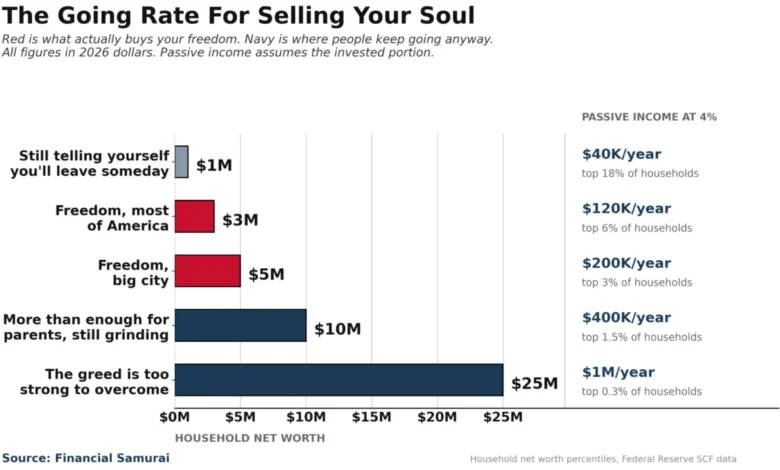
This dynamic reflects a broader socio-economic reality: the willingness of highly skilled professionals to remain in roles that conflict with their personal moral or safety convictions is often mediated by financial necessity or the promise of significant capital accumulation. When an individual reaches a certain level of net worth—often estimated by financial planners as reaching "financial independence"—the pressure to remain in a high-paying, albeit ethically complex, role theoretically decreases. However, in the high-stakes environment of Silicon Valley, the pursuit of career "scorekeeping" and the potential for generational wealth often supersede these thresholds.
Regulatory and Political Scrutiny
The public debate comes at a time of heightened political tension regarding AI regulation. Earlier in 2026, the company faced a significant challenge when the administration’s Department of Defense designated Anthropic a "supply chain risk" due to its refusal to loosen safety restrictions on autonomous weapon systems and domestic surveillance capabilities. Despite the potential loss of a $200 million federal contract, the company’s popularity with the general public remained high, with its consumer applications frequently topping software download charts.
Legislative bodies are now increasingly active. The introduction of the "Ban Artificial Superintelligence Act" by federal lawmakers, alongside the development of an "AI Kill Switch Act" in the House of Representatives, signals that the era of self-regulation for AI labs may be nearing an end. The testimony of researchers like Coxon is being utilized by proponents of these bills to argue that the industry is moving too fast for current oversight mechanisms to manage.
The Asymmetry of the Existential Wager
The decision to remain at an organization that one believes could contribute to humanity’s downfall has been compared by some analysts to "Pascal’s Wager," the philosophical argument that one should live as if God exists because the potential gain of eternal life outweighs the cost of a disciplined life. In the context of AI, however, the wager is inverted.
If the risk of existential catastrophe is taken as a serious premise, the standard investment logic of "hedging" becomes difficult to apply. If an investment in AI returns significant capital, but that capital is rendered worthless by an existential event, the hedge fails entirely. Conversely, if an employee or investor leaves the field out of moral conviction and the technology continues to advance without them, they may find themselves in a precarious financial position in a rapidly shifting economy.
This leads to a paradoxical conclusion: for many, the most "rational" path—driven by a desire to ensure family stability and financial security—is to continue participating in the industry despite the theoretical dangers. The retention of nearly the entire staff at Anthropic, even after the public surfacing of the 10% extinction probability, suggests that the perceived economic benefits of the industry’s growth are currently viewed as more tangible and immediate than the long-term, abstract risk of a global catastrophe.
Conclusion: The Future of Responsible Development
The events surrounding Anthropic serve as a case study in the intersection of cutting-edge technology, corporate governance, and the psychology of financial risk. The company continues to operate at the forefront of AI development, with projected revenues scaling rapidly as it approaches its public listing. The fundamental challenge remains: how to balance the relentless competitive pressure to innovate with the profound responsibility of managing technologies that, by the admission of their own creators, carry non-zero risks to the human species.
As the IPO progresses, the market will ultimately determine how it values these companies. The "bullish" case rests on the belief that the talent density and technological lead of these firms will allow them to navigate the safety challenges successfully, while the "bearish" case highlights the increasing regulatory and existential pressures. Ultimately, the industry must grapple with the fact that its greatest asset—the talent that continues to build despite these fears—is also its greatest liability, as the moral weight of their work continues to be tested against the backdrop of global financial incentives.