The Evolution of Collaborative Debugging and the Changing Landscape of Online Programming Communities


In the high-stakes environment of software development, where a single missing semicolon can derail an entire production environment, engineers have long relied on a collection of idiosyncratic yet highly effective diagnostic methodologies. Chief among these is the "rubber ducking" technique, a cognitive process wherein a developer explains their code, line by line, to an inanimate object. This practice forces the programmer to articulate their logic, often revealing the logical fallacies or syntax errors that were previously obscured by the "expert blind spot"—the tendency to skip over one’s own errors due to prior knowledge of the intended outcome.
While rubber ducking serves as a solitary diagnostic tool, it is frequently paired with "divide and conquer" debugging. This algorithmic approach to problem-solving involves isolating the problematic segment of code by systematically splitting the codebase in half, testing each section until the error is narrowed down to its origin. These practices are not merely anecdotal; they represent the foundational discipline required for professional software engineering. However, as the programming community has scaled from the insular newsgroups of the 1980s to the massive, global infrastructure of modern platforms like Stack Overflow, the challenge has shifted from simply finding a solution to managing the social and technical protocols of requesting help.
A Chronology of Developer Collaboration: From Usenet to the Global Stage
The history of collaborative programming help is marked by a tension between the need for expert-level precision and the imperative to onboard new generations of developers. In the 1980s and 1990s, Usenet groups such as comp.lang.c served as the primary nexus for C programmers. These forums were characterized by high technical barriers and a culture that favored gatekeeping. As these platforms aged, they became increasingly hostile to novices. Seasoned veterans, having answered the same questions regarding local memory management and pointer arithmetic for years, grew increasingly impatient. This led to the institutionalization of "Frequently Asked Questions" (FAQs) lists—not necessarily to help newcomers, but to preemptively silence them.

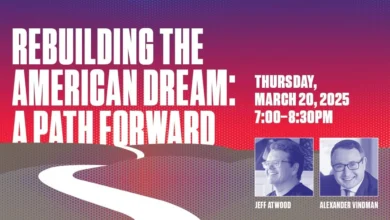
The consequence was the stagnation of these communities. By catering exclusively to a shrinking demographic of long-term members, these groups eventually lost their relevance and vitality. When Stack Overflow was conceptualized in the late 2000s, founders Jeff Atwood and Joel Spolsky aimed to avoid this fate. Their design philosophy was built on the premise that while the site should serve as a high-fidelity repository for expert knowledge, it must also remain accessible to those at the beginning of their professional journey.
The Anatomy of an Ideal Query
The effectiveness of any collaborative platform rests on the quality of the questions posed. Influential community members, such as veteran developer Jon Skeet, have long advocated for a rigorous protocol for question-asking. Skeet’s checklist, which emphasizes the necessity of context, clarity, and the isolation of code into "short, complete, and verifiable examples" (MCVE), functions as a formalization of the rubber ducking and divide-and-conquer principles.
From an analytical standpoint, these requirements are not arbitrary hurdles. They are designed to minimize the cognitive load on the respondent. When a user provides a complete, minimal, and reproducible example, they are essentially performing the initial legwork of debugging themselves. This creates a reciprocal relationship: the seeker provides high-quality information, and the expert provides high-quality solutions. When these protocols are ignored, the result is often a flood of low-effort, "broad-scope" questions that require the expert to perform the equivalent of a software audit just to understand the problem, a burden that is often perceived as an insult to the expert’s time.
The Burning Man Analogy and the Problem of Community Norms
The frustration felt by many newcomers to platforms like Stack Overflow can be likened to the experience of a first-time participant at the Burning Man festival. The festival’s "10 Principles," which include radical self-expression and leave-no-trace policies, are essential for the event’s survival in a harsh, protected environment. Similarly, the strict moderation policies of Stack Overflow—such as closing questions that are too broad—are designed to protect the "environmental integrity" of the platform.

However, the barrier to entry has become a significant point of contention. Data indicates that as these communities mature, the tone of discourse can often drift toward elitism. While experts feel the weight of answering repetitive questions, novices often interpret this fatigue as condescension. The implications of this friction are profound. If the threshold for entry is too high, the platform risks alienating the very demographic—aspiring developers—that will eventually sustain it. A decline in diversity and the inhibition of knowledge transfer are the direct consequences of a community that loses its capacity for patience.
Addressing the Cultural and Structural Deficit
Recent internal reviews by platform stakeholders have identified that while technical guidelines remain necessary, the culture of "snark" and condescension is a measurable deterrent. The impact of such behavior is not just social; it is professional. By discouraging novices, the community inadvertently shrinks the talent pool of the industry.
To combat this, efforts are currently underway to iterate on the user experience. This includes:
- Refined UI Prompts: Redesigning the "Ask Question" interface to guide users through the necessary debugging steps before they hit submit.
- Moderation Tooling: Developing advanced systems to identify and flag toxic, condescending, or unhelpful comments that violate the spirit of professional collaboration.
- Tiered Community Models: Experimenting with private, team-based environments where developers can ask questions in a lower-stakes setting, effectively "scaling down" the pressure of the global public forum.
Implications for the Future of Software Development
The role of Stack Overflow has evolved into something akin to the Library of Congress for code. With millions of active users and billions of page views, its influence on the global economy cannot be overstated. Statistics suggest that the average programmer has been aided by the platform hundreds of times throughout their career. This utility makes it a critical piece of global infrastructure.

However, the "Library of Congress" model presents a paradox: how does a platform remain a bastion of high-level, curated truth while simultaneously acting as an open, welcoming classroom for the uninitiated? The answer, according to current leadership, lies in balancing technical rigor with social empathy.
The ultimate goal for such platforms is to transition from a gatekeeping model to a mentorship-led model. By providing better tools for moderation and clearer instructions for engagement, the community hopes to reduce the "brouhaha" surrounding simple questions without sacrificing the quality of the answers provided. As programming continues to define the trajectory of future technologies, the platforms that host these discussions must ensure they remain inclusive. If the industry fails to lower the barriers to entry for newcomers, it will not only fail the individual learner but also compromise the long-term sustainability of the global developer ecosystem. The challenge for the next decade will be to ensure that the "Library of Congress" remains a place where any student can walk in and find an answer, provided they are willing to do the hard work of asking the right question.