Mastering Business Efficiency: The Ultimate Guide to Free Workflow Templates and Advanced Project Management Solutions

In today’s hyper-competitive corporate landscape, the ability to streamline operations across dispersed teams and complex departments has transitioned from a competitive advantage to an absolute operational necessity. Organizations across global markets increasingly rely on structured workflow templates to provide a repeatable architecture for executing daily tasks, minimizing communication silos, and eliminating catastrophic errors in project lifecycles. By meticulously outlining sequential responsibilities and process boundaries, modern workflow templates ensure cross-functional alignment, elevate productivity metrics, and guarantee uniform quality from project inception to final delivery.

Recent industry data underscores the critical nature of standardized process management. Studies in organizational efficiency indicate that businesses utilizing formalized workflow frameworks experience up to a 30% reduction in project delays and a measurable decrease in redundant operational efforts. Whether an enterprise is managing intricate internal operations, onboarding high-value enterprise clients, or scaling supply chain procurement, deploying the appropriate workflow templates fundamentally transforms team collaboration. To address this widespread corporate demand, project management authorities have recently curated a comprehensive library of free, customizable workflow templates designed to simplify complex operational pipelines and accelerate project execution without the burden of building processes from scratch.
The Evolution and Necessity of Workflow Architecture
The historical evolution of workflow management dates back to early industrial engineering and Taylorism, where systematic observation of manual tasks first dictated modern assembly lines. Over the decades, digital transformation has shifted workflow optimization from physical factory floors to cloud-based software dashboards. Today, a workflow template serves as a predefined digital blueprint mapping out the exact sequence of business processes, delineating individual accountability, and defining how work transitions dynamically between operational phases.

Modern organizational psychologists and operations management experts emphasize that ambiguity is the primary catalyst for workplace inefficiency. When roles and deadlines are left undefined, employee engagement plummets, and organizational liability increases. By integrating standardized structures, companies cultivate a culture of radical accountability. According to recent workplace productivity surveys, over 65% of project failures stem from poor communication and misaligned expectations during early execution phases. Structured workflow templates directly counteract these vulnerabilities by establishing explicit baselines for performance.
Essential Free Workflow Templates for Modern Teams
To address diverse industry requirements, contemporary project management resources offer specialized template categories. Each asset is tailored to specific methodological frameworks, ranging from agile sprints to traditional lean manufacturing:
1. The Standard Workflow Template
A foundational workflow template outlines the macro-level steps required to finalize any standard business operation. By offering a panoramic view of task dependencies, these templates assist managers in content approval chains, client onboarding pipelines, and procurement workflows. They remove guesswork, standardize milestones, and establish clear organizational expectations.
2. Kanban Board Template
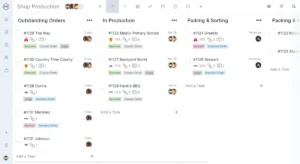
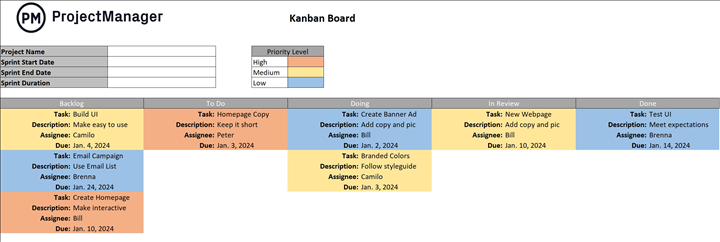
Rooted in agile philosophy, the kanban board template visualizes work-in-progress (WIP) using interactive digital cards and columns such as "To Do," "In Progress," and "Done." This configuration allows teams to instantly identify operational bottlenecks, optimize resource allocation, and support continuous delivery models during daily standups and sprint reviews.
3. SIPOC Template (Suppliers, Inputs, Process, Outputs, Customers)
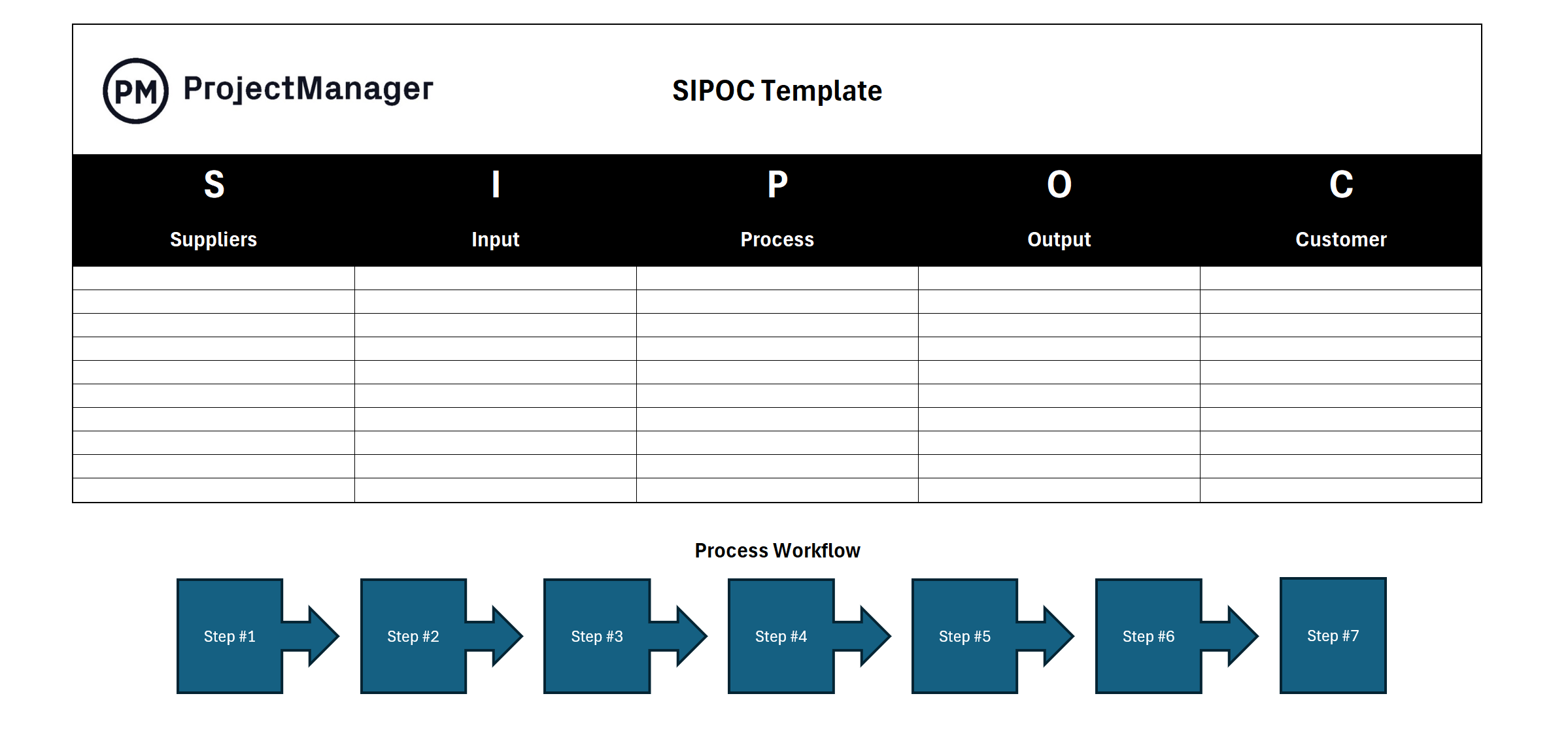
Widely embraced within Six Sigma and Lean management methodologies, the SIPOC framework provides a macro-level overview of process improvement initiatives. By categorizing suppliers, inputs, processes, outputs, and customer deliverables, organizations can tightly define project scope and align stakeholder expectations during early exploratory phases.
4. Process Map Template
Going beyond basic task lists, a process map template illustrates decision points, handoff zones, and sequential actions. This tool is instrumental during compliance audits, operational redesigns, and employee training programs, highlighting redundant activities and structural inefficiencies.
5. Swimlane Diagram Template
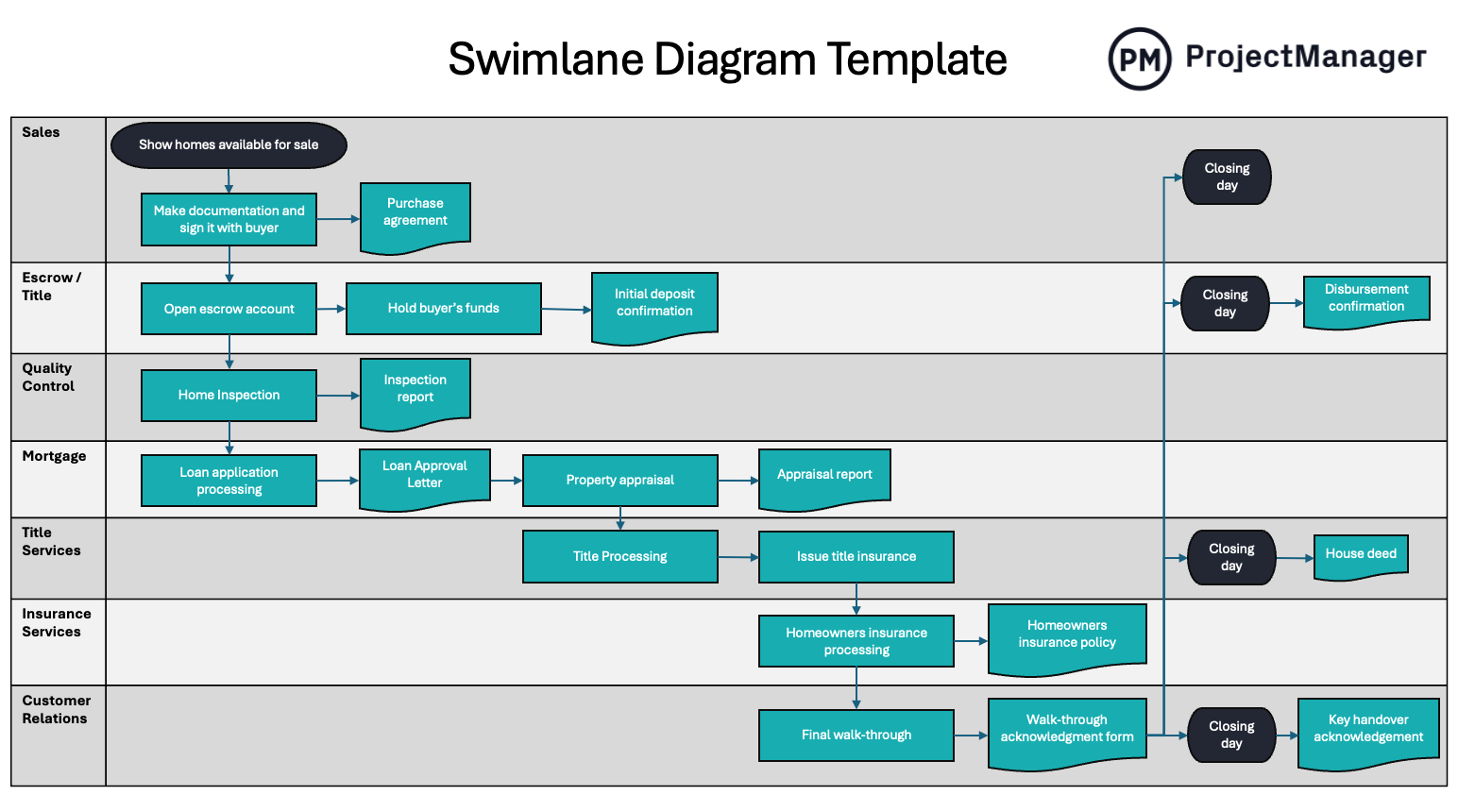
For multi-departmental initiatives, the swimlane diagram organizes workflow steps into dedicated horizontal or vertical lanes representing specific teams or roles. This visual segmentation immediately clarifies accountability, resolving chronic bottlenecks caused by vague handoffs between disparate corporate divisions.
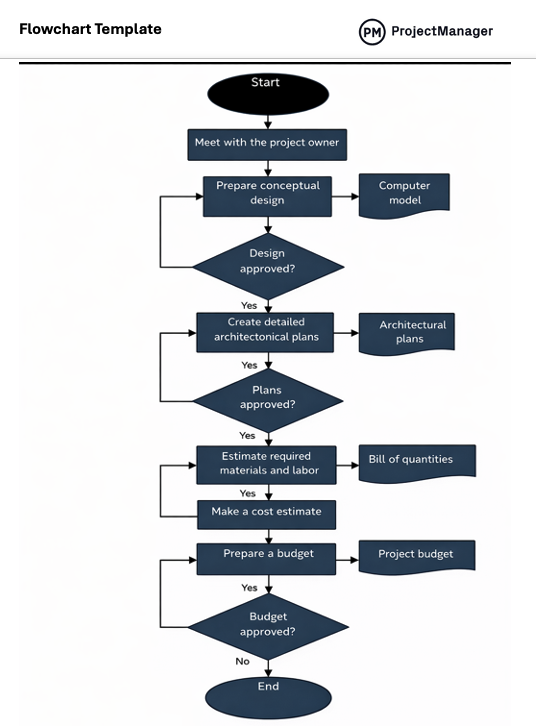
6. Flowchart Template
Utilizing standardized geometric symbols to denote decisions, actions, and outcomes, flowchart templates offer a universally understood language for documenting troubleshooting protocols, customer support pipelines, and IT ticket resolutions across global enterprises.

7. Work Instruction Template
Operating at the most granular level of task documentation, work instruction templates provide precise, step-by-step guidance for technical, engineering, and manufacturing environments. By detailing exact tool requirements, safety protocols, and execution methodologies, these documents ensure rigorous quality control and facilitate seamless knowledge transfer.
Transitioning from Static Templates to Dynamic Software Solutions
While static workflow templates provide an invaluable starting point for organizational structuring, contemporary enterprise demands have catalyzed a massive shift toward dynamic project management software. Industry analysts project that the global workflow automation market will continue its exponential trajectory, driven by the need for real-time data analytics and automated resource balancing.
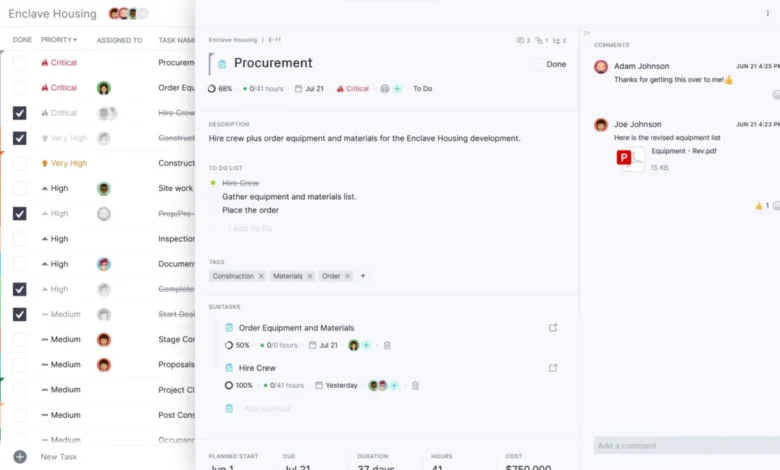
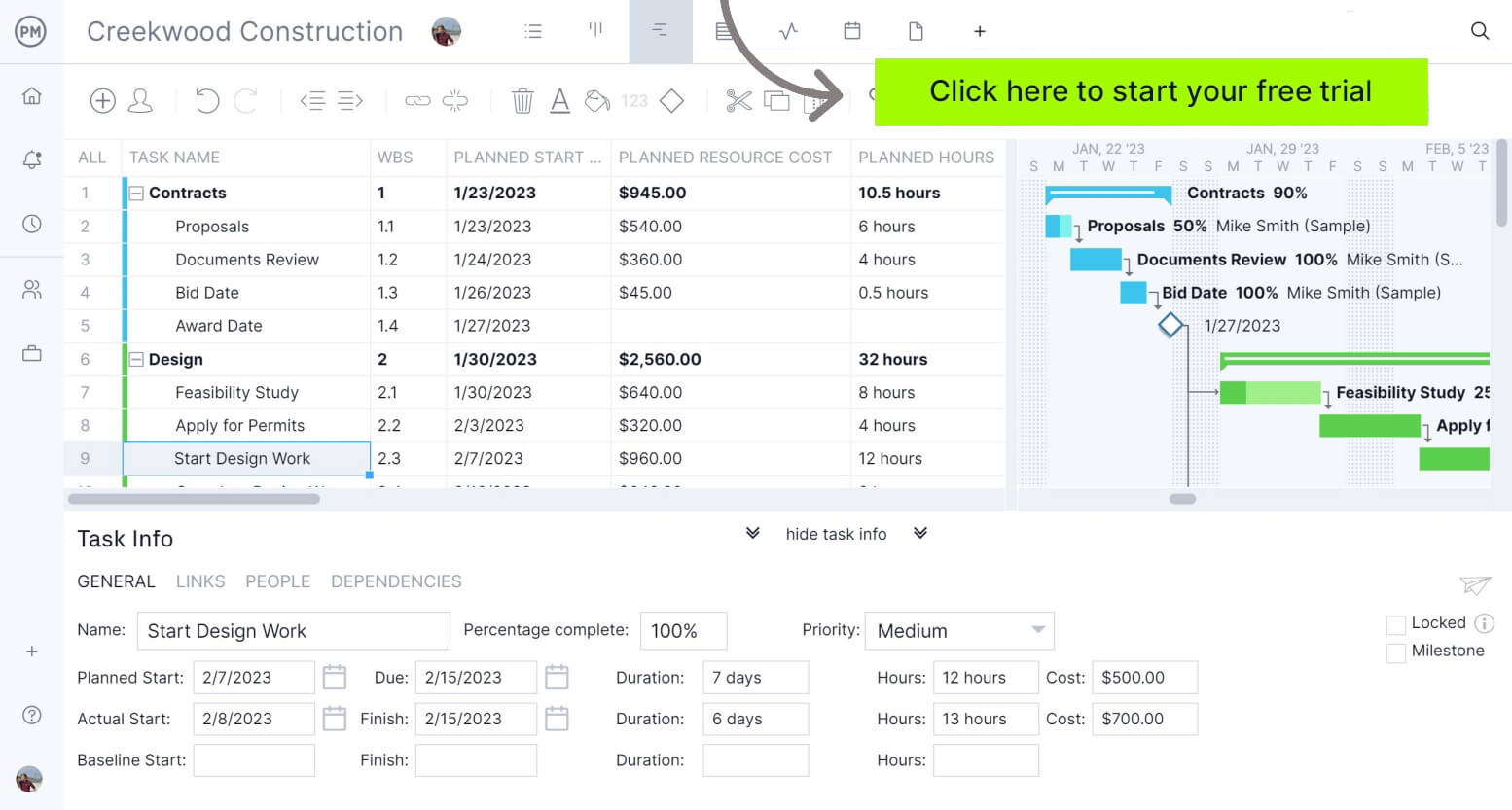
Advanced platforms—such as ProjectManager—supersede traditional static documents by introducing interactive, interconnected ecosystems. For instance, rather than manually updating a spreadsheet workflow, teams utilize dynamic Gantt charts featuring drag-and-drop task scheduling, automated dependency linking, and real-time milestone tracking. Furthermore, integrated resource management tools empower project leads to monitor workload charts instantly, identifying over-allocated personnel and reallocating tasks before productivity stalls.
Industry experts note that multi-view project management capability is paramount for modern hybrid workforces. Organizations frequently transition between Kanban boards for agile software development, calendar views for deadline-driven marketing campaigns, traditional spreadsheets for financial tracking, and list views for granular task prioritization.
Performance Tracking and Real-Time Analytics
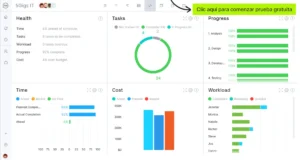
The true implication of modern workflow management lies in data-driven decision-making. Cutting-edge project environments utilize centralized dashboards and customizable reporting engines to aggregate live performance metrics. By tracking team velocity, project health indicators, and secure timesheet data, executive leadership can transition from reactive problem-solving to proactive portfolio forecasting.
As global enterprises—including multinational entities across manufacturing, logistics, and technology sectors—continue to refine their operational frameworks, the integration of structured templates with automated software solutions remains the definitive benchmark for sustainable corporate growth. By bridging the gap between standardized process documentation and real-time analytical oversight, modern organizations can successfully navigate market volatility and secure long-term operational excellence.
Related posts: