How AI Wealth Management Tools Are Uncovering Hidden Portfolio Risks and Redefining Retail Investing


The intersection of artificial intelligence and personal finance has reached a critical inflection point, as sophisticated algorithmic tools move beyond mere data aggregation to provide actionable, high-level investment strategy. A recent case study involving the AI-driven wealth management platform Mezzi illustrates this shift, highlighting how investors with complex, multi-account portfolios often harbor significant "blind spots"—hidden stock concentrations that can leave them unintentionally exposed to market volatility. By utilizing advanced diversification "X-ray" technology, the platform successfully identified an unexpected $300,000 in redundant Google (Alphabet Inc.) exposure within a single retail portfolio, a discovery that underscores the limitations of traditional, static financial dashboards.
The Problem of Portfolio Opacity
For the modern investor, financial management has become increasingly fragmented. Between 401(k) plans, individual retirement accounts (IRAs), taxable brokerage accounts, and private equity or real estate holdings, maintaining a clear view of total asset allocation is a logistical challenge. Most retail investors rely on manual spreadsheets or basic financial aggregation apps that offer a "scorecard" view of their wealth. However, these tools frequently fail to account for the "under-the-hood" reality of index-based investing.
When an investor holds both individual shares of a company and broad-market ETFs—such as those tracking the S&P 500—there is a high probability of significant position overlap. Because the S&P 500 is market-cap weighted, major technology firms often constitute a disproportionate share of these funds. Without a granular analysis tool, an investor might believe they are well-diversified while, in reality, maintaining a dangerously high concentration in a single underlying asset.
Chronology of an AI-Driven Portfolio Correction
The discovery of the $300,000 in redundant Google holdings occurred during a summer audit conducted via the Mezzi platform. The portfolio owner, who had held Alphabet stock for over 15 years, had utilized traditional manual tracking methods that failed to account for the compounding weight of the stock held within various index funds.

The timeline of the intervention was as follows:
- Initial Audit: Upon integrating multiple equity accounts, the AI engine performed a "Diversification X-ray," which aggregates all holdings to determine the true weight of each ticker symbol across the entire net worth.
- The Identification: The system flagged an aggregate Google position approximately $300,000 higher than the investor’s estimated calculation.
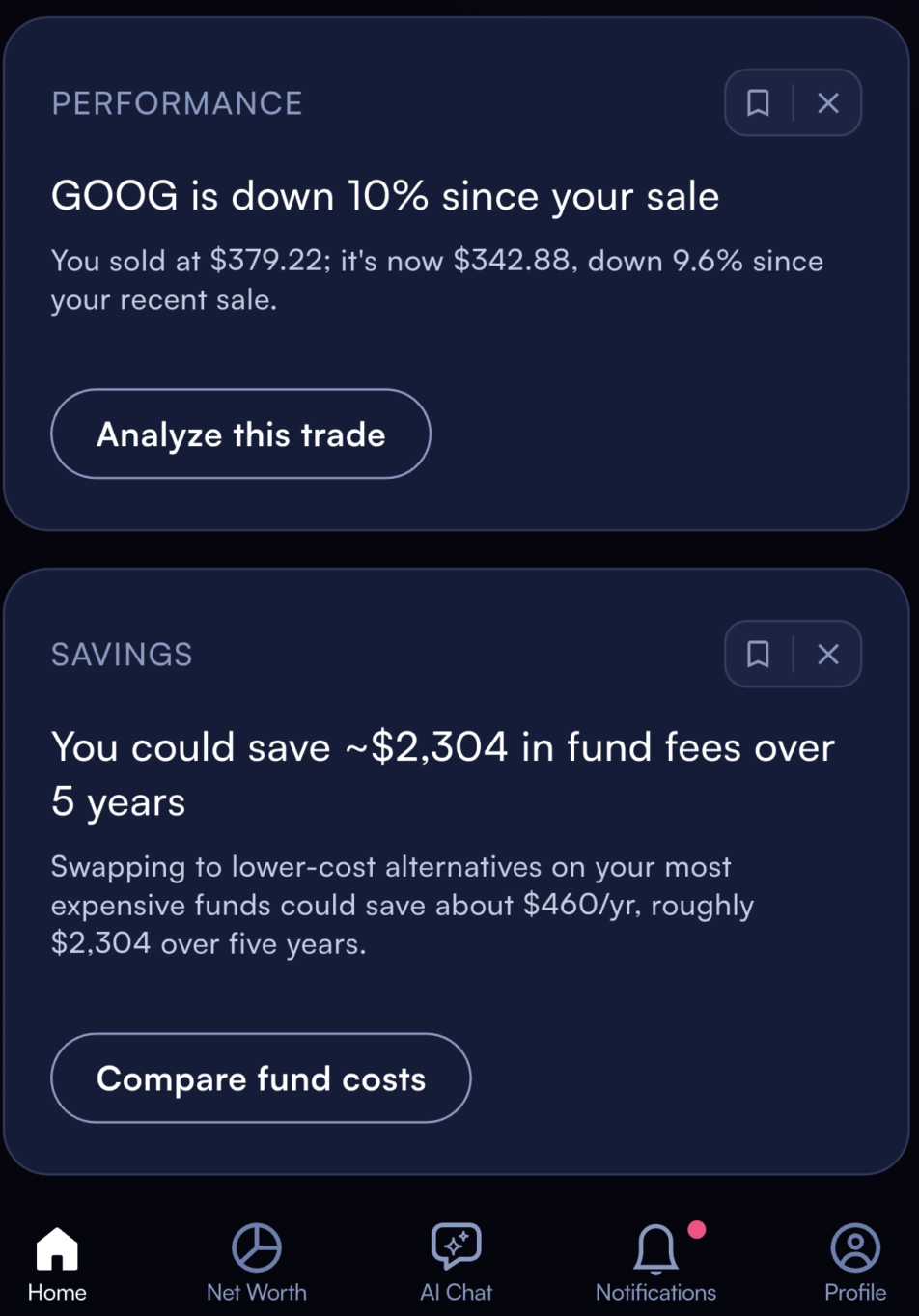
- Strategic Execution: Acting on the platform’s recommendation, the investor trimmed the position by $200,000, reallocating 80% of the proceeds back into a diversified S&P 500 index and holding 20% in cash.
- The Market Event: Several weeks following the rebalancing, internal shifts within Alphabet—specifically the departure of high-level personnel including Chief Scientist Jeff Dean—precipitated a roughly 10% decline in share price.
- Result: By adjusting the weighting prior to this volatility, the portfolio avoided approximately $20,000 in unrealized losses, demonstrating the tangible financial impact of automated, real-time risk assessment.
The Role of SEC-Registered AI Advisors
Mezzi, which has been in development for three years, represents a new class of SEC-registered investment advisors that leverage large language models (LLMs) to provide an interactive interface. Unlike traditional robo-advisors that rely on rigid, pre-set algorithms to manage portfolios, these AI-driven platforms act as an "always-on" analyst.
The regulatory status of such platforms is significant. As an SEC-registered investment advisor, the entity is held to a fiduciary standard, meaning it is legally obligated to act in the best interest of the client. This distinguishes it from general-purpose financial tools or consumer-grade chatbots that lack regulatory oversight and professional accountability. The platform’s ability to process natural language queries allows users to "interrogate" their money, asking specific questions about tax-loss harvesting, fee structures, and sector exposure, rather than simply viewing a static pie chart.
Behavioral Finance and the "Value Trap"
Beyond technical rebalancing, AI tools are increasingly being used to mitigate cognitive biases in investing. Behavioral economics suggests that investors often suffer from "loss aversion" and "confirmation bias," leading them to avoid reviewing underperforming assets. The Mezzi platform’s ability to provide an objective, data-backed assessment of losers—such as the identified case regarding a stagnant Nike position—serves as a psychological circuit breaker.
By presenting the actual, rather than the perceived, financial loss, the software allows investors to make rational decisions about tax-loss harvesting. In the context of the analyzed portfolio, this objective data allowed the user to realize capital losses specifically to offset capital gains elsewhere, an optimization strategy that is mathematically difficult to execute manually without precise, up-to-the-minute data.
Market Implications and the Future of Wealth Management
The success of such platforms suggests a broader shift in how high-net-worth and mass-affluent individuals will manage wealth in the coming decade. As the complexity of investment vehicles grows—ranging from crypto-assets to fractional real estate and private equity—the human brain becomes an inadequate tool for real-time risk management.
The implications for the industry are three-fold:
- Democratization of Institutional-Grade Analytics: Tools previously reserved for hedge fund analysts and institutional portfolio managers are now accessible to individual retail investors at a fraction of the cost.
- Increased Market Efficiency: As more investors utilize AI to identify and correct portfolio overlaps, there may be a cooling effect on "crowded" trades, as automated systems steer capital away from over-concentrated positions.
- The Shift from "Reporting" to "Strategy": The evolution of wealth management software is moving away from retrospective reporting (what happened?) to prospective strategy (what should I do now?).
Final Considerations for Retail Investors
While AI-driven advisory tools provide powerful insights, they are not a substitute for financial literacy or long-term planning. SEC registration and the use of sophisticated technology do not guarantee market performance or immunity from losses. However, the ability to identify hidden risks—such as the $300,000 of "ghost" exposure discovered in this case—provides a measurable edge in an increasingly complex financial landscape.
As the industry continues to mature, the partnership between AI and human oversight appears to be the most viable path forward. By offloading the technical burden of data aggregation and risk identification to an AI engine, investors can better focus on higher-level strategic goals, ensuring that their portfolios remain aligned with their long-term objectives rather than being dictated by historical inertia or unintended market concentrations. The integration of such tools marks a transition from a passive approach to wealth management to a proactive, data-driven methodology that is increasingly necessary in a volatile global market.