Stack Overflow Founders Reunite at WeAreDevelopers World Congress to Address the Future of Developer Communities and AI Infrastructure

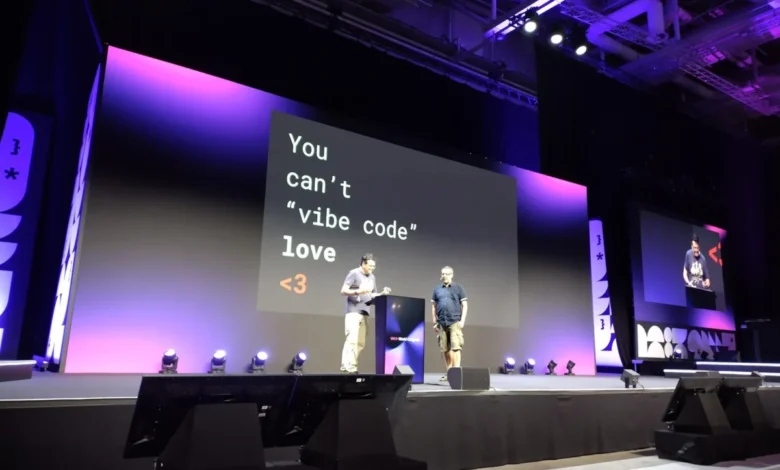
The modern software development landscape stands at a critical historical juncture, defined by the tension between automated artificial intelligence solutions and the enduring value of human-centric technical communities. This dynamic took center stage on Friday, July 10, at the CityCube in Berlin during the WeAreDevelopers World Congress. Jeff Atwood, co-founder of Stack Overflow, delivered a landmark joint keynote presentation alongside Ben Dumke-von der Ehe, one of the platform’s earliest community hires and a prominent Berlin-based software engineer. The appearance marked a rare international speaking engagement for Atwood, who agreed to the conference slot only on the condition that Dumke-von der Ehe share the stage to present contrasting yet complementary perspectives on the evolution of developer knowledge sharing.
Main Facts and the Berlin Reunion
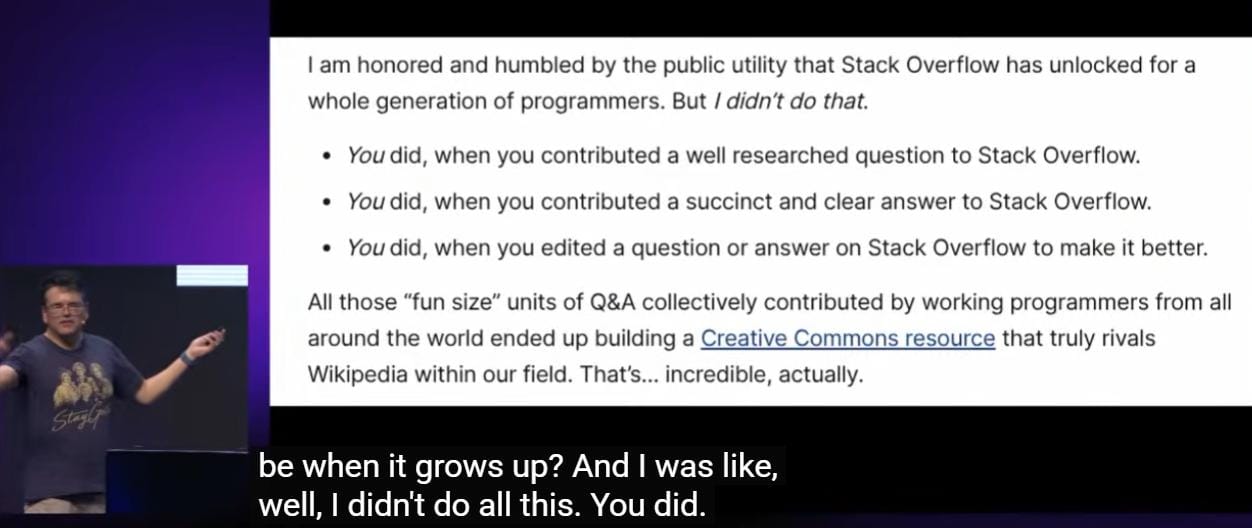
The keynote address, titled "None of Us Is As Dumb As All of Us: Community And Knowledge Go Hand In Hand," served as both a technical retrospective and a philosophical inquiry into how collaborative platforms built the modern internet. Atwood and Dumke-von der Ehe explored the foundational human stories that shaped Stack Overflow following its launch in 2008. Atwood emphasized that the platform’s creation was fundamentally an exercise in collective community building, anchored by a bedrock Creative Commons license designed to respect and preserve the intellectual contributions of millions of developers worldwide.
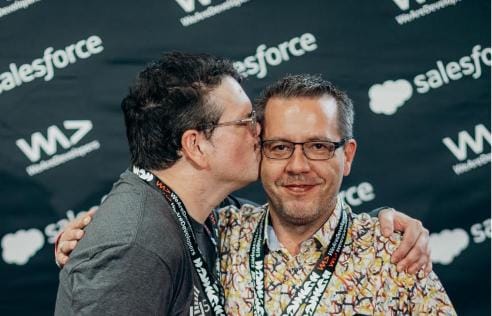
The reunion underscored a deep professional and personal indebtedness between the two figures. Dumke-von der Ehe’s trajectory with Stack Overflow—featuring multiple tenures of leaving and returning to the organization—exemplifies the winding career paths forged within early web-era tech communities. By bringing their dialogue to the WeAreDevelopers World Congress, the speakers aimed to bridge the gap between historical community governance models and the contemporary realities of generative artificial intelligence in software engineering.
Chronology of Stack Overflow and the Rise of AI
To understand the weight of the Berlin presentation, it is necessary to examine the chronological evolution of developer knowledge acquisition over the past two decades:
- 2008: Jeff Atwood and Joel Spolsky launch Stack Overflow as an open, community-driven alternative to fragmented expert forums like Experts-Exchange. The platform relies on a reputation system and a Creative Commons attribution license.
- 2010: Ben Dumke-von der Ehe is brought on as an early community operations hire, helping to establish moderation standards and user engagement frameworks in Europe.
- 2010s: Stack Overflow grows into the definitive global repository for programming solutions, indexing tens of millions of questions and answers. The platform’s core philosophy maintains that passive readers finding answers via search engines represent its highest success metric.
- 2022–2023: The rapid emergence of Large Language Models (LLMs) and conversational coding assistants transforms how developers seek information. Traffic to traditional Q&A platforms experiences noticeable shifts as developers pivot to instant, conversational synthetic answers.
- July 2026: Atwood and Dumke-von der Ehe reunite on stage in Berlin at the WeAreDevelopers World Congress to evaluate the long-term sustainability of the developer commons in an AI-dominated ecosystem.
Supporting Data and the Duplicate Question Paradox
The integration of LLMs into daily software development workflows has fundamentally altered the friction points of technical research. Historically, traditional Q&A sites enforced strict anti-duplication rules to prevent the fragmentation of knowledge. However, as databases scaled to tens and hundreds of millions of entries, navigating prior art became an increasingly formidable challenge for new contributors.

According to technical analysis discussed during the keynote, LLMs successfully solve the persistent "Gordian knot" of duplicate questions. When a user queries an AI model with phrasing that diverges entirely from historical forum syntax, the underlying neural network maps the intent directly to established solutions. Atwood acknowledged this as a transformative net positive for the industry. In alignment with Stack Overflow’s original design philosophy—where approximately 98 percent of programmers should ideally find what they need through passive search without ever needing to author a new post—AI acceleration achieves unprecedented efficiency.
Furthermore, empirical data from software developer surveys indicates that reliance on automated coding assistants has become ubiquitous. Industry metrics show that a vast majority of professional developers utilize AI tools daily for boilerplate generation, debugging, and syntax lookups. This shift has relieved pressure on human moderators who previously spent countless hours closing duplicate threads and redirecting traffic.
Implications for the Developer Commons
Despite the operational efficiencies introduced by generative AI, the keynote raised critical questions regarding the long-term sustainability of the global knowledge ecosystem. The central paradox highlighted by Atwood and Dumke-von der Ehe centers on data provenance and community health: if future developers transition entirely to private, siloed interactions with AI models, where will the next generation of training data originate?
LLMs fundamentally rely on the public commons—the open forums, wikis, and collaboratively maintained repositories built under open licenses over the past twenty years—to learn the nuances of programming languages and system architectures. If community-driven platforms decay due to a lack of active human participation, the pipeline of novel human-vetted technical solutions risks drying up.
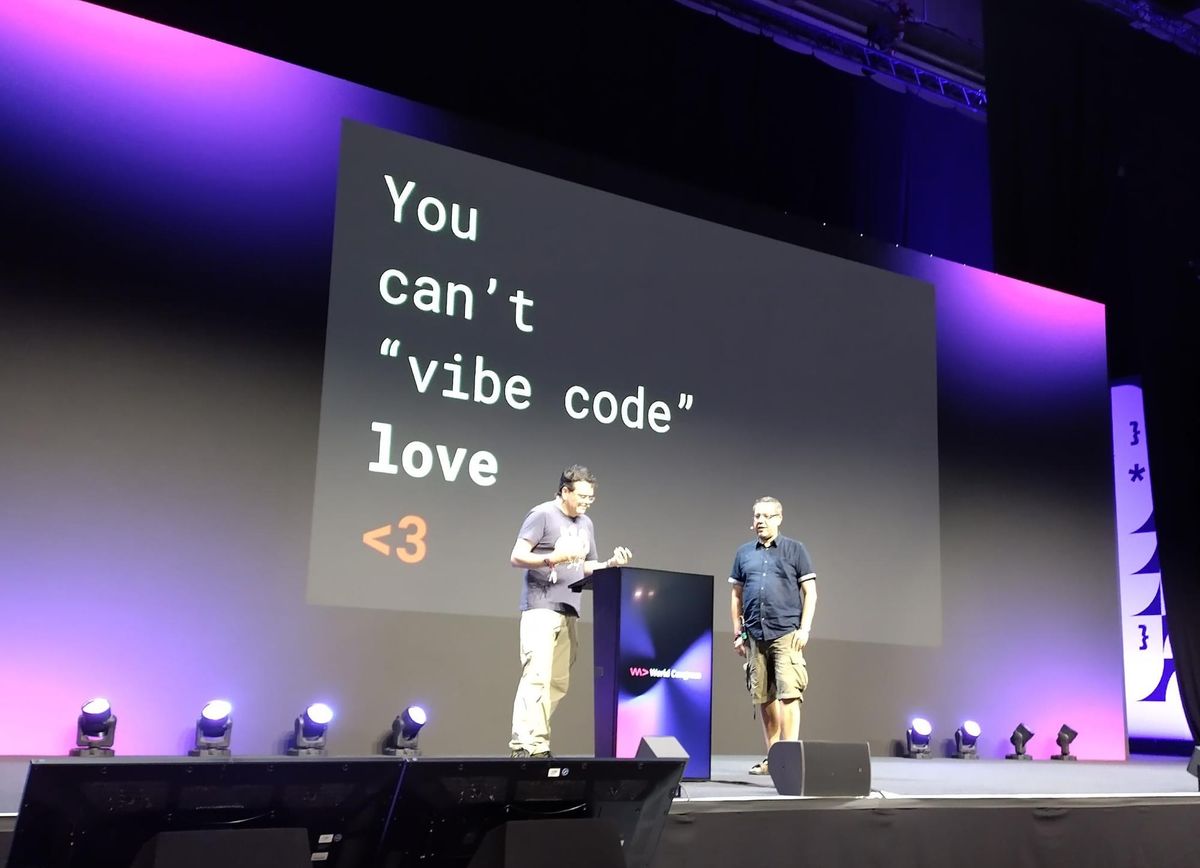
Industry analysts observing the conference noted that while automated tools excel at executing known patterns, they cannot replicate the organic mentorship, cultural transmission, and community bonding experienced by early contributors like Dumke-von der Ehe. As Atwood succinctly stated during the presentation, referencing the intangible human element of collaborative spaces, "You can’t vibe code love."
Broader Industry Impact and Future Outlook
The dialogue in Berlin reflects a broader reckoning across the technology sector regarding the stewardship of public digital infrastructure. As copyright litigation, licensing disputes over training data, and economic pressures on community forums mount, platform architects are forced to reconsider how contributions are valued and sustained.
The overarching takeaway from the WeAreDevelopers World Congress keynote is that artificial intelligence and human community do not need to exist in mutually exclusive silos. Instead, the future of software engineering depends on establishing a symbiotic relationship where LLMs alleviate the mechanical burdens of documentation and duplication, while human-led commons continue to foster the social trust, peer learning, and collaborative innovation necessary to generate the foundational knowledge of tomorrow.