The Block Protocol: Unlocking the Semantic Web’s Potential Through Open Standards and Universal Blocks


Since the nascent days of the internet in the 1990s, the World Wide Web has served as humanity’s primary publishing platform for human-readable documents. This foundational era saw the widespread adoption of HyperText Markup Language (HTML), a relatively simple system designed to structure content for display in web browsers. HTML provides basic organizational elements, allowing authors to delineate paragraphs, emphasize text, and create links, thereby rendering information navigable and digestible for human users. As the web evolved, Cascading Style Sheets (CSS) emerged, empowering designers to add aesthetic layers, transforming plain textual documents into visually engaging experiences. This combination of HTML for structure and CSS for presentation became the bedrock of modern web design, enabling a vibrant and accessible digital landscape. However, this human-centric design, while revolutionary, harbored a critical limitation: its inherent lack of machine-readable semantic meaning, which has profoundly impacted the web’s potential for intelligent data processing.
The Semantic Web Vision: A Dream Deferred
Despite the web’s unparalleled success as a publishing medium, a significant challenge persisted: computers struggled to interpret the actual meaning of the content. While a human could easily discern that a bolded line followed by an italicized one represented a book title and its author, a computer program saw only formatting, not intrinsic data relationships. This fundamental gap between human understanding and machine comprehension spurred visionaries like Sir Tim Berners-Lee, the inventor of the World Wide Web, to articulate the concept of the "Semantic Web." As early as 1999, in his seminal work Weaving The Web, Berners-Lee envisioned a transformative evolution: "I have a dream for the Web [in which computers] become capable of analyzing all the data on the Web — the content, links, and transactions between people and computers. A ‘Semantic Web’, which makes this possible, has yet to emerge, but when it does, the day-to-day mechanisms of trade, bureaucracy and our daily lives will be handled by machines talking to machines. The ‘intelligent agents’ people have touted for ages will finally materialize."
This ambitious vision aimed to create a "web of data" where information would be given well-defined meaning, enabling machines and intelligent agents to understand, interpret, and even generate human-like interactions. The World Wide Web Consortium (W3C), the main international standards organization for the World Wide Web, subsequently spearheaded initiatives to realize this dream. Technologies like RDF (Resource Description Framework), OWL (Web Ontology Language), and SPARQL (SPARQL Protocol and RDF Query Language) were developed to provide standardized ways to describe data, define relationships, and query semantic information across disparate sources. These technologies offered powerful frameworks for embedding rich, machine-understandable metadata directly into web pages, transforming static documents into interconnected datasets.
However, the journey from vision to widespread implementation proved arduous. Despite the robust technical foundations laid by the W3C, the adoption of Semantic Web technologies remained largely confined to specialized domains, academic research, and enterprise-level applications. The complexity of authoring semantic markup, often requiring deep technical knowledge of ontologies, schema definitions, and specialized data formats like RDF or JSON-LD, presented a formidable barrier for the average content creator or web developer. The perceived effort-to-reward ratio was often too high: publishing a "beautiful blog post" for human consumption was already a task, and adding additional layers of machine-readable markup felt like "homework" that offered little immediate, tangible benefit unless a sophisticated "intelligent agent" was already poised to consume it. Consequently, over two decades after Berners-Lee’s prophecy, the Semantic Web, in its fullest form, remains largely unrealized across the vast majority of the internet.
The Persistent Challenge: Bridging the Human-Machine Divide
The practical implications of this semantic deficit are profound. Consider a common scenario: a web page listing details about a book, such as Goodnight Moon by Margaret Wise Brown. A human reader immediately grasps that "Goodnight Moon" is the title, "Margaret Wise Brown" is the author, and "1947" is the publication year. However, for a standard computer program parsing the raw HTML:
Goodnight Moon
by Margaret Wise Brown
Illustrated by Clement Hurd
Harper & Brothers, 1947
ISBN 0-06-443017-0

The machine merely sees bold text, italicized text, and a series of strings. It cannot inherently distinguish between a title, an author, a publisher, or an ISBN. Without explicit semantic tags, extracting this information programmatically is a heuristic guessing game, prone to errors and requiring bespoke programming for each unique presentation style. This challenge is magnified in an era increasingly dominated by artificial intelligence, machine learning, and data-driven applications. From search engines striving for more relevant results to intelligent assistants managing schedules, and sophisticated analytical tools processing vast amounts of information, the demand for structured, machine-readable data has never been higher. The current web, largely optimized for human readability, inadvertently creates a bottleneck for technological progress that relies on efficient data extraction and interpretation.
While efforts like Schema.org, launched in 2011 by major search engines (Google, Microsoft, Yahoo!, and Yandex), have provided a collaborative, community-driven vocabulary for structured data markup, their implementation still largely falls into the category of manual annotation. Publishers are encouraged to embed microdata or JSON-LD snippets into their HTML to help search engines understand the content more deeply, leading to "rich snippets" in search results. However, this process often remains an afterthought, a technical optimization layered on top of content creation, rather than an integral part of it. The mental energy required to consistently and correctly apply this additional markup, often without direct visual feedback or immediate user-facing benefits, deters widespread adoption, leaving the web’s vast information largely untapped by intelligent systems.
Introducing the Block Protocol: A New Paradigm for Web Content
Addressing this persistent challenge is the core mission of the newly unveiled Block Protocol. Its fundamental premise is elegantly simple yet powerfully transformative: people will only add semantic markup to their web pages if doing so is easier than not. In essence, the cost, both cognitive and technical, of adding structured data must be zero or negative for it to achieve widespread adoption. The Block Protocol proposes to achieve this by embedding semantic meaning directly into the content creation workflow, making it an intuitive and beneficial part of the authoring experience rather than a cumbersome post-publication task.
Imagine a world where creating web content involves interacting with intelligent "blocks" that inherently understand the type of information they contain. Instead of manually typing out a book’s details and then separately adding hidden semantic tags, a content creator might simply select a "Book Block." This block, integrated into their editing environment, could then assist them by looking up details like the author, publisher, publication date, and ISBN from publicly available databases (e.g., Goodreads, library APIs) based on a simple title entry. The creator would do less work, and the resulting output would be more structured and machine-readable.
This vision extends far beyond books. Consider an "Address Block." A user inputs an address, and the block, aided by its inherent understanding of geographical data, automatically formats it, provides a map, and offers dynamic functionalities. A web browser encountering such a semantically rich address block could then intelligently suggest "address-y" actions: opening a navigation app, summoning a ride-sharing service, or even, in a more advanced future, facilitating emergency services. The visual presentation of the address could be customized (e.g., a simple text block, a small map, a localized version), but the underlying semantic content would remain consistent and accessible to machines.
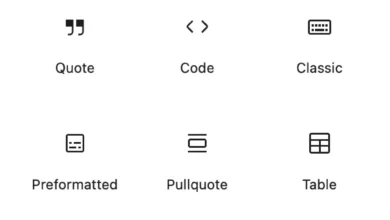
The current landscape of web content creation, particularly within modern Content Management Systems (CMS) like WordPress, Notion, Trello, or Mailchimp, has embraced the "block" metaphor for content organization. WordPress’s Gutenberg editor, for example, offers hundreds of block types for various content elements—paragraphs, images, headings, lists. However, these proprietary block ecosystems suffer from a critical limitation: a lack of extensibility and interoperability. Each platform develops its own set of blocks, and there’s no standardized mechanism for developers or users to create and share new, semantically rich block types (like "Book" or "Address" or even niche ones like "Burning Man Theme Camp") that would function universally across different editors and platforms. This forces creators to wait for platform vendors to develop every conceivable block, hindering innovation and perpetuating data silos.
An Open Standard for a Connected Web
The Block Protocol offers a "better plan" by leveraging the open principles that underpinned the original web’s success. It proposes a universal, open protocol for blocks, independent of any specific platform or vendor. The core idea is simple: if all developers agree on a common protocol for how blocks are defined, how they interact, and how they expose their semantic data, then any developer can create a block that conforms to this protocol. Crucially, any web-text-editing application can also conform to this protocol, enabling a future where a single "Book Block" developed by one person can be seamlessly used across WordPress, Notion, a custom application, or any other compliant editor.

This open approach ensures that the effort invested in creating useful, semantically rich blocks is not locked into a single ecosystem but becomes a public good, benefiting the entire web. The Block Protocol is designed to be 100% free, open, and public, removing any impediment to its adoption and encouraging widespread collaboration. While it champions open-source development for blocks, it also accommodates private or commercial blocks, fostering a flexible and diverse marketplace of structured content components. This commitment to openness positions the Block Protocol as a potential successor to the unfulfilled promise of the Semantic Web, offering a pragmatic, user-centric path to machine-readable data.
Driving Adoption: The WordPress Catalyst
Recognizing that even the most elegant protocol requires widespread adoption to succeed, the Block Protocol team has strategically focused on a key enabler: integration with WordPress. With WordPress powering an astonishing 43% of all websites globally, its ecosystem represents an unparalleled opportunity to introduce and popularize the Block Protocol. Over the past year, significant progress has been made in defining the protocol’s mechanics in a clean and straightforward manner. The most critical development is the creation of a free WordPress Plugin that allows users to embed Block Protocol-compliant blocks into their WordPress posts and pages with the same ease as any other native WordPress block.
This strategic move dramatically lowers the barrier to entry for both block developers and content creators. Developers can now build Block Protocol blocks without needing to master the intricacies of WordPress plugin development or write any PHP code, simplifying the process immensely. For content creators, the plugin makes adding structured, semantic information as intuitive as dragging and dropping. By integrating with the world’s most popular CMS, the Block Protocol ensures that any block built to its specification gains immediate, wide usability, circumventing the "chicken and egg" problem that plagued earlier semantic web initiatives. The plugin, along with version 0.3 of the Block Protocol specification, is slated for general availability in February, with early access already provided to eager developers and publishers. A compelling video demonstration showcases the seamless integration and user experience, highlighting the protocol’s potential to transform content creation.
Implications and Future Outlook
The launch of the Block Protocol, particularly its robust integration with WordPress, carries profound implications for the future of the web across multiple dimensions:
- For Content Creators and Publishers: The protocol promises to democratize structured data. Authors will no longer need to be technical experts to enrich their content with machine-readable metadata. This ease of use will lead to vastly improved Search Engine Optimization (SEO), as search engines can more accurately understand and index content, resulting in richer search results and better discoverability. Beyond search, it enables more dynamic and interactive content experiences, where information can be automatically formatted, translated, or connected to external services.
- For Web Developers: The Block Protocol offers a unified framework, reducing the need for platform-specific block development. Developers can focus on creating innovative, semantically rich blocks that are universally deployable, fostering a vibrant ecosystem of reusable components. This also encourages specialization, as developers can build expertise in specific data types (e.g., event blocks, product blocks, academic citation blocks) knowing their creations will have broad utility.
- For AI and Data Science: This initiative could unleash a torrent of high-quality, structured data into the global information commons. For AI and machine learning models, this means a significantly expanded and more reliable dataset for training, leading to more intelligent agents, more accurate data analysis, and breakthroughs in natural language understanding and automated reasoning. The dream of "machines talking to machines" moves closer to reality when the data they exchange is inherently understandable.
- For the Web Ecosystem: The Block Protocol fosters greater interoperability, breaking down the silos that currently exist between different content platforms. It paves the way for a truly interconnected web where information flows freely and intelligently, enabling new forms of aggregation, analysis, and personalized experiences. It represents a crucial step towards a more dynamic, intelligent, and useful web, moving beyond static documents to a truly intelligent information network.
While the Block Protocol holds immense promise, its success will ultimately hinge on continued community adoption and collaboration. Overcoming inertia, ensuring robust security, maintaining the openness of the standard, and fostering a diverse ecosystem of high-quality blocks will be critical challenges. However, by making semantic markup not just possible but easier and more beneficial, the Block Protocol offers a compelling and pragmatic pathway to finally realize the decades-old vision of a truly intelligent, machine-understandable web. The establishment of a Discord server for community engagement underscores the collaborative spirit intended to drive this project forward, inviting developers, content creators, and enthusiasts to participate in shaping the next evolution of online information.