The Evolution of Software Development: Rethinking the SDLC in the Age of Artificial Intelligence

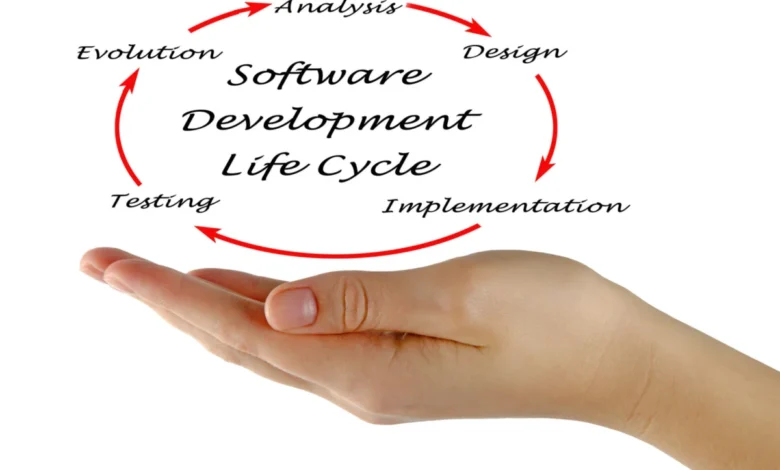
The traditional Software Development Life Cycle (SDLC), a structured methodology comprising stages such as planning, analysis, design, coding, testing, deployment, and maintenance, has long served as the bedrock for ensuring the safety, stability, and managed risk of software from its initial concept to final delivery. This systematic approach, honed over decades, was designed to bring order and predictability to complex engineering endeavors. However, its inherent rigidity, fixed assumptions, and built-in constraints are increasingly proving to be a bottleneck in the rapidly evolving landscape dominated by Artificial Intelligence. This traditional model, while robust for its era, lengthens the software delivery pipeline, restricts engineers’ capacity for flexible innovation, and ultimately limits an organization’s ability to capitalize on the unprecedented speed and capabilities that AI now offers. The imperative is not to abandon established best practices but to evolve them, forging a new paradigm that harmonizes human ingenuity with AI’s unparalleled processing power, thereby compressing delivery timelines without compromising stability or customer focus.
The Genesis and Evolution of the SDLC
The concept of a structured software development process emerged in the mid-20th century, primarily driven by the increasing complexity of early computing projects and the need for greater control and predictability. The "Waterfall model," a linear-sequential design approach, became one of the earliest and most influential SDLC methodologies. Each phase (requirements, design, implementation, verification, maintenance) had to be completed before the next could begin, offering clear documentation and ease of management for well-defined projects.
However, as software projects grew in scope and requirements became more dynamic, the Waterfall model’s inflexibility became a significant drawback. Changes late in the cycle were prohibitively expensive, leading to the rise of iterative and incremental methodologies. The late 1990s and early 2000s saw the widespread adoption of "Agile" methodologies, emphasizing iterative development, collaboration, customer feedback, and adaptability to change. Frameworks like Scrum and Kanban revolutionized how teams delivered software, prioritizing working software over comprehensive documentation and responding to change over following a plan. Agile significantly accelerated delivery cycles and improved responsiveness, becoming the dominant approach for modern enterprises.
Despite Agile’s successes, the core stages of the SDLC – planning, analysis, design, coding, testing, deployment, and maintenance – remained fundamentally intact, albeit executed in shorter, iterative sprints. The underlying assumption was still that humans would perform the vast majority of these tasks, leveraging tools for automation and collaboration. This human-centric model, even in its most agile form, is now confronting its next evolutionary leap with the advent of advanced AI and machine learning.
AI as a Catalyst for Transformation: A New Division of Labor
For years, the SDLC has adeptly managed risk, coordinated diverse teams, and facilitated the delivery of high-quality software at scale. AI does not negate the necessity for this foundational structure; rather, it fundamentally redefines how software is constructed within it. The true value of AI lies in its capacity to augment often-overworked engineers, not to supplant them. AI tools excel at synthesis, pattern recognition, rapid iteration, and the efficient execution of repetitive or simple tasks, thereby freeing human talent for higher-order cognitive functions.
Industry data strongly supports this shift. A 2023 report by GitHub, following the widespread adoption of AI coding assistants like Copilot, indicated that developers using these tools completed tasks 55% faster on average. Furthermore, a McKinsey Global Institute study projected that generative AI could automate up to 70% of software development activities, significantly enhancing productivity. These statistics underscore the profound impact AI is already having on development velocity.
The transformative impact of AI is most evident in several key areas:
-
Automating Boilerplate and Handling Maintenance Toil: AI agents are increasingly capable of generating foundational code, scaffolding new projects, and writing standard boilerplate code based on high-level prompts. This eliminates countless hours engineers previously spent on repetitive setup tasks. Beyond initial creation, AI can batch and execute repetitive maintenance work, such as dependency upgrades, security vulnerability patching, and library updates across dozens, or even hundreds, of repositories simultaneously. This frees engineers from tedious, but critical, upkeep work before meaningful feature development even begins. For instance, an AI agent can analyze a repository for outdated dependencies, identify compatible updates, generate pull requests with updated code, and even suggest necessary test adjustments, all with minimal human oversight.
-
Streamlining Documentation and Communication: AI can rapidly draft technical specifications, user stories, and bug tickets based on conversation logs, design mockups, or even code changes. It can also generate status reports and summarize project progress, significantly reducing the administrative overhead for development teams. This improves clarity, reduces miscommunication, and ensures documentation keeps pace with rapid development cycles.
-
Accelerating Testing and Quality Assurance: While humans define testing strategies and complex scenarios, AI can generate comprehensive unit tests, integration tests, and even suggest performance tests based on code analysis and usage patterns. AI-powered testing tools can identify edge cases and potential vulnerabilities far more efficiently than manual processes, leading to higher code quality and fewer post-deployment issues. A report by Forrester Research highlighted that companies adopting AI for testing saw a 25-35% reduction in testing cycles and improved defect detection rates.
-
Facilitating Code Review and Optimization: AI can act as an intelligent peer reviewer, identifying potential bugs, security vulnerabilities, performance bottlenecks, and style inconsistencies in code. It can suggest optimizations and refactorings, thereby improving code quality and maintainability before human engineers even begin their review. This proactive approach catches issues earlier, reducing the cost of remediation.
-
Direct-to-Production UI Shipping: Emerging AI capabilities allow for the direct conversion of design tool outputs (e.g., Figma files) into production-ready UI code. This dramatically shortens the front-end development cycle, bridging the gap between design and implementation with unprecedented speed.
The Enduring ‘Why’: Customer Focus and Engineering Fundamentals
While AI dramatically alters how engineers deliver code, it does not fundamentally change why they do it. The core purpose remains constant: addressing customer problems and delivering tangible value. The principles of sound engineering — robust architecture, clear ownership, reliable systems, and maintainability — do not diminish in importance; if anything, they become more critical. As AI democratizes development and accelerates the pace of code generation, the potential for introducing errors, technical debt, and security risks increases exponentially. This makes the human factor, with its emphasis on strategic oversight and accountability, more indispensable than ever.
The Human Advantage: Judgment, Context, and Empathy

As AI assumes responsibility for much of the repetitive and low-judgment work in software development, the human role undergoes a profound strategic shift. Humans possess irreplaceable qualities: judgment, contextual understanding, and empathy. These are not merely soft skills but critical capabilities that operate at the system level. Engineers are increasingly tasked with breaking down organizational silos, making complex architectural decisions, enforcing production discipline, and strategically deploying engineering resources to maximize impact.
In practice, this means an engineer’s daily activities will increasingly diverge from the traditional tasks of writing and debugging lines of code. Instead, their day will be dominated by defining intricate problems, evaluating complex trade-offs between competing solutions, and making high-stakes decisions that demand real-world experience, deep business context, and an understanding of human users. They will focus on the "what" and the "why," while AI handles much of the "how."
In this human + AI collaborative model, the most valuable engineers will be those who develop exceptional oversight capabilities for AI tools. They will operate in a strategic capacity, leveraging their judgment and understanding of nuance to guide AI, interpret its outputs, and ensure its alignment with business objectives and ethical guidelines. Crucially, they remain ultimately accountable for outcomes. This includes rigorously reviewing AI-generated code to assess its quality, identify subtle security vulnerabilities, anticipate and address edge cases that AI might miss, and ensure overall production reliability. This shift elevates the engineer from a coder to an architect, strategist, and guardian of quality.
Navigating the New Risks: Code Drift and Security Exposure
The rapid proliferation of AI-generated code introduces new challenges that demand proactive mitigation. One significant concern is "AI-generated code drift." Without a standardized layer that embeds approved architectural patterns, corporate libraries, coding standards, and stringent security requirements into every AI agent session, code generated by different AI instances or teams can quickly diverge. This lack of consistency can lead to new forms of technical debt, making maintenance more complex and introducing inconsistencies across the codebase. Furthermore, it significantly increases security exposure, especially as more developers adopt AI code generation tools without adequate guardrails.
Industry experts emphasize the need for robust governance frameworks. "The democratizing power of AI in coding is undeniable, but it also amplifies the need for centralized oversight," notes a principal software architect at a leading fintech firm. "Without a clear standardization layer, we risk exchanging development speed for long-term maintainability nightmares and critical security vulnerabilities. AI is a powerful assistant, but it needs human-defined rules of engagement."
Another critical risk lies in the potential for AI to propagate existing biases or inadvertently introduce new ones. Training data, if not carefully curated and continuously audited, can lead to AI generating code that perpetuates discriminatory practices or creates inaccessible user experiences. Ethical AI development and deployment become paramount, requiring human vigilance and intervention.
Forging the Future: Creating a New Gold Standard for Software Delivery
Modern software delivery transcends a mere handoff of manual tasks to AI. Organizations that view AI as a simple automation layer, treating it as a "bolt-on" to existing, unchanged processes, will likely achieve only incremental gains at best, and disappointment at worst. The true opportunity lies in a more fundamental paradigm shift: a complete re-architecture of the SDLC from the ground up. This involves intricately weaving humans and AI together, leveraging their respective strengths to establish a new gold standard for software delivery.
This "human + AI" model is not about replacing engineers but augmenting human capabilities with AI’s speed and scale. AI accelerates execution, handling the repetitive, data-intensive, and pattern-matching tasks. Humans, in turn, provide the indispensable judgment, contextual understanding, strategic direction, and ultimate accountability that technology cannot replicate.
The benefits of successfully implementing this symbiotic model will resonate far beyond the engineering teams. As this collaboration matures, the entire business undergoes a transformation. Products reach markets with unprecedented speed, gaining a critical competitive advantage. Software systems become inherently more reliable and secure due to AI-assisted quality assurance and human oversight. Crucially, precious engineering resources are liberated from mundane tasks, allowing them to focus their intellect and creativity on solving complex, high-value customer problems and driving true innovation. Organizations that strategically rebuild their operational models around this human + AI synergy will not only accelerate their development cycles but also elevate the quality, security, and strategic impact of their software offerings.
Broader Impact and Implications
The shift towards an AI-augmented SDLC carries profound implications across the enterprise. For business leaders, it means faster time-to-market, enabling quicker response to market demands and competitive pressures. It also translates to more efficient resource allocation, potentially reducing operational costs associated with software development and maintenance. For product managers, the ability to rapidly prototype, iterate, and deploy features based on user feedback becomes significantly enhanced, leading to more responsive and customer-centric product development.
Security teams will face a new landscape. While AI can assist in identifying vulnerabilities, the sheer volume of AI-generated code necessitates advanced AI-powered security analysis tools and highly skilled human security architects to oversee the process and ensure compliance with evolving regulations. The concept of "security by design" must be deeply embedded into the AI’s training and operational parameters.
Talent development will also undergo a significant transformation. The demand for engineers skilled in traditional coding will evolve into a demand for "AI-savvy engineers" – individuals capable of prompting, validating, integrating, and overseeing AI tools effectively. This requires a new set of skills: critical thinking, system-level design, ethical reasoning, and a deep understanding of AI’s capabilities and limitations. Universities and corporate training programs will need to adapt rapidly to cultivate this new generation of software professionals.
The Path Forward: A Continuous Evolution
The integration of AI into the SDLC is not a one-time event but a continuous evolutionary process. Organizations must foster a culture of experimentation, embracing new AI tools while maintaining rigorous standards for quality and security. This involves investing in continuous learning for engineers, establishing clear governance policies for AI usage, and developing internal frameworks for validating and monitoring AI-generated code. The ultimate goal is to create a dynamic, adaptive SDLC that can leverage the best of human and artificial intelligence, driving innovation and delivering superior software solutions at the speed of modern business. This collaborative future promises to redefine what is possible in software engineering, pushing the boundaries of creativity and efficiency in an ever-more interconnected world.