Unlocking Sales Potential: Amazon Quick Transforms Seller Productivity and Drives Revenue Growth

The modern sales landscape is increasingly complex, with professionals often finding themselves bogged down by administrative tasks that detract from their core selling activities. Recent industry analyses consistently highlight a significant productivity gap, with sales representatives dedicating as little as 40% of their workday to actual selling. The remaining time is consumed by essential, yet time-intensive, responsibilities such as updating Customer Relationship Management (CRM) systems, conducting prospect research, drafting emails, and navigating between numerous disparate software tools. This constant context-switching and administrative overhead not only diminishes efficiency but also leads to missed opportunities and a slower pace of closing deals, ultimately impacting revenue and customer satisfaction.

In response to this pervasive challenge, Amazon Web Services (AWS) has introduced Amazon Quick, an innovative AI assistant designed to revolutionize the way sales professionals operate. Quick aims to reclaim valuable selling time by transforming inquiries into actionable insights and automating lower-value tasks, enabling sales teams to focus on what they do best: engaging with customers and driving business growth. Available across various platforms, including web browsers, desktop applications, and seamlessly integrated within Microsoft 365 and Outlook, Quick empowers sales representatives to operate more effectively regardless of their environment. Early adopters, including industry giants like 3M, AWS Global Sales, and Amazon itself, are already reporting significant improvements in their sales operations, demonstrating the tangible benefits of this AI-powered solution.
The genesis of Amazon Quick stems from a deep understanding of the friction points within the sales funnel. The traditional sales cycle, from initial lead identification and qualification to nurturing relationships and closing deals, is fraught with inefficiencies. Each stage often requires manual data aggregation, research, and communication, creating bottlenecks that slow down progress and increase the likelihood of errors. By leveraging artificial intelligence, Quick seeks to streamline these processes, providing a more cohesive and intelligent workflow that supports sellers throughout their entire engagement with a prospect or customer.
Intelligent Prospect Prioritization: Focusing Efforts on High-Value Opportunities
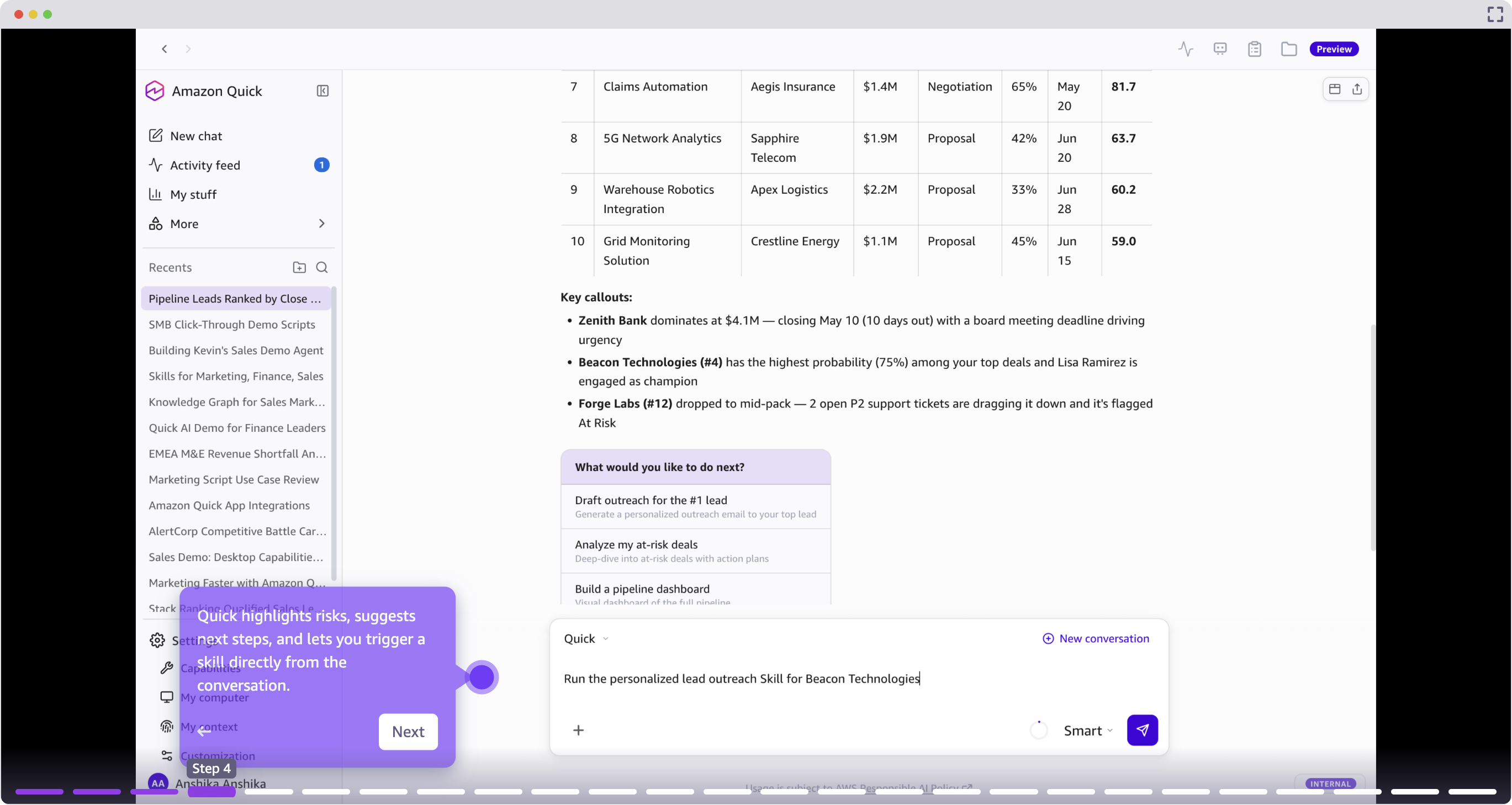
One of the most significant challenges faced by sales teams is effectively prioritizing leads from a potentially vast and unorganized pipeline. Imagine a scenario where a sales representative is presented with a list of 200 leads, each with varying degrees of engagement and historical interaction. Some may have submitted an inquiry months ago, while others recently downloaded a whitepaper or responded to a cold outreach. Without a clear understanding of which leads are most likely to convert, valuable time can be wasted pursuing less promising opportunities, or worse, high-intent prospects can be overlooked entirely. This lack of visibility can lead to elongated sales cycles and missed revenue targets.
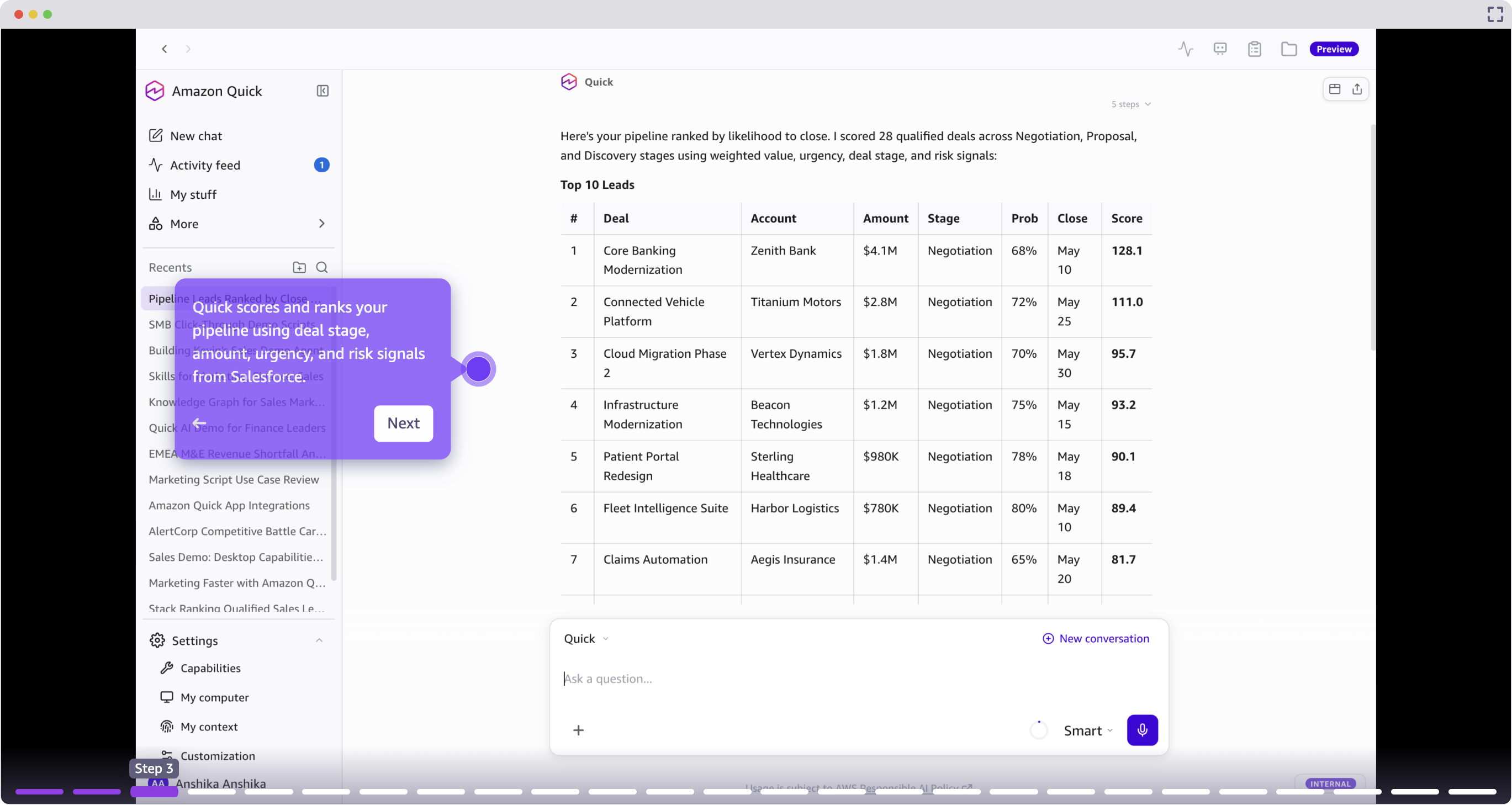
Amazon Quick addresses this critical issue by automating lead scoring and prospect prioritization. By integrating with existing CRM systems, email platforms, web analytics, and customer support tools, Quick analyzes engagement signals from these disparate sources. This analysis allows it to dynamically rank leads based on their buying intent, surfacing those that are most likely to be ready to engage. The system can be further enhanced with custom chat agents that draw context from internal documents, detailed opportunity information, and historical account data. This comprehensive approach ensures that sales representatives can dedicate their efforts to the prospects with the highest probability of conversion, thereby optimizing resource allocation and improving sales outcomes.

The integration process for Quick is designed to be straightforward, with detailed step-by-step instructions available for popular CRM platforms such as Salesforce, HubSpot, and ServiceNow, alongside broader support for other systems. Once integrated, users can leverage Amazon Quick Sight, a business intelligence service within Amazon Quick, to create interactive dashboards from their connected data sources. A natural language prompt, such as "rank my pipeline," can then be used to instruct Quick to analyze these dashboards. The AI then presents a prioritized view of the pipeline, highlighting deals that may be stalled, have overdue follow-ups, or are facing competitive pressures. This immediate, data-driven insight allows sales professionals to quickly identify and act upon the most urgent and promising opportunities.
Proactive Risk Detection and Actionable Next Steps
Beyond simply identifying promising leads, Quick also plays a crucial role in risk management throughout the sales cycle. For each active deal, the AI can detect specific risk signals. These might include stalled email threads, missed follow-up opportunities, or even mentions of competitors in customer communications. Crucially, Quick doesn’t just identify these risks; it recommends concrete next actions to mitigate them. This proactive approach empowers sales representatives to address potential roadblocks before they escalate. For instance, a seller can trigger a follow-up action directly from a conversation within Quick, eliminating the need to switch between different applications and interrupt their workflow. This seamless integration of risk identification and action planning is a significant step towards more resilient and effective sales strategies.
Crafting Resonant Outreach: Personalized Communication at Scale
The art of effective sales outreach lies in personalization. Generic, one-size-fits-all messages are increasingly ineffective in today’s crowded marketplace. Traditionally, crafting a truly personalized message required sales representatives to spend considerable time sifting through various data sources: CRM records for past interactions, internal documents for product information, external websites for company news, and professional networking sites like LinkedIn for prospect background. This manual research process is not only time-consuming but also prone to errors and omissions, often forcing sellers to resort to less impactful, generic communications.
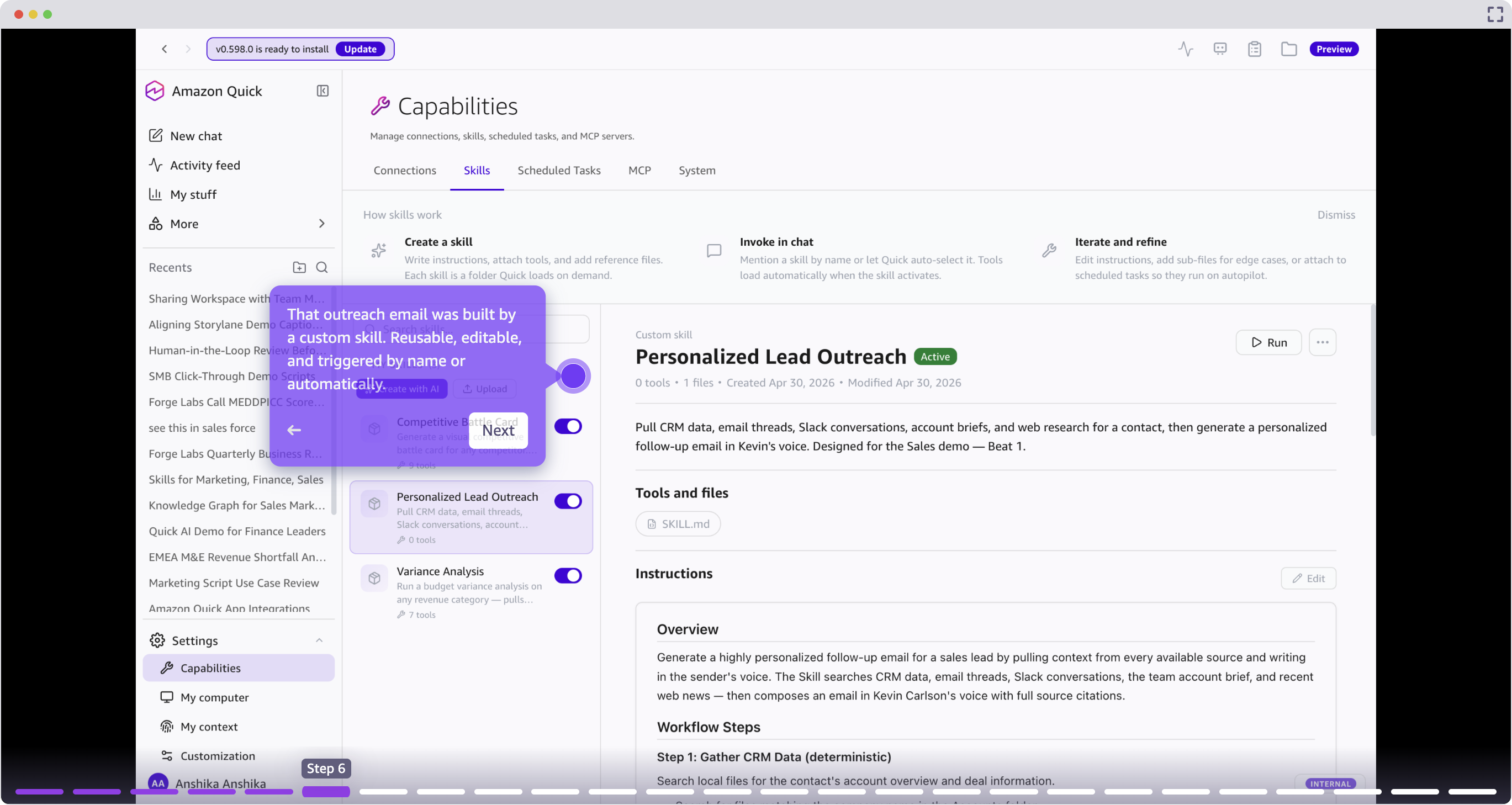
Amazon Quick fundamentally alters this dynamic by enabling the creation of highly tailored outreach messages in mere seconds. By referencing specific context such as recent company news, identified pain points from prior interactions, or relevant use cases, Quick helps sellers craft messages that resonate deeply with their prospects. This capability is powered by "skills," which are reusable, automated workflows. A sales professional can define a skill, for example, to "research a prospect by pulling data from multiple sources (CRM, email threads, Slack conversations, account briefs, and web research), then generate a personalized outreach message." This skill can then be applied to the current prospect and repurposed for future engagements across the entire sales team.
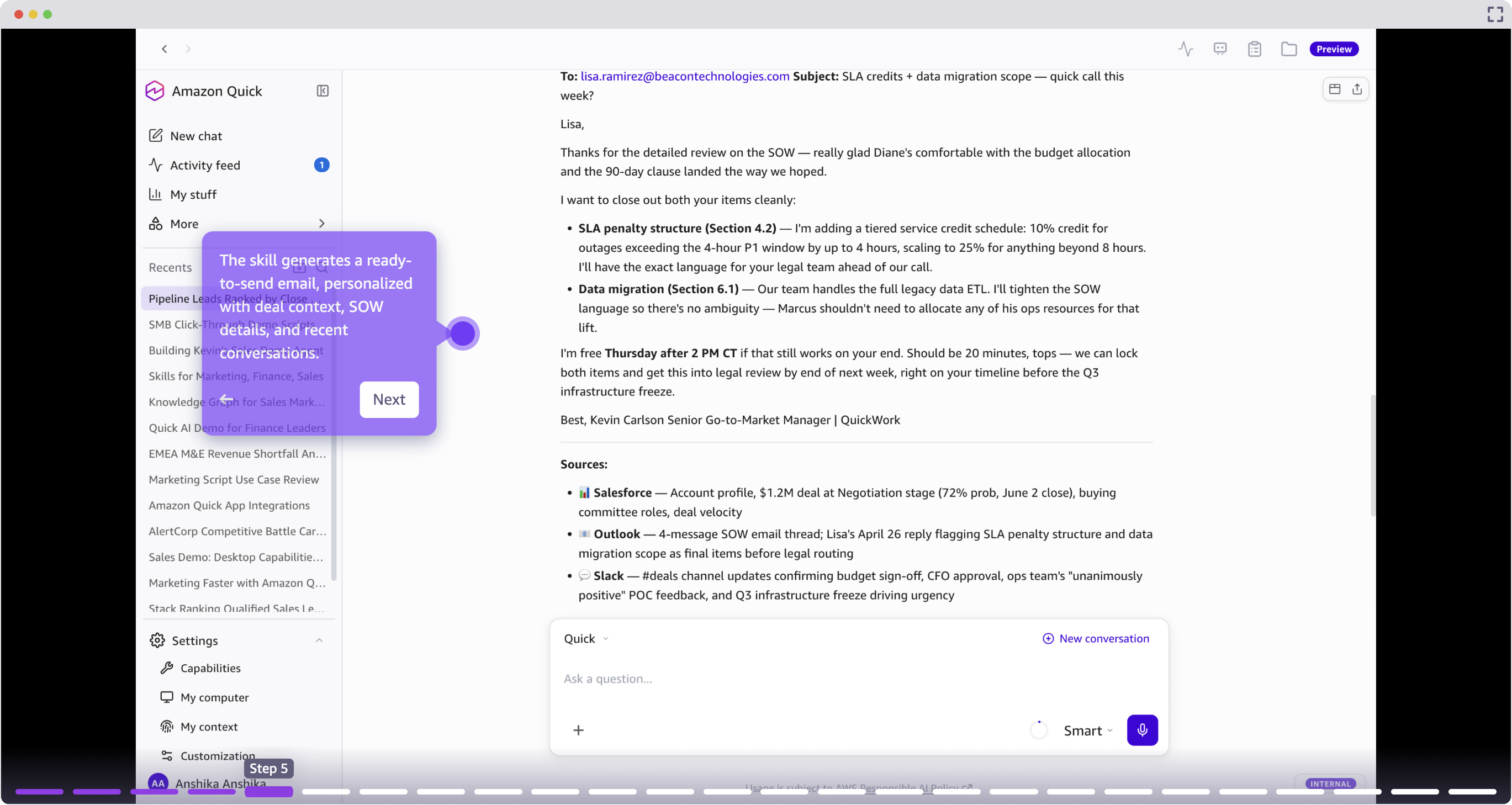
The integration with Microsoft Outlook is particularly impactful here. When integrated, Quick appears as a side panel within the Outlook interface. This allows users to generate personalized outreach emails, pull essential account context, and refine messaging without ever leaving their email client, significantly reducing context-switching and boosting efficiency. The generated emails are powered by these custom skills, which can be triggered by name or configured to run automatically based on predefined conditions. After a quick review and any necessary feedback, the email can be sent directly from Quick, ensuring that personalized communication is both efficient and effective.
Streamlining Daily Operations: The Power of the Activity Feed
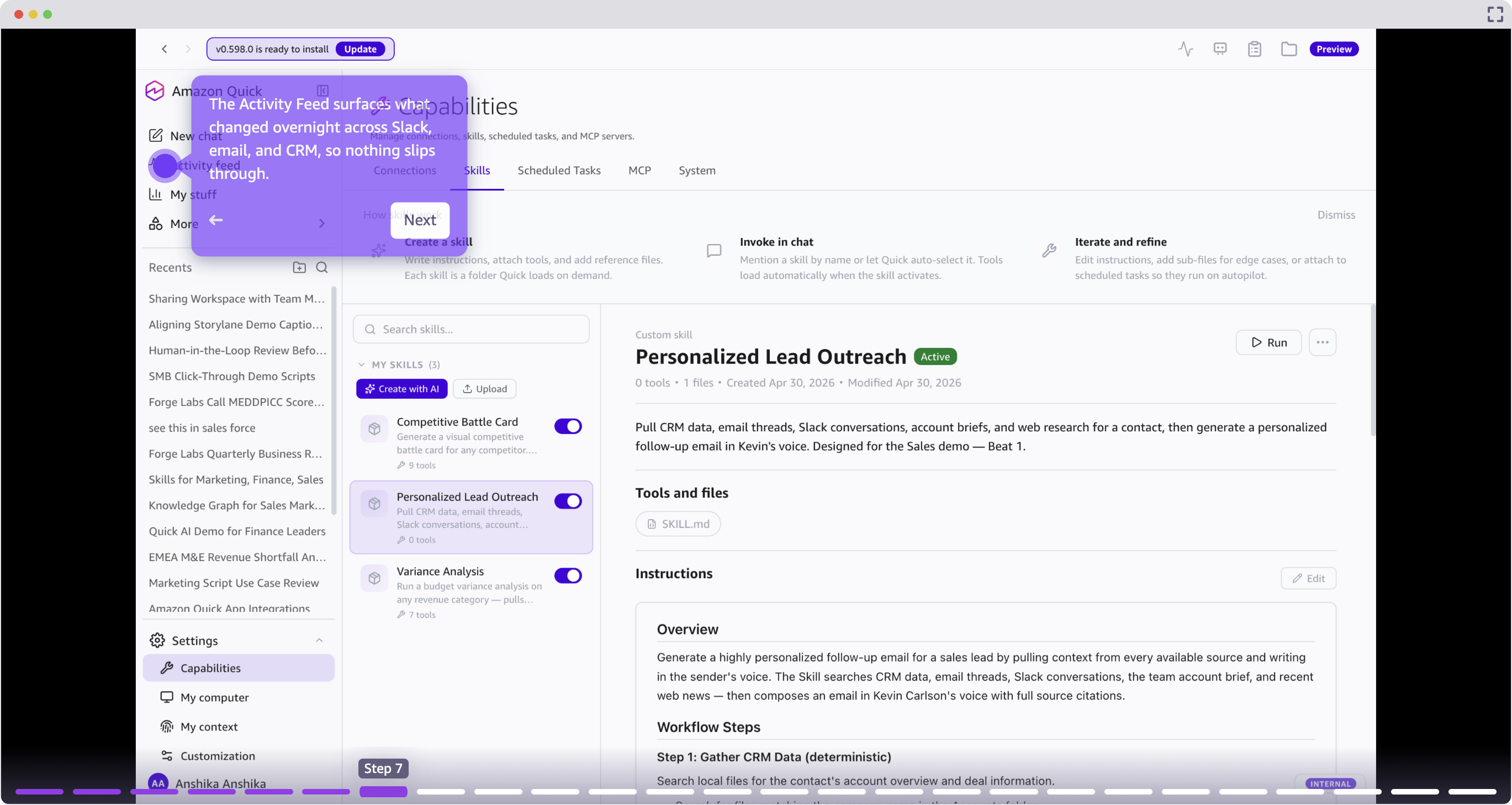
Starting the day with clarity and focus is essential for sales productivity. However, many sales professionals face the daunting task of manually sifting through emails, Slack messages, and CRM updates from the previous day to understand what requires their immediate attention. Amazon Quick’s Activity Feed consolidates these overnight changes across various connected systems into a single, prioritized view. This feed is intelligently filtered to highlight activities most relevant to a seller’s active deals, effectively replacing hours of manual triage with a consolidated, actionable overview. This allows sales representatives to begin their day by addressing the most critical tasks and engagements first, setting a productive tone from the outset.
Enhanced Account Intelligence for Confident Deal Closing
As a sales deal progresses towards a close, thorough preparation for meetings and reviews becomes paramount. Traditionally, this involved extensive manual research across multiple platforms. A seller might need to consult Salesforce for deal history, ServiceNow for support tickets, their email client for past conversations, and a search engine for industry context. Piecing together this comprehensive picture could easily consume an hour or more, diverting precious time from strategic planning.
Quick streamlines this preparation process significantly. For upcoming meetings, sellers can request Quick to generate a concise, one-page meeting prep document. This document can include an account snapshot, relevant attendee bios, suggested questions, and identified risks. This information can be further enhanced by linking Quick Chat to a Quick Space, which serves as a centralized knowledge repository for documents, data sources, and files that Quick can reference.
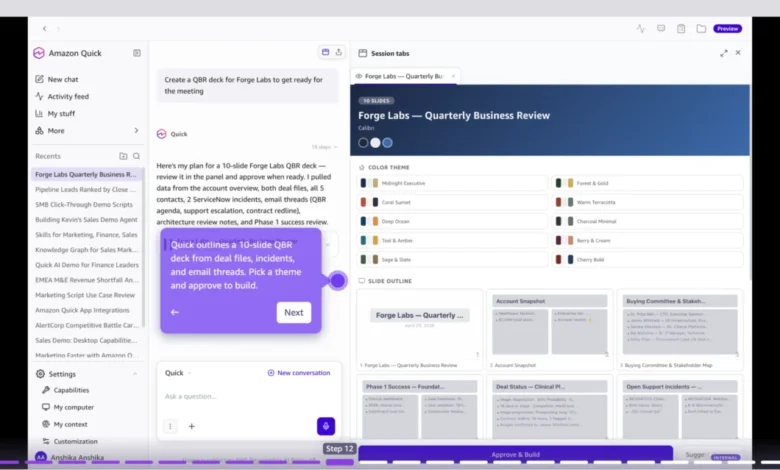
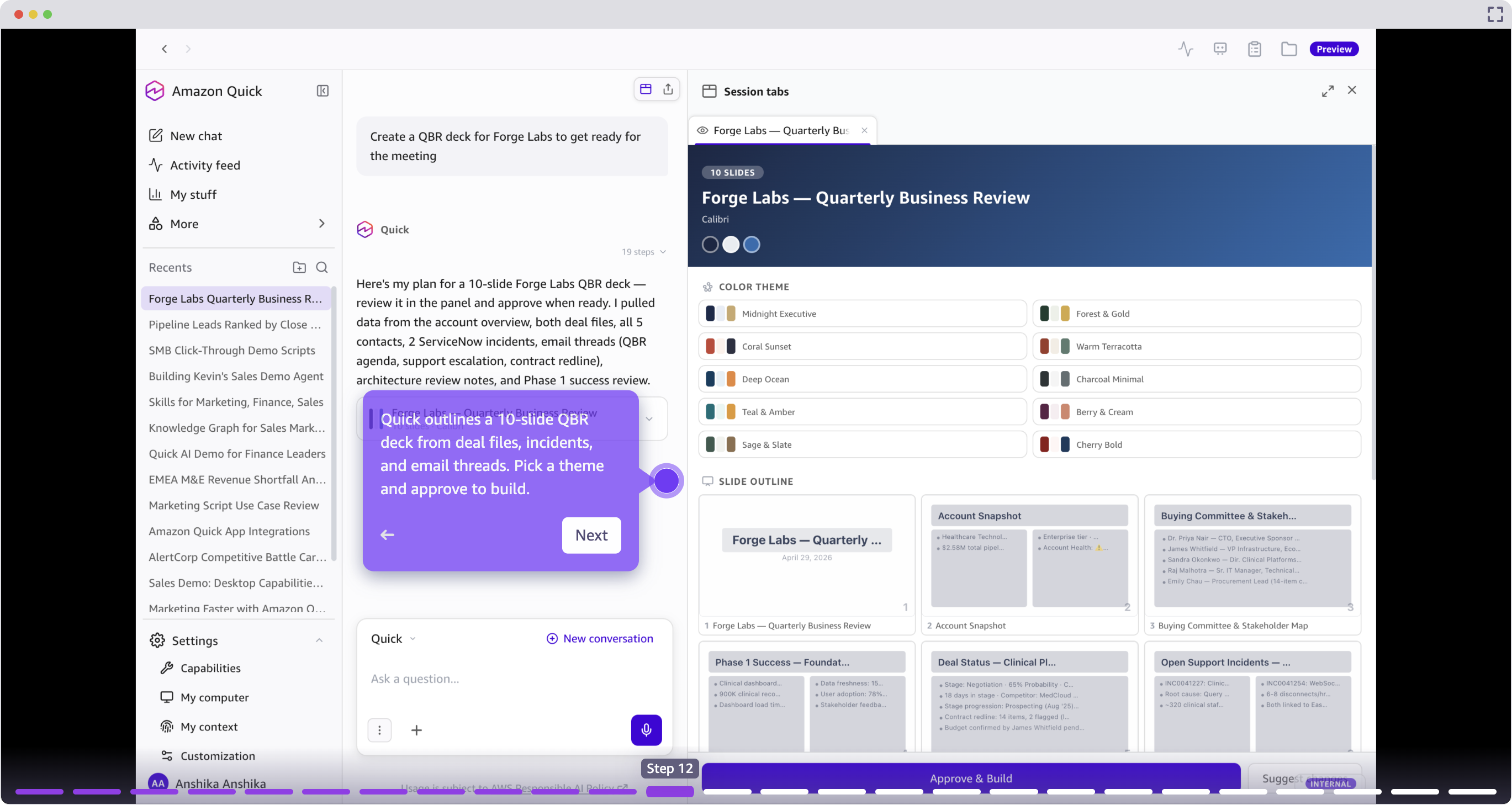
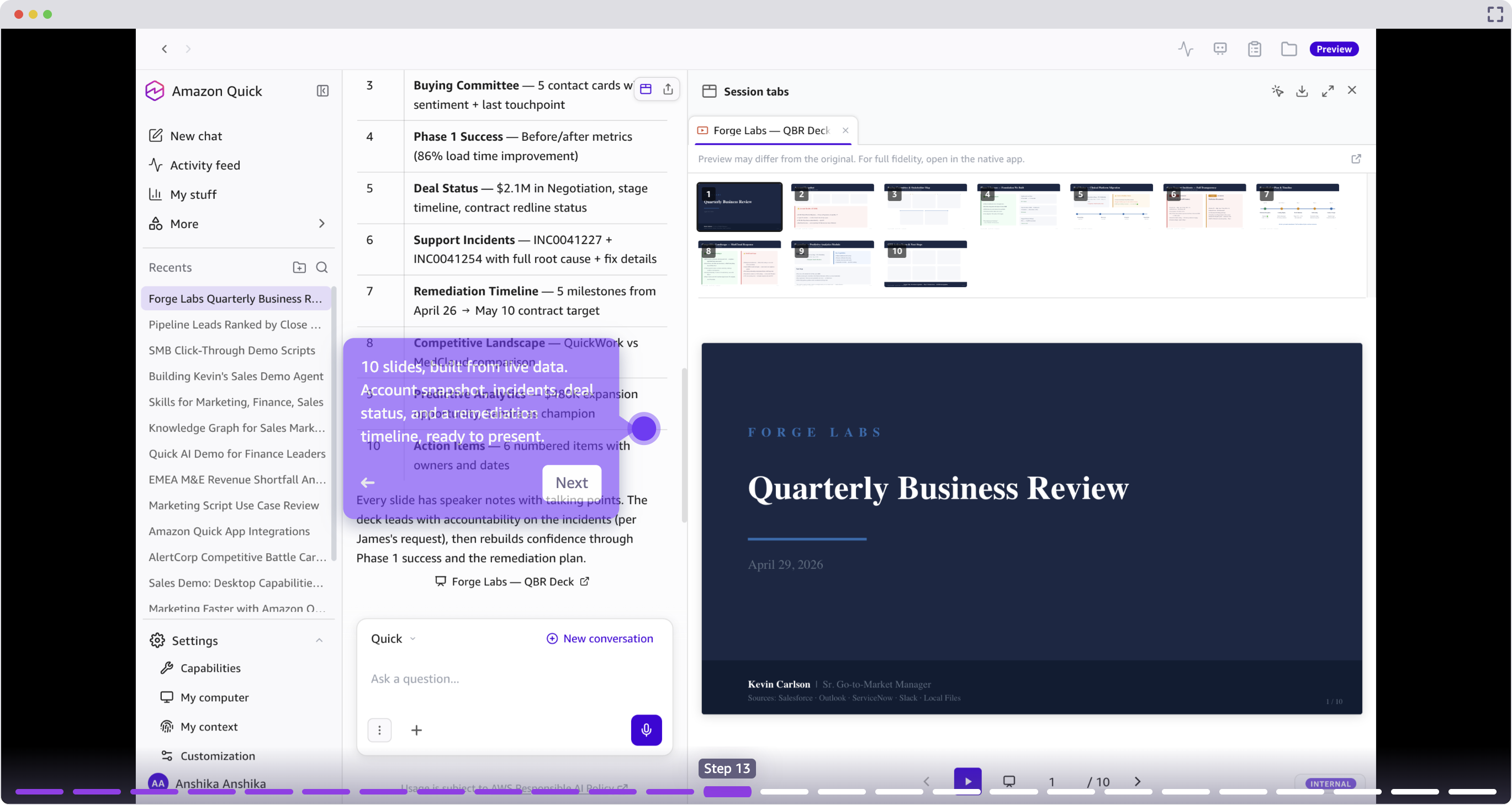
The capabilities extend even further for significant events like Quarterly Business Reviews (QBRs). Quick can automatically outline and build a full presentation deck, drawing content from deal files, support incidents, and email threads. The sales representative can then review the proposed outline, select a visual theme, and approve the deck’s construction. The resulting presentation is built from current, live data, encompassing an account snapshot, incident timeline, deal status, and remediation plan. This transformation from hours of manual assembly to mere minutes of review and refinement represents a substantial gain in efficiency and preparedness, allowing sellers to approach crucial meetings with greater confidence and a deeper understanding of their accounts.
Objective Call Evaluation: Measuring Performance Against Methodology
Effective sales methodology adherence is a cornerstone of consistent success. However, manually evaluating every sales call against a specific framework, such as MEDDPICC or BANT, is an arduous and often subjective process. Amazon Quick introduces automated call transcript scoring. Sales representatives can submit call transcripts to Quick, which then analyzes the conversation against predefined sales methodologies or custom frameworks. The AI identifies what aspects of the methodology were covered, pinpoints any gaps, and provides a structured assessment of deal health based directly on the conversation. This objective evaluation offers valuable feedback for individual sellers and can inform broader sales training and coaching initiatives.
Automating CRM Updates: Maintaining Data Integrity and Flow
Accurate and up-to-date CRM data is critical for effective sales management and forecasting. However, the manual process of logging every interaction, follow-up, and detail into a CRM system can be burdensome. Sellers often find themselves dedicating 15-20 minutes per interaction to CRM updates, a task that can be difficult to prioritize amidst customer engagements. As time passes between a meeting and the subsequent CRM update, context can be lost, and important details may be forgotten.
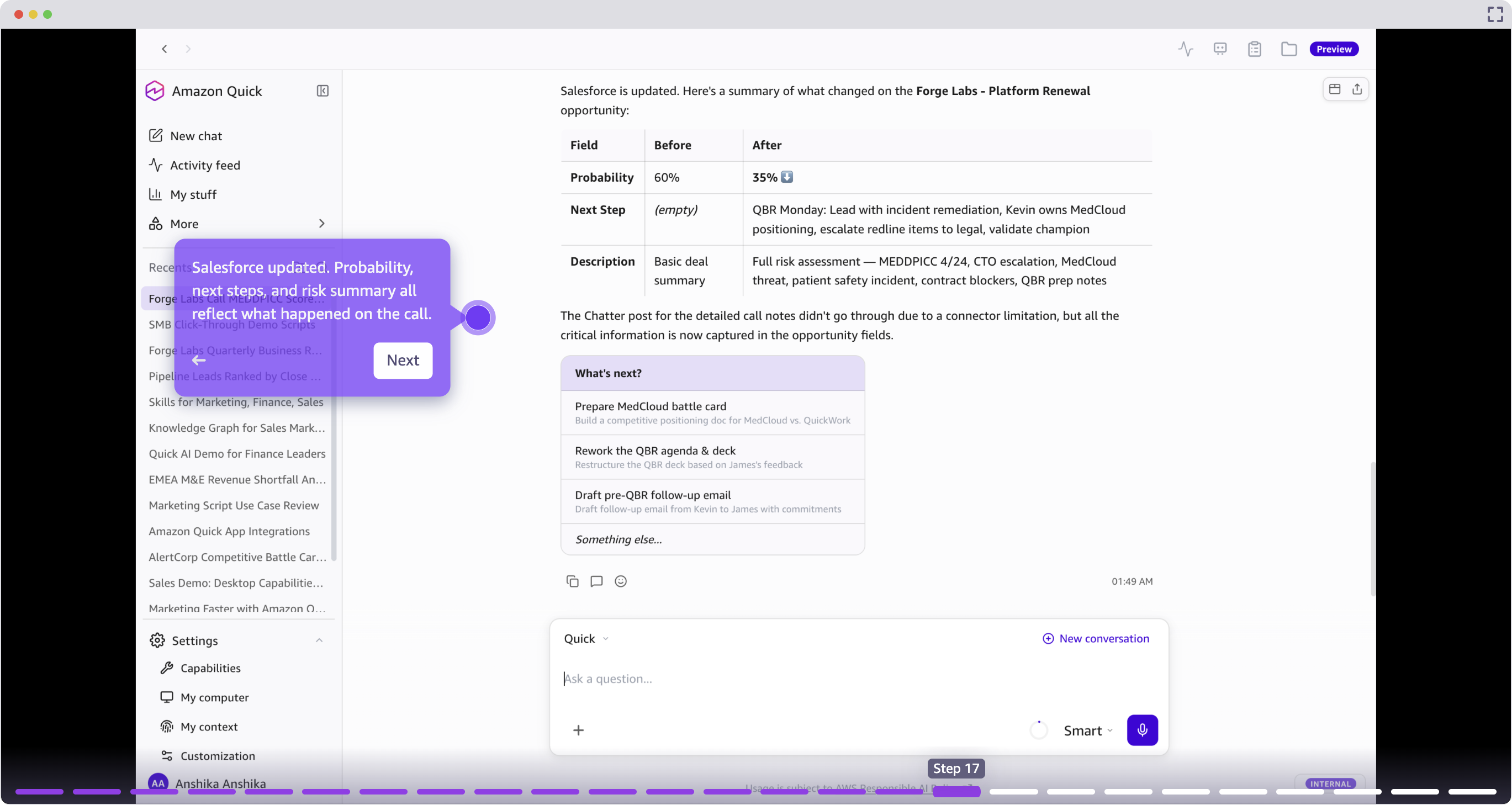
Following the analysis of a sales call or interaction, Quick can automatically push structured updates to the CRM system. This includes essential information such as updated deal probabilities, defined next steps, identified risk flags, and concise conversation summaries. By automating these data entries, Quick ensures that the system of record remains accurate and current without requiring manual intervention, freeing up sellers to focus on their core responsibilities.
Empowering Innovation: Building Custom Applications with Natural Language
Beyond automating existing workflows, Amazon Quick empowers sales and operations teams to create custom applications through natural language prompts. This capability democratizes application development, allowing users to build interactive tools without writing a single line of code. By simply describing the desired functionality, Quick can read connected data schemas and automatically scaffold a live application. This means that a sales team can, for instance, request a "custom pipeline tracker application," and Quick will generate a functional tool that pulls live data from systems like Salesforce.
These generated applications are not static; they are live, shareable, and iterable. Users can add new features, modify layouts, or connect additional data sources through subsequent natural language prompts. This allows for rapid prototyping and deployment of tailored solutions that directly address specific business needs, fostering a culture of innovation and continuous improvement within sales organizations. The ability to create role-based access controls further ensures that these custom applications are secure and accessible only to the intended users.

Visualizing Relationships: The Power of the Knowledge Graph
Understanding the intricate web of relationships within a book of business is crucial for strategic account management and identifying new opportunities. The Knowledge Graph within Amazon Quick maps these relationships between people, accounts, deals, and various interactions that Quick has observed across connected tools. Sales professionals can query this graph to understand historical relationship dynamics, identify potential warm introduction paths, and gain a comprehensive understanding of complex account structures without the need for extensive manual research. This visual representation of interconnected data provides a powerful strategic advantage, enabling more informed decision-making and relationship building.
A Unified Workflow for Uninterrupted Productivity
The capabilities demonstrated across Amazon Quick form a cohesive and interconnected sales workflow. From the initial pipeline review in the morning to personalized outreach, meeting preparation, call scoring, automated CRM updates, custom application development, and sophisticated relationship mapping, each function seamlessly leads into the next. This creates a continuous flow that keeps sellers engaged and productive, minimizing the disruptive context-switching that plagues traditional sales environments.
The summarized capabilities of Amazon Quick highlight its comprehensive approach to enhancing sales productivity:
| Capability | Function |
|---|---|
| Pipeline Scoring | Ranks deals using live CRM signals and engagement data. |
| Risk Detection | Surfaces stalled deals, competitive threats, and other potential issues. |
| Personalized Outreach | Generates context-aware email messages from deal history and external data. |
| Custom Skills | Codifies and shares reusable workflows for repetitive tasks. |
| Activity Feed | Consolidates and prioritizes overnight changes across connected systems. |
| Meeting Prep & QBR Decks | Builds presentations and prep documents from live account data. |
| Call Scoring | Evaluates call transcripts against sales methodologies. |
| CRM Updates | Pushes structured, data-rich updates to CRM systems like Salesforce. |
| Custom Applications | Builds interactive sales tools from natural language prompts. |
| Knowledge Graph | Maps and visualizes relationships across accounts and contacts. |
By enabling sales teams to start with a single workflow, such as lead scoring or CRM automation, organizations can begin to experience the transformative impact of Amazon Quick. The platform offers a clear path to reclaiming valuable selling time, fostering deeper customer relationships, and ultimately driving significant revenue growth in an increasingly competitive global market.