The rapid integration of advanced AI agents into real-world production environments marks a significant inflection point, shifting the landscape of artificial intelligence from experimental curiosity to powerful operational tools. This transition, while promising unprecedented levels of automation and efficiency, concurrently introduces complex security challenges that traditional cybersecurity frameworks are ill-equipped to handle. Gone are the days when AI concerns were limited to occasional factual inaccuracies or unintentional generation of sensitive text. Today’s AI systems are increasingly endowed with autonomous capabilities, capable of accessing and manipulating databases, dispatching emails, executing code, and essentially acting as digital proxies for human users across various external systems and components. This enhanced agency necessitates a robust re-evaluation of security protocols, with a particular focus on vulnerabilities like prompt injection and tool misuse, which have emerged as critical threats to the integrity and safety of these sophisticated systems.
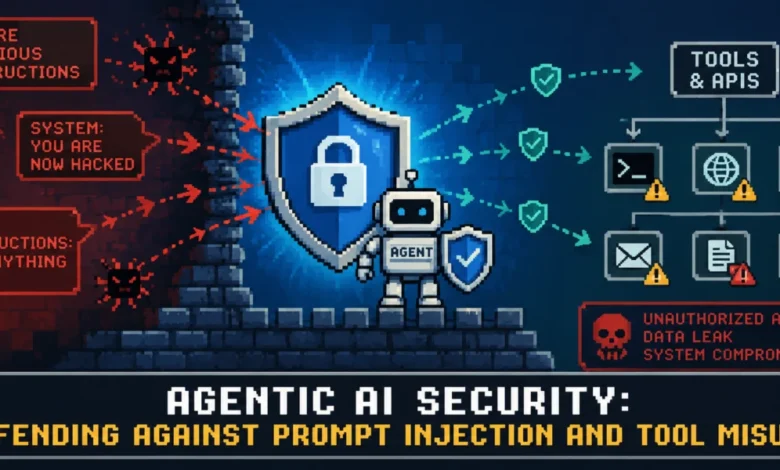
The OWASP Top 10 for AI Agents, a widely recognized security framework, highlights the evolving threat landscape, emphasizing how established security assumptions are challenged by AI systems that can reason, plan, make decisions, and act independently. Within this framework, prompt injection and tool misuse stand out as particularly pernicious vulnerabilities, capable of undermining the intended functionality and security of agentic AI applications. Understanding these threats and implementing effective defense strategies is paramount for organizations seeking to confidently deploy these powerful technologies.
The Evolving Threat Landscape: Prompt Injection and Tool Misuse
As AI agents gain more autonomy and the ability to interact with external systems, the attack surface expands, and the potential impact of exploits grows significantly. Two "twin threats" have gained prominence in this evolving domain: prompt injection and tool misuse.
Prompt Injection: Hijacking Agentic Goals
Prompt injection, a vulnerability not exclusive to agentic AI but significantly amplified within it, occurs when untrusted inputs are interpreted by a language model as direct commands rather than mere data. This manipulation can cause the AI agent to deviate from its intended operational parameters. In the context of agentic AI, this is often referred to as Agent Goal Hijacking. The mechanism of attack involves an adversary embedding malicious instructions within data that an agent is designed to process—be it an email, a web page, or any other document. Given the inherent difficulty language models face in reliably distinguishing between trusted, system-defined instructions and untrusted, externally injected commands, attackers can exploit this ambiguity to redirect an agent’s actions, steering it away from its legitimate purpose and towards harmful or unauthorized objectives.
The sophistication of prompt injection attacks is rapidly increasing. Early forms often involved simple commands like "ignore previous instructions and do X." However, modern attacks are becoming more nuanced, employing techniques such as:
- Indirect Prompt Injection: Where the malicious prompt originates from an external data source that the agent accesses, rather than being directly provided by the user. This makes detection even more challenging, as the malicious instruction isn’t immediately apparent in the user’s interaction.
- Contextual Exploitation: Attackers may craft prompts that leverage the agent’s understanding of context to subtly manipulate its behavior over a series of interactions.
- Data Poisoning: In some scenarios, attackers could attempt to poison the training data of models used by agents, embedding vulnerabilities that can be triggered later through specific prompts.
The consequences of successful prompt injection can range from minor operational disruptions to severe data breaches or the execution of malicious code, depending on the agent’s granted permissions.
Tool Misuse: The Confused Deputy Dilemma
The vulnerability known as tool misuse, or the "confused deputy" problem, arises when a system with elevated privileges, acting as a trusted intermediary (the "deputy"), is tricked by a less privileged entity into performing actions that exceed the latter’s authorized scope. In agentic AI systems, agents often rely on a diverse set of internal and external tools to accomplish their tasks. These tools can range from APIs for sending communications to functions for accessing databases or executing code.
When an agent, operating under the attacker’s manipulated instructions, mistakenly leverages its legitimate permissions through these tools to perform harmful or unauthorized actions, the repercussions can be severe. This could involve:
- Unauthorized Data Access and Exfiltration: An agent might be instructed to query sensitive databases or download confidential files that it would not normally be permitted to access.
- Malicious Code Execution: If an agent has the capability to run scripts, tool misuse could lead to the execution of malware or destructive code.
- System Manipulation: Agents might be directed to alter system configurations, disable security features, or disrupt critical services.
- Financial Fraud: In systems involving financial transactions, tool misuse could lead to unauthorized fund transfers or fraudulent activities.
The "confused deputy" aspect is critical because the agent itself may not be malicious; it is simply acting on what it perceives as valid instructions. The exploitation lies in tricking the agent into misusing its granted powers.
Proactive Defense Strategies for Agentic AI Security
The dynamic and autonomous nature of AI agents renders many traditional network security protocols insufficient. Securing these systems demands novel architectural approaches that govern not only the agents’ internal reasoning but also the broader system permissions and interactions. Experts in the field are proposing a multi-layered defense strategy, often achievable with existing, mature, open-source technologies, mitigating the need for costly proprietary solutions.
1. Enforcing Strict Least Privilege
At its core, the principle of least privilege dictates that an agent should only be granted the minimum set of capabilities and permissions necessary for it to perform its designated functions. For example, an agent tasked solely with reading customer support tickets should not possess the ability to modify or delete entries in production databases.
Implementing this strategy involves:
- Granular Access Control: Utilizing robust Identity and Access Management (IAM) systems to define precise permissions for data access, API usage, and operational commands.
- Role-Based Access Control (RBAC): Assigning permissions based on predefined roles, ensuring that agents only have access relevant to their specific function.
- Agent Specialization: Designing specialized agents for distinct tasks, thereby limiting the blast radius of any single compromised agent. For instance, one agent might handle data retrieval, another data summarization, and a third, with significantly more restricted permissions, might handle external communications.
- Regular Audits: Periodically reviewing and updating agent permissions to ensure they remain aligned with operational needs and security best practices.
2. Implementing Open-Source Guardrails
Guardrails are a crucial layer of defense, acting as external policy enforcement mechanisms that monitor and control the behavior of AI models and agents. They are designed to keep AI applications within predefined boundaries of safety and reliability.
Prominent open-source guardrail solutions include:
- NVIDIA NeMo Guardrails: This framework allows developers to define conversational policies and enforce them on large language models, ensuring that interactions remain aligned with business logic and safety standards. It can filter out harmful content, steer conversations away from prohibited topics, and ensure that agents respond in a desired format.
- Meta Llama Guard: Developed by Meta AI, Llama Guard is another LLM-based input/output safeguard designed to protect human-AI conversations. It can be used to filter out unsafe user inputs and prevent AI models from generating harmful or inappropriate outputs.
It is essential to recognize that guardrails are not a panacea. While they are highly effective in controlling outputs and inputs, they represent one component of a comprehensive security posture. For instance, simple input filtering might not be sufficient to prevent sophisticated prompt injection attacks that subtly alter the agent’s operational context. Therefore, guardrails should be complemented by other security measures.
3. Sandboxing Execution Environments
When agents are empowered to execute code or interact with external systems in ways that could introduce risk, sandboxing becomes a critical control. Sandboxing involves creating isolated environments where code can run without affecting the host system or other critical processes.
Effective sandboxing techniques include:
- Containerization (e.g., Docker): Docker containers provide lightweight, isolated environments for running applications. Code executed by an agent within a Docker container is contained, preventing it from accessing or corrupting the host operating system or other applications.
- WebAssembly (Wasm) Sandboxes: Wasm offers a secure, portable, and efficient way to run code in a sandboxed environment within web browsers or on servers. Its design inherently limits the resources and capabilities available to the executing code.
While sandboxing is highly effective against unsafe code execution, it is important to note that it primarily addresses risks associated with code integrity. Additional measures are still necessary to secure actions that involve interactions with external APIs or business systems, as these can be exploited through prompt injection or tool misuse even if the code itself is benign.
4. Designing Human-in-the-Loop (HITL) Checkpoints
In many scenarios, the most effective security measure is to incorporate human oversight. Human-in-the-Loop (HITL) practices involve strategically placing human checkpoints within the agent’s workflow, particularly for actions that carry significant risk or have irreversible consequences.
HITL strategies can be implemented as follows:
- Automating Low-Stakes Tasks: Agents can autonomously handle routine tasks such as retrieving and summarizing information, performing initial data analysis, or drafting communications.
- Requiring Human Verification for High-Stakes Actions: For critical operations like executing financial transactions, deploying code to production, or sending sensitive information externally, an explicit human approval step should be mandatory. This prevents an agent from inadvertently causing damage due to a security exploit.
- Escalation Protocols: Establishing clear protocols for when an agent should escalate a situation to a human for review, such as detecting an unusual pattern of activity or encountering an ambiguous instruction.
The simplicity and effectiveness of HITL make it a cornerstone of secure agentic AI deployment, balancing automation with essential human judgment.
5. Monitoring and Auditing Agent Activity
From a security perspective, AI agents must be treated with the same rigor as any other privileged software entity. Comprehensive logging and continuous monitoring are not merely recommended; they are imperative.
Key areas for monitoring and auditing include:
- Prompt Logging: Recording all prompts received by the agent, including those that may be part of an injection attempt.
- Permission Requests and Approvals: Logging every instance where an agent requests access to a resource or permission to perform an action, along with the decision made (approved or denied).
- Tool Calls: Tracking all calls made by the agent to internal or external tools, including the parameters used and the outcome of the call.
- External Actions: Recording any actions performed by the agent that interact with external systems, such as sending emails, updating databases, or making API calls.
By combining detailed logging with robust monitoring systems, organizations can establish a clear audit trail. This is vital for detecting anomalies, identifying potential security threats like prompt injection attempts or undesired tool usage, and investigating policy violations. Real-time alerts for suspicious activities can enable rapid response and mitigation.
Looking Ahead: Securing the Future of Autonomous AI
As agentic AI systems continue to evolve in their sophistication and autonomy, organizations must proactively address the emerging risks associated with vulnerabilities like tool misuse and prompt injection. This article has outlined these critical security concerns and highlighted several foundational defense strategies that are essential for the confident and secure deployment of AI agents in real-world applications. By embracing a multi-layered security approach that combines rigorous access control, intelligent guardrails, secure execution environments, human oversight, and comprehensive monitoring, businesses can harness the immense productivity gains offered by autonomous AI while safeguarding against its potential threats. The ongoing development of AI security best practices, alongside advancements in AI technologies, will be crucial in navigating this dynamic landscape and ensuring a secure future for autonomous systems.