The Agentic Era Demands Continuous Post-Training: NVIDIA’s Platforms Drive Intelligence per Dollar

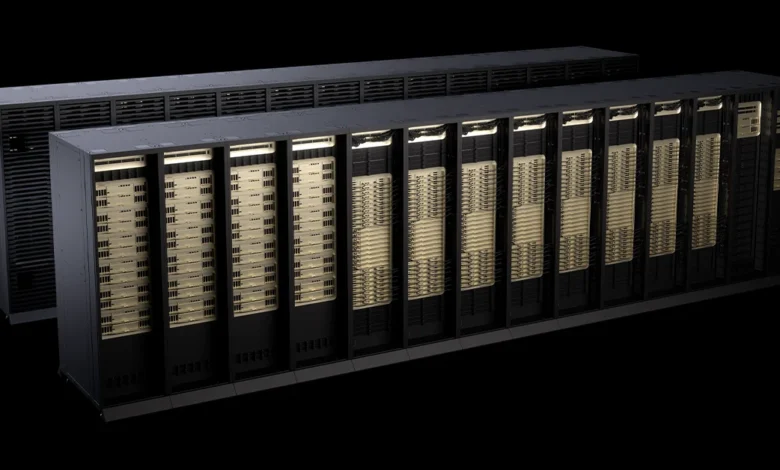
The evolution of artificial intelligence is entering a new phase, moving beyond static models to dynamic, adaptable systems known as agentic AI. This shift necessitates a fundamental reimagining of the AI development lifecycle, with post-training emerging as the critical, continuous engine for driving intelligence and efficiency. Companies are increasingly recognizing that the true value of AI lies not just in initial training, but in the ongoing refinement and adaptation that mirrors the dedication of elite athletes. This continuous improvement loop, powered by advanced hardware and software platforms, is becoming the central workload of the agentic era and the primary driver of intelligence per dollar.
At its core, agentic AI operates on a different paradigm than its generative predecessors. Instead of simply responding to prompts with pre-learned knowledge, agentic models are tasked with achieving specific goals. This requires them to plan, interact with diverse environments, utilize a growing array of tools, and crucially, to learn from and recover from errors encountered during operation. This inherent need for adaptability means that the post-training phase, traditionally viewed as a one-time finishing step after initial data ingestion, is now a perpetual process. The digital and physical environments in which these agents operate are in constant flux, with tools being updated weekly, unforeseen edge cases surfacing in real-world deployments, and each new integration bringing unique codebases, policies, and environmental variables.
This continuous refinement loop generates a new compute pattern. The computational footprint of agentic AI doesn’t necessarily grow from larger individual runs, but from the sheer persistence and cyclical nature of these post-training operations. As new challenges and opportunities arise from production deployments, feedback loops are established, feeding back into the post-training process. This makes post-training the central workload, and consequently, the primary determinant of "intelligence per dollar"—a metric that encapsulates the cost-effectiveness of an AI model’s capabilities. The ultimate objective is to maximize the yield of every computational pass within this continuous learning cycle, thereby optimizing the value derived from every unit of compute spent.
Understanding Agentic Post-Training: From Fluency to True Intelligence
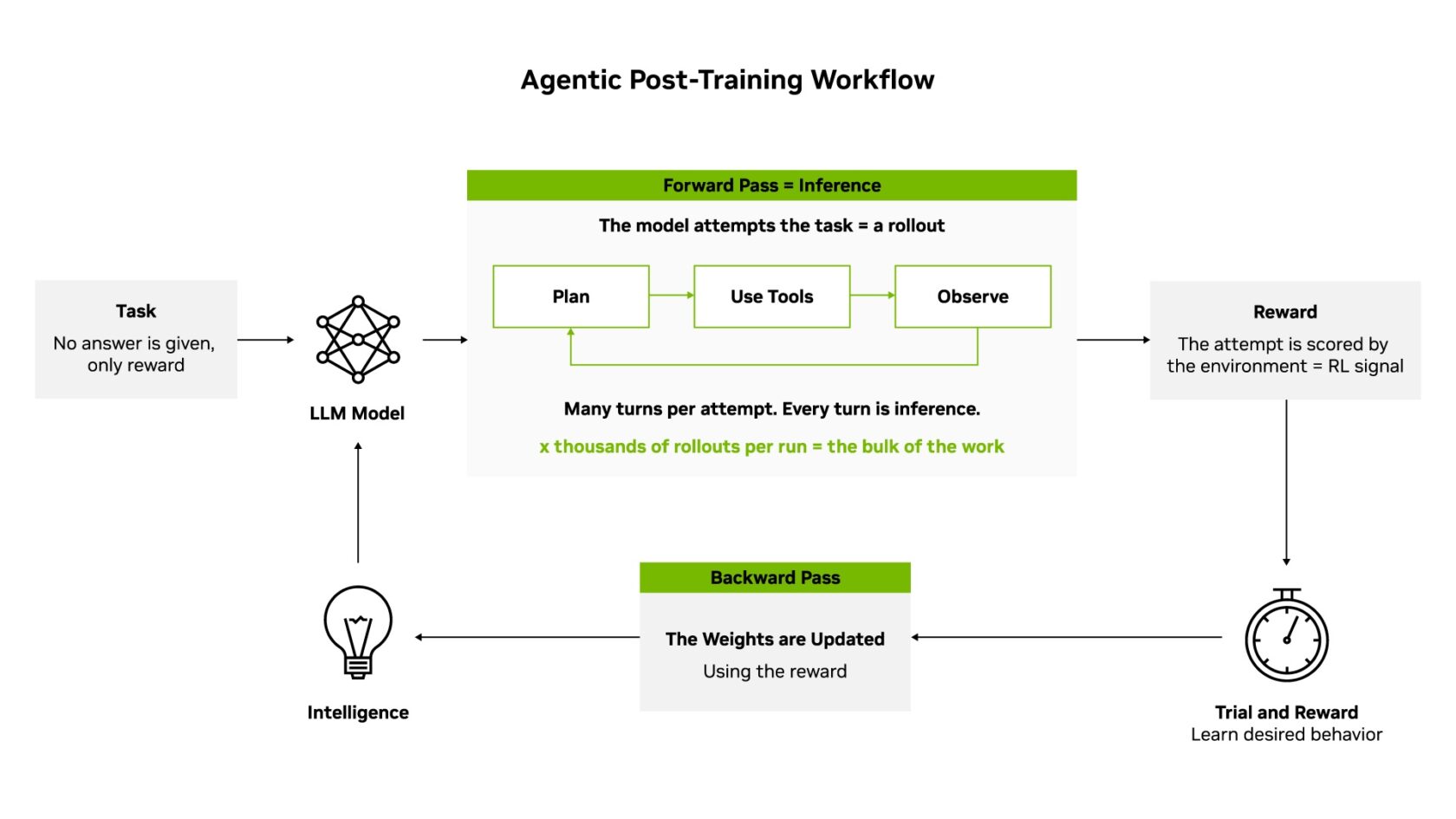
The distinction between pre-training and post-training is fundamental to grasping the intelligence gained by agentic AI. During pre-training, models learn to predict the next token in a sequence. This process imbues them with remarkable fluency and a broad understanding of language and patterns, akin to a student memorizing vast amounts of information. However, this does not equate to true intelligence. Intelligence, in the context of agentic AI, emerges during post-training. This is where models learn to perform complex tasks such as writing code, devising multi-step plans, effectively using external tools like search engines, and developing the resilience to recover from unexpected failures. Inference, the subsequent stage where the model is deployed for its intended task, is then measured by its cost per token, reflecting the operational efficiency of delivering AI-generated output.
The learning mechanism employed in post-training is primarily reinforcement learning (RL). Unlike supervised learning, which relies on labeled data with definitive "correct" answers, RL operates on a reward system. When presented with a task, the agent attempts to complete it—this is the forward pass, mirroring the work it would perform in production. This attempt is then evaluated, and a reward signal is generated. This feedback loop, through the backward pass, updates the model’s internal weights, reinforcing successful strategies and discouraging unsuccessful ones. Over millions of such attempts and subsequent learning cycles, the agent’s intelligence and capability steadily grow.
The sheer scale of this process presents significant computational and orchestration challenges. Thousands of simulated environments must generate parallel rollouts, rewards need to be meticulously verified, and updated model weights must be efficiently fed back into the training pipeline, all while ensuring optimal utilization of powerful accelerators. NVIDIA has been at the forefront of addressing these complexities, developing open libraries like NeMo Gym for creating diverse training environments and NeMo RL for distributed post-training. These tools aim to transform the bespoke, research-intensive nature of post-training into a robust, repeatable, and scalable infrastructure.
The Symbiotic Relationship: Intelligence per Dollar and Cost per Token
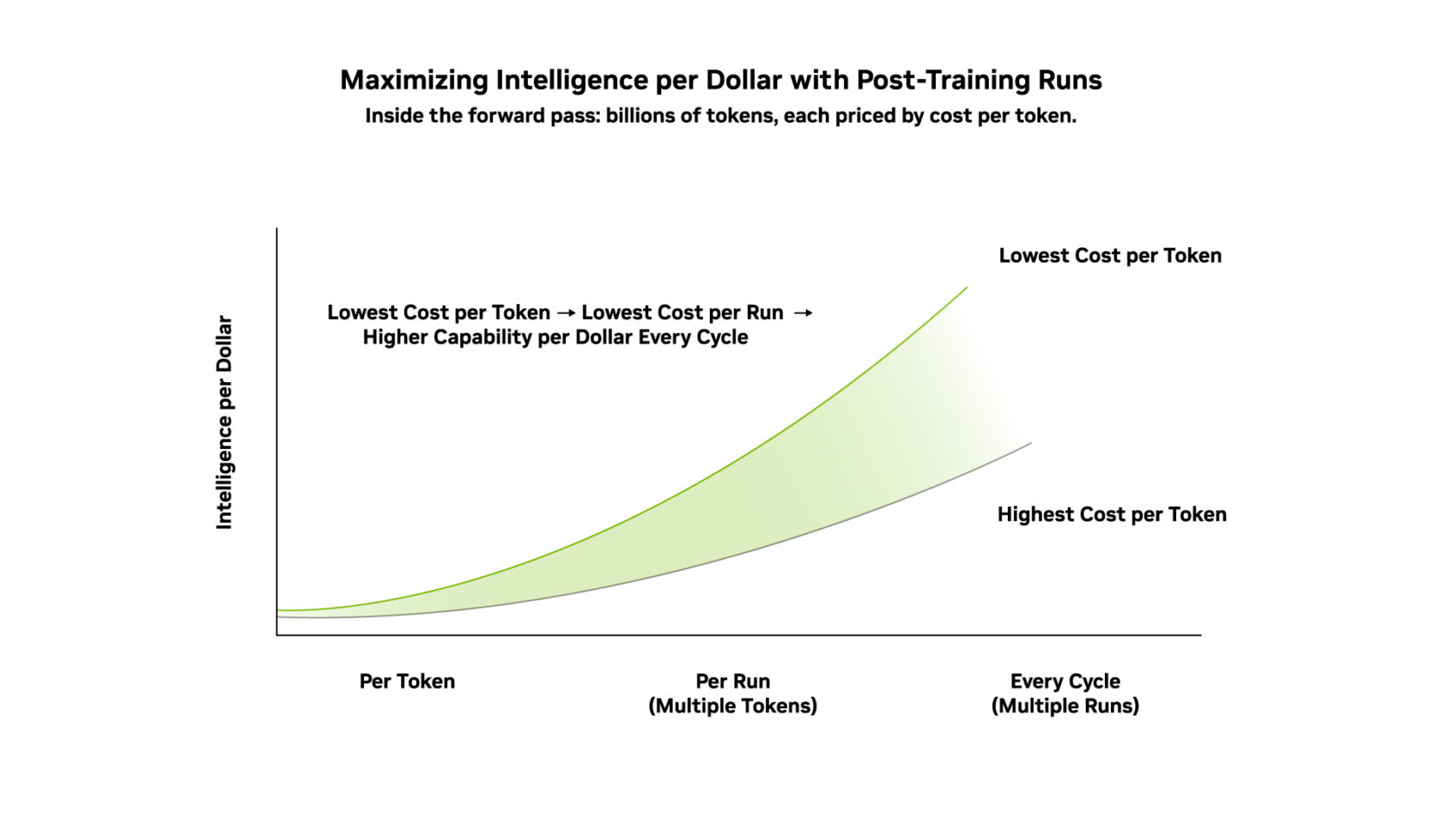
The economic viability of agentic AI hinges on the interplay between operational cost and intellectual value. While cost per token is the key metric for the "inference factory"—measuring the all-in cost of delivering a specific volume of output—intelligence per dollar operates at a higher strategic level. It asks a more profound question: what is the cost of developing and maintaining a model that is not only capable but also adaptable and valuable in a dynamic environment?
These two metrics are not in opposition but are intrinsically linked. AI infrastructure that successfully reduces the cost per token simultaneously lowers the expense associated with building and refining each point of intelligence within a model. Conversely, every increment of intelligence embedded into a model enhances the value and utility of every token it serves during inference. In essence, cost per token quantifies the operational efficiency, while intelligence per dollar assesses the return on investment in a model’s learning and adaptability.
NVIDIA’s commitment to advancing AI infrastructure is particularly evident in its latest platforms, designed to maximize intelligence per dollar for the demanding workloads of the agentic era. The NVIDIA Blackwell platform, for instance, is engineered to reduce the cost of each post-training run, making the continuous learning cycles essential for agentic AI economically feasible. The intelligence gained through these cycles is then leveraged across every token served, creating a compounding effect on value.
Pushing the Frontier: The NVIDIA Vera Rubin Platform and Nemotron 3 Ultra
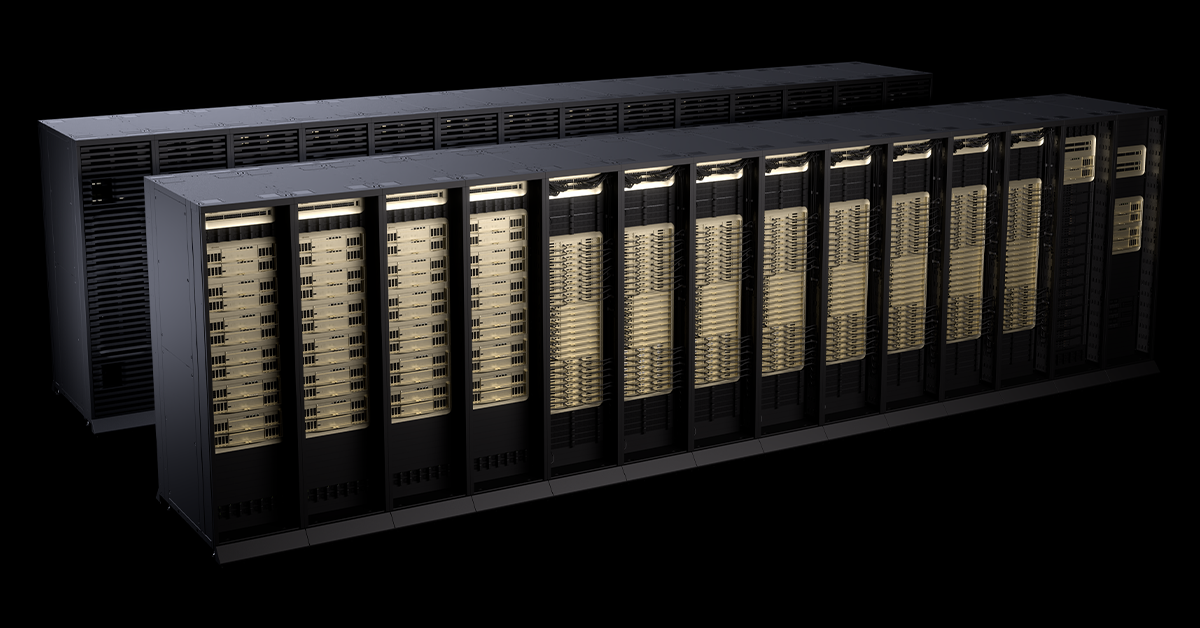
Further extending this trajectory is the NVIDIA Vera Rubin platform, which is specifically designed for training the largest models with unprecedented efficiency. It utilizes significantly fewer GPUs compared to previous generations, a testament to its end-to-end co-design for maximizing intelligence per dollar. This platform is built to handle the relentless demands of agentic post-training, enabling more rollouts per run, supporting a greater number of concurrent environments, and facilitating continuous training cycles that never cease.
A prime example of this advancement is NVIDIA Nemotron 3 Ultra, an open-weight, 550-billion-parameter mixture-of-experts (MoE) model. This model boasts verifiable benchmarks and a transparent post-training methodology executed on the NeMo RL framework. Its performance on SWE-bench, a standard real-world coding benchmark, is particularly noteworthy. Nemotron 3 Ultra achieved a 71.7% success rate, successfully producing working fixes for approximately seven out of every ten real software bugs sourced from open-source projects. Each fix was rigorously validated against the respective project’s own testing suites, underscoring the practical intelligence and reliability of the post-training process.

The illustrative data for Nemotron 3 Ultra highlights the scale involved. Based on prior-generation Nemotron 3 Super’s approximately 1.2 million rollouts, each averaging around 10,000 tokens, the Ultra model’s 20 billion rollout tokens represent a significant scaling up. While the absolute values will vary with token counts, the intelligence per dollar achieved between platforms remains independent of these scaling assumptions, emphasizing the underlying efficiency gains.
The economic impact of these platforms is substantial. By lowering the cost per run and optimizing compute utilization, NVIDIA’s hardware and software ecosystem makes the continuous post-training required for agentic AI not just possible, but profitable. This translates directly into higher-value AI services and applications for businesses.
Real-World Implementations: Pushing the Boundaries with Industry Partners
Leading organizations are already leveraging these advanced platforms to drive their agentic AI initiatives. Prime Intellect’s Lab, for instance, continuously post-trains frontier open models on the NVIDIA Blackwell platform and utilizes NVIDIA Dynamo for inference orchestration. With the advent of Vera Rubin, Prime Intellect plans to further scale its reinforcement learning environments, generate an even greater volume of rollouts per run, and accelerate the iterative loops between training and inference, all with the objective of maximizing intelligence per dollar for its business clients.
Prime Intellect has also integrated its sandbox infrastructure with NVIDIA Vera CPUs, achieving low-latency and energy-efficient reinforcement learning. Their adoption of open-source tools and models, including NVIDIA Nemotron and NVIDIA NeMo Gym, demonstrates a comprehensive approach to building intelligent agents. Comparative analyses of their RL sandbox workloads against alternative x86 architectures have revealed that Vera CPUs deliver, on average, a 30% greater throughput per CPU, highlighting the hardware advantage for these specific computational tasks.
Perplexity AI’s RL post-training stack operates asynchronously across hundreds of NVIDIA GPUs. Their system incorporates an RDMA-based weight transfer engine, capable of synchronizing trillion-parameter models between training and inference compute nodes in under two seconds. The resulting post-trained Qwen3 235B models are then efficiently served on NVIDIA GB200 NVL72 systems, showcasing a seamless integration from intensive training to high-volume inference.
Together AI is providing post-training as a managed service, encompassing supervised fine-tuning, reinforcement learning, and direct preference optimization. Delivered through a feature-rich API and SDK on their AI Native Cloud platform, this service has been optimized on NVIDIA’s platform and its specialized kernel libraries. The company is now looking to leverage the capabilities of the Vera Rubin platform to further enhance its offerings.
The implications of this continuous post-training paradigm are far-reaching. As agentic AI becomes more sophisticated and integrated into critical business processes, the ability to rapidly adapt, learn, and improve becomes paramount. Platforms like NVIDIA Vera Rubin are not merely hardware upgrades; they represent a fundamental shift in how AI is developed and deployed, enabling an era where intelligence is not a fixed attribute but a perpetually evolving, economically optimized asset.
Organizations seeking to remain at the forefront of AI innovation are increasingly turning their attention to these integrated hardware and software solutions. The focus is shifting from simply acquiring AI models to building AI factories—robust, scalable systems capable of continuous learning and adaptation. This ongoing evolution promises to unlock new levels of performance, efficiency, and value from artificial intelligence, driving transformative changes across industries. The pursuit of maximum intelligence per dollar in the agentic era is no longer a theoretical concept but a practical imperative, shaping the future of AI development and deployment.