Jeff Atwood and Leo Laporte Launch ‘Off By One’ on TWiT Network, Blending Tech Insights with Societal Commentary

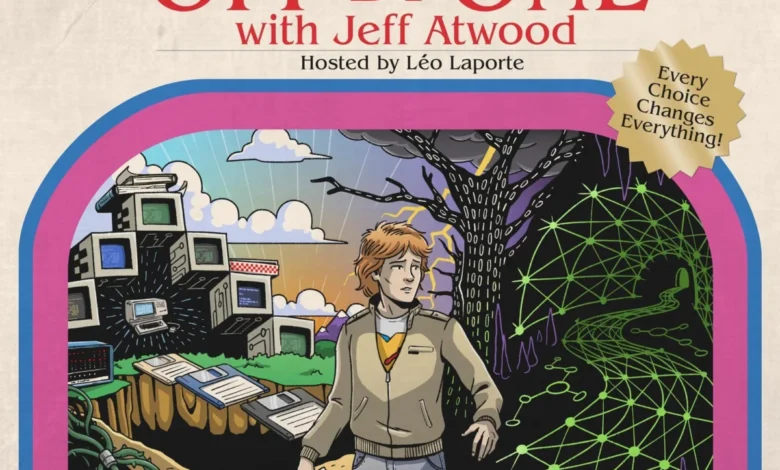
A new monthly program, "Off By One with Jeff Atwood," has premiered on the TWiT network, featuring technology luminary Jeff Atwood, co-founder of Stack Overflow and Discourse, alongside veteran tech broadcaster Leo Laporte. The show, which recently released its second episode, aims to deliver a unique blend of tech discussion, cultural commentary, and "low-level insanity" with a consistently positive outlook. The program’s distinctive title, "Off By One," is a humorous nod to a classic programmer joke, reflecting both hosts’ deep roots in the technology sector.
The inaugural episode was recorded approximately three weeks prior to the public announcement, marking a significant addition to the TWiT network’s diverse programming lineup. This collaboration brings together two influential voices in technology, promising engaging discussions that transcend conventional tech talk, venturing into areas like computing history, the open web, wealth inequality, and even prop comedy. The show is deliberately structured to allow for organic, tangential conversations, often deviating "off by one topic at all times, in the best possible way," as described in its official synopsis.
The Genesis of "Off By One"
The seeds for "Off By One" were sown during Jeff Atwood’s guest appearance on TWiT’s "Intelligent Machines #859" on February 25th. This initial interaction, facilitated by Wesley Faulkner, proved to be a catalyst for the new monthly series. Atwood’s "chaotic good" style during that appearance, shared with Paris Martineau and Jeff Jarvis, evidently resonated with Leo Laporte and the TWiT team, paving the way for a more permanent collaboration. The success of this initial guest spot underscored the potential for a show that leveraged Atwood’s insightful, often provocative, yet always thought-provoking perspectives.
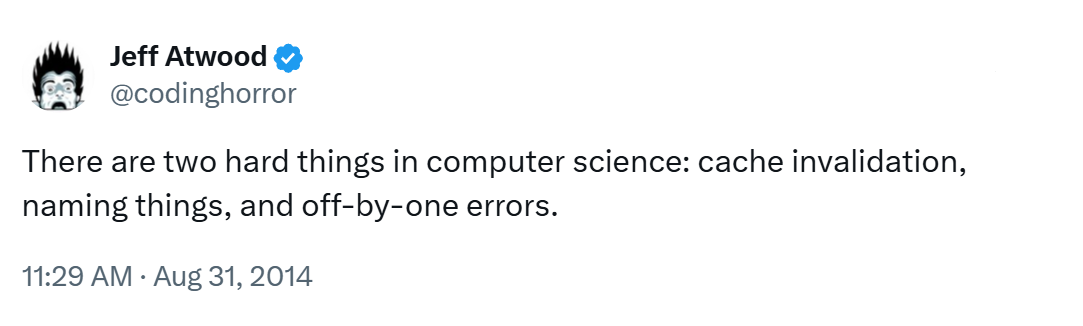
Following this successful trial, discussions led to the creation of "Off By One." The naming process itself, a notoriously challenging task in the tech world, echoed the community-driven approach that defined Atwood’s past projects like Stack Overflow, where names were almost put to a vote. However, the hosts quickly settled on "Off By One," a title that cleverly encapsulates the show’s spirit of intellectual exploration and its foundation in programmer culture. The name draws from a well-known variation of the "Two Hard Things in Computer Science" quote, humorously adding "off-by-one errors" to cache invalidation and naming things as the trio of programming challenges. This subtle humor sets the tone for a show that, while deeply rooted in tech, doesn’t take itself overly seriously, fostering an environment of "mandatory fun."
The Hosts: A Confluence of Tech and Media Expertise
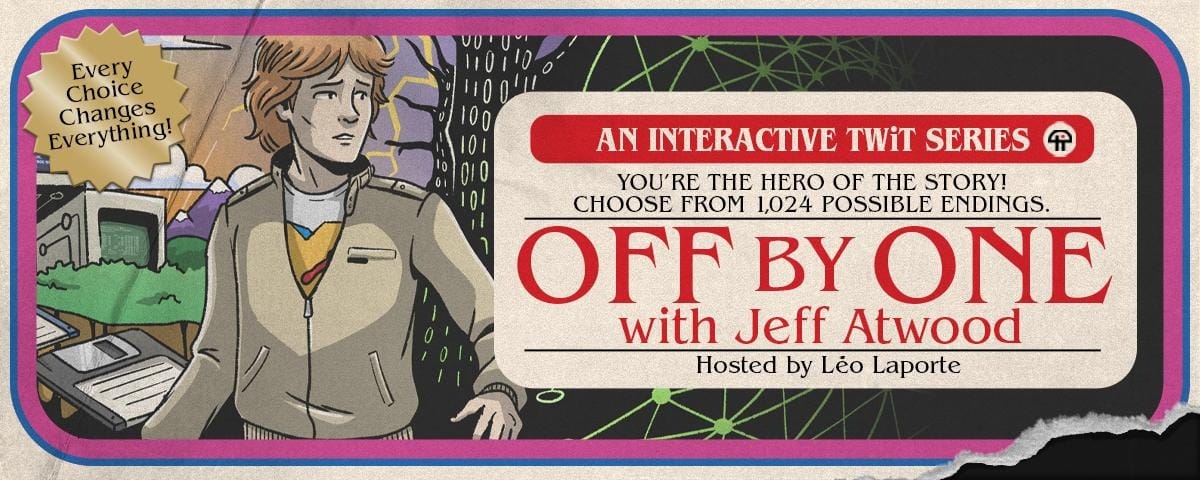
The pairing of Jeff Atwood and Leo Laporte brings a formidable combination of experience and influence to "Off By One."
Jeff Atwood, widely recognized as a foundational figure in the modern developer community, is the co-founder of Stack Overflow, a Q&A platform that revolutionized how programmers seek and share knowledge. Launched in 2008, Stack Overflow quickly became an indispensable resource, transforming professional development and problem-solving for millions globally. Atwood’s philosophy behind Stack Overflow emphasized practical, community-driven knowledge sharing, a principle he later extended to Discourse, an open-source forum software designed to foster civil and engaging online discussions. Beyond these ventures, his "Coding Horror" blog has been an influential voice in software development since 2004, offering candid insights into programming practices, career development, and the broader tech landscape. Atwood’s perspective, as he articulates on the show, is not that of an "elite coder" but rather an advocate for "survivable code" – robust, maintainable systems that prioritize human collaboration and minimize complexity, even advocating for "no code at all" as the ultimate solution in some instances. This pragmatic, human-centered approach to engineering forms a core part of his contribution to the show.
Leo Laporte is a broadcasting veteran and a pioneer in online tech media. As the founder of the TWiT (This Week in Tech) network, he has built a media empire dedicated to covering technology news, reviews, and discussions since 2005. TWiT has garnered a loyal following through its extensive podcast and video programming, becoming a go-to source for in-depth analysis and expert commentary on the rapidly evolving tech world. Laporte’s extensive experience as a radio and television host, combined with his deep knowledge of technology, allows him to navigate complex subjects with clarity and engaging conversation, making him an ideal counterpart for Atwood’s often unconventional thought processes. His ability to facilitate lively, informative, and accessible discussions has been a hallmark of his career, making the TWiT network a cornerstone of tech media.
The synergy between Atwood’s deep, philosophical understanding of software and community, and Laporte’s masterful interviewing and broadcasting skills, creates a dynamic that is both intellectually stimulating and highly entertaining. Their shared enthusiasm for "positive stuff in tech" and their commitment to "making happiness real" through shared experiences underscore the show’s mission.
Key Themes and Discussions from Early Episodes
The second episode of "Off By One," titled "From Stack Overflow to Stay Gold, America," offers a comprehensive glimpse into the show’s scope. Clocking in at 1 hour and 47 minutes, the episode has been characterized by its "pure joy" and absence of negativity, focusing instead on "low-level insanity" and "mandatory fun."
A central tenet discussed by Atwood revolves around his personal philosophy on coding and its broader implications. He asserts, "I am not an elite coder by any stretch of the imagination… I am very persistent." This humble yet profound statement sets the stage for his advocacy of "survivable code," which he defines as code that "doesn’t kill you in so many different ways." His ultimate aspiration, a "zen statement" he admits, is "ideally, no code at all. That’s the best code, is none." This perspective champions good engineering practices and processes that acknowledge human fallibility and encourage collaborative, even congenial, team environments.

Beyond technical discussions, the show delves into significant societal issues, demonstrating its commitment to a holistic view of technology’s impact. Atwood shares a poignant reflection on his late father, articulating a powerful sentiment: "we won capitalism, and then we went back and made it better for everyone." This aspirational statement leads into a critical discussion on wealth inequality, a theme explored further in his prior TWiT appearance.
Atwood presents a compelling, data-driven argument: "If we simply collected a fair tax from Billionaires, we could literally eliminate all poverty in this country at the 100% FPL level, which is $15,000 per year. All poverty. We would have zero poverty. We have the means to do it. We lack the will." This statement highlights a stark reality regarding economic disparities. According to recent analyses from organizations like Oxfam and the Institute for Policy Studies, the wealth of billionaires has indeed surged dramatically in recent decades. For instance, reports indicate that the world’s five richest men have more than doubled their fortunes since 2020, while billions have become poorer. Estimates vary, but many economists and policy advocates contend that even a modest wealth tax or more stringent enforcement of existing tax codes on the wealthiest individuals could generate trillions of dollars, potentially sufficient to address major social challenges like poverty, hunger, and healthcare access on a national scale. The debate often centers not on the feasibility of collecting such taxes, but on political will and policy implementation, aligning with Atwood’s observation.
Precursor Discussions: "Intelligent Machines #859"
The "chaotic good" guest appearance on "Intelligent Machines #859" serves as an essential prelude to "Off By One," setting the stage for many of the themes explored in the new show. During this episode, Laporte and Atwood discussed the moral imperative of wealth. Laporte posed, "If you have everything you need, then help others have everything they need." Atwood’s response, "What is money even FOR? I don’t even have ‘that much’, what do you… how do you spend it all? I don’t have… I just want a simple life, man!" resonates with the broader societal discussion on wealth distribution and the responsibility of those with substantial resources.
Another critical discussion point from this earlier episode concerned the capabilities and limitations of Large Language Models (LLMs). Atwood introduced a memorable analogy: "I call it JPEG for words, which it kind of is." He elaborated on how LLMs, despite their impressive ability to summarize complex discussions accurately (a feature implemented in Discourse), fundamentally lack true understanding. They operate on "global brain statistics and copy paste," excelling at merging and synthesizing information without genuine comprehension. While effective for "reading summaries" and acting as "JPEG for that conversation, without much loss," Atwood cautions against overestimating their capabilities, noting that just as JPEG doesn’t work for every image (e.g., Garfield, as he humorously points out), LLMs have their inherent limitations. This analogy has been widely discussed in AI circles, as it succinctly captures the essence of current generative AI models – powerful pattern recognizers and synthesizers, but not sentient intelligences. The debate around AI’s capabilities, its ethical implications, and its potential impact on employment and creativity remains a paramount topic in tech journalism, and Atwood’s insights contribute a pragmatic voice to this conversation.
The discussion also touched upon the concept of a "second Gilded Age." Atwood starkly observed, "The first gilded age, we’re deep in the second one now. I mean, just look up the numbers. More money in the hands of fewer people than in any other period of time. In the first gilded age, that was basically the railroad barons. Guess who it is in the second gilded age? I’m in this picture and I don’t like it. So like, what are we gonna do about it?" This direct challenge to the tech industry, of which Atwood himself is a part, highlights the show’s willingness to engage with uncomfortable truths. The Gilded Age, a period in U.S. history from the 1870s to the early 1900s, was characterized by rapid economic growth, particularly in the North and West, driven by industrialization and the rise of powerful industrialists ("robber barons"). However, it was also marked by extreme wealth disparity, social unrest, and political corruption. Contemporary economists and social commentators frequently draw parallels to the current era, citing unprecedented concentrations of wealth among tech titans and financiers, alongside persistent social and economic inequalities. Atwood’s direct question, "what are we gonna do about it?", serves as a call to action for the tech community and society at large to address these systemic issues.
Broader Impact and Community Engagement
"Off By One" is positioned not just as an entertainment vehicle but as a platform for fostering deeper community engagement and intellectual discourse. The show’s home on twit.tv/obo provides a central hub for episodes and information. To further cultivate interaction, the hosts actively encourage viewers to join the TWiT community Discourse, linking the show directly to the principles of open discussion and knowledge sharing that Jeff Atwood has championed throughout his career.
The concept of "the Power of the Paragraph," as promoted by Discourse and referenced by Atwood, underscores the importance of coherent narrative and structured communication in an age dominated by fragmented digital interactions. Atwood suggests that the practice of writing well-formed paragraphs can enhance overall writing and communication skills, and even improve one’s life. This advocacy for thoughtful expression aligns perfectly with the TWiT Discourse platform, where nuanced conversations can unfold.
In an initiative to welcome new members, Jeff Atwood has extended an offer to cover a full year of Club TWiT membership for the first 10 people who watch the entire second episode, like what they see, and fill out a specific form. Club TWiT offers exclusive content, ad-free listening, and access to live streams of recordings, further enhancing the community experience. Moreover, a playful rumor hints at "super cool little token[s] of appreciation" being sent via postal mail to Club TWiT users who regularly post on the TWiT Discourse, encouraging active participation and rewarding dedicated community members.
Through "Off By One," Jeff Atwood and Leo Laporte are not merely launching another podcast; they are creating a space for authentic, wide-ranging conversations that reflect the complexities of the modern tech world and its interface with society. By sharing their insights, humor, and "all the feels," they aim to "make happiness real" in a new dimension, leveraging the power of video and audio to convey nuance and emotion beyond the written word. The show promises to be a monthly staple for those seeking informed, engaging, and occasionally unpredictable discussions on the ever-evolving landscape of technology, culture, and humanity.