In April 2026, a shift in household financial management led to a widespread trend among high-net-worth families in San Francisco: the intentional abandonment of public recreational spaces in favor of private, gated alternatives. This transition, prompted by market volatility, rising inflation, and a growing concern for personal security, highlights a broader socioeconomic shift in how families define "essential" expenses versus luxury costs.
The catalyst for this movement has been a series of interactions between residents and municipal authorities in public parks, leading many to re-evaluate the trade-off between public infrastructure utilization and the perceived safety of private institutions.
The Financial Landscape and Strategic Cost-Cutting
During the spring of 2026, the S&P 500 experienced significant volatility, dipping to 6,368 points in late March before a subsequent recovery. Faced with this economic uncertainty, many households initiated aggressive cost-reduction measures. For one representative household, this meant canceling a $185-per-month private sports club membership, alongside the additional $50 in recurring guest fees for family members.
Simultaneously, cable television subscriptions were terminated, saving approximately $70 monthly. This decision was supported by changing media consumption habits, as mobile-first consumption of sports highlights replaced traditional broadcast viewing. These cuts were initially driven by the need to maintain a wide buffer between stagnant or fluctuating portfolio income and rising urban living costs. However, the decision to return to these services—or opt for even more expensive alternatives—was predicated on a shift in priorities that prioritized physical security over mere fiscal austerity.
Chronology of the Shift
- April 2026: Initial austerity measures implemented. Private club memberships are canceled to simplify finances and mitigate market risk.
- May–July 2026: Increased reliance on public parks and infrastructure for recreation.
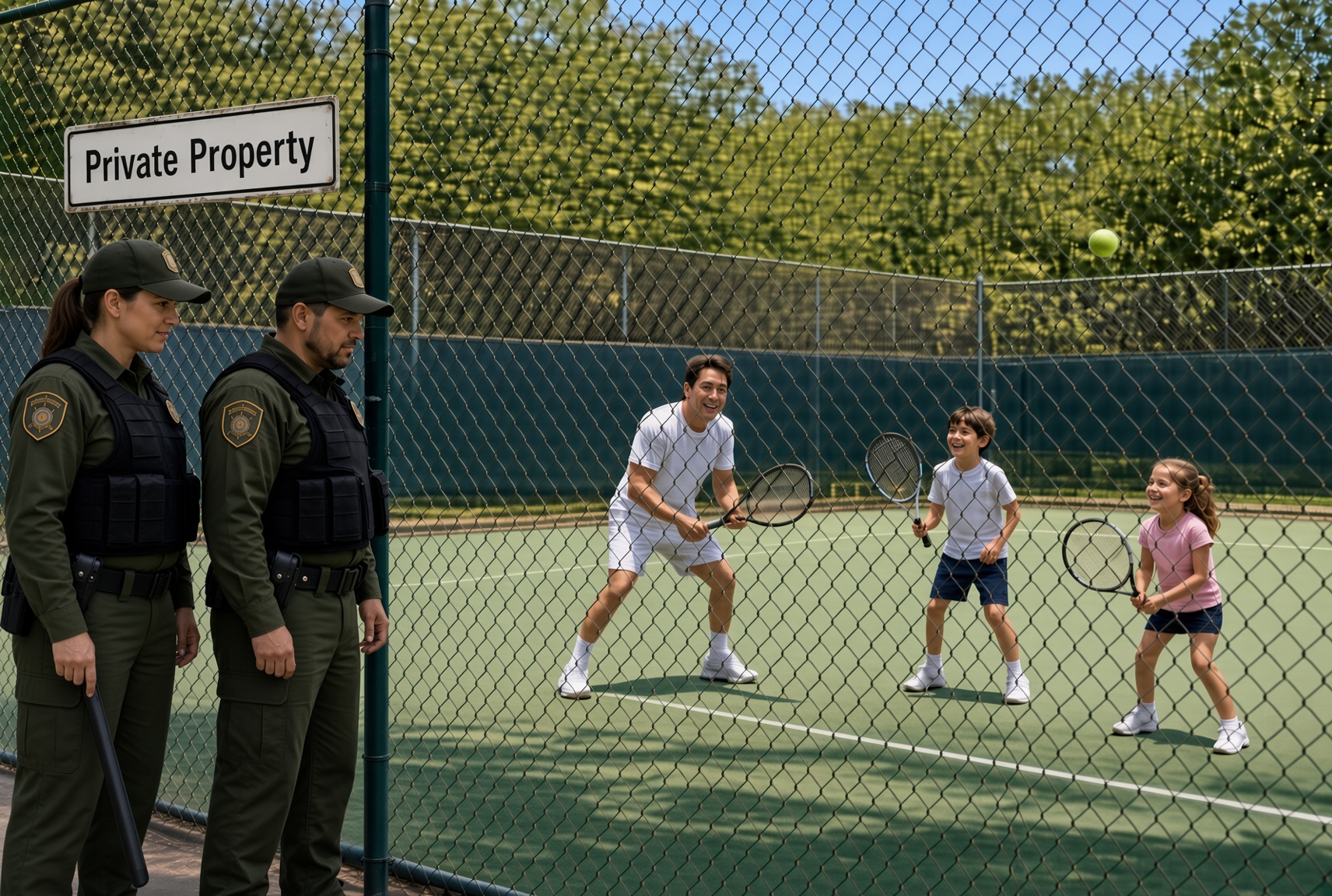
- August 2026: A pivotal encounter occurs on a public tennis court at 3:15 p.m. on a weekday. Two park rangers, equipped with batons and protective vests, approached a parent and two children, demanding proof of familial relationship and authorization for the use of the facility.
- September 2026: Analysis of the incident leads to a decision to prioritize "controlled environments."
- October 2026: Re-enrollment in a private club occurs, with a revised cost structure totaling $5,400 annually to ensure exclusive access and private oversight.
The Intersection of Security and Public Policy
The incident involving municipal park rangers serves as a case study in the friction between public resource management and resident expectations. According to local policy, park rangers are tasked with ensuring the safety and appropriate use of city facilities. However, for many residents, the escalation of these interactions—from simple monitoring to demanding documentation of parental status—creates an environment that feels exclusionary rather than welcoming.
While municipal authorities maintain that these measures are necessary to prevent the unauthorized commercialization of public courts and to ensure equitable access, the result for many families is a feeling of being a "guest" in their own neighborhood. This perception is particularly acute for individuals who have invested significantly in property taxes and local infrastructure.
The Economic Analysis of Private Alternatives
The shift toward private clubs is rarely about status, as often assumed by external observers. Instead, the decision is a calculated risk-management strategy.
When analyzing the costs, one must look beyond the base monthly dues. In this instance, the membership dues were $185 per month. However, factoring in guest fees for two children at the updated rate of $100 per guest—totaling $200 per visit—brought the potential monthly expenditure to nearly $985. Recognizing the long-term inefficiency of this model, the family opted for a structured junior membership plan, locking in a total household cost of $450 per month, or $5,400 annually.
This expenditure is framed by financial experts not as a discretionary luxury, but as a "peace of mind" premium. In the current economic climate, families are increasingly willing to pay a high cost to avoid the "activation energy" of managing public interactions and to ensure a predictable, secure environment for their children.
Broader Societal Implications
The trend of moving from public to private institutions has significant implications for urban planning and social cohesion. When the most tax-compliant residents opt out of public parks in favor of private clubs, the social contract regarding public space begins to erode.
- The Erosion of Public Commons: As private, gated, or member-only facilities proliferate, public spaces risk becoming underutilized or poorly maintained. This creates a feedback loop where lack of use leads to decreased funding, which in turn leads to less desirable conditions, further driving residents toward private alternatives.
- Socioeconomic Self-Selection: The ability to "buy out" of public interactions is a form of optionality. Those who can afford it are increasingly self-selecting into environments where they are surrounded by peers, leaving the public commons to those who cannot afford the entry fee. This increases the risk of social fragmentation within major metropolitan areas like San Francisco.
- The "Insurance" Mentality: Much like the decision to maintain life insurance or upgrade to a vehicle with superior safety ratings, the move to a private club is viewed as a hedge against unpredictable risks. Parents are effectively paying to eliminate the variables of public interaction, a trend that is becoming a hallmark of modern, risk-averse parenting in high-cost-of-living urban centers.
Conclusion: The Cost of Peace of Mind
The decision to rejoin a private organization is a reflection of a wider societal trend where wealth is increasingly utilized to purchase solitude and security. While the initial financial goal was to maximize savings, the ultimate realization was that capital is an instrument meant to facilitate a higher quality of life.
For parents in high-pressure urban environments, the cost of an annual membership is weighed against the intangible value of protecting children from unnecessary confrontation or unpredictable public encounters. As these families continue to navigate the complexities of long-term financial independence, the "right to be left alone" has emerged as a premium commodity, one that is reshaping the landscape of urban life and the utilization of public resources. Ultimately, the choice is between the volatility of the public sphere and the curated, albeit costly, stability of the private sector.