Tech Innovator Jeff Atwood and Retired Lt. Col. Alexander Vindman Take the Stage at Cooper Union to Debate the Future of the American Dream


The pursuit of the American Dream has long served as the foundational ethos of the United States, yet the mechanisms required to sustain, protect, and evolve that promise in the modern era remain a subject of intense national debate. In a compelling public dialogue hosted at New York City’s historic Cooper Union Great Hall, software pioneer and Stack Overflow co-founder Jeff Atwood joined retired Lieutenant Colonel Alexander Vindman for a wide-ranging discussion titled "Rebuilding the American Dream: A Path Forward." The event brought together two distinct perspectives—one forged in the crucible of military and geopolitical national security, the other shaped by decades of architecting digital communities and open-source infrastructure—to examine how civic duty, technological design, and systemic reform intersect in 2025.
The Main Facts of the Cooper Union Dialogue
The headline event centered on a fundamental question facing contemporary American society: How can the foundational promise of the American Dream—traditionally defined as upward economic mobility, fairness, and the reward of hard work—be adapted to serve an increasingly polarized and economically stratified populace?
Rather than relying on partisan talking points, Atwood and Vindman framed the discussion around structural resilience, institutional integrity, and the necessity of active civic participation. Vindman drew upon his high-profile career in the United States military and the National Security Council to articulate the fragility of democratic norms, arguing that democratic institutions require constant, courageous defense against internal and external erosion. Atwood, meanwhile, pivoted from his software engineering background—notably his work on developer platforms like Stack Overflow and community forum software Discourse—to posit that the operational architecture of digital spaces mirrors the challenges of governing physical societies. Both speakers emphasized that sustaining democracy and equitable economic opportunity requires moving past isolated acts of individual charity toward robust, systemic frameworks that guarantee long-term security and dignity for all citizens.
A Chronology of Commitment and Public Service
To understand the weight of the perspectives brought to the Cooper Union stage, it is necessary to examine the divergent yet complementary trajectories of the speakers’ professional lives.
Alexander Vindman’s journey into the American public consciousness is deeply tied to his background as an immigrant. Born in the Soviet Union, Vindman arrived in the United States as a child, settling in Brooklyn before pursuing a military career that spanned 21 years. He graduated from the State University of New York at Binghamton and was commissioned as an infantry officer in the U.S. Army. Over two decades of distinguished service, Vindman deployed to Iraq, where he was wounded in action and awarded the Purple Heart. He later earned a master’s degree from Harvard University and served as a foreign area officer specializing in Eurasia before rising to the position of Director for European Affairs on the National Security Council.
Vindman’s career reached a critical juncture in 2019 when he raised formal concerns regarding a July 25 phone call between then-President Donald Trump and Ukrainian President Volodymyr Zelenskyy. Testifying before Congress under a subpoena, Vindman upheld his oath to the Constitution despite severe professional repercussions, ultimately retiring from the military in 2020 after determining that his career had been curtailed due to political retaliation. His book, Here, Right Matters: An American Story, chronicles this descent into the political spotlight and remains a touchstone for discussions on integrity and institutional duty.
Jeff Atwood’s trajectory, by contrast, evolved within the digital landscape. As a software developer and writer, Atwood spent years analyzing human interaction in cyberspace. In 2008, alongside Joel Spolsky, he co-founded Stack Overflow, a platform that revolutionized how software developers troubleshoot problems, share knowledge, and build collaborative solutions. Later, Atwood launched Discourse, an open-source platform designed to modernize internet discussion boards and foster healthier, more constructive civil discourse. Through his long-running blog, Coding Horror, Atwood has systematically explored the mechanics of community governance, scale, and digital infrastructure. His recent writings, including the essay series "Stay Gold America," seek to bridge the gap between digital community management and the preservation of democratic ideals in the physical world.
Supporting Data and Societal Context
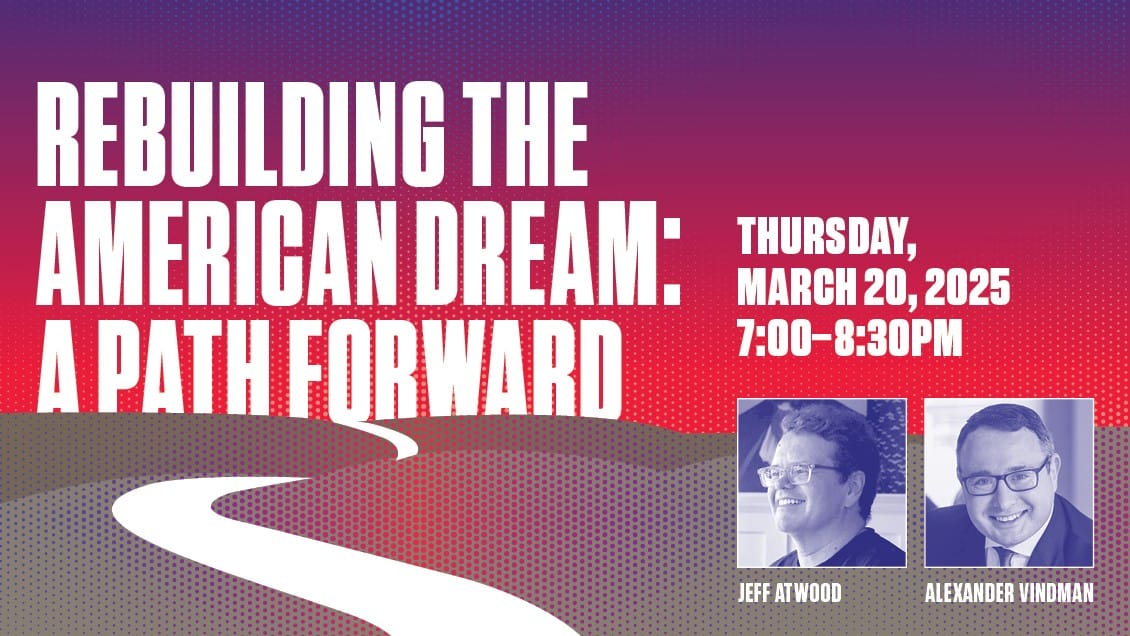
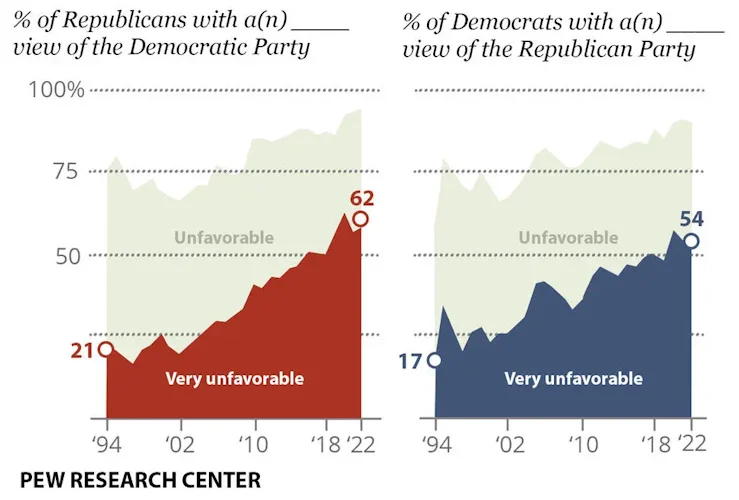
The discourse at Cooper Union took place against a backdrop of mounting economic anxiety and declining institutional trust in the United States. According to data from the Pew Research Center, public trust in the federal government remains near historic lows, with fewer than 20 percent of Americans expressing trust in Washington to do the right thing consistently. Concurrently, data from the Federal Reserve indicates that while overall productivity has risen over the past several decades, wage growth for middle- and lower-income earners has failed to keep pace with the soaring costs of housing, higher education, and healthcare.
These economic pressures directly challenge the viability of the traditional American Dream. Sociological research from organizations like Opportunity Insights demonstrates that absolute upward mobility—the likelihood that a child will earn more than their parents did at the same age—has dropped precipitously from over 90 percent for children born in the 1940s to approximately 50 percent for those born in the 1980s.
It is within this quantitative framework that Atwood and Vindman’s discussion gained analytical weight. The speakers argued that the erosion of economic mobility is not merely a statistical anomaly, but a systemic failure of policy design. Just as a poorly moderated software forum descends into toxicity and chaos due to a lack of clear rules and boundary enforcement, a nation lacking transparent systems, equitable resource distribution, and enforceable civic norms risks democratic degradation.
Institutional Background: The Legacy of Cooper Union
The venue itself added symbolic resonance to the proceedings. The Cooper Union for the Advancement of Science and Art, founded in 1859 by industrialist and philanthropist Peter Cooper, has long stood as an epicenter for free speech, radical thought, and civic action in New York City. The Cooper Union Great Hall famously hosted Abraham Lincoln’s pivotal February 1860 speech—often credited with propelling him to the presidency—which outlined his opposition to the expansion of slavery into the territories.
By staging their dialogue in a hall steeped in the history of American political transformation, Atwood and Vindman aligned their contemporary exploration of democratic resilience with a long lineage of public debate. The historic setting underscored the premise that modern challenges to the American experiment, though technologically and globally complex, require the same foundational commitment to truth, civic engagement, and institutional reform that past generations invoked.
Broader Impact and Implications for the Future of Governance
The convergence of a military whistle-blower and a software architect may appear unconventional at first glance, but the implications of their joint analysis point toward a developing framework for 21st-century civic action.
Observers and policy analysts have noted a growing recognition among technologists and public servants alike that digital networks and physical democracies share systemic vulnerabilities. Disinformation campaigns, algorithmic polarization, and the breakdown of shared factual realities affect both online communities and electoral politics. By addressing these parallels, Atwood and Vindman offered a blueprint for structural reform that transcends partisan divides.
The core takeaway from the Cooper Union event is a call to action regarding system design. While individual acts of generosity and personal integrity remain vital, the speakers emphasized that sustainable progress requires intentional institutional design—building policies, digital spaces, and economic frameworks that bake fairness, transparency, and opportunity directly into the system. As public discourse continues to grapple with polarization, technological disruption, and shifting geopolitical landscapes, conversations of this nature highlight the urgent need for cross-disciplinary cooperation in safeguarding the future of democratic society.