The Trillion-Dollar Bet: How the Artificial Intelligence Infrastructure Boom Risks Becoming History’s Largest Misallocation of Capital

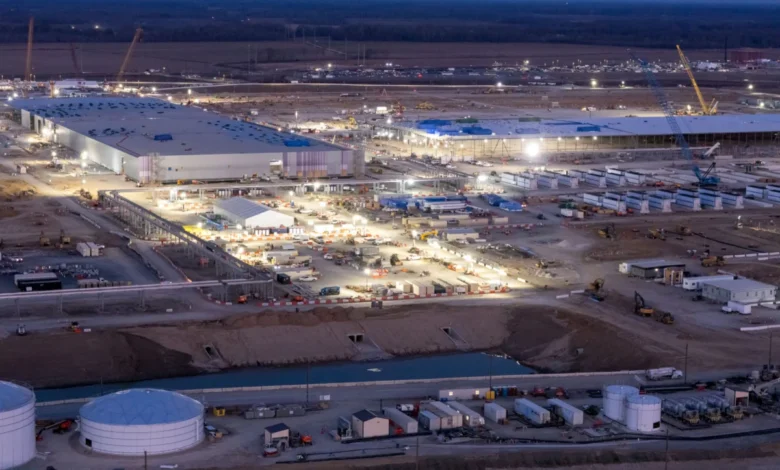
As major technology firms accelerate unprecedented capital expenditures into the infrastructure required for artificial intelligence, economists, financial regulators, and industry analysts are increasingly warning of systemic economic vulnerabilities. Leading the analytical charge is Jessica Wachter, a finance professor at the Wharton School of the University of Pennsylvania and former chief economist for the Securities and Exchange Commission (SEC). When attempting to model the macroeconomic impact of artificial intelligence over the coming years, Wachter bypassed speculative assessments regarding the ultimate utility or societal adoption rates of machine learning models. Instead, she anchored her research on an indisputable reality: a small cohort of dominant technology enterprises—widely referred to as hyperscalers—is committing historic volumes of capital to the construction of massive data centers.
Rather than predicting technological integration, Wachter and her collaborator examined the financial thresholds required for these corporations to justify their expenditures. Projections indicate that cumulative capital outlays by hyperscalers—namely Alphabet, Microsoft, Amazon, Meta, and strategic partner Oracle—will approach $1.1 trillion by 2027, with broader industry forecasts suggesting totals could exceed $5 .0 trillion within a four-year window. To achieve a break-even financial position by 2030, accounting for the cost of capital, a standard 15% return, and asset depreciation, these artificial intelligence operations must elevate their organizational productivity by a factor of 2.7.
While Wachter notes that such a trajectory mirrors the remarkable economic expansion witnessed during the United States IT boom of the mid-1990s, compressing a decade-long productivity surge into a compressed timeframe presents extraordinary operational hazards. Should these technology conglomerates fail to capture the requisite profit margins to service escalating debt obligations, the resulting defaults could trigger corporate restructuring or bankruptcy. According to the research paper co-authored by Wachter, if the anticipated productivity boom fails to materialize, the ongoing infrastructural buildout will constitute the largest misallocation of capital in economic history.
The Revenue-Spending Disconnect and Financial Engineering
The core tension underlying the current artificial intelligence boom lies in the staggering disparity between capital deployment and immediate monetization. Gary Gensler, former SEC chairman during the Biden administration and currently a professor at the MIT Sloan School of Management, highlights that while hyperscalers are projected to expend approximately $750 billion annually on infrastructure, aggregate industry revenues generated by artificial intelligence applications sit at a comparatively modest $150 billion to $200 billion.
This widening deficit has forced major technology firms to pivot from utilizing accumulated internal cash reserves to acquiring substantial external debt. For instance, Alphabet recently reported that its substantial quarterly revenues of nearly $120 billion were entirely absorbed by infrastructure expenditures, resulting in a free cash flow deficit of approximately $5.9 billion—its first such shortfall since the company’s initial public offering in 2004. According to data from financial institutions such as Morgan Stanley, more than half of the projected $2.9 trillion in capital expenditures slated by hyperscalers between 2025 and 2028 will rely on external financing mechanisms, including private credit funds and specialized debt structures.
Financial analysts caution that this heavy reliance on leverage is quietly entangling the broader financial ecosystem. Columbia Business School finance professor Stijn Van Nieuwerburgh points out that institutional lenders, guarantors of debt, and private credit funds are embedding these high-risk infrastructure liabilities deep within mainstream financial portfolios. Consequently, exposure to data center financing is increasingly distributed through pension funds and life insurance backing, often without the explicit awareness of retail investors or beneficiaries.
The Chronology of Meta’s Hyperion Project: A Case Study in Complex Financing
The structural complexities and community-level implications of modern data center financing are vividly illustrated by Meta’s Hyperion data center project in Richland Parish, Louisiana. The chronology of the development underscores how rapid industrial scaling intersects with local utility planning and intricate corporate structuring:
- Late 2024: Meta officially announces plans to construct the Hyperion data center in rural northeast Louisiana, aiming for two gigawatts of compute capacity at an initial projected cost of $10 billion. State and local officials praise the initiative as an economic windfall, prompting Entergy Louisiana to propose the construction of three natural-gas power plants to service the facility.
- Late 2025: Projected costs for the facility escalate to $30 billion. Meta transfers an 80% stake in the project to private-credit firm Blue Owl Capital, forming a joint venture named Beignet. Meta establishes a network of wholly owned subsidiaries—including Laidley LLC as the property owner and Pelican Leap LLC as the tenant—and executes a series of four-year leases backed by residual value guarantees.
- July 2026: Meta announces a major expansion of the Richland Parish site, scaling targeted compute capacity to five gigawatts and driving total estimated expenditures to $50 billion. In tandem, Entergy revises its energy infrastructure plans, proposing an aggregate total of seven gas-fired power plants capable of producing approximately 7.5 gigawatts of electricity—roughly six times the power consumption of New Orleans.
This intricate web of leases, matching the typical two-year deprecation and performance cycle of high-end graphical processing units (GPUs), has drawn sharp criticism from consumer advocacy groups. Organizations such as the Alliance for Affordable Energy and the Union of Concerned Scientists have raised concerns regarding long-term ratepayer exposure. While Entergy maintains that Meta has secured a binding 20-year agreement to purchase power and offset infrastructure costs, local analysts question whether future corporate leadership will honor long-term commitments if market dynamics shift, potentially leaving regional residential ratepayers responsible for stranded assets and surplus energy generation capacity.

The Ticking Time Bomb of Hardware Depreciation
Compounding the financial risk is the rapid technological obsolescence inherent in semiconductor manufacturing. The high-performance graphical processing units (GPUs) that form the operational core of artificial intelligence data centers—representing approximately 60% of total hardware costs—experience performance doubling cycles approximately every two years.
This rapid cadence of innovation ensures that data centers coming online currently will require multi-billion-dollar hardware overhauls before the decade concludes to maintain competitive viability. Mihir Kshirsagar of Princeton University’s Center for Information Technology Policy warns that without continuous capital reinvestment into subsequent generations of chips, existing facilities risk becoming obsolete "hulks"—stranded infrastructural assets scattered geographically without viable revenue streams.
The Three-Pronged Capital Bet and Broad Economic Productivity
For the artificial intelligence infrastructure boom to avoid a catastrophic market correction, capital markets must successfully win a complex, interdependent "parlay bet," as characterized by MIT’s Gary Gensler. This wager requires simultaneous success across three distinct domains: hyperscalers must generate multi-trillion-dollar revenues; artificial intelligence must measurably accelerate broad economic productivity; and premium frontier models must maintain market dominance against increasingly sophisticated, low-cost open-source alternatives.
Economists emphasize that the ultimate validation of the sector depends on economy-wide productivity growth. Daron Acemoglu, an MIT economist and 2024 Nobel laureate, notes that if corporate customers fail to observe tangible bottom-line operational efficiencies from artificial intelligence deployment, market sentiment will inevitably sour, leading to curtailed investment and restricted revenue expansion.
Current empirical data present a mixed picture. While recent international executive surveys indicate that approximately 90% of senior business leaders have not yet registered measurable productivity gains from artificial intelligence over the past three years, many anticipate modest efficiency improvements over the medium term. Furthermore, business spending directed toward artificial intelligence integration is projected to approach $280 billion in the private sector by the close of 2026. However, much of this anticipated productivity growth is projected by corporate leaders to stem from workforce reductions rather than revenue expansion alone. Such employment contractions risk catalyzing severe public backlash, potentially compounding regulatory hurdles and community resistance already facing large-scale data center developments.
Historical Precedents and Future Market Realities
Financial historians note structural parallels between the current artificial intelligence buildout and previous speculative cycles, most notably the late-1990s dot-com boom and the subsequent telecommunications overexpansion. While past market corrections resulted in severe macroeconomic contractions, corporate bankruptcies, and significant employment losses, the underlying technological innovations ultimately survived to form the bedrock of the modern digital economy. The fiber-optic networks laid during the telecommunications bubble, for instance, provided the essential infrastructure required for the subsequent rise of cloud computing and modern internet conglomerates.
Nevertheless, market observers emphasize that the current cycle introduces unique systemic risks due to the deep entanglement of private credit, complex special purpose vehicles, and institutional lending instruments with mainstream financial portfolios. As Gary Gensler observes, a market retrenchment is historically inevitable; the primary uncertainties remain the timing and severity of the correction.
Ultimately, while the foundational technologies of artificial intelligence will likely persist past any near-term financial downturn, the long-term financial viability of trillions of dollars in specialized data center infrastructure remains unproven. As the industry navigates rising debt servicing costs, hardware depreciation schedules, and shifting macroeconomic indicators, the global economy remains tethered to one of the most ambitious and financially hazardous capital deployments in corporate history.