Tech Giants and OpenSSF Unite to Secure the Future of Global Software Infrastructure Through Enterprise Funding

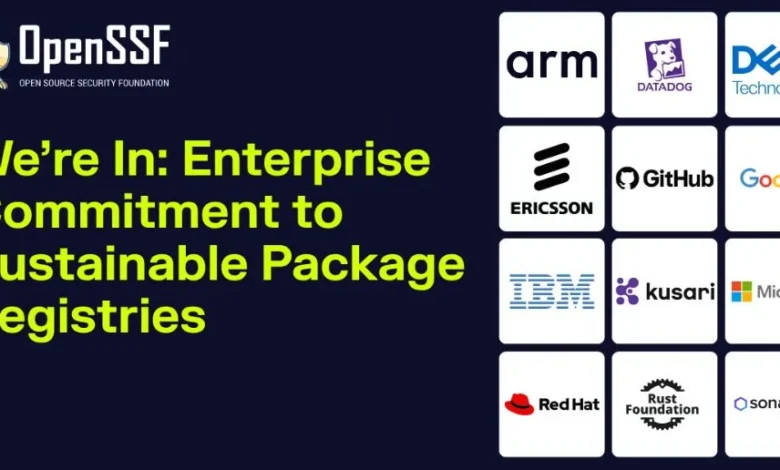
In a significant pivot for the software supply chain, a coalition of technology industry leaders—including Arm, Datadog, Dell Technologies, Ericsson, GitHub, Google, IBM, Kusari, Microsoft, Red Hat, the Rust Foundation, and Sonatype—has announced a landmark commitment to fundamentally reform how public package registries are funded. Backed by the Open Source Security Foundation (OpenSSF), this initiative marks the end of an era where critical digital infrastructure relied primarily on precarious volunteer efforts and donated cloud credits. As the rapid integration of artificial intelligence accelerates demand on global registries, these enterprise consumers have pledged to transition into paying commercial customers, ensuring the longevity and security of the systems that underpin nearly every modern application.
The Foundation Under Pressure
Public package registries, such as PyPI, Maven Central, crates.io, RubyGems, npm, NuGet, OpenVSX, and Packagist, function as the central nervous system of the global software economy. They are the distribution hubs that facilitate the movement of trillions of code packages annually, serving as the essential building blocks for virtually every software product developed in the 21st century.
Historically, these repositories have functioned as public goods, maintained by small, often under-resourced teams of volunteers. While this model fostered an era of unprecedented open-source collaboration, it has become increasingly brittle. The infrastructure requires constant uptime, massive bandwidth, and rigorous security monitoring—costs that have historically been covered by intermittent corporate donations or the altruism of individual maintainers. Today, that model is effectively obsolete. The sheer scale of modern software development, coupled with the security-critical nature of the code these registries distribute, has created a mismatch between the vital importance of these hubs and the fragility of their financial support.
Chronology of a Growing Crisis
The necessity for this structural overhaul did not emerge overnight; it is the culmination of several years of compounding technical debt and external pressures.
- 2020–2022: The rise of large-scale software supply chain attacks, such as the SolarWinds incident, brought unprecedented focus to the security of open-source dependencies. Registries began to face immense pressure to implement features like multi-factor authentication (MFA) and automated vulnerability scanning.
- 2023–2024: AI-driven coding assistants began to gain mainstream adoption. These tools increased the frequency of dependency lookups and installations, putting further strain on registry infrastructure.
- 2025: The threat landscape shifted dramatically. Malicious actors began utilizing AI to craft sophisticated, "human-like" packages designed to exfiltrate data or compromise build environments, leading to a surge in registry security incidents.
- 2026: A watershed year for the industry. Security researchers documented over 1.8 million malicious packages—a record-breaking figure that surpassed the cumulative total of 2025. This explosion in malicious activity highlighted that the "volunteer-only" approach to maintenance and security was no longer capable of holding the line.
The AI Acceleration and the Security Paradox
The integration of autonomous AI coding agents into the software development lifecycle (SDLC) is the primary engine behind the current capacity crisis. These agents are not merely helping developers write code; they are fundamentally changing how software is composed. Research indicates that download volumes across major package registries are growing at an annual rate of 30% to 50%. This surge is largely attributable to AI agents that, in their quest to resolve dependencies, trigger millions of automated requests for packages and metadata.
Simultaneously, the threat landscape has reached a point of exponential escalation. AI is no longer just a tool for developers; it is a tool for attackers. Automated vulnerability discovery allows bad actors to identify and exploit weaknesses in popular libraries at machine speed. With registries anticipating a 3x to 5x increase in publish events, the burden on maintainers has become unsustainable. Small, three-person teams tasked with monitoring, vetting, and managing these massive influxes of data are currently operating beyond capacity. Without immediate financial intervention, the security of the global software supply chain risks a systemic collapse.

Sustaining Package Registries Working Group
To address these challenges, the Linux Foundation has hosted the "Sustaining Package Registries Working Group." This entity serves as a formal forum for cross-registry governance, bringing together the stakeholders who run the infrastructure and the enterprise consumers who rely on it.
The working group’s mandate is clear: to move registries from "survival mode" to "enterprise-ready infrastructure." By establishing a predictable, recurring revenue stream through paid enterprise usage tiers, the working group aims to provide the capital necessary for:
- Enhanced Security Protocols: Implementing robust artifact signing, build provenance attestations, and automated malware quarantine systems.
- Infrastructure Resilience: Scaling server capacity to meet the 30–50% year-over-year growth in demand without service degradation.
- Dedicated Security Personnel: Providing the budget to staff teams capable of 24/7 incident response, security analysis, and the implementation of modern authentication workflows.
- SBOM/VEX Generation: Enabling standardized metadata creation, such as Software Bill of Materials (SBOM) and Vulnerability Exploitability eXchange (VEX), to improve transparency for enterprise users.
Maintaining the Open Source Ethos
A primary concern among the developer community following the announcement was the potential for "paywalls" around open-source code. However, the coalition has been explicit in its commitment to the open-source spirit. The proposed funding model is strictly tiered toward enterprise commercial consumers—large organizations that derive significant revenue from the software they build using these packages.
Individual developers, hobbyists, students, and small organizations will continue to have free, unrestricted access to all packages hosted on these registries. The coalition views this as a necessary social contract: large companies, which have benefited from the "free" labor of the open-source community for decades, are now stepping up to ensure that the infrastructure remains robust for everyone. The goal is not to privatize open source, but to professionalize the distribution channels that make it possible.
Implications for the Future of Tech
The move toward sustainable enterprise funding for registries has far-reaching implications for the broader technology industry. For one, it signals a shift in how corporations view "upstream" dependencies. For years, the industry relied on the implicit assumption that open-source code would always be available, secure, and free. This new commitment represents a move toward active stewardship.
Furthermore, this model may set a precedent for other critical infrastructure components in the open-source ecosystem. If registries can successfully transition to a model of enterprise-backed support, other areas—such as critical cryptographic libraries, build tools, and core system utilities—may follow suit. This transition is not merely a financial change; it is a cultural one, acknowledging that open-source security is a collective responsibility that requires institutionalized, long-term commitment.
As the industry navigates the integration of AI into every facet of software development, the stability of package registries is no longer just a technical issue—it is a business imperative. By aligning the incentives of the largest technology consumers with the needs of the registry maintainers, the Sustaining Package Registries Working Group is attempting to build a foundation that can survive the next generation of digital transformation. The success of this initiative will be measured not just in dollars, but in the continued security and reliability of the digital world upon which our global economy depends.