NVIDIA Launches DSX Ready Qualification Program to Streamline AI Factory Infrastructure and Overcome Global Grid and Cooling Bottlenecks

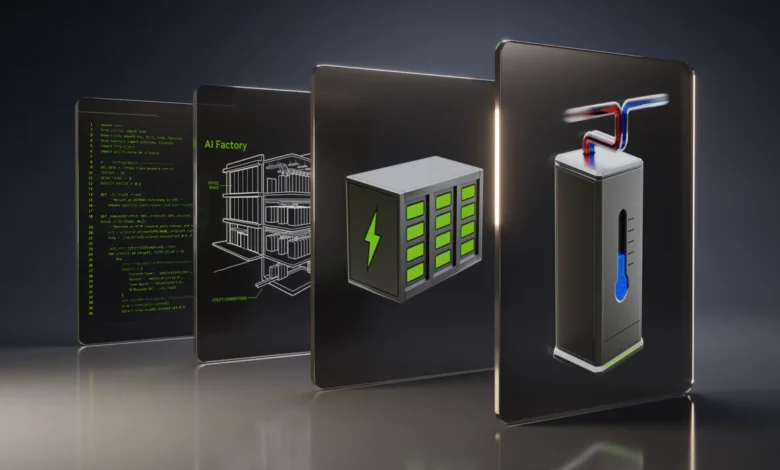
As the global artificial intelligence boom accelerates, the physical constraints of powering and cooling massive data centers have emerged as the primary limiting factors for technological expansion. The construction of modern AI factories—vast, highly specialized computing complexes designed to train and run foundational large language models—demands an unprecedented integration of electrical engineering, thermal dynamics, and advanced computing architecture. Every AI factory requires power and cooling systems that precisely match its underlying computing infrastructure. However, as this infrastructure rapidly expands, constraints related to available power generation, thermal dissipation, water consumption, localized site footprints, and electrical grid capacities are fundamentally reshaping what data center builders can deploy. Selecting products and building blocks that fit seamlessly into a comprehensive, holistic factory design is no longer just a best practice; it is a vital prerequisite for turning raw computing capacity into useful, scalable AI output.
To address these compounding infrastructure challenges and help builders make more confident, standardized decisions, NVIDIA has officially introduced NVIDIA DSX Ready. This comprehensive qualification program is designed to evaluate and validate partner products and solutions, ensuring they meet rigorous, applicable NVIDIA DSX AI factory reference design requirements. By bridging the gap between high-level architectural blueprints and off-the-shelf hardware, the program aims to remove guesswork from the procurement process, drastically reduce integration risks, and accelerate the timeline from facility conception to full operational deployment.
The launch of NVIDIA DSX Ready marks a critical milestone in the maturation of the AI hardware ecosystem. Initially rolling out with two highly critical infrastructure categories—battery energy storage systems (BESS) and cooling distribution units (CDUs)—the program establishes stringent, category-specific requirements. Through rigorous technical reviews and standardized testing protocols, DSX Ready empowers data center builders to evaluate market offerings with significantly greater confidence, knowing that the vetted components align with the demanding operational profiles of modern accelerated computing environments.
The Growing Infrastructure Crisis in Modern AI Factories
To understand the necessity of the NVIDIA DSX Ready program, one must examine the unprecedented scaling laws governing modern artificial intelligence. Over the past five years, the parameter size of leading foundational AI models has surged by orders of magnitude, accompanied by a corresponding explosion in training cluster sizes. Modern AI training clusters frequently comprise tens of thousands of specialized graphics processing units (GPUs) housed in dense, rack-scale architectures. These clusters draw massive amounts of electrical power—often scaling into tens or hundreds of megawatts per facility—and generate immense heat densities that traditional air-cooling methodologies simply cannot manage.
The NVIDIA DSX AI factory platform was originally conceived to unify AI factory design and operations across a disparate array of disciplines, encompassing compute infrastructure, high-speed networking, power delivery, thermal management, physical facilities, and orchestrating software. By viewing the factory as a single, highly integrated system, the platform helps enterprise partners and hyperscale operators design and operate facilities that maximize useful AI output while remaining within strict real-world constraints such as local grid availability, power substation limits, and water conservation mandates.
Yet, a persistent challenge in enterprise data center engineering is the interconnected nature of facility bottlenecks. Optimizing one isolated part of an AI factory—such as installing higher-density server racks—can inadvertently shift the system bottleneck elsewhere, overwhelming local power distribution units or straining existing chiller loops. Consequently, power and cooling equipment suppliers have desperately needed a clear, standardized path from conceptual reference designs to commercially qualified offerings. Simultaneously, data center builders and real estate developers have required a transparent, reliable methodology to discover, benchmark, and evaluate those offerings before committing millions of dollars in capital expenditure.
The DSX Ready program directly resolves this friction by connecting the component selection process directly to applicable NVIDIA DSX requirements. It provides builders with a definitive mark of qualification to look for during the procurement phase, while offering hardware partners a clearly defined, standardized framework to demonstrate that their specific products meet the rigorous functional and operational requirements established for their respective categories.
Initial Launch Categories: Power Storage and Liquid Cooling
At its commercial debut, the NVIDIA DSX Ready program focuses heavily on the two most critical physical subsystems of a modern accelerated computing facility: power resilience and thermal management. The initial roster of participating infrastructure providers features some of the most respected names in global energy and thermal engineering.
For battery energy storage systems (BESS), the initial wave of qualified solutions includes offerings from industry leaders Hitachi Energy, LG Energy Solution, and Tesla. These systems are increasingly vital for AI factories as they grapple with intermittent grid power, peak demand pricing, and the sheer volatility of instantaneous power draws characteristic of massive GPU training runs. Energy storage systems provide critical ride-through capabilities, frequency regulation, and load-shaping functions that protect sensitive computing equipment from micro-outages and grid instability.
On the thermal management side, the initial batch of qualified cooling distribution units (CDUs) features solutions from LG Electronics, LiquidStack, and Vertiv. As thermal design power (TDP) per chip continues to climb beyond the thresholds of traditional forced-air cooling, direct-to-chip liquid cooling has become the industry standard. CDUs act as the beating heart of these liquid loops, circulating coolant efficiently between facility water supplies and the server cold plates. Bringing these power systems and liquid-cooling infrastructure solutions into a unified qualification program ensures that both electrical and thermal domains are harmonized under shared performance expectations.
The qualification pathways differ tailored to the specific nature of each technology. For BESS providers, participating partners must execute a series of required qualification tests and submit extensive supporting empirical data for rigorous NVIDIA engineering review and approval, all within a strictly defined qualification boundary. Industry analysts note that passing this initial qualification phase does not replace comprehensive site-level engineering analysis, nor does it automatically imply absolute site-level grid stability; rather, it guarantees that the hardware meets baseline performance and compatibility criteria defined by the reference architecture.
For CDU providers, the evaluation path utilizes a streamlined CDU self-qualification suite. This suite enables manufacturers to determine whether a specific product offering meets all applicable NVIDIA functional requirements regarding pressure drops, flow rates, thermal rejection efficiency, and control system integration. Once these foundational checks are complete, engineering teams can focus entirely on how the qualified offerings integrate into their specific physical site layouts, facility configurations, and unique operating requirements. For instance, a data center architect might verify that a specific qualified CDU meets all relevant cooling capacity criteria, while simultaneously evaluating how its physical footprint and piping connections will fit within a newly retrofitted legacy data center or a greenfield hyperscale campus.
Chronology and Evolution of AI Facility Standards
The introduction of DSX Ready represents the culmination of years of iterative development in data center design, driven by the explosive growth of generative artificial intelligence following the public introduction of advanced large language models in late 2022.
During the 2023–2024 period, the primary bottleneck for AI deployment was silicon supply, with enterprises and cloud service providers scrambling to secure allocations of advanced accelerators. However, by late 2024 and into 2025, the industry transitioned from a silicon-constrained environment to a power- and facility-constrained environment. Utilities across North America, Europe, and Asia began reporting unprecedented interconnection queue delays, with data center developers facing multi-year waits to secure dedicated high-voltage power substations.
Recognizing that hardware innovation alone could not solve systemic facility limitations, NVIDIA began formalizing its reference architectures for complete AI factories. These blueprints expanded beyond traditional server specifications to encompass holistic facility guidelines, detailing optimal power distribution topologies, liquid-cooling manifold placements, and software-defined energy management systems.
The launch of DSX Ready in early 2025 formalizes this architectural ecosystem. By establishing an official qualification framework, NVIDIA is effectively creating an interoperability standard for the auxiliary infrastructure market. Industry observers anticipate that the program will rapidly expand beyond its initial BESS and CDU categories. Over the coming quarters, future rollouts are expected to introduce qualification categories spanning secondary infrastructure components—such as backup diesel generators, switchgear, busways, water treatment systems—as well as advanced facility management software and data center infrastructure management (DCIM) integrations.
Industry Implications and Strategic Analysis
From a strategic standpoint, the NVIDIA DSX Ready program carries profound implications for the entire data center supply chain. For equipment manufacturers such as Tesla, Vertiv, Hitachi Energy, and others, earning the DSX Ready designation serves as a powerful market differentiator. In a crowded enterprise hardware market where data center operators are inundated with vendor claims, official qualification from the dominant force in AI computing provides an immediate stamp of credibility and technical validation. It streamlines the sales cycle, reduces lengthy proof-of-concept validation periods, and positions participating vendors as preferred partners for upcoming hyperscale and enterprise AI factory builds.
For data center developers, colocation providers, and enterprise IT buyers, the program significantly lowers the risk profile associated with deploying bleeding-edge liquid-cooling and energy storage technologies. Integrating direct-to-chip liquid cooling and high-density battery storage into existing or greenfield facilities has historically presented complex engineering hurdles, often requiring bespoke custom integration and extensive troubleshooting. By relying on DSX-qualified components, engineering teams can streamline procurement, ensure architectural compatibility, and minimize the risk of costly deployment delays.
Furthermore, the program addresses broader macroeconomic and environmental concerns surrounding the AI boom. As public scrutiny intensifies regarding the massive carbon footprint and water consumption of modern data centers, energy efficiency and resource optimization have become board-level priorities. By ensuring that power storage systems and cooling distribution units operate at peak efficiency within a unified reference architecture, DSX Ready indirectly helps operators minimize wasted energy, optimize water usage effectiveness (WUE), and maintain compliance with increasingly stringent environmental regulations governing commercial real estate and utility consumption.
Moving Forward: From Platform Design to Partner Selection
The ultimate value of any complex reference design lies in its ability to translate high-level engineering theory into tangible, actionable commercial products and informed operational decisions. The NVIDIA DSX Ready initiative successfully bridges this crucial gap, embedding cutting-edge partner innovation directly into the infrastructure decisions that underpin modern NVIDIA DSX AI factories.
As the digital economy continues its rapid pivot toward accelerated computing and autonomous intelligence, the physical infrastructure supporting these workloads must evolve with equal velocity. Programs like DSX Ready provide the necessary standardization, confidence, and collaborative framework to ensure that the physical foundation of the AI era is built to scale reliably, sustainably, and efficiently. Enterprise builders, facility engineers, and hardware manufacturers looking to participate in the ongoing evolution of accelerated computing can explore the official NVIDIA DSX Ready qualification categories, review participation guidelines, and connect directly with specialized engineering teams to initiate the qualification process for their proprietary products and infrastructure solutions.