Deploying ChatGPT Desktop and Codex on Amazon Bedrock in AWS GovCloud US for Secure Enterprise Intelligence

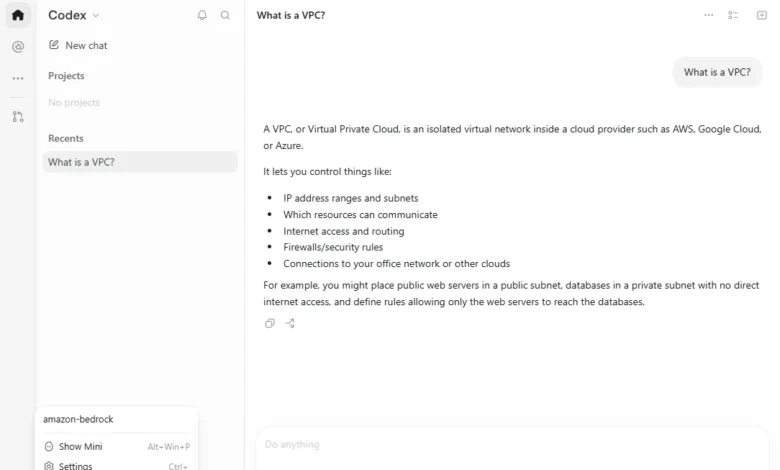
The integration of OpenAI’s frontier models into the AWS GovCloud (US) ecosystem via Amazon Bedrock marks a significant shift in how government agencies and highly regulated industries leverage generative AI. By enabling the ChatGPT desktop application and the Codex coding agent to operate within the stringent confines of the AWS GovCloud (US) environment, organizations can now harness advanced language processing and automated software development capabilities while maintaining rigorous data sovereignty, security, and compliance standards. This development is designed specifically for entities that operate under strict regulatory frameworks, such as the Federal Risk and Authorization Management Program (FedRAMP) or the Department of Defense (DoD) Cloud Computing Security Requirements Guide (SRG).
Background and Technical Context
For many years, the primary barrier to adopting generative AI in the public sector has been the conflict between the cloud-native, multi-tenant architecture of consumer-grade AI tools and the isolated, high-security requirements of government infrastructure. Traditional ChatGPT deployments typically rely on public internet endpoints and OpenAI-managed data storage, which are often incompatible with the mandates of agencies handling classified or sensitive unclassified information.
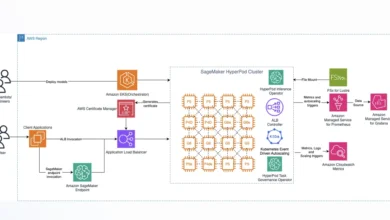
Amazon Bedrock, a fully managed service that offers a choice of high-performing foundation models from leading AI companies via a single API, provides the bridge. By hosting these models within AWS GovCloud (US), AWS ensures that the infrastructure itself is physically and logically isolated, managed by U.S. persons, and subject to the specific regional controls that define the GovCloud experience. The introduction of the ChatGPT desktop app and Codex as authorized clients for these Bedrock-hosted models allows developers to utilize AI-powered coding assistance without their code or proprietary data ever leaving the approved AWS environment.
Chronology of the Integration
The path toward this deployment began with the broader strategic partnership between Amazon Web Services and OpenAI. As demand for "sovereign AI" surged in 2023 and 2024, AWS expanded its Bedrock service to support more complex, multi-step agentic workflows. In late 2024, the technical foundation for "Codex"—the specialized coding agent—was integrated into the Bedrock Mantle endpoint.
Following successful pilot programs with early-adopter agencies, the release of this configuration guide serves as a blueprint for wider adoption. It moves the technology from a "lab environment" to a "production-ready" state. Organizations are now entering a phase of rigorous validation, where IT security teams are tasked with documenting the specific IAM policies and network egress controls necessary to finalize their Authority to Operate (ATO) for AI workloads.

Data Security and the Zero Data Retention Paradigm
A critical component of this deployment is the support for Zero Data Retention (ZDR). In this mode, the prompts sent to the model and the subsequent responses generated by the system are processed in volatile memory and are not written to durable storage by AWS, nor are they used to train the underlying models. This is a vital requirement for intelligence and defense sectors where the "learning" aspect of generative AI must be strictly contained to prevent the leakage of sensitive patterns or proprietary logic.
Furthermore, the cost structure is designed to appeal to enterprise procurement officers. By shifting to a per-token billing model without seat licenses or long-term per-developer commitments, agencies can scale their usage based on actual project requirements. This financial flexibility, combined with the security of the AWS infrastructure, removes the two most significant hurdles to enterprise AI: cost predictability and data leakage risk.
Architectural Framework and Implementation
The deployment relies on a dual-file configuration strategy involving requirements.toml and config.toml. These files serve as the "guardrails" of the installation. The requirements.toml file is an administrator-level document that acts as a hard boundary. By setting allow_browser_and_computer_use to false and strictly defining allowed network domains, security teams can effectively "sandbox" the ChatGPT desktop app, ensuring it only communicates with the designated Amazon Bedrock endpoint in us-gov-west-1.
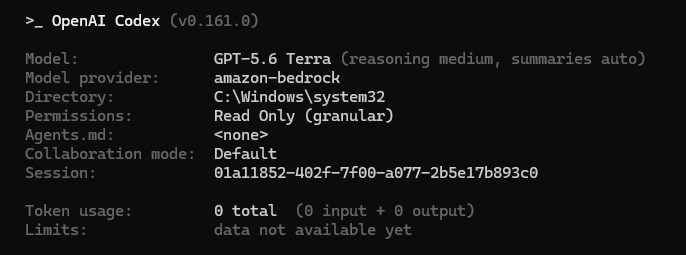
The config.toml file, conversely, handles the operational parameters for the end user. It defines the model provider as amazon-bedrock, routes the traffic to the specific Bedrock Mantle URL, and links the application to the user’s AWS identity through the standard AWS SDK credential chain. This ensures that access to the AI model is gated by the same identity and access management (IAM) controls that protect all other sensitive assets within the agency’s VPC.
Implications for Software Development
The integration of Codex, specifically, represents a shift in the developer experience. Codex is not merely a chatbot; it is an AI agent capable of multi-step reasoning, testing, and debugging. By hosting this agent within the GovCloud boundary, developers can utilize IDE integrations—such as Visual Studio Code or JetBrains—to receive real-time code suggestions while maintaining full compliance with internal security policies.
This environment mitigates the "copy-paste" risk, where developers might otherwise be tempted to take sensitive, proprietary code and feed it into public-facing AI tools. By localizing the inference, the agency keeps the code inside their secure perimeter, significantly reducing the attack surface.
Analysis of Regulatory Impact
For security teams, the primary task is now moving from the "what" to the "how." The official guidance from AWS and OpenAI is clear: the availability of this architecture does not automatically grant a workload authorization. Each agency must conduct its own assessment. This includes:
- Model Review: Evaluating the specific foundation model’s capabilities and limitations.
- Endpoint Validation: Ensuring that network traffic is restricted solely to the approved Bedrock endpoints.
- Identity Governance: Using AWS IAM Identity Center (formerly SSO) to ensure that only authorized personnel can invoke the models.
- Data Flow Audit: Mapping the movement of tokens to ensure that logs or monitoring tools do not accidentally store sensitive information.
Industry analysts suggest that this model of "on-premises-like security in a public cloud" is the future of government technology. By leveraging the scale of the cloud while maintaining the isolation of a private data center, organizations can finally close the gap between the speed of innovation in the private sector and the security requirements of the public sector.
Official Stance and Future Outlook
While neither Amazon nor OpenAI has issued a blanket statement, the release of this documentation signals a long-term commitment to the public sector. The focus is currently on "controlled local deployment." By forcing agencies to manually configure, test, and document their deployments, both providers are ensuring that only mature, security-conscious organizations are moving into production.
The move is also expected to influence other cloud providers and AI vendors. As the market for "Secure AI" grows, the ability to provide a "GovCloud" equivalent for generative workloads is becoming a competitive necessity. For agencies, the next twelve months will be defined by the transition from proof-of-concept testing to full-scale enterprise integration.
Conclusion and Best Practices for Deployment
The deployment of the ChatGPT desktop app and Codex on Amazon Bedrock is a sophisticated maneuver in IT infrastructure management. It requires a precise hand, deep knowledge of AWS IAM, and a thorough understanding of network security. Agencies are advised to prioritize the following:
- Start with a pilot: Do not roll out to the entire organization simultaneously. Test the configuration on a small group of developers to ensure that the
requirements.tomlrules effectively block unauthorized traffic. - Continuous Monitoring: Utilize AWS CloudTrail and other logging mechanisms to monitor API calls to Bedrock. Any anomaly in token usage or endpoint connection should trigger an immediate review of the security policy.
- Document Everything: The path to an ATO is paved with documentation. Ensure that every decision, from the choice of model to the specific network restrictions, is documented in the system security plan.
By following these procedures, agencies can transform their software development lifecycle, utilizing the power of frontier AI to accelerate mission-critical projects without compromising the safety or integrity of their data. This is the new standard for secure, enterprise-grade generative intelligence.