Is Upgrading to a Larger Home You Do Not Need a Sound Financial Decision or a Costly Mistake

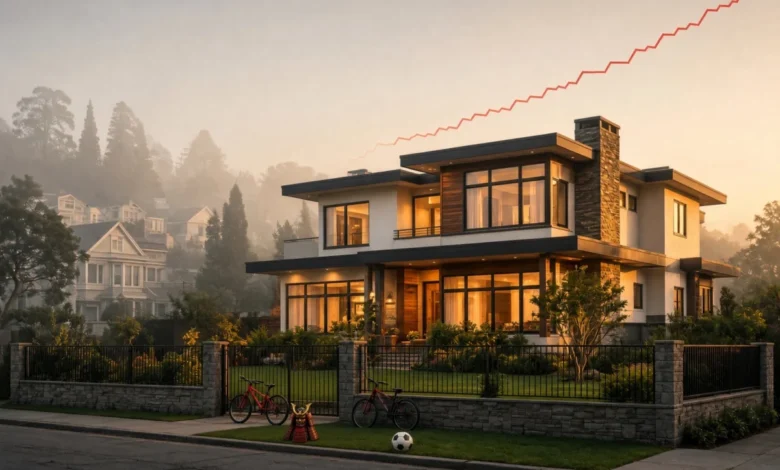
The decision to transition into a larger, more expensive primary residence—often referred to as an "unnecessary upgrade"—represents a complex intersection of personal lifestyle choices and significant capital allocation. As of late 2023, the real estate market reached a point where many homeowners began evaluating the long-term utility of their living spaces against the backdrop of shifting interest rates and fluctuating stock market performance. Three years into such an transition, the data suggests that while the emotional and developmental benefits for families are substantial, the opportunity cost remains a critical factor for investors to consider.
The Evolution of the Property Ladder
For many professionals, the "property ladder" has historically served as a primary vehicle for wealth accumulation. Between 2003 and 2023, the cultural trend of incrementally upgrading residences became a standard strategy for those seeking to leverage real estate appreciation. However, by the end of 2023, the landscape shifted. The decision to move into a home that exceeds immediate utility—such as opting for extra square footage or more outdoor space than is strictly required—represents a move toward "lifestyle-first" investing.
This transition involves a departure from pure capital growth strategies. When a homeowner pivots from high-yield liquid assets, such as S&P 500 index funds or corporate equities, into a non-income-producing primary residence, they are effectively trading potential compound interest for utility and peace of mind.
Chronology of the Decision-Making Process
The process of acquiring a larger home requires rigorous financial preparation. Based on common industry best practices for high-net-worth individuals, the journey typically begins with a 30/30/3-5 framework. This involves ensuring that at least 30% of the total purchase price is held in liquid assets, maintaining monthly mortgage payments at or below 30% of gross household income, and ensuring the total asset value does not exceed five times the annual gross income.
In the case of families, the timeline often spans several months, beginning with a consensus-building phase between partners. Once the decision is made, the execution phase—spanning the search, negotiation, and the critical escrow period—serves as the primary defensive barrier against future maintenance liabilities. By utilizing an extended escrow period, buyers can mandate that sellers address structural, mechanical, and aesthetic defects prior to closing, effectively front-loading the maintenance cycle and minimizing out-of-pocket costs for the first few years of occupancy.
Data-Driven Analysis of Homeownership Costs
A common rule of thumb in real estate maintenance suggests that homeowners should budget approximately 1% of the property’s total value annually for repairs and upkeep. However, empirical evidence suggests this figure can be significantly lower if the property is purchased near the end of a major renovation cycle.
Recent case studies of homeowners who conducted exhaustive pre-purchase inspections and required comprehensive repairs during escrow show maintenance expenditures as low as $1,500 per year—a fraction of the 1% industry standard. This discrepancy highlights the importance of the due diligence phase. When a home is "turnkey" upon acquisition, the financial strain on the owner’s cash flow is reduced, allowing for more predictable budgeting. Conversely, neglecting this phase often leads to "buyer’s remorse" as maintenance costs aggregate rapidly.
The Opportunity Cost of Real Estate Concentration
One of the most significant arguments against upgrading into a larger, non-essential home is the opportunity cost associated with liquidating equities. Since the post-2020 market surge, the S&P 500 has experienced historic growth, with many tech-heavy portfolios seeing gains exceeding 80% to 100%.
For an individual who sold significant positions in volatile stocks, such as Salesforce or Tesla, to fund a real estate upgrade, the theoretical loss of future earnings is substantial. Calculations indicate that for some homeowners, the opportunity cost—measured by the performance of the assets liquidated to cover the down payment and closing costs—can exceed $1 million over a three-year period. This highlights a fundamental tension: the "boom loop" of a strong local real estate market, fueled by technological growth and demand, must be weighed against the broader, often higher-yielding performance of the public stock market.
Behavioral and Developmental Impacts
While financial metrics often favor liquid investments, the qualitative benefits of larger residential spaces are particularly pronounced for families with young children. Research into childhood development suggests that access to secure, private outdoor spaces is correlated with increased physical activity and improved focus during academic tasks.
Furthermore, the psychological impact of "stopping the climb"—the realization that one has reached a terminal, satisfactory home—provides a level of stability that is difficult to quantify. For individuals who have spent decades preoccupied with real estate transactions and property ladder advancement, the transition to a final, long-term residence can result in a significant reduction in stress and a heightened sense of long-term settlement.
Strategic Framework for Future Upgrades
For those considering a similar upgrade, experts advise a disciplined approach to risk management:
- Alignment of Stakeholders: All parties involved in the household must reach a consensus that is enthusiastic rather than begrudging. A lack of genuine agreement often leads to long-term relational friction.
- The "Frenzy Zone" Strategy: Bidding wars in highly competitive neighborhoods often drive prices beyond reasonable market value. Savvy buyers often look for properties just outside the primary "frenzy zone," where demand is lower, competition is diminished, and there is greater leverage to negotiate terms.
- Stress Testing Cash Flow: Before finalizing a purchase, households should conduct a "what-if" analysis, modeling the impact of a total loss of one income stream for a period of six months. If this scenario creates immediate insolvency, the property is likely too expensive.
- Liquidity vs. Leverage: The decision to pay cash versus financing with a mortgage is a critical lever. While cash payments avoid interest and provide negotiation power, they create an illiquid position. Conversely, maintaining a mortgage allows capital to remain in the market, though it introduces debt-servicing risks.
Broader Market Implications and Diversification
The decision to concentrate a significant portion of net worth into a single physical asset inherently reduces portfolio diversification. To mitigate this, many investors are turning to passive real estate investment vehicles. Platforms such as Fundrise offer exposure to commercial and residential real estate sectors without the operational burdens of physical property management, such as plumbing repairs or property tax administration.
As artificial intelligence and data-center expansion drive demand for physical infrastructure, real estate remains a central component of the global economy. However, the distinction between "investment-grade" real estate and "consumption-grade" primary residences remains vital. A primary home is, first and foremost, a place of residence; treating it as a financial instrument requires a level of emotional detachment that most homeowners find difficult to maintain.
Ultimately, the decision to upgrade to a home that exceeds current needs is a trade-off between absolute financial maximization and the immediate quality of life. For families who prioritize the developmental environment for their children and a permanent, stable base of operations, the cost is often deemed acceptable. However, for those focused strictly on capital preservation and growth, the opportunity cost of divesting from high-performance equities remains a steep price to pay. Whether this trade-off is "worth it" depends entirely on the homeowner’s ability to balance their long-term financial security with their immediate, subjective standard of living.