Mastering Generative AI Cost Governance: A Five-Stage Framework for Amazon Bedrock Management


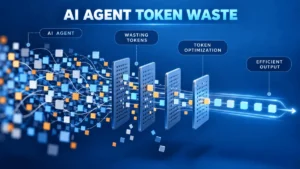
As generative AI transitions from experimental prototypes to mission-critical infrastructure, the focus for enterprise leaders has shifted from technical feasibility to economic sustainability. The rapid adoption of agentic workflows—where AI systems autonomously plan, execute, and iterate on complex tasks—has rendered traditional cost-tracking methods obsolete. Unlike simple chat interfaces that generate a single model invocation per user prompt, agentic systems can trigger dozens of calls for a single objective, often carrying massive context windows that escalate cloud consumption. For organizations scaling these deployments, cost management is no longer a peripheral finance task but a core architectural and operational requirement that demands a unified, five-stage governance framework.
The Evolution of AI Spending
The rise of generative AI has created a new, complex category of cloud expenditure. Historically, cloud spend was categorized by static infrastructure—compute, storage, and networking. Generative AI introduces token-based consumption, where costs are inextricably linked to model performance, context size, and the frequency of autonomous iterations.
Industry data suggests that without proper guardrails, AI development teams often default to using the most capable—and expensive—models regardless of the specific task requirements. This behavior, often termed "model over-provisioning," can lead to budget overruns that jeopardize the ROI of AI initiatives. As companies like those using Amazon Bedrock scale their agentic fleets, they are finding that the "shared responsibility" model applies not just to security, but to the economics of production-grade intelligence. Finance and engineering departments are now tasked with creating a feedback loop that transforms raw billing data into actionable business intelligence.
Stage 1: Establishing Granular Attribution
The foundational pillar of effective AI cost governance is the ability to map every dollar of expenditure to a specific owner, team, or project. In many organizations, the "shared-role problem" acts as a blind spot; when an entire platform accesses Amazon Bedrock through a single AWS Identity and Access Management (IAM) role, attribution is flattened, making it impossible to identify which user or business unit generated a specific cost.
To rectify this, organizations are adopting per-user session management. By using the AWS Security Token Service (STS) to assume roles with unique session names and tags, companies can restore visibility. This approach allows organizations to pass user attributes—such as cost center, team, or application ID—into the billing pipeline. When integrated with AWS Cost and Usage Reports (CUR) 2.0, this granular data transforms the billing report from an abstract invoice into a precise map of consumption patterns, enabling accurate chargeback models across diverse corporate departments.
Stage 2: Implementing Observability and Metadata
While billing reports explain what was spent, they lack the context required to understand why. Observability must be treated as a first-class engineering requirement. By enabling model invocation logging, teams can capture request metadata—the "who, what, and why" of every interaction.
The implementation of request metadata is critical for workload-level analysis. By stamping calls with identifiers for the specific workflow, application, or tenant, developers gain the ability to analyze their consumption through tools like Amazon CloudWatch Logs Insights. This allows for the identification of "token-heavy" workflows. For instance, an engineering team might discover that a specific coding assistant is consuming 40% of the total budget due to redundant file-reading loops. Without this level of granular telemetry, the cost of an agentic workflow remains a "black box," preventing engineers from refining the logic that drives high consumption.
Stage 3: Enforcement and Budget Guardrails
Once visibility is established, the next logical step is enforcement. Organizations typically approach this in three tiers, depending on their risk tolerance and operational maturity.
The first tier, monitoring and alerting, relies on AWS Budgets to trigger notifications when thresholds are crossed. While non-intrusive, it leaves room for accidental overspend. The second tier involves IAM tag enforcement, where an automated process identifies users who have breached their budget and temporarily restricts their access by modifying IAM policies. This provides a hard stop without requiring complex middleware.
The third and most advanced tier is gateway-based enforcement. By routing traffic through a dedicated gateway, such as the Claude apps gateway for AWS, organizations can implement synchronous, sub-second blocking. This ensures that if a user or team hits their limit, the system immediately returns an error, preventing further consumption. This approach is increasingly preferred by high-velocity organizations where budgets are measured in millions of dollars and real-time control is a necessity.
Stage 4: Optimizing Platform Defaults
Most AI waste is not the result of malicious intent or extreme inefficiency, but rather suboptimal platform defaults. Optimization involves two primary levers: model routing and prompt caching.
Intelligent prompt routing allows organizations to direct requests to the most cost-effective model capable of handling the task. A simple summarization task, for instance, rarely requires a frontier model like Claude 3.5 Opus or equivalent, yet many systems default to the highest-performing model available. By automating the routing process, companies can significantly reduce their unit economics without compromising user experience.
Furthermore, prompt caching has emerged as a revolutionary tool for cost reduction. By caching stable prefixes—such as system instructions or common reference documentation—teams can reduce the input token costs for repeated tasks by as much as 80% to 90%. Platforms that monitor cache-read hit ratios can identify which workflows are failing to leverage this feature, usually because of non-deterministic elements like timestamps or session IDs being prepended to the prompt.
Stage 5: Operationalizing the Feedback Loop
The final, and perhaps most important, stage is the creation of a consistent review cadence. An operating model is only as effective as the decisions it informs. FinOps teams and platform engineers should hold regular reviews, utilizing a scorecard that tracks key metrics: cost per successful outcome, daily spend per developer, model routing efficiency, and cache hit ratios.
This scorecard shifts the conversation from "why is the bill so high?" to "how can we optimize the routing for this specific workflow?" When a metric falls into the "red" zone, the response should be a systemic adjustment—such as updating routing rules or adjusting token limits—rather than a plea for users to be more careful.
Implications for Enterprise AI Strategy
The adoption of this five-stage framework carries significant implications for the future of enterprise AI. As the technology matures, the definition of success is shifting from "AI performance" to "economic utility." Organizations that successfully implement these governance measures gain a competitive advantage: they can afford to run more agents, experiment with more use cases, and scale their AI infrastructure confidently, knowing that their spend is governed by transparent, enforceable, and data-driven policies.
Ultimately, the goal is to reach a state of "cost-aware development." When engineers can see the real-time financial impact of their code, they naturally optimize for efficiency. By aligning the incentives of product, engineering, and finance teams through a common language of metrics, enterprises can bridge the gap between the promise of generative AI and the reality of a sustainable, scalable business model. The transition from uncontrolled spending to disciplined governance is the defining challenge of the current AI deployment wave.
Related posts: