Scaling Intent-Driven UI Testing: How Epsilon Transformed Quality Assurance with Amazon Nova Act


In the rapidly evolving landscape of digital marketing and data-driven technology, maintaining consistent user interface (UI) quality across hundreds of web applications presents a formidable operational challenge. Epsilon, a global leader in data and marketing services and a subsidiary of Publicis Groupe, recently reached a critical inflection point. Managing a vast ecosystem of consumer profiles and brand relationships necessitated a more resilient approach to software testing that could keep pace with rapid deployment cycles. To solve this, the company’s Agentic Platform team turned to Amazon Nova Act and the Amazon Bedrock AgentCore Browser Tool, effectively pivoting from traditional, brittle selector-based testing to a highly scalable, intent-driven model.
The transition, which successfully operationalized a multi-tenant testing-as-a-service (TaaS) model for 50 internal engineers, marks a significant shift in how large enterprises handle automated quality assurance. By abstracting away the complexities of browser infrastructure, Epsilon has effectively eliminated the "maintenance tax" that typically hampers product teams when they attempt to implement comprehensive UI regression suites.
The Evolution of UI Testing at Epsilon
For years, Epsilon relied on a robust, Playwright-based regression suite to validate core functionality across its web estate. While this traditional approach served the company well, it was inherently tied to specific DOM selectors and hard-coded pathways. As the complexity of Epsilon’s applications grew, the overhead required to maintain these tests became unsustainable. Minor design changes or UI updates often necessitated significant refactoring of test scripts, leading to "flaky" tests and delayed release pipelines.
The objective was not to replace the functional backbone provided by Playwright, but to augment it with a layer of intelligent, intent-based testing. The team envisioned a system where tests could be defined by what a user needs to achieve—such as "Create an agent" or "Verify account balance"—rather than the specific technical steps required to interact with a button or a text field. By integrating Amazon Nova Act, the team discovered they could describe these objectives in natural language, leaving the underlying browser logic to be handled by an AI-driven agent.
A Chronology of Integration and Architecture
The implementation began with the Agentic Platform team, which is tasked with providing shared infrastructure for over 50 internal engineers. The goal was to provide a seamless, self-service environment where product teams could deploy AI agents without having to rebuild foundational security, identity, or browser infrastructure.
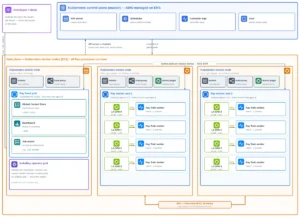
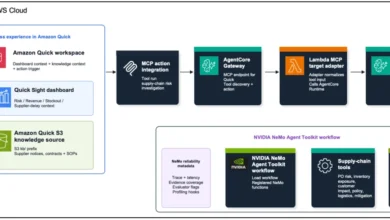
The architecture was structured into three distinct layers:
- The API Gateway Layer: Utilizing Django REST, this layer handles all authentication, authorization, and workflow management. It acts as the primary interface for product teams to register their applications and define test suites.
- The Execution Orchestrator: This backend service manages the queueing of test jobs via Amazon SQS. When a test is triggered, the service deploys a headless Chromium browser within an Amazon ECS container, integrated with the Nova Act engine.
- The Storage and Observability Layer: All test artifacts, including screenshots, video trajectories, and HTML reports, are persisted in Amazon S3, ensuring full traceability and compliance for audit-heavy marketing applications.
By the second quarter of 2025, the team successfully piloted the ui-test-agent within this framework. The integration is technically lean, utilizing a WebSocket connection to the browser’s Chrome DevTools Protocol (CDP). This allows the agent to observe the page state in real-time and execute actions based on semantic understanding of the interface, rather than static coordinates or CSS selectors.
Comparative Metrics: The Efficiency Dividend
The shift to an intent-based model has yielded measurable improvements in productivity and reliability. Data provided by Epsilon’s platform team highlights a stark contrast between legacy methods and the new Nova Act-driven workflow. In a representative 18-step test workflow, the traditional Playwright approach would require between 80 and 150 lines of code, involving constant DOM inspection and manual selector mapping. In contrast, the same workflow can be authored in approximately 10 to 15 minutes using 18 natural-language intent steps.
| Metric | Traditional (Playwright) | Intent-Driven (Nova Act) |
|---|---|---|
| Authoring Effort | 30-90 minutes | 5-10 minutes |
| DOM Inspection | Required | None |
| Maintenance Burden | High (selector updates) | Low (intent-based) |
| Total Effort Ratio | 4-6x higher | Baseline |
These efficiencies have allowed Epsilon to increase test coverage by approximately 40% within the first six months of deployment, without increasing the size of their QA engineering staff. The "effort ratio," which calculates the cost of maintenance relative to the value provided, indicates that the AI-augmented workflow is significantly more sustainable for long-term project lifecycles.
Overcoming Operational Hurdles: Best Practices
Epsilon’s deployment was not without its learning curves. To ensure the stability of this platform, the team developed several best practices that are now considered institutional knowledge within the organization:
- Runtime Isolation: The team realized that mixing Nova Act dependencies with the main backend stack could lead to version conflicts. By isolating the runtime in a dedicated FastAPI sidecar container, they prevented environmental collisions and ensured that the testing service could be updated independently.
- Trajectory Reuse: One of the most effective cost-saving measures involves saving successful "trajectories"—the recorded steps taken by the AI. For repetitive regression testing, the system replays these trajectories rather than asking the LLM to "think" through the process again, which significantly reduces both compute latency and cost.
- Multi-tenancy via IAM: By leveraging cross-account AssumeRole policies, the team ensured that every tenant’s tests run within their own secure environment. This provides a clear audit trail and ensures that no single product team can inadvertently access the data or configurations of another.
Broader Implications for the Industry
The success of Epsilon’s approach signals a broader trend in software engineering: the transition from "code-heavy" automation to "logic-heavy" automation. As large language models (LLMs) and agentic frameworks like Nova Act become more reliable, the role of the QA engineer is shifting from a "coder of tests" to an "architect of intent."
For organizations managing large-scale, multi-tenant platforms, this model provides a blueprint for democratizing testing. By exposing testing as a platform service, companies can empower product managers and business analysts—who may lack advanced coding skills—to define and run complex functional tests. This democratized access ensures that testing is integrated earlier in the development lifecycle, effectively shifting quality further "left."
Furthermore, the integration of Amazon Bedrock AgentCore Browser Tool serves to abstract the operational burden of managing browser binaries and display servers. This is particularly significant for enterprises that have historically spent millions of dollars on maintaining internal testing grids. By offloading this infrastructure to managed AWS services, companies like Epsilon can redirect their engineering talent toward higher-value initiatives, such as product feature innovation and data strategy.
Looking Ahead
As Epsilon continues to scale its use of Amazon Nova Act, the company is looking at further integrating these agents into its automated deployment pipelines. The ability to automatically verify a user flow, report on its success, and provide a visual trajectory in the event of a failure has transformed the feedback loop for their product teams.
Industry analysts suggest that this type of "autonomous testing" will become a standard requirement for enterprise-grade SaaS platforms by the end of the decade. While traditional frameworks will likely remain the backbone for low-level component testing, the high-level, end-to-end orchestration provided by agents will increasingly handle the complex, multi-step workflows that define modern web applications.
For Epsilon, the result is more than just faster testing; it is a more resilient product culture. By treating testing as a managed platform capability, the company has ensured that its rapid pace of innovation does not come at the expense of user experience or system stability. As other organizations look to replicate this success, the focus will undoubtedly shift toward balancing the high-level benefits of AI-driven automation with the rigorous governance and security standards required in a competitive global market.