Pentagon Seeks $30 Million for AI-Powered Polygraph Next Initiative Amid Rising Leak Investigations

The United States Department of Defense is seeking a federal investment of $30.3 million over the next five years to develop and deploy an advanced iteration of the traditional lie detector. According to recent Department of Defense budget justification documents submitted for fiscal year 2027, the initiative—formally designated as Polygraph+ or Polygraph Next—aims to revolutionize credibility assessment technologies through the integration of artificial intelligence, machine learning algorithms, and non-contact physiological sensing methods.
This ambitious federal push comes at a time of heightened institutional anxiety and internal security scrutiny within the Pentagon. Under the leadership of Defense Secretary Pete Hegseth, the defense establishment has increasingly relied on high-stakes polygraph examinations to trace the sources of sensitive national security disclosures to the press. The intersection of modern surveillance technology, artificial intelligence, and federal personnel security vetting has reignited a fierce debate among legal scholars, computer scientists, and civil liberties advocates regarding the scientific validity and ethical implications of automated deception detection.
The Scope of Polygraph Next and Technological Ambitions
According to official planning documents first brought to light by the defense trade publication Inside Defense, the Polygraph+ project is designed to fundamentally modernize federal polygraph systems to achieve significantly higher levels of accuracy, reliability, and throughput. The core of the program rests on two primary technological pillars: advanced algorithmic scoring driven by machine learning, and "standoff sensing."
Standoff sensing represents a radical departure from conventional polygraph examinations, which require subjects to be physically tethered to diagnostic hardware via blood pressure cuffs, pneumograph tubes, and galvanic skin response finger plates. Instead, standoff sensing seeks to capture involuntary physiological metrics from a distance using specialized hardware such as thermal imaging cameras, high-definition optical sensors, and laser Doppler vibrometry.
While the Defense Counterintelligence and Security Agency (DCSA)—the division tasked with conducting background investigations and security clearances across the federal apparatus—will manage the program, specific contractor details remain tightly controlled. However, recent procurement trajectories offer substantial insight into the Pentagon’s technical roadmap. In 2023, the Defense Innovation Unit (DIU), an organization tasked with bridging the gap between commercial tech innovation and military requirements, launched an open solicitation seeking commercially viable deception detection prototypes.
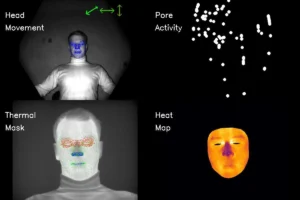
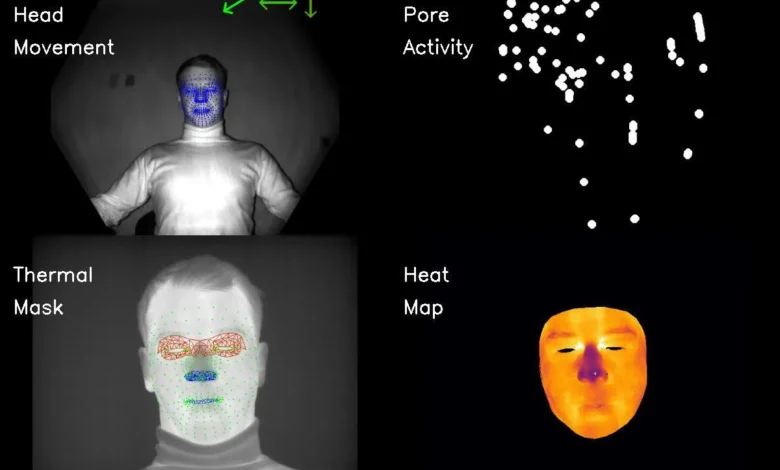
The DIU subsequently selected two private entities to develop prototype systems: Presage Technologies, a firm asserting an ability to measure cardiovascular metrics and respiration rates solely through standard optical cameras, and Altec Research, a specialized medical sensor enterprise expanding into non-contact biometrics. Released DIU documentation and technical imagery indicate that Altec’s prototype tracks minute physiological indicators including head movement dynamics, localized facial skin temperature differentials, and micro-sweat pore activity.
Chronology of Institutional Tension and Leak Probes
The urgency driving the funding request for Polygraph+ is deeply rooted in a series of high-profile security breaches that have rattled Pentagon leadership. The contemporary reliance on expanded polygraph testing reflects a reactive posture to internal leaks concerning military readiness and strategic positioning.
The friction intensified notably in September of the previous year. Investigative reporting by The New York Times revealed that approximately 50 senior military officers assigned to the Joint Staff were subjected to mandatory polygraph examinations following media coverage detailing the severe depletion of United States precision-guided munitions and tactical weapon stockpiles resulting from ongoing regional conflicts involving Iran.
This aggressive employment of credibility assessments for internal intelligence containment reflects a broader historical pattern within the national security state. Whenever classified operational details emerge in public reporting, federal agencies frequently resort to mass polygraph screenings of personnel with access to the affected information, creating an internal climate characterized by suspicion and deterrence.
A Century of Contested Science: The Polygraph Legacy
To understand the challenges facing the Polygraph+ initiative, analysts point to the persistent scientific skepticism that has dogged the traditional polygraph since its operational inception in the 1920s. For nearly a century, the fundamental operational premise of the lie detector has remained largely unchanged. Examiners measure localized autonomic nervous system responses—specifically blood pressure fluctuations, pulse rates, respiratory depth, and electrodermal activity—while a subject answers a structured series of baseline questions (such as inquiries regarding basic factual truths) alongside relevant target inquiries (such as past criminal behavior or security violations).
Despite its widespread administrative utilization, the scientific foundation of the polygraph has faced continuous institutional rebuke. In 1983, the Office of Technology Assessment (OTA), a former analytical arm of the United States Congress, released a landmark evaluation concluding that there was insufficient scientific evidence to substantiate the validity of polygraph testing in employee screening contexts. Two decades later, in 2003, the U.S. National Research Council (NRC) published an exhaustive review declaring that the empirical support for polygraph efficacy was "weak at best."
Legal systems across the United States have consistently reflected this skepticism. Results derived from traditional polygraph examinations are rarely admissible as evidence in federal and state courts due to their unproven reliability and susceptibility to error.
Statistically, the margin for error carries profound human consequences within massive organizations. The American Polygraph Association (APA) asserts accuracy rates ranging between 80% and 94%. However, critics and statistical analysts note that even within these claimed parameters, the mathematical reality of applying such a test across a massive enterprise like the Department of Defense—which employs approximately 2.8 million active-duty military personnel, civilian workers, and defense contractors—leads to systemic failure. An imperfect diagnostic screening tool applied at this scale risks generating false positives for tens of thousands of loyal personnel, misidentifying honest workers as security threats.

Furthermore, traditional polygraphs are plagued by subjective interpretation. Independent researchers have repeatedly demonstrated that different examiners evaluating the exact same physiological chart can arrive at contradictory conclusions. Studies have likewise indicated that individuals belonging to certain demographic or ethnic minority groups may experience higher rates of false-positive determinations due to physiological variations or elevated stress responses in authoritative environments.
Compounding these validity concerns is the vulnerability of the technology to physical and mental countermeasures. Subjects undergoing polygraph testing can deliberately manipulate their physiological baselines by employing covert techniques, such as altering their breathing patterns or applying subtle physical pressure—like stepping on a small tack concealed inside a shoe—during control questions to artificially inflate their autonomic reactivity.
The Mirage of the Technological Silver Bullet
As Sophie van der Zee, an associate professor specializing in deception research at Erasmus University Rotterdam, observes, the primary utility of the polygraph has historically been psychological rather than analytical. "If you know how it works, you can beat it," van der Zee notes, emphasizing that the machine’s primary efficacy functions as a deterrent mechanism, frequently inducing pre-test admissions from anxious subjects. "But that only works if people think a polygraph works."
Over the past several decades, federal researchers and private developers have repeatedly attempted to engineer a foolproof, next-generation alternative. Proposed innovations have ranged from high-resolution thermal imaging systems and rapid pupil-tracking software to functional magnetic resonance imaging (fMRI) brain scans. None of these methodologies have achieved reliable diagnostic validity outside controlled laboratory environments.
The core obstacle remains biological: human deception does not produce a singular, universal physiological indicator akin to a physical manifestation of guilt. As researchers frequently summarize, science has yet to discover a functional "Pinocchio’s nose."
The AI Integration Debate: Modernizing Uncertainty
Proponents of the Department of Defense’s Polygraph+ initiative argue that artificial intelligence and machine learning can overcome these historical limitations by identifying complex, multi-dimensional patterns in physiological data that human examiners fail to detect.
Modern deception detection theory posits that lying engages three distinct psychological and physiological mechanisms simultaneously: heightened autonomic stress, increased cognitive load, and the conscious executive effort required to suppress truth and fabricate a consistent narrative. Traditional polygraphs capture primarily physiological stress. By synthesizing disparate data streams—such as vocal tremors, micro-expressions, thermal fluctuations, and ocular dynamics—into a unified, multi-modal deception algorithm, AI advocates believe the system’s resilience can be substantially enhanced.
This conceptual framework is not entirely novel. Throughout the 2000s and 2010s, various institutional and governmental bodies pursued similar multi-modal automation projects. Researchers at Manchester Metropolitan University developed "Silent Talker," a computer-based system designed to evaluate deception from video feeds. This research later informed iBorderCtrl, an automated, EU-funded pilot program intended to screen travelers at international borders. Concurrently, the United States developed AVATAR (Automated Virtual Agent for Truth Assessments in Real-time), an avatar-driven kiosk integrating eye-tracking, voice analysis, and postural monitoring for border security screening applications. Ultimately, these advanced pilots quietly faded from operational deployment following persistent scientific challenges and privacy concerns.
Legal scholars and biometrics experts remain deeply critical of the Pentagon’s renewed investment. Kyri Kotsoglou, a legal scholar at Northumbria University who specializes in the application of forensic technologies within criminal justice systems, characterizes the marriage of AI and polygraph testing as "the worst of both worlds."
According to Kotsoglou, introducing machine learning algorithms to analyze fundamentally flawed physiological data merely layers mathematical complexity over unverified scientific premises. Because no absolute "ground truth" dataset exists to train deception algorithms—a polygraph chart cannot objectively prove whether a subject is lying or telling the truth—machine learning models are trained on inherently noisy, subjective inputs.
"Even if you have all the records in the world from polygraph tests, you don’t know whether those polygraph tests are right or not," notes Marion Oswald, a professor of law who has collaborated with Kotsoglou on research examining credibility assessment technologies. Oswald argues that the current political climate surrounding internal security has transformed technical research into an instrument of intimidation.
"It seems very much a response to the concern of the current administration to leaks and perceived lack of loyalty," Oswald stated. "It’s being used as a threat, to intimidate and force people to confess to things, as opposed to anything that’s actually getting valid information."
Broader Implications and Outlook
As the Department of Defense’s $30.3 million budget request awaits congressional review and authorization, the implications of the Polygraph Next initiative extend far beyond internal Pentagon security protocols. The development of advanced, AI-driven standoff sensing tools by defense contractors risks setting a controversial precedent for federal civilian vetting, law enforcement agencies, and commercial workplace monitoring.
If advanced non-contact biometrics and algorithmic lie detection systems are institutionalized within national security clearance procedures, civil liberties organizations anticipate intense legal challenges regarding privacy rights, due process, and the protection of federal employees against arbitrary algorithmic profiling. For now, the Pentagon’s pursuit of an infallible truth machine highlights a persistent tension between the institutional desire for absolute internal security and the enduring scientific reality of human complexity.