The Unseen Foundation: How Advanced Materials Are Powering the AI Revolution

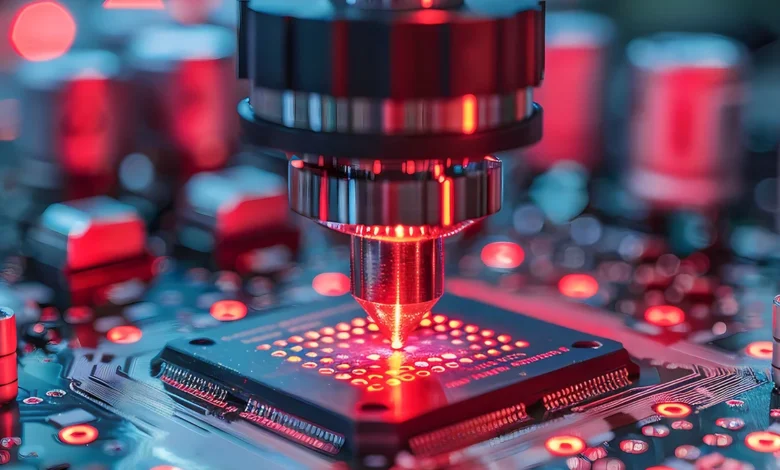
The explosive growth of artificial intelligence, characterized by increasingly sophisticated algorithms, colossal computing power, and massive investments in semiconductor fabrication plants and hyperscale data centers, often overshadows a crucial, yet less visible, layer of innovation: advanced materials. These specialized substances are not merely supporting players; they are the fundamental enablers, dictating the very limits of what AI technologies can achieve. Every leap forward in AI demands greater processing power, enhanced memory capacity, superior energy efficiency, and unwavering reliability. This escalating performance requirement places unprecedented physical demands on the systems that design, manufacture, and operate AI, making advancements in materials science an indispensable component of the ongoing revolution.
The relentless pursuit of higher computing performance is inextricably linked to the physical properties of the materials used in semiconductors and the supporting infrastructure. Chip design and system architecture have seen remarkable progress, but these innovations are fundamentally constrained by the materials that must withstand extreme operating conditions. As AI continues to push the boundaries of semiconductor physics and data center engineering, advanced materials are transitioning from passive enablers to active definers of future technological possibilities. Their development and application are no longer just about supporting AI; they are about shaping its trajectory.
The Performance Imperative: Meeting AI’s Escalating Demands
At their core, advanced materials exist to solve complex performance challenges, and the escalating demands of AI are pushing these challenges to unprecedented extremes. The manufacturing of a modern semiconductor chip is a testament to precision engineering, involving thousands of meticulously controlled process steps where even minute deviations can lead to defects, reducing production yields and escalating costs. With each new generation of semiconductor technology, manufacturers are actively seeking materials that offer enhanced purity, superior resistance to aggressive chemicals and plasma environments, and greater stability under increasingly demanding operational conditions. These are not new engineering challenges, but rather familiar ones amplified to an unprecedented degree.
This is precisely where materials innovation becomes the critical differentiator. Continuous advancements in polymers, elastomers, specialty fluids, and other high-performance materials are making each successive generation of technology possible. For companies specializing in materials science, the objective is not to reinvent the complex processes of semiconductor manufacturing but to ensure that the materials supporting this industry evolve in lockstep with it. This principle extends far beyond the confines of the fabrication floor. As AI workloads become more computationally intensive, the physical infrastructure that powers them is undergoing a rapid transformation.
The drive for increased computing density is fundamentally reshaping data center design. This evolution necessitates more sophisticated thermal management solutions, higher-voltage power architectures, expanded data storage capabilities, and faster, more dependable data transmission. Every component within these systems, from cooling and power management units to critical electronic elements like connectors, capacitors, and hard disk drives, is subjected to intensified pressures.
Syensqo, a global leader in specialty materials, is leveraging its deep expertise in electronic and electrical components, drawing insights from diverse markets, to address these emerging needs. For instance, as data centers migrate towards higher-voltage architectures and greater power density, the material challenges encountered bear a striking resemblance to those faced in the electric vehicle (EV) sector. The sophisticated fluid circulation techniques honed in semiconductor and automotive coolant systems, for example, can be readily adapted to design direct liquid-cooling solutions for AI servers. This cross-market knowledge transfer is instrumental in accelerating the development of novel power and thermal management solutions, while simultaneously upholding the stringent reliability standards demanded by next-generation AI infrastructure. Whether on the semiconductor fabrication floor or within hyperscale server farms, the fundamental challenge for materials science companies remains consistent: enabling enhanced performance without any compromise on reliability.
Redefining Performance: Beyond Technical Prowess
While performance remains the paramount concern, the very definition of what constitutes "performance" in advanced materials is undergoing a significant evolution. Beyond meeting the increasingly stringent technical requirements of next-generation semiconductors and data centers, there is a growing expectation that these materials are developed and manufactured with a heightened sense of responsibility.
Consider perfluoroelastomers (FFKM), critical sealing materials employed in the harsh environments of semiconductor manufacturing. These materials must operate effectively under extreme temperatures, aggressive plasma conditions, and in the presence of highly reactive chemicals. To address the environmental impact associated with their production, Syensqo has developed a next-generation line of FFKMs that utilize a fluorosurfactant-free manufacturing process. The objective was twofold: to create a material that not only performs better but is also produced in a more sustainable manner, ensuring that manufacturers no longer face a trade-off between superior performance and responsible production practices.
This approach reflects a broader industry-wide trend. New materials are not adopted simply by virtue of their novelty. The qualification process for advanced materials can be an arduous journey, often spanning years. Manufacturers are compelled to make changes only when a material demonstrably solves a genuine engineering challenge or unlocks entirely new technological capabilities. Performance, therefore, remains the essential prerequisite for market entry. However, the contemporary definition of performance has expanded significantly. Success is increasingly contingent upon delivering technical excellence coupled with manufacturing processes that prioritize sustainability from their inception.
Accelerating Discovery: AI’s Role in Materials Innovation
As the performance bar for AI technologies continues to rise, the methodologies employed in materials innovation must evolve in parallel. The traditional path to developing advanced materials has been a lengthy cycle of hypothesis generation, synthesis, rigorous testing, and iterative refinement. While this fundamental scientific process remains unchanged, the advent of new digital tools, particularly artificial intelligence, is dramatically accelerating these cycles. AI empowers researchers to identify the most promising material candidates earlier in the discovery phase, thereby reducing the number of physical experiments required and significantly speeding up the initial stages of materials exploration.
It is crucial to emphasize that AI is not supplanting scientific expertise; rather, it is augmenting it, enabling scientists to apply their knowledge more effectively. This allows researchers to dedicate less time to the often-tedious search for answers and more time to tackling the industry’s most pressing and complex challenges.
Syensqo is actively integrating this AI-driven approach into its research and development operations. The company is employing various AI tools, including the Microsoft Discovery platform, to assist researchers in identifying and evaluating promising molecular candidates for next-generation heat transfer fluids. These fluids are vital for both semiconductor manufacturing processes and the thermal management of AI data centers. AI algorithms enable Syensqo’s researchers to rapidly pinpoint and assess potential molecular candidates based on their predicted properties, allowing for a more focused allocation of laboratory resources to areas with the highest probability of yielding impactful results. This accelerates the pace of discovery and shortens the timeline for transforming promising materials into solutions that customers can reliably qualify and deploy.
The journey from initial laboratory discovery to a fully qualified and deployable material will invariably require deep scientific expertise, meticulous validation, and close collaborative partnerships with end-users. However, by significantly accelerating the nascent stages of discovery, AI is proving to be an indispensable tool in ensuring that materials innovation can keep pace with the rapidly evolving demands of industries such as semiconductors, electronics, and data centers.
Progress is Earned: The Ongoing Challenge and Opportunity
The future trajectory of artificial intelligence will undoubtedly be shaped by advancements in algorithms, the development of more powerful semiconductor chips, and the expansion of computing infrastructure. However, sustaining this progress and unlocking the next wave of AI capabilities will critically depend on parallel innovations in the underlying materials that make these technologies possible.
Whether within the intricate processes of semiconductor manufacturing or the vast architectures of AI infrastructure, progress is not given; it is earned. Each new generation of technology inherently raises the performance bar, and every novel material must unequivocally prove its ability to deliver the requisite performance, reliability, and efficiency before it can secure its place in the technological ecosystem. For companies operating in the advanced materials sector, this presents both a formidable challenge and a significant opportunity to shape the future of computing and artificial intelligence.