The Email Playbook Every Digital Product and Course Creator Actually Needs


Selling a physical product and selling a course or digital product are fundamentally different challenges, requiring distinct strategies, particularly in how email marketing is employed. For physical goods, the tangible nature of the product often speaks for itself. A customer can hold it, feel its quality, and assess its value directly. In such scenarios, email’s primary role is to drive traffic to the product page, where the item’s inherent appeal can seal the deal. However, for digital products and courses, the burden of persuasion falls almost entirely on the email itself. Without a physical item to examine, the email must convey a compelling promise of value, ensuring the prospect believes the content or service is worth their time and investment. This distinction necessitates a different strategic approach, one that prioritizes trust, education, and relationship-building before even considering a direct sales pitch.
The genesis of this disparity lies in the very nature of the transaction. When a consumer purchases a physical item, the immediate gratification and tangible evidence of their purchase can foster satisfaction. Conversely, a digital product’s value is often realized over time through its application or the knowledge gained. This delayed gratification cycle means that email marketing for digital products must not only attract attention but also sustain engagement and build confidence over an extended period.
The Unique Role of Email in Digital Product Sales
For traditional e-commerce brands, email marketing typically functions as a powerful tool for customer retention and re-engagement. Its objective is to entice existing customers back to the storefront, recapture abandoned carts, and cultivate brand loyalty through repeat purchases. However, for creators of digital products and online courses, email often serves as the entire sales funnel.
The customer journey frequently begins with an introduction through indirect channels such as podcasts, social media posts, or word-of-mouth referrals. Potential customers might express initial curiosity but are not yet prepared to commit to a purchase. The next step often involves signing up for a free resource, such as a webinar, a downloadable guide, or a mini-course. This action places them on the creator’s email list, initiating a crucial relationship-building phase. The success of this relationship, cultivated through consistent and valuable email communication, is often the deciding factor in whether a subscriber ultimately converts into a paying customer.
Unlike physical product sales, the digital product ecosystem often lacks the safety nets of abandoned cart recovery sequences or retargeting pixels performing heavy lifting. The entire conversion process hinges on the quality and effectiveness of the emails sent, and their ability to consistently earn trust and demonstrate value week after week, culminating in a well-timed offer.
Beyond the Lead Magnet: The Power of the Nurture Sequence
Many course creators excel at developing effective lead magnets – valuable free resources designed to capture email addresses. However, a common pitfall is treating these lead magnets as the culmination of the value exchange, rather than its starting point. A lead magnet’s primary function is to secure the opt-in. It is the subsequent welcome sequence that captures the subscriber’s attention, and it is the ongoing nurture content that ultimately earns their trust and leads to a sale.
Foundr, a prominent platform for entrepreneurs, offers a compelling case study in this regard. Their free trainings, strategically placed at the top of their marketing funnel, are not merely lead generation tools. Instead, they serve as the introductory chapters of an extended dialogue with founders at various stages of their business development. By the time an individual engages with Foundr+, their membership platform featuring over 30 courses and a community of more than 30,000 entrepreneurs, they have typically consumed a substantial amount of free content. This consistent exposure has already fostered a sense of trust in the source. Consequently, the subsequent offer of a low-risk $1 trial becomes a natural and easily accessible next step, removing the final barrier to conversion. This sequential approach, moving from free value to an accessible entry point, is highly effective because it prioritizes the establishment of trust.
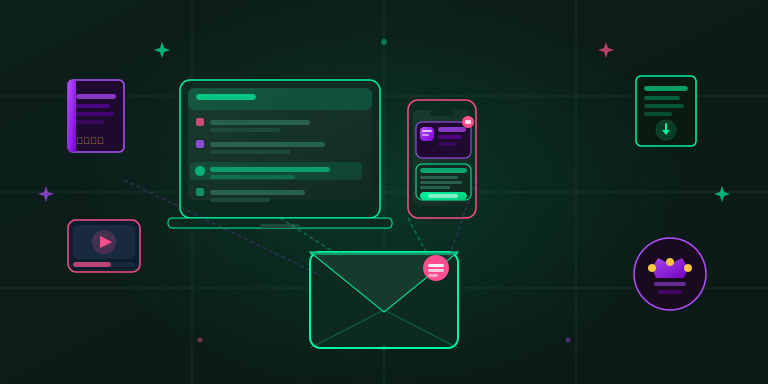
Crafting Nurture Sequences That Drive Engagement and Conversion
The objective of a nurture sequence extends beyond simply filling a subscriber’s inbox. Its core purpose is to progressively cultivate belief in several key areas: the reality and significance of the problem the creator is addressing, the credibility and efficacy of their proposed solution, and the logical positioning of their course or digital product as the optimal next step for an individual committed to achieving progress.
A highly effective nurture sequence typically follows a clear narrative arc. It commences by acknowledging and validating the immediate challenges and pain points experienced by the target audience. Subsequently, it pivots to illustrate the aspirational possibilities and positive outcomes achievable once these challenges are overcome. This is followed by the introduction of social proof, such as testimonials from satisfied students, detailed case studies, or the creator’s own relatable journey. By the time the course or product is introduced, a subscriber who has journeyed through this arc is not merely reading a sales pitch; they are encountering confirmation of a decision they have already begun to internalize.
The optimal length of a nurture sequence is contingent upon the price point of the offering. A lower-priced digital product, such as a $49 ebook, may convert effectively with a sequence of three to four emails. In contrast, a flagship course or a premium membership typically requires a more extended engagement period. A runway of six to ten emails, spread over several weeks, is often necessary before the sales cart opens to allow sufficient time for trust to solidify and conviction to grow.
The Distinct Discipline of Launch Emails
When a sales window opens, the established rules of engagement shift. The measured, value-centric approach that characterizes a nurture sequence is insufficient to drive a successful launch. A launch period is defined by a contained sense of urgency, and the accompanying emails must mirror this elevated energy.
The opening emails of a launch should ideally begin with a compelling narrative rather than a dry list of features. Mid-launch emails are best utilized to directly address potential objections. For instance, if a common concern is time constraints, the emails should highlight how existing students successfully integrate the course into their busy schedules. If prospects express doubt about the product’s applicability to their specific situation, sharing a success story from an individual with a similar background can be highly persuasive.
The concluding emails of a launch must convey honesty and transparency. An explicit and genuine deadline should be communicated. Manufactured urgency can quickly erode credibility the moment it is tested. Authentic urgency, on the other hand, does not require hyperbole; its inherent validity speaks for itself. During the final 48 hours of a launch, sending one email per day is not excessive. By this stage, interested subscribers are actively seeking information and reminders.
The Underserved Opportunity: Post-Purchase Communication
Once the sales cart closes and the sales page is taken down, many course creators fall silent. This is a significant missed opportunity. A simple check-in email sent approximately one week after a purchase, inquiring about the student’s progress, can generate a disproportionate amount of goodwill. Many buyers are unaccustomed to seeing the creator actively engaged after the transaction has been completed.
Progress-based emails that acknowledge key milestones and offer encouragement to students who may be lagging can have a direct and positive impact on course completion rates. High completion rates are invaluable, as a student who successfully finishes a course and achieves tangible results becomes the most potent marketing asset. They are the individuals who generate authentic testimonials, refer friends and colleagues, and are predisposed to purchase future offerings.
Foundr reinforces this principle with a 90-day results guarantee on Foundr+. Such a commitment is only viable if the post-purchase experience is robust enough to facilitate student success. Email communication plays an integral role in delivering this exceptional experience.
Final Thoughts on Sustainable Email Growth
Building a digital product business on the foundation of email marketing represents one of the most enduring and resilient models in online entrepreneurship. It is a strategy that is not beholden to algorithmic whims or vulnerable to the unpredictable shifts in platform rules. Its growth is directly proportional to the care and attention invested in nurturing the audience on the email list.
The most successful creators are not necessarily sending a higher volume of emails, but rather, they are sending more effective emails, strategically timed to reach individuals who have already established a level of trust and are inclined to open and engage.
Platforms such as Omnisend are specifically designed to support this strategic approach, offering automation tools that manage nurture sequences, launch flows, and post-purchase follow-ups with minimal manual intervention. Their segmentation capabilities ensure that the right message reaches the right subscriber at the appropriate stage of their journey, optimizing engagement and conversion rates.
For businesses considering a transition from other email marketing platforms, Omnisend aims to streamline the process. Their migration team offers complimentary assistance in transferring all flows, lists, and templates, typically completing the process within five business days. This transition often results in significant cost savings, with users paying up to 35% less than their previous providers, and SMS messaging starting at an attractive rate of $0.007 per message. Furthermore, a special offer provides Foundr readers with a 50% discount on their first three months when using the code FOUNDR50 during signup, encouraging the development of an email program that audiences genuinely anticipate receiving.
The enduring power of email marketing in the digital product space lies in its direct relationship with the audience. By focusing on genuine value, consistent engagement, and a deep understanding of the customer journey, creators can build a sustainable and thriving business that is resilient to external market fluctuations.