ProjectManager vs. Asta Powerproject for Construction: A Comprehensive Evaluation of Scheduling Software for General Contractors and Subcontractors

The selection of construction scheduling software remains one of the most critical operational and financial decisions facing general contractors, specialty subcontractors, and project owners. As construction projects grow increasingly complex—driven by tight margins, stringent compliance regulations, and the constant pressure to accelerate delivery timelines—the industry relies heavily on sophisticated digital tools to manage Critical Path Method (CPM) schedules, resource allocation, and field-to-office communication. Within this competitive landscape, two platforms frequently emerge as frontrunners for distinctly different operational philosophies: Asta Powerproject, a heavy-duty, Windows-native desktop scheduler engineered for formal program analysis and 4D Building Information Modeling (BIM); and ProjectManager, a cloud-native platform designed to bridge the gap between office planners and on-site superintendents through real-time collaboration.
Background Context and Industry Evolution
For decades, the construction sector relied on traditional, siloed methodologies where dedicated planning engineers built master schedules behind closed doors, issuing static PDF prints or specialized viewer files to project teams on-site. This traditional workflow often resulted in a dangerous information lag. A delay on the jobsite—such as an unexpected weather event or a delayed material delivery—might take days to be reflected in the master program, leading to misinformed decision-making and costly project overruns.
In response to these inefficiencies, the market has undergone a significant digital transformation. Cloud-based project management solutions have risen in prominence, promising instantaneous updates, mobile accessibility, and lower barriers to entry for field personnel. Concurrently, traditional desktop scheduling tools have evolved to incorporate advanced risk analysis, multi-baseline tracking, and automated schedule health metrics compliant with the Defense Contract Management Agency (DCMA) and the Chartered Institute of Building (CIOB).

Evaluating ProjectManager and Asta Powerproject requires a thorough examination of platform capabilities, deployment models, pricing structures, and real-world applicability across various tiers of the construction ecosystem.
Core Architectural Differences: Desktop Power vs. Cloud Agility
The fundamental divergence between Asta Powerproject and ProjectManager lies in their architectural design and intended user base.
Asta Powerproject is unabashedly a planner’s tool. Built primarily as a Windows desktop application, it excels at managing massive, highly detailed construction programs containing thousands of tasks, complex resource loading profiles, and sophisticated logic relationships. It is widely regarded as an industry standard in the United Kingdom, Commonwealth nations, and among Tier 1 civil infrastructure contractors where complex contractual requirements dictate the use of native .pp files. Furthermore, Powerproject’s native integration with 4D BIM allows planners to link 3D components directly to schedule tasks, providing a visual simulation of the construction sequence over time.
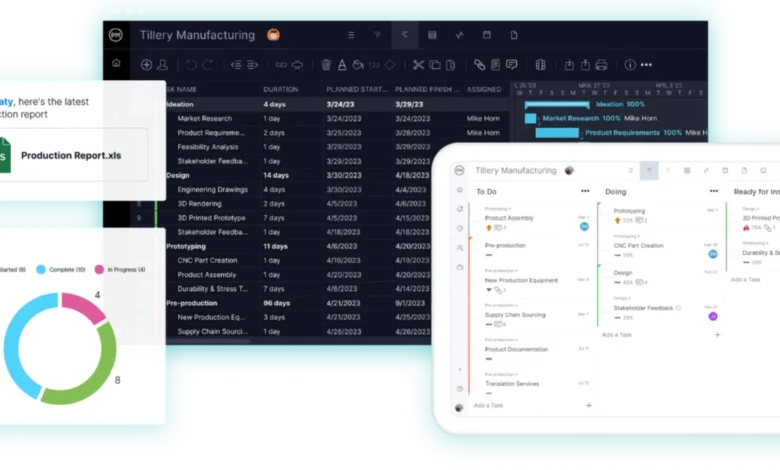
ProjectManager, conversely, is built on a cloud-first infrastructure designed for cross-functional accessibility. Rather than restricting schedule editing to a solitary planner running a high-powered desktop computer, ProjectManager enables superintendents, project managers, and subcontractors to interact with a single, live schedule from any web browser or via dedicated iOS and Android mobile applications. This architecture eliminates the friction of file-sharing and ensures that all stakeholders operate from a single source of truth in real time.

Comparative Feature Analysis
To better understand how these two platforms serve the construction industry, a detailed comparative analysis of their core capabilities highlights their respective strengths and limitations:
| Feature / Capability | ProjectManager | Asta Powerproject |
|---|---|---|
| Primary Target Audience | Collaborative job teams requiring office-to-field synchronization | Dedicated planning professionals building complex master programs |
| Deployment Platform | Cloud-native (browser-based, iOS, and Android applications) | Windows desktop; SaaS option available for Mac and Windows Home |
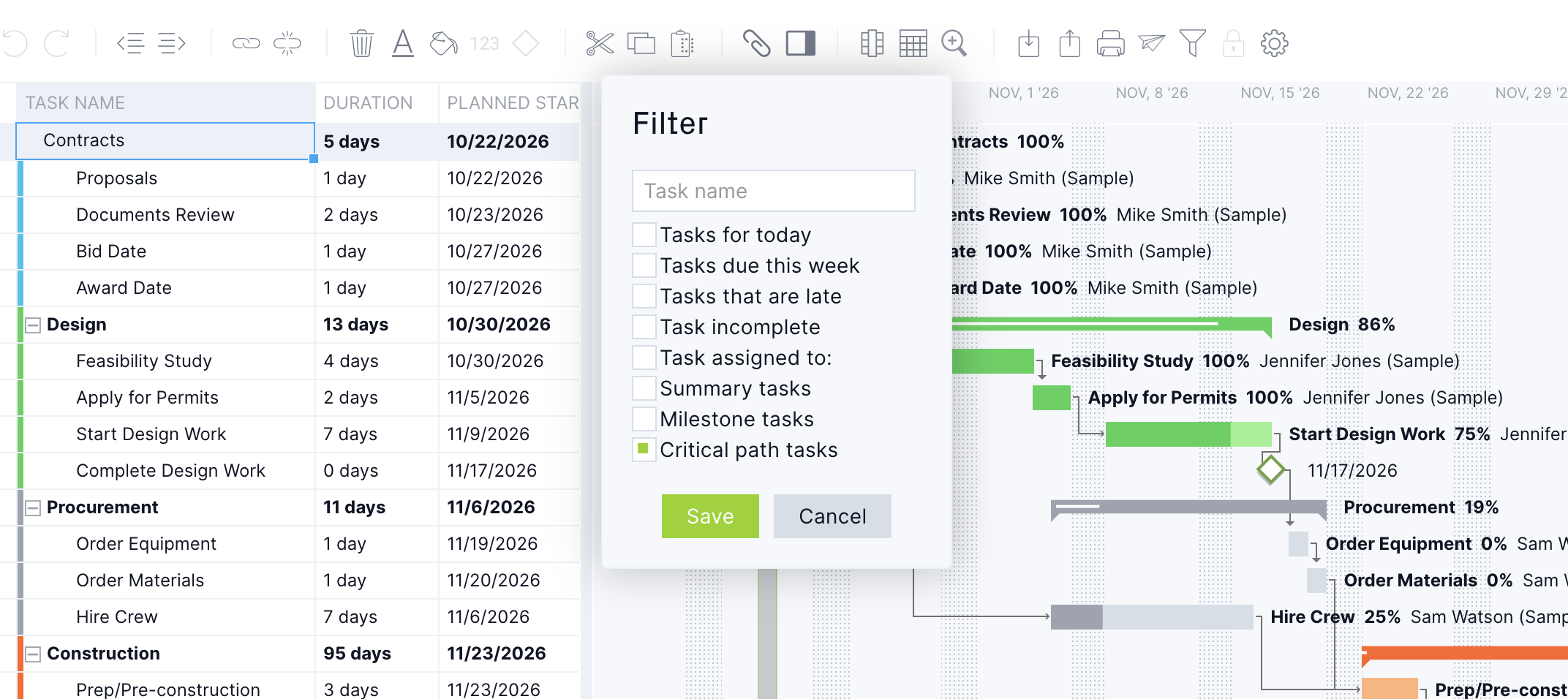
| Critical Path Method (CPM) | Supported via intuitive Gantt charts with dedicated critical path filters | Comprehensive CPM engine including advanced float and delay analysis |
| Task Dependencies | Finish-to-Start, Start-to-Start, Finish-to-Finish, Start-to-Finish (with lag/lead) | Full suite of dependency types, lag, lead, and multiple calendars |
| Baselines & Variance | Standard baseline creation and variance reporting | Multiple progressive baselines and automated schedule quality audits |
| File Interoperability | Imports Microsoft Project (MPP), XML, Excel, and CSV files (No XER native support) | Direct import and export of Primavera P6 (.xer) and XML files |
| 4D BIM Integration | Not natively supported | Fully integrated via Asta Powerproject BIM / 4D modules |
| Field Updates | Native to the platform (mobile application, timesheets, embedded comments) | Requires a separate, licensed companion application (Asta Siteprogress) |
| Resource Management | Cross-project workload visibility and automated over-allocation alerts | Resource loading per program; requires Asta Enterprise for cross-project sharing |
| Learning Curve | Minimal; intuitive interface accessible to field superintendents immediately | Steep; typically demands specialized training and experienced scheduling personnel |
| List Pricing (Approximate) | ~$28 per user/month on Business plans (~$336 annually) | ~$1,320 to $1,675 per user/annually (concurrent licenses incur higher costs) |
Performance in Common Construction Scenarios
Contractual Compliance and Client Requirements
For contractors operating in heavily regulated sectors or regions where contract specifications explicitly demand native Asta Powerproject files, substituting an alternative platform is rarely feasible. Public infrastructure projects and large-scale commercial developments frequently mandate specific scheduling software to ensure uniformity across the supply chain. In such environments, Powerproject remains the definitive choice.
However, many private commercial, residential, and light industrial contracts do not mandate a specific software engine, requiring only a clear, readable CPM schedule submitted as a PDF or exported format. For these projects, ProjectManager provides adequate compliance without the administrative overhead associated with heavy enterprise schedulers.
Schedule Construction and Sequence Management
Building a CPM schedule requires rigorous adherence to logic links, durations, and resource constraints. Both platforms support all four standard dependency types (Finish-to-Start, Start-to-Start, Finish-to-Finish, and Start-to-Finish) alongside lead and lag times.
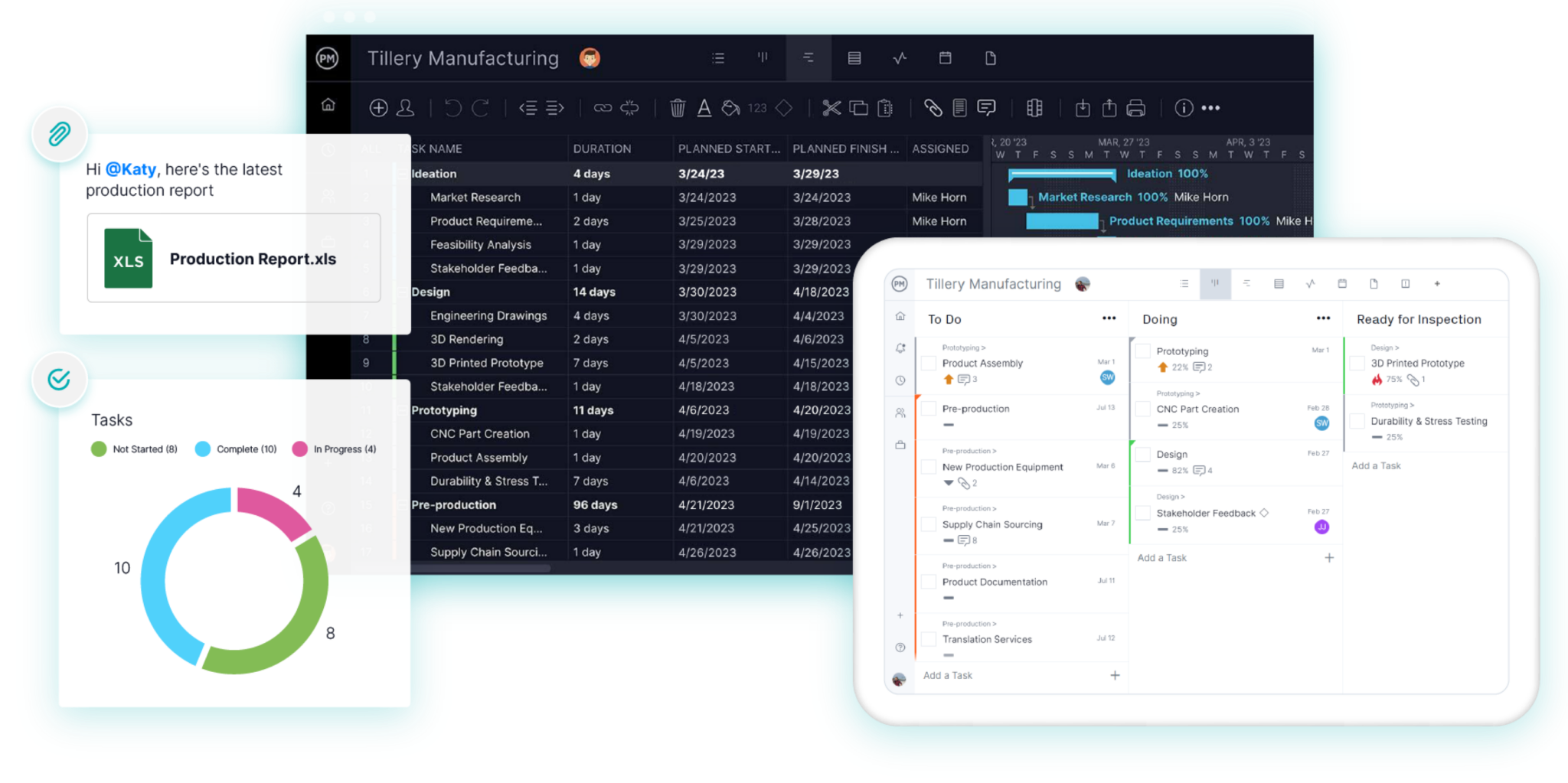
Powerproject offers advanced granularity through multi-calendar assignments, custom shift patterns, productivity rates, and the ability to model complex "what-if" scenarios. ProjectManager approaches schedule creation with an emphasis on speed and usability. Users can rapidly establish sequencing—such as excavation, footing installation, foundation pours, curing, and inspections—and immediately toggle the critical path filter to identify tasks possessing zero total float.
Delay Analysis, Documentation, and Claims
When projects encounter disruptions—whether caused by adverse weather conditions, supply chain bottlenecks, or owner-directed changes—the method of documentation and analysis becomes paramount.
Asta Powerproject is exceptionally well-suited for forensic delay analysis and extension of time (EOT) claims. Its capacity to manage multiple baselines, perform rigorous progress comparisons, and execute automated schedule quality checks aligned with DCMA and CIOB standards provides contractors with defensible data during legal or contractual disputes.
ProjectManager’s baseline and variance tracking features are robust enough to monitor slippage and communicate schedule deviations to project owners in real time; however, they are not designed to replace comprehensive forensic scheduling suites required for complex legal litigation or major contractual arbitration.
Field-to-Office Communication and Lookahead Schedules
The operational gap between the trailer and the field is where cloud-based tools demonstrate their greatest utility. In traditional workflows utilizing Powerproject, field updates are frequently mediated by a site manager who submits daily logs or markup sheets to the planner, who must then manually input the data into the desktop program. While Asta offers the Asta Siteprogress companion application to facilitate mobile updates, it requires separate licensing and administrative configuration.
ProjectManager integrates field reporting directly into its core offering. Superintendents and foremen can update task completion percentages, attach photographic evidence of site conditions, log labor hours via integrated timesheets, and post comments directly from mobile devices. These inputs instantly refresh the live master schedule, removing communication barriers and eliminating the need for periodic manual data consolidation.
Financial Implications and Total Cost of Ownership
When evaluating enterprise software, organizations must look beyond base subscription fees to calculate the true total cost of ownership (TCO). This includes user licensing tiers, deployment costs, required third-party add-ons, training expenditures, and administrative overhead.
Asta Powerproject commands a premium price point reflecting its specialized engineering capabilities. Annual subscription list prices typically range between $1,320 and $1,675 per user, with concurrent licensing models incurring additional costs. Furthermore, organizations must factor in expenses related to specialized training courses—which can cost upwards of £950 per person for introductory instruction—alongside potential licensing fees for companion applications like Asta Siteprogress or Asta Enterprise.
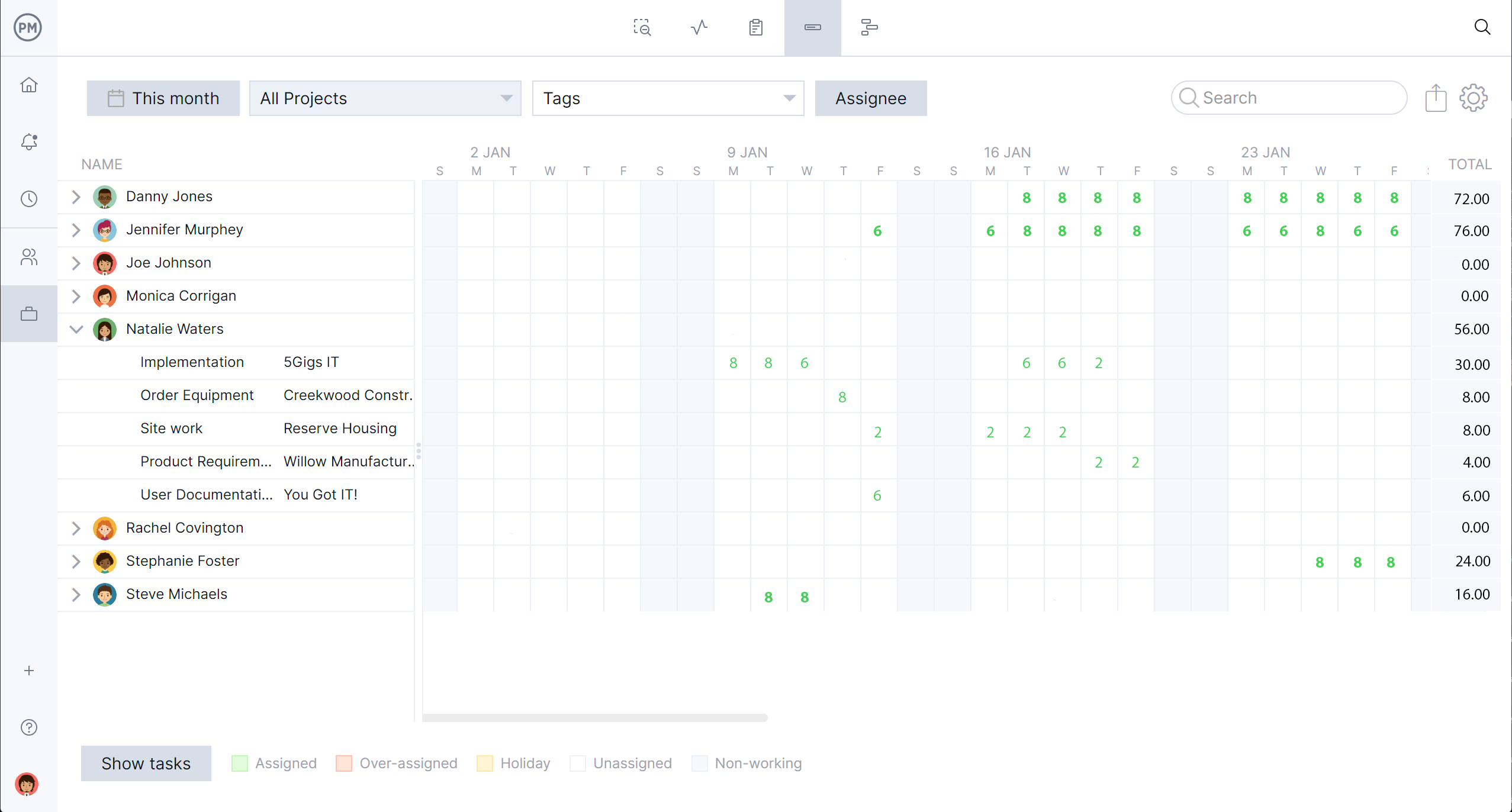
ProjectManager operates on a predictable, highly accessible SaaS model. Its Business tier is priced at approximately $28 per user, per month (billed annually at $336), packaging mobile access, timesheet management, and collaborative features into a single subscription. For mid-sized general contractors, specialty subcontractors, and residential builders managing large teams of field personnel, the cost differential per seat can translate into significant annual savings.
Strategic Recommendations by Company Type
Different segments of the construction industry face unique operational pressures, making software selection highly contingent on company size, contractual obligations, and project delivery models:
- Tier 1 General Contractors and Infrastructure Builders: Strongly advised to utilize Asta Powerproject. Clients in this bracket routinely expect native program deliverables, advanced 4D BIM coordination, and formal delay modeling capabilities.
- Planning Consultants and Owner’s Representatives: Best served by Asta Powerproject due to its deep analytical capabilities, comprehensive schedule quality audits, and robust Primavera P6 file exchange functionality.
- Mid-Sized Commercial General Contractors: Frequently adopt a hybrid approach. Organizations may maintain Asta Powerproject licenses within a central estimating and planning department to satisfy contract delivery requirements, while deploying ProjectManager across regional job sites to manage daily lookaheads, field updates, and crew coordination.
- Specialty Subcontractors: Perfectly aligned with ProjectManager. Subcontractors rarely need the deep forensic modeling of desktop enterprise tools, but they desperately require real-time visibility over crews, equipment, and material allocations distributed across multiple simultaneous jobsites at a sustainable price point.
- Residential and Design-Build Builders: Benefit immensely from ProjectManager due to its rapid onboarding timeline, intuitive user interface for field personnel, and cost-effective per-seat pricing structure.
Conclusion: Integrating Both Worlds
Rather than viewing Asta Powerproject and ProjectManager as mutually exclusive alternatives, many progressive construction firms have successfully implemented a hybrid workflow. By keeping the contract-mandated master program within Powerproject to satisfy client deliverables and regulatory compliance, while simultaneously leveraging ProjectManager for daily lookaheads, field collaboration, timesheets, and resource tracking, organizations can capture the best of both operational paradigms.
Though these two platforms do not currently feature automated real-time synchronization, project teams can easily bridge the gap by exporting schedules via standard formats (such as XML, MPP, or CSV) on a regular cadence. Ultimately, whether an organization chooses the heavy computational power of a desktop planner or the agile collaboration of a cloud-based ecosystem, the defining factor remains aligning software capabilities with the practical realities of executing construction work in the field.