U.S. Intelligence Memo Alleges Chinese State Security Recruited Executive to Target Nvidia CEO Jensen Huang

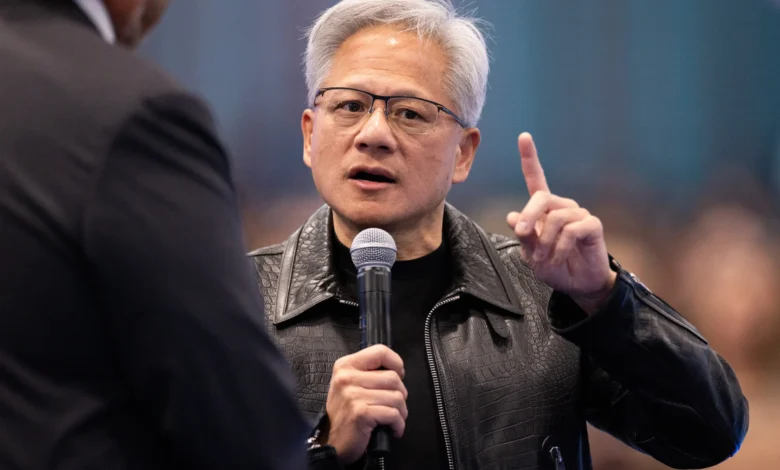
An intelligence memo circulated among U.S. officials earlier this year has ignited widespread concern across the global technology and geopolitical sectors, alleging that a prominent technology executive was recruited by China’s Ministry of State Security (MSS) to gather intelligence on Nvidia Chief Executive Officer Jensen Huang. The explosive document, which has triggered high-level scrutiny in both Washington and corporate boardrooms, highlights the intensifying espionage and security challenges facing American semiconductor giants as artificial intelligence hardware becomes a primary pillar of global geopolitical power.
The revelation of the memo first came to light through investigative reporting by The New York Times, which detailed how U.S. intelligence agencies flagged the alleged targeting of one of the world’s most influential technology leaders. Shortly after, The Financial Times published additional details from the assessment, claiming the document also pointed to a personal, romantic relationship between Jensen Huang and the targeted executive, Alice Huang, an official at Megaspeed, a Singapore-based technology firm.
The convergence of high-stakes corporate leadership, international espionage allegations, and the fiercely contested global semiconductor supply chain underscores the fragile intersection of national security and commercial innovation. As governments worldwide race to secure dominance in artificial intelligence infrastructure, the security of executives spearheading critical technology development has emerged as a paramount concern for intelligence agencies.
Chronology and Origins of the Allegations
The public disclosure of the U.S. intelligence assessment stems from investigative reporting published in November 2026, though the underlying memo was compiled and circulated within government circles earlier in the year.
According to reports by The New York Times, U.S. intelligence analysts monitoring Chinese foreign intelligence operations identified what they believed to be a concerted effort by the Ministry of State Security to compromise or extract sensitive information from Jensen Huang through human intelligence networks. The primary vehicle for this alleged operation was Alice Huang, an executive associated with Megaspeed, a firm operating out of Singapore—a critical regional hub for technology trade, finance, and diplomacy.
Subsequent reporting by The Financial Times elaborated on the nature of the alleged interaction, noting that intelligence files suggested the relationship between Alice Huang and the Nvidia CEO extended beyond professional circles into a personal connection. While intelligence memos of this nature often compile raw intelligence, unverified assertions, and analytical hypotheses, the inclusion of a high-profile corporate chief executive elevated the document’s priority among national security officials.
The timeline of these disclosures coincides with a period of unprecedented market valuation and strategic importance for Nvidia. As the primary designer of graphics processing units (GPUs) that power modern generative artificial intelligence models, Nvidia and its leadership have become central figures in both global commerce and international diplomacy. Consequently, any perceived vulnerability in the company’s executive leadership structure immediately triggers heightened vigilance from federal regulators and counterintelligence agencies.
Broader Scrutiny of the Semiconductor Supply Chain
The release of the intelligence memo did not occur in a vacuum; it arrived alongside simultaneous investigations into how advanced American technology continues to find its way into restricted jurisdictions, particularly China.
In a companion report published by The New York Times, journalists examined New Matrix, a Chinese corporate entity that had received explicit authorization from the U.S. Commerce Department to purchase advanced semiconductor chips from Nvidia. However, when reporters visited the official office address listed by New Matrix in corporate filings, they discovered an empty commercial space described as "a hollow gray shell."

This physical discrepancy has intensified bipartisan scrutiny on Capitol Hill regarding export controls, corporate transparency, and the efficacy of federal oversight mechanisms designed to prevent advanced dual-use technology from bolstering foreign military and technological capabilities. Lawmakers and national security experts have increasingly warned that sophisticated procurement networks and front companies may be exploiting regulatory loopholes to bypass strict U.S. trade restrictions on high-end AI chips.
The intersection of the alleged espionage attempt and the loophole concerns surrounding front companies like New Matrix paints a complex picture of the multifaceted pressure campaign facing Nvidia and the broader semiconductor industry. Federal agencies are tasked with balancing the commercial interests of American corporations operating in global markets against the imperative of safeguarding critical intellectual property and national security assets.
Corporate and Official Responses
In the wake of the media reports, representatives for Nvidia moved quickly to address the allegations and contextualize Jensen Huang’s professional interactions.
Responding to inquiries from The New York Times, an Nvidia spokesperson characterized Jensen Huang’s interactions with Alice Huang as "not unusual" given the standard course of business, international networking, and high-level stakeholder engagement expected of a chief executive in the global technology sector. Furthermore, the spokesperson firmly pushed back against any insinuation that proprietary or classified corporate information was compromised, emphasizing that Nvidia strictly protects its intellectual property and does not share classified or sensitive data with commercial customers or external entities.
Addressing the broader context of export compliance and international sales, the Nvidia spokesperson reiterated the company’s commitment to national security and domestic economic priorities. The company stated that it sells "the first, best and most of our technology in America," emphasizing its alignment with federal export guidelines and its ongoing cooperation with U.S. regulatory bodies.
Government agencies, including the Office of the Director of National Intelligence and the Department of Commerce, have declined to comment publicly on the specifics of the leaked memo, adhering to standard policy regarding intelligence assessments and ongoing investigations. However, independent national security analysts note that the public confirmation of such memos often serves as a deliberate signal to corporate executives regarding the aggressive posture of foreign intelligence services.
Geopolitical Implications and Future Outlook
The public airing of these intelligence findings marks a significant turning point in how corporate security is managed at the highest levels of the technology industry. For decades, Silicon Valley executives operated largely within a framework of globalization, open scientific exchange, and international commercial expansion. Today, that framework is rapidly being supplanted by a reality defined by strategic competition, technological decoupling, and state-backed espionage.
The case highlights several critical implications for the technology sector:
- Executive Vulnerability as a National Security Risk: CEOs of foundational technology companies are no longer viewed merely as commercial leaders, but as high-value targets in geopolitical intelligence conflicts. Protecting executive communications, travel, and personal networks will increasingly require coordination with federal counterintelligence services.
- The Limits of Export Controls: The discovery of shell companies like New Matrix demonstrates the persistent challenges of enforcing technology curbs in a globalized economy. As advanced chips become the oil of the twenty-first century, illicit procurement networks will continue to evolve, necessitating more rigorous vetting and enforcement by authorities such as the Bureau of Industry and Security.
- Corporate Compliance and Due Diligence: Technology firms will face mounting pressure to conduct deeper background checks not only on corporate clients and downstream distributors, but also on the ecosystem of individuals interacting with executive leadership.
As the geopolitical rivalry between the United States and China continues to center on artificial intelligence and semiconductor manufacturing, incidents of this nature are likely to recur. The challenges faced by Nvidia illustrate that the frontier of national security now extends directly into corporate boardrooms, altering the operational landscape for multinational technology enterprises for the foreseeable future.