BrainBOK Review: A Comprehensive Analysis of Project Management Professional and Certified Associate in Project Management Exam Preparation Tools


The landscape of professional project management certification has undergone a significant transformation over the last decade, shifting from traditional, process-heavy methodologies to more agile and hybrid frameworks. As the Project Management Institute (PMI) continues to update its curriculum to reflect modern industry requirements—most notably with the release of the PMBOK Guide 7th Edition and subsequent updates to the PMP and CAPM Exam Content Outlines—candidates face an increasingly complex study environment. BrainBOK, an online training platform developed by project management expert Harwinder Singh, has emerged as a specialized resource designed to bridge the gap between academic theory and the rigorous demands of standardized testing.
The Evolution of PMP and CAPM Certification Requirements
To understand the utility of platforms like BrainBOK, one must first consider the evolution of the PMP certification. Since its inception, the PMP credential has served as the gold standard for project managers globally. However, the July 2026 update to the PMP exam, which further solidified the transition toward the Business Environment domain and agile methodologies, necessitated a departure from rote memorization of Input-Tools-Techniques-Outputs (ITTOs).
Historically, candidates spent hundreds of hours memorizing the 49 processes defined in previous iterations of the PMBOK Guide. Modern exams, however, place a premium on situational judgment and the ability to navigate complex stakeholder landscapes. BrainBOK operates as a digital toolkit, attempting to support students through this transition by providing structured data-driven study aids, mock examinations, and progress-tracking analytics.
Platform Architecture and Technical Capabilities
BrainBOK’s pedagogical approach is built upon a modular architecture that separates abstract theory from practical application. The platform provides a tiered access model, allowing students to engage with a free version for preliminary assessment before committing to a full license. The primary offering is a 90-day access plan, priced at $149, which includes the necessary documentation for the 35 contact hours required to sit for the PMP examination.
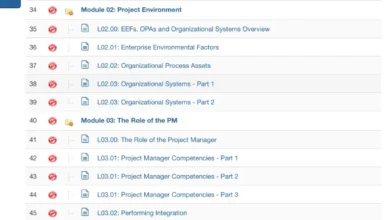
The technical backbone of the platform is the "ITTO Explorer." While the industry has moved away from a process-centric focus, the tool provides a searchable, visual database that allows students to observe how specific project inputs—such as Enterprise Environmental Factors or Organizational Process Assets—interact with various project phases. By allowing users to toggle between "Process Groups" and "Knowledge Areas," the tool facilitates a modular learning experience that is particularly effective for those who benefit from spatial learning.
Performance Analytics and Mastery Mode
The most significant differentiator for BrainBOK, compared to static textbook study, is its integration of AI-driven performance tracking. The platform’s "Mastery Mode" serves as a personalized feedback loop. When a user engages with the 2,230 available mock questions, the system tracks specific areas of deficiency. If a user repeatedly fails questions related to risk mitigation or scope management, the Mastery Mode automatically generates targeted quizzes to reinforce those specific competencies.
This data-centric approach addresses a common pain point for exam candidates: the inability to objectively identify knowledge gaps. In traditional study settings, students often over-study familiar concepts while neglecting complex domains. By quantifying performance, BrainBOK enables a more efficient allocation of study time, which is critical for professionals balancing certification preparation with full-time employment.

Comparative Analysis of Study Tools
While BrainBOK offers a robust technical suite, it does not function as a comprehensive, standalone academic course. In the broader ecosystem of project management training, it is classified as a "supplemental reinforcement tool." Professional consensus suggests that while tools like BrainBOK are superior for exam simulation and retention, they often lack the narrative depth provided by comprehensive study guides or interactive, instructor-led courses.
For instance, Brain Sensei, another prominent player in the market, offers a more narrative-driven, gamified learning experience that emphasizes the "why" behind project management methodologies. Conversely, PMI-sanctioned chapters offer classroom-based instruction that provides the soft-skill development and professional networking that digital apps cannot replicate. Therefore, the strategic use of BrainBOK is best contextualized as a "final mile" solution—a tool utilized to hone precision and confidence after the foundational concepts have been established.
Implications for Future Project Managers
The shift toward digital-first certification preparation has broad implications for the project management profession. As organizations move toward remote and hybrid work models, the ability to engage with digital training platforms is becoming a baseline requirement for professional development.
The data provided by platforms like BrainBOK also offers an interesting meta-analysis of the industry. By observing where candidates struggle most—often in the transition from predictive (waterfall) to adaptive (agile) methodologies—educators and certification bodies can better tailor their future materials. The current trend suggests that the industry is moving away from the "memorization" phase of professional development toward a "competency-based" model, where the ability to interpret data and make high-stakes decisions is valued above the ability to recall specific process charts.
Strategic Recommendations for Candidates
For students currently preparing for the PMP or CAPM, the following strategy is recommended to maximize the utility of available resources:
- Foundational Knowledge: Utilize established textbooks or accredited courses to grasp the overarching philosophy of project management.
- Contextual Application: Use tools like the BrainBOK ITTO Explorer to map how theoretical processes connect to real-world project outcomes.
- Iterative Testing: Employ mock examinations at the midpoint and final stages of preparation. The goal should be to achieve a consistent score of 80% or higher before scheduling the official exam.
- Targeted Remediation: Use Mastery Mode or similar analytical tools to identify and correct specific knowledge weaknesses identified during practice exams.
Final Assessment
BrainBOK provides a high level of transparency into the student’s learning journey. Its primary strength lies in its ability to quantify progress and remove the guesswork from exam preparation. By offering a structured path through the massive volume of information required for the PMP and CAPM, it effectively reduces the cognitive load on the candidate.
However, users must be cautioned that digital tools are not a replacement for professional experience or conceptual understanding. A well-rounded study plan should integrate these technical aids with practical, real-world application of project management principles. As the industry continues to evolve, the demand for such specialized, data-driven preparation tools will likely increase, setting a higher bar for what candidates must know and, more importantly, how they demonstrate that knowledge under pressure. With its money-back guarantee and accessible pricing structure, the platform remains a viable and competitive option for those seeking to formalize their project management credentials within the modern, digital-first marketplace.