I Watched a Humanoid Robot Clean My Apartment—It Felt Like a Taste of the Future

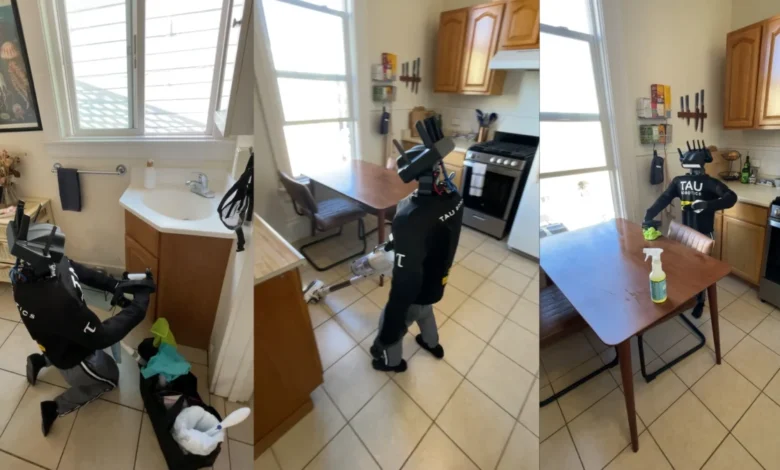
The intersection of artificial intelligence, consumer robotics, and domestic labor has officially entered the residential housing market in San Francisco, California. Tau Robotics, an emerging startup specializing in humanoid machine learning and teleoperation, has begun dispatching bipedal robotic units to private apartments to perform routine cleaning duties. While the commercial deployment signals a notable milestone in the evolution of practical robotics, a comprehensive examination reveals a technology still heavily dependent on human intervention, network stability, and specialized infrastructure.
The service, which initially launched with promotional pricing before scaling to standard commercial rates, offers consumers a glimpse into a potential future where domestic chores are largely automated. However, beneath the novelty of robotic assistants lies a complex operational framework combining remote piloting, data harvesting, and the rigorous training regimens required to transition from supervised teleoperation to true machine autonomy.
The Genesis of Residential Robotics and Teleoperation
For decades, the concept of a humanoid home assistant has been a staple of science fiction, popularized by media representations of automated domesticity. In reality, the engineering challenges associated with bipedal locomotion, dynamic manipulation, and unstructured domestic environments have proved exceptionally difficult to solve. Traditional industrial robots thrive in predictable, highly structured environments like automotive assembly lines, where every variable is strictly controlled. By contrast, a standard residential apartment presents an infinite variety of obstacles: misplaced clothing, irregular surface textures, varying lighting conditions, and unpredictable spatial layouts.
To bypass these immediate hurdles in autonomous navigation and manipulation, Tau Robotics utilizes a hybrid model anchored in teleoperation. Rather than relying entirely on onboard artificial intelligence algorithms, the company’s 4.5-foot-tall robots are actively piloted by human operators sitting miles away. These remote controllers monitor the apartment’s interior through high-definition cameras mounted in the robot’s 3D-printed head and wrists.
This methodology mirrors developments across the broader autonomous vehicle and robotics sectors, where companies utilize human-in-the-loop systems to handle edge cases that current neural networks cannot reliably resolve. Every successful counter wiped, floor mopped, and garment folded is captured as high-value kinematic data. This information is subsequently fed back into Tau Robotics’ proprietary machine-learning models, serving as the foundational training data necessary to eventually achieve full autonomy.
Chronology of a Deployment: From Arrival to Operation
The operational reality of deploying a humanoid robot into a multi-story residential building involves distinct logistical hurdles. In a typical service cycle, a Tau Robotics employee delivers the unit via vehicle to the client’s location. Upon arrival at the test site, the bipedal unit immediately confronts physical infrastructure designed exclusively for human biometrics.
During observed deployments, the robot faced immediate structural challenges upon encountering exterior staircases leading to the building’s entrance. Lacking the fluid, intuitive balance of a human, the unit navigated the steps with a halting, uncoordinated gait—frequently described as a drunken stagger—where forward progress was periodically punctuated by backward momentum-reversing steps. While the machine successfully maintained its structural footing without suffering a catastrophic fall, the traversal highlighted the limitations of current bipedal balance algorithms when exposed to uneven, external architectural features.
Once inside the premises, internal environmental factors introduced further complications. During unseasonably high ambient temperatures, early deployment models experienced operational stalls. While initial assessments attributed these halts to thermal throttling within the robot’s onboard hardware, subsequent troubleshooting revealed a more fragile dependency: the extreme heat had caused temporary failures in the remote monitoring equipment utilized by the human pilot at headquarters. Without a stable video feed and continuous telemetry transmission, the robot’s operational safety protocols engaged, bringing the cleaning cycle to a temporary halt until connectivity and environmental stability were restored.
Despite these interruptions, once operational, the units demonstrated a surprising degree of functional capability across standard domestic tasks. Equipped with 3D-printed claw end-effectors—selected over more complex human-like synthetic hands due to superior durability and mechanical reliability—the robots executed kitchen surface sanitation, floor vacuuming, and specialized tasks such as bathroom maintenance. In one notable demonstration of trial-and-error problem-solving, a unit successfully reattached the head of a dropped toilet-cleaning wand after multiple physical adjustments, utilizing tactile feedback loops to locate the proper contact angle.
Economic Models and Data Collection Incentives
The pricing structure implemented by Tau Robotics reflects the strategic value of the data collected during each residential visit. At early launch phases, the startup offered single-robot cleaning sessions at a rate of $30 per hour, subsequently adjusting pricing tiers to approximately $60 per weekly visit utilizing two units, or $100 for specialized one-time service calls.
Financial analysts examining the consumer robotics sector note that these service fees are notably lower than standard commercial cleaning rates in high-cost-of-living metropolitan areas like San Francisco. This pricing strategy underscores the primary business objective of the enterprise: data acquisition. By subsidizing the cost of domestic cleaning through accessible consumer pricing, Tau Robotics effectively turns residential customers into data providers.
Every minute the robot spends interacting with household objects generates terabytes of kinematic and visual datasets. This data is critical for training neural networks to master complex manipulation tasks, such as textile folding and dynamic object avoidance, which currently elude purely algorithmic approaches. Consequently, the consumer is not merely purchasing a cleaned apartment, but participating indirectly in a massive data-harvesting initiative designed to accelerate the commercialization of autonomous artificial intelligence.
Technical Specifications and Hardware Design
The engineering architecture of the Tau Robotics unit prioritizes cost-effective manufacturing, modularity, and task-specific durability. Standing approximately four and a half feet tall, the robot utilizes a lightweight frame optimized for indoor environments. To protect delicate residential flooring, the units are outfitted with specialized footwear, including high-traction athletic socks designed to prevent scratching on hardwood surfaces.
Communication with central headquarters is maintained via wireless transmission protocols routed through an integrated head assembly equipped with aesthetic and functional antennae arrays. The utilization of 3D-printed components for structural head and manipulator elements allows the company to rapidly iterate on hardware designs based on real-world operational feedback from ongoing deployments.
However, the reliance on remote human operators introduces vulnerabilities inherent to network latency and bandwidth stability. Cornelia Weinzierl, co-founder of Tau Robotics, has frequently emphasized the engineering capital required to optimize timing protocols and connectivity parameters. Even minor transmission delays between the remote pilot and the physical unit can disrupt the complex balance equations required for smooth bipedal locomotion, resulting in the characteristic stumbles observed during transit.
Official Responses and Industry Perspectives
Representatives for Tau Robotics maintain that the long-term trajectory of domestic robotics addresses critical labor shortages within the maintenance and service sectors. According to company leadership, traditional cleaning industries suffer from chronically high turnover rates, substantial physical injury risks, and a shrinking pool of available workers willing to perform repetitive, physically demanding tasks.
"Cleaning is not a job that a lot of people really actively want to be doing," Weinzierl stated in post-deployment evaluations. "There’s high turnover, there’s a high risk of injury. We need people, and we don’t have them, and no one wants to do it."
Beyond residential housekeeping, Tau Robotics is actively evaluating the expansion of its teleoperated and semi-autonomous platforms into adjacent industries characterized by hazardous or physically strenuous conditions. Potential future deployment vectors under consideration include specialized mold remediation, industrial sanitation, and home health care support services where heavy lifting and precise manipulation are required.
Socioeconomic Implications and Labor Market Concerns
While the commercial integration of humanoid robots into domestic spaces presents undeniable technological fascination, labor economists and policy analysts emphasize the broader socioeconomic implications of widespread automation. As startups like Tau Robotics refine their machine-learning models and transition from human-in-the-loop teleoperation to full operational autonomy, the potential displacement of traditional domestic service workers becomes a pressing public policy concern.
The United States currently lacks comprehensive regulatory frameworks or social safety nets specifically designed to mitigate large-scale employment disruption driven by artificial intelligence and robotics deployment. Critics of rapid automation argue that while technology companies celebrate the elimination of mundane household labor, the commercialization of low-cost robotic labor threatens the livelihoods of thousands of independent cleaners and domestic workers, predominantly comprising immigrant and low-income populations.
Furthermore, privacy advocates have raised questions regarding the extensive data collection practices inherent to teleoperated robotics. Because the robots are equipped with cameras and sensors that map private residential interiors in real time, questions regarding data retention, third-party access, and cybersecurity vulnerabilities remain critical areas of regulatory scrutiny. Ensuring that consumer data harvested during domestic cleaning sessions is adequately protected against unauthorized access will be a fundamental challenge for the industry as it scales operations.
Future Outlook and Path to Autonomy
Tau Robotics represents a growing cohort of specialized robotics enterprises attempting to bridge the gap between theoretical artificial intelligence research and practical commercial utility. Although the current generation of cleaning robots requires constant supervision, robust internet connectivity, and frequent human intervention to complete standard household tasks, the iterative learning process is steadily advancing.
The company has successfully completed several hundred residential cleaning deployments in the San Francisco area, gradually reducing the level of physical oversight required during each visit. As machine learning models absorb larger volumes of kinematic data, the frequency of remote pilot interventions is projected to decline.
Whether humanoid robots will eventually become ubiquitous fixtures of modern urban living—comparable to the integration of autonomous ride-hailing vehicles across metropolitan streets—remains an open question. For the immediate future, however, the sight of a bipedal machine navigating a living room, carefully wiping a kitchen counter, and managing household sanitation offers an unmistakable preview of an automated horizon that is rapidly moving from fiction to reality.