The Mid-2026 Evolution of Agentic AI: From Orchestrated Loops to Specialized Swarms

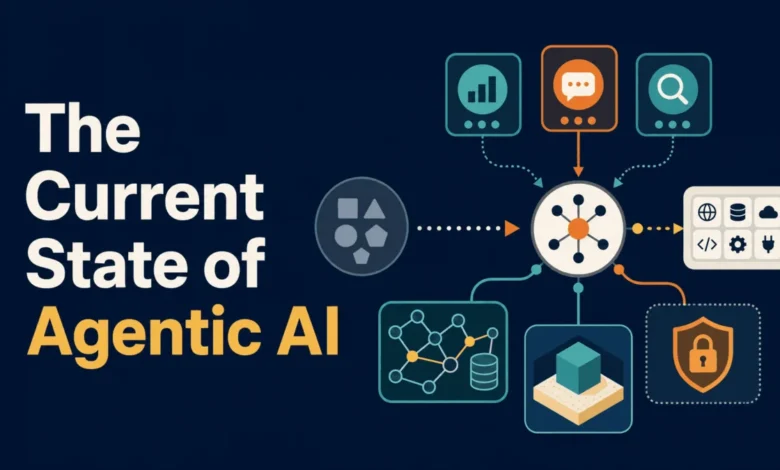
The landscape of Artificial Intelligence (AI) agents has undergone a profound transformation by mid-2026, shifting away from monolithic, brute-force orchestration methods towards sophisticated multi-agent swarms and standardized communication protocols. This evolution marks a significant maturation of the field, moving AI engineering from the intricate crafting of reasoning loops to the strategic design of infrastructure that enables specialized agents to collaborate seamlessly. The dominant paradigm of the past, characterized by complex ReAct (Reasoning and Acting) loops and brittle prompt chains, has given way to a more modular and efficient architecture, driven by advancements in foundation models and the necessity for scalable, production-ready AI systems.
The Dawn of Native Reasoning and the Decline of Orchestrated Loops
Just a year prior, the development of AI agents was largely defined by external orchestration. Engineers dedicated considerable effort to constructing complex reasoning loops, a process that involved forcing large language models (LLMs) to perform planning, tool execution, and context management simultaneously. Techniques like Plan-and-Execute and Reflexion, explored in earlier guides to agentic AI systems, relied on external code to simulate step-by-step thinking, self-critique, and iterative refinement. This approach, while functional, often introduced significant latency and token overhead.
By mid-2026, a fundamental shift has occurred: foundation models now natively handle these cognitive processes. These advanced models are capable of generating hidden reasoning tokens, exploring multiple solution branches internally, and self-correcting before presenting a final output. This integrated "System 2" thinking, as it’s sometimes referred to, has rendered much of the external scaffolding for simulated reflection redundant.
For AI architects and engineers, this transition means a significant reorientation of their roles. The focus has moved from meticulously prompting individual agents to designing the overarching infrastructure within which specialized agents operate. The need for complex orchestration frameworks to manage agent reflection has diminished, allowing engineering resources to be redirected towards more impactful areas, such as the decomposition of complex tasks across multiple, highly specialized agents. This frees up the orchestration layer to concentrate on essential functions like routing, state management, and environment execution, while the model itself manages its internal cognitive loop.
The Rise of Agent Swarms: Multi-Agent Microservices
With foundation models now adept at internal reasoning, the critical question facing production teams has become: what is the optimal scope of responsibility for a single AI agent? The emerging consensus points towards extreme specialization, with each agent tasked with performing as little as possible. This principle, articulated in analyses of AI orchestration as the new architecture, counters the earlier approach of attaching numerous tools to a single, large language model, which inevitably creates bottlenecks.
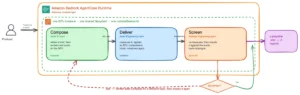
The prevalent architecture in mid-2026 is the "agent swarm" – a collection of smaller, highly specialized agents that communicate via a standardized protocol. Instead of a single agent attempting to manage dozens of tools, the swarm model distributes these functionalities. For example, one agent might be solely responsible for fetching data from a SQL database, another for executing Python scripts within a sandboxed environment, and yet another for analyzing the results.
This distribution of tasks offers several advantages. While it might seem that complexity is merely shifted rather than reduced, the key insight is that it becomes manageable, testable, and replaceable. Each specialized agent can be developed, debugged, and updated independently, leading to more robust and adaptable AI systems. This modularity also allows for the use of smaller, more cost-effective, and faster LLMs for individual agent tasks, reserving larger, more powerful models for critical functions like overall task routing and final synthesis of results.
Building a Basic Swarm Pattern: A Conceptual Overview
The conceptual architecture of a basic swarm pattern can be illustrated through pseudo-code, highlighting the interaction between specialized agents. While not directly runnable without a dedicated framework, it demonstrates the core principles.
A typical swarm might begin with a "Triage" agent. This entry point agent is responsible for understanding the user’s request and routing it to the appropriate specialist agent. Its system prompt would be something like, "Route the request to the correct specialist agent." It would possess tools designed to transfer the request, such as transfer_to_sql or transfer_to_analyst.
Following the triage, specialized agents would handle specific sub-tasks. For instance, a "Data Fetcher" agent, designed to write and execute read-only SQL queries, would be equipped with an execute_read_query tool. Similarly, a "Data Analyst" agent, tasked with analyzing datasets using Python pandas and generating insights, would utilize a run_python_sandbox tool.
The crucial element that connects these agents is the handoff mechanism. When a specialist agent completes its task, it invokes a "transfer" tool to pass control and relevant context to the next agent in the workflow. For example, the SQL agent, after fetching data, might call transfer_to_analyst, signaling that the raw data is ready for analysis. This is facilitated by defining these transfer functions as tools that agents can call.
The swarm itself is then initialized with a starting agent (e.g., the Triage agent) and a collection of all participating agents. When a user input is provided, the swarm begins its execution, with the Triage agent initiating the process and directing the flow of information and control between the specialized agents. This architecture emphasizes statelessness for individual agents per call, but statefulness is maintained across the entire system through the progression of tasks and data passing.
The Standardization of Agency: The Model Context Protocol (MCP)
The integration of these specialized agents with real-world systems and data sources has been significantly streamlined by the standardization of tool protocols, most notably through the Model Context Protocol (MCP). Previously, integrating an API into an AI agent was a laborious process involving writing custom schemas, managing HTTP requests, and handling complex JSON parsing errors. Each new integration essentially required reinventing the wheel.
MCP has emerged as a universal adapter, acting as a bridge between AI models and local or remote data sources. This open standard automates much of the boilerplate integration work. The contrast with the old paradigm is stark:
| Old Paradigm (Pre-2025) | Current State (Mid-2026) |
|---|---|
| Hardcoded API keys into the agent’s environment | Agent connects to an isolated MCP server for secure access |
| Engineer writes custom JSON schemas for every tool | MCP server automatically exposes available tools and resources |
| Agent directly executes API calls inline | Execution happens on the MCP server, separating concerns and risks |
This standardization means that teams can now plug pre-built MCP servers for platforms like GitHub, Slack, or PostgreSQL into their agent swarms without needing to write extensive API wrappers. While careful credential management remains a critical concern on the server side, the overall integration surface area has been dramatically reduced. This accelerates development cycles and lowers the barrier to entry for creating sophisticated AI-powered applications.
Continuous Learning Through Memory Graphs
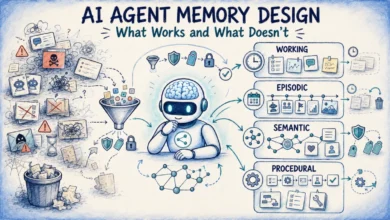
A long-held promise of agentic AI has been the ability for agents to learn from their past interactions and improve their performance over time. By mid-2026, this capability is moving into production environments through the implementation of memory graphs. This system complements the per-call statelessness of individual agents by providing persistent, system-level memory.
When a swarm executes a task, a specialized "Memory Agent" operates asynchronously in the background. Its sole function is to analyze the main swarm’s execution trajectory, identify salient facts, and update a graph database. This graph database, which could be a solution like Neo4j or a managed alternative, is injected directly into the agent’s context pipeline.
The process typically involves several steps:
- Fact Extraction: The Memory Agent parses the output and intermediate steps of the primary swarm’s execution.
- Graph Update: Identified facts are then structured and stored within the graph database. This could include user preferences, previously resolved issues, domain-specific knowledge, or relationships between entities.
- Contextual Injection: For subsequent tasks, relevant information is retrieved from the memory graph and injected into the context of the relevant agents, influencing their decision-making and improving their accuracy and efficiency.
This approach shifts the focus from prompt engineering to "context engineering." By building and maintaining a rich memory graph, the system can compound knowledge and improve its performance over time without requiring continuous fine-tuning of the underlying LLMs. This offers a more scalable and cost-effective method for long-term AI learning.
Security: The Evolving Swarm Attack Surface
The widespread adoption of multi-agent systems connected via universal protocols has inevitably expanded the attack surface for AI systems. The threat of "AIjacking," where indirect prompt injections can hijack automated workflows, has become a primary concern for enterprise adoption. The swarm architecture, by its very nature, exacerbates these risks.
The danger lies in the lateral movement capabilities within a swarm. If Agent A, which has access to external email feeds, can transfer context and control to Agent B, which possesses database access, a malicious instruction embedded within an email could pivot through the entire swarm. This mirrors traditional network intrusion patterns, where a vulnerability in one system can be used to compromise others. The very handoff mechanisms that make swarms efficient also make them susceptible to cascading attacks.
In response to these escalating security challenges, three emergent defense strategies are gaining traction:
- Principle of Least Privilege: Agents are granted only the minimum permissions necessary to perform their designated tasks, significantly limiting the damage a compromised agent can inflict.
- Runtime Verification and Sandboxing: Continuous monitoring of agent behavior and strict sandboxing of tool execution environments are employed to detect and contain anomalous or malicious activities.
- Secure Agent Communication Protocols: Development of encrypted and authenticated communication channels between agents is underway to prevent unauthorized interception or manipulation of inter-agent messages.
While these defenses are not yet universally standardized, they represent the active frontier of production agentic security. Any organization deploying agent swarms into production environments must consider at least one of these strategies as a baseline security requirement.
The Path Forward: Engineering Resilience and Specialization
Agentic AI has transitioned from an academic curiosity to a robust engineering discipline, complete with well-defined constraints, predictable failure modes, and critical design decisions at every architectural layer. The foundational elements – including tool calling, intelligent routing, and native reasoning capabilities within LLMs – are rapidly maturing.
The remaining significant leverage for innovation lies in the systems layer: the design of swarm topologies, the architecture of memory systems for knowledge compounding, and the establishment of robust security boundaries that allow these systems to operate safely and effectively at scale.
The leading teams in this domain are not solely focused on developing "smarter" individual agents. Instead, they are concentrating on building more resilient, specialized swarms. For organizations embarking on new agentic AI projects, the recommendation is to adopt one of the established patterns, implement it at a small scale, and instrument it meticulously for performance and security monitoring. The architectural intuitions developed from managing a three-agent swarm are directly transferable to orchestrating much larger and more complex thirty-agent systems, paving the way for the next generation of intelligent automation.