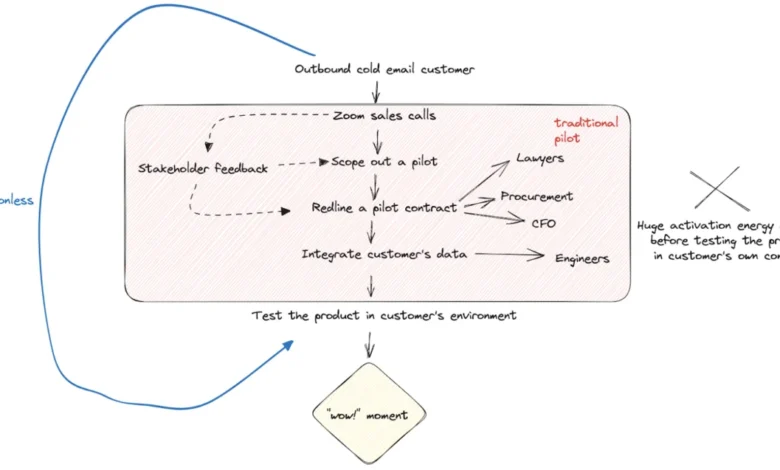
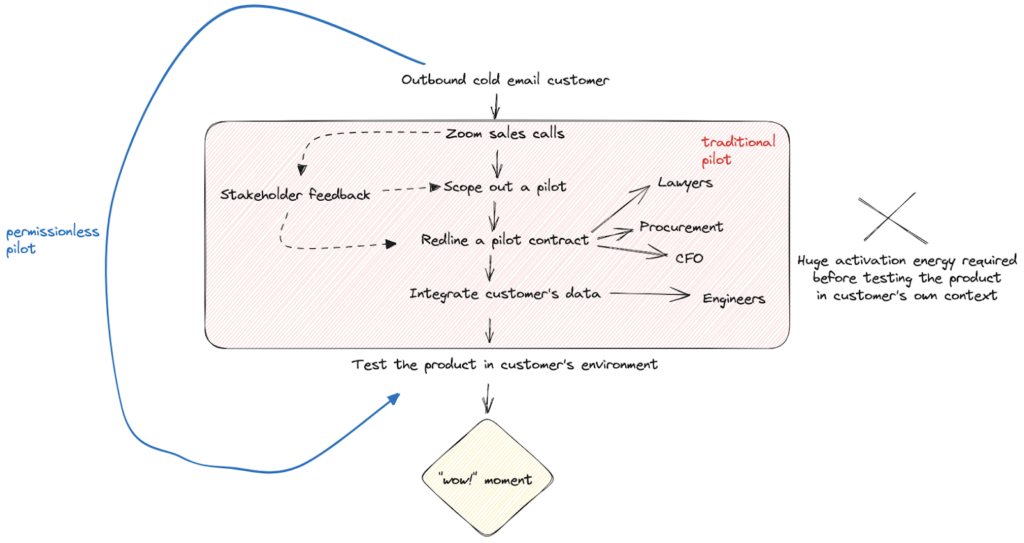
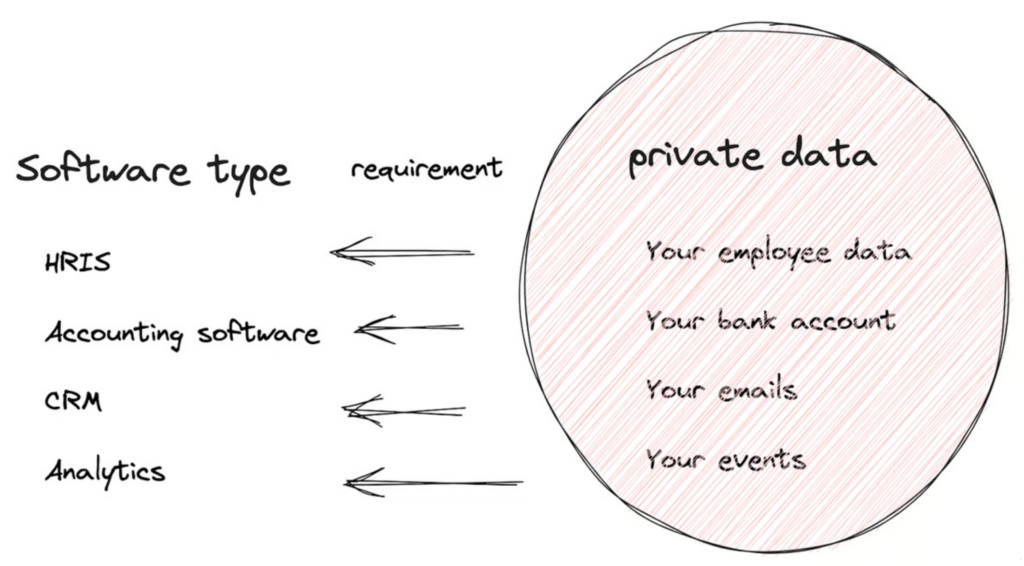
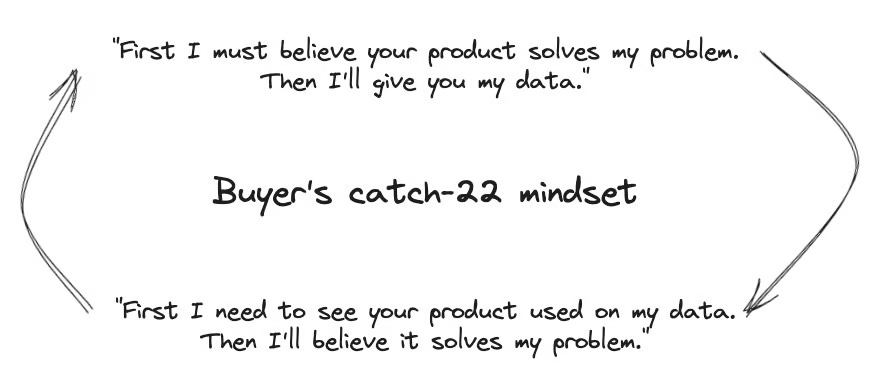
The contemporary enterprise software-as-a-service (SaaS) market is defined by a paradox that has frustrated founders and sales leaders for decades: software requires internal company data to prove its efficacy, yet prospective buyers are notoriously reluctant to surrender that data until they are entirely convinced of the product’s value. Traditionally, navigating this catch-22 required a protracted sequence of introductory sales calls, protracted procurement reviews, rigorous legal negotiations, and complex technical integrations. Only at the conclusion of this exhausting pipeline could a client experience what SaaS pioneer David Skok famously termed the "Time to Wow!" moment—the exact juncture at which a buyer fully comprehends a product’s utility.
However, a fundamental shift is currently underway across the technology sector. Innovative startups are successfully inverting the traditional, sluggish enterprise sales cycle by leveraging what industry experts now call "permissionless pilots." By utilizing publicly accessible information to deliver an instant, customized demonstration using a prospect’s own data footprint before a single sales meeting takes place, these agile companies are driving rapid growth, collapsing sales cycles, and closing major contracts at an unprecedented pace.

The Mechanics of the Traditional Enterprise Sales Slog
To understand the disruptive nature of permissionless pilots, one must first examine the systemic inefficiencies of the conventional enterprise sales architecture. Historically, vendors relied on pre-configured product demonstrations populated with generic dummy data. While functional, these simulations offer a theoretical user experience comparable to watching a promotional video rather than taking a vehicle out for a test drive on an actual highway.
Furthermore, compelling enterprise buyers to migrate past the initial demonstration phase demands significant political capital within their own organizations. Prospective champions must secure internal alignment, navigate bureaucratic compliance hurdles, and convince risk-averse IT departments to authorize third-party data integrations. In many instances, the sheer friction required to initiate a formal software evaluation causes promising deals to stall indefinitely. Consequently, closing enterprise software contracts has traditionally been viewed as a grueling marathon rather than a sprint, testing the financial runway and operational stamina of early-stage startups.
The Birth of the Permissionless Pilot
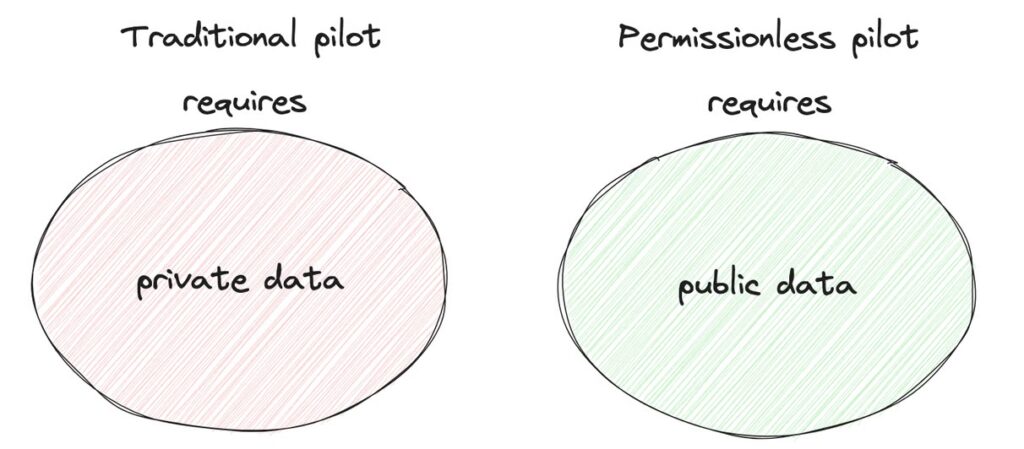
To bypass these systemic roadblocks, modern engineering and sales teams have pioneered the permissionless pilot—a strategy designed to reduce a customer’s time-to-value to absolute zero. Defined fundamentally as a product demonstration that harnesses public, customer-specific data to instantly deliver a high-impact value proposition, this approach eliminates the need for upfront configuration or formal consent.
Rather than positioning the "Wow!" moment at the conclusion of a lengthy sales funnel, the permissionless pilot places it at the very top of the funnel. A prospective client encounters the product operating directly within their specific operational context almost immediately upon discovering the software. By demonstrating tangible value prior to any formal engagement, vendors effectively disarm buyer skepticism and short-circuit the traditional procurement gauntlet.
Scaling Innovation Through Public Data and Advanced Machine Learning
The viability of permissionless pilots has been significantly accelerated by macroeconomic and technological trends over the past decade. Most notably, the exponential expansion of publicly available digital data—spanning global enterprise records, open-source code repositories, digital media, and regulatory filings—has created a rich landscape for automated analysis.
Simultaneously, recent breakthroughs in artificial intelligence, computer vision, and natural language processing, particularly Large Language Models (LLMs), have empowered software systems to ingest, structure, and derive insights from vast oceans of unstructured data with minimal human intervention. This convergence of big data and advanced machine learning allows startups to automate the creation of customized product demonstrations at scale, transforming what was once a bespoke, labor-intensive sales engineering task into an automated, software-driven acquisition engine.
Real-World Implementation: The Emerge Tools Case Study
The practical efficacy of permissionless pilots is perhaps best illustrated by mobile application performance management platform Emerge Tools. Established to help mobile engineering teams optimize application binaries to reduce file sizes, decrease download times, and accelerate launch speeds, the company achieved rapid market penetration among household technology brands—including DoorDash, Square, Airbnb, Duolingo, and Dropbox—without maintaining a traditional outbound sales force.
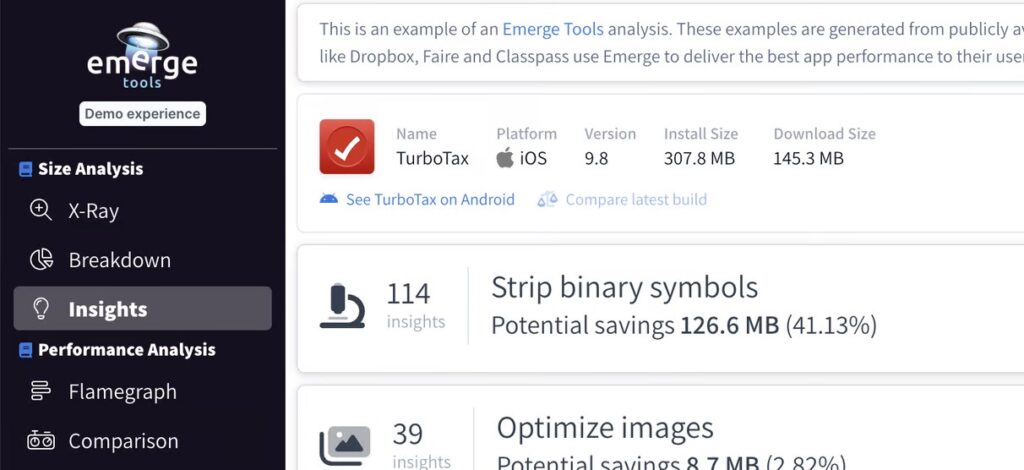
Faced with the reality that integrating an optimization suite requires extensive stakeholder buy-in from corporate engineering groups, Emerge engineered a system to reverse-engineer the publicly available binary code of native mobile applications hosted within the iOS and Android app stores. Instead of demanding internal application data from a prospect, Emerge’s automated platform generated instant analysis reports for publicly listed apps by simply referencing their names.
For instance, an automated public audit of the TurboTax iOS application revealed structural optimizations capable of reducing the app’s overall size by over 40 percent. Critically, Intuit, the parent company of TurboTax, was able to review these actionable insights without executing non-disclosure agreements, redlining legal contracts, or expending internal political capital.
Scaling this capability systematically, Emerge expanded its automated application analysis pipeline from approximately 500 apps at the beginning of 2023 to over 10,000 public applications. Each unique analysis was published to a dedicated, public-facing URL, effectively transforming individual product demonstrations into shareable digital artifacts. These reports circulated rapidly among engineering teams via collaborative platforms like Slack, catalyzing a 400 percent surge in organic search traffic, brand visibility, and developer engagement. The resulting enterprise contracts materialized naturally, driven by technical validation rather than aggressive salesmanship.
Cross-Industry Applications and Strategic Implications

While permissionless pilots have found a natural home in mobile application optimization, the underlying strategic framework holds broad applicability across diverse vertical markets. Forward-thinking startups across multiple sectors are currently exploring analogous models tailored to their respective domains:
- Search Engine Optimization (SEO): Platforms such as Conductor analyze public Google search results to automatically propose structural and algorithmic optimization strategies to prospective enterprise clients.
- E-commerce Optimization: Drawing inspiration from early pioneers like Salsify, software providers cross-reference millions of digital retail listings to deliver instant, conversion-focused recommendations regarding product copy, imagery, and pricing architecture.
- Cybersecurity and Vulnerability Scanning: Automated threat-detection tools, following the trajectory established by firms like HackerOne, execute permissionless web-application scans to highlight surface-level security vulnerabilities.
- Financial Intelligence and Compliance: Specialized analytics providers like Bedrock AI parse public regulatory filings, such as SEC documents, to surface forensic indicators of financial anomalies or earnings quality concerns prior to human review.
- Web-Based Personalization: Marketing technology platforms such as Mutiny permit prospective buyers to visualize how dynamic personalization software would modify their active landing pages without requiring prior software installation or account creation.
Strategic Execution and Industry Outlook
Despite the clear commercial advantages of permissionless pilots, industry strategists emphasize that deployment must be executed with careful consideration of brand reputation and professional tone. The objective is to establish an immediate, compelling connection with prospective users by demonstrating genuine technical competence and actionable utility, avoiding aggressive tactics that might alienate enterprise buyers.
As the volume of global digital data continues to scale exponentially, the traditional enterprise sales model faces mounting pressure to evolve. By shifting the moment of realization to the very beginning of the buyer journey, permissionless pilots offer a compelling blueprint for modern SaaS growth. Startups capable of identifying relevant public data sources and translating them into automated, high-value demonstrations are uniquely positioned to bypass historical sales friction, capture market share rapidly, and redefine the standards of enterprise software procurement.
Related posts: