The Definitive Guide to Production Scheduling: Optimizing Manufacturing Processes, Inventory Control, and Resource Allocation in Modern Supply Chains

Production scheduling stands as a critical operational pillar within the modern global supply chain, bridging the gap between raw material procurement and final market delivery. As industrial ecosystems face mounting pressure to accelerate time-to-market while simultaneously driving down operational costs, the methodologies governing production scheduling have undergone a significant evolution. No single phase of the manufacturing pipeline operates in isolation; sourcing, planning, scheduling, and execution are inextricably linked. A production schedule is only as robust as the underlying inventory records, labor data, and manufacturing analytics that feed into it. Industry analysts note that modern manufacturing facilities can no longer afford the friction caused by siloed data structures. When shop-floor operations, warehouse inventories, and financial ledgers synchronize in real time, organizations achieve unprecedented levels of efficiency, drastically reducing waste and mitigating the risk of costly supply chain bottlenecks.
To comprehend the full scope of production scheduling, industry stakeholders must evaluate its core definitions, chronological implementation phases, strategic techniques, and the technological tools designed to automate complex workflows. At its core, production scheduling is the strategic process of allocating available resources, machinery, and labor to execute production orders efficiently. It dictates the exact sequence, timing, and volume of manufacturing operations, ensuring that finished goods emerge precisely when market demand dictates. Conversely, production scheduling is not merely a static calendar or a generalized estimation of output; rather, it is a dynamic, highly calculated blueprint that must continuously adapt to real-time supply chain fluctuations, equipment maintenance cycles, and shifting consumer demands.
The Historical Evolution and Background Context of Production Scheduling
Historically, manufacturing plants relied heavily on manual spreadsheets and intuition-based forecasting to manage shop-floor operations. These legacy methods frequently resulted in overproduction, excessive inventory holding costs, and missed delivery deadlines due to unanticipated machine downtime or material shortages. The advent of Enterprise Resource Planning (ERP) systems in the late 20th century attempted to centralize manufacturing data, yet many small and mid-sized businesses found traditional ERP implementations overly cumbersome and cost-prohibitive.
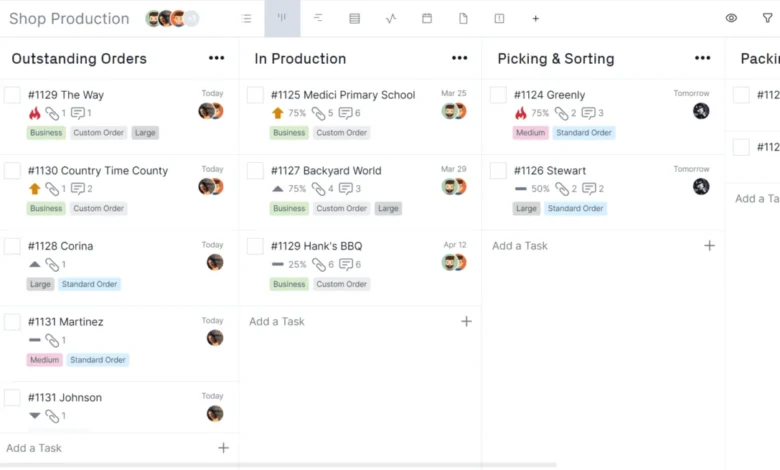
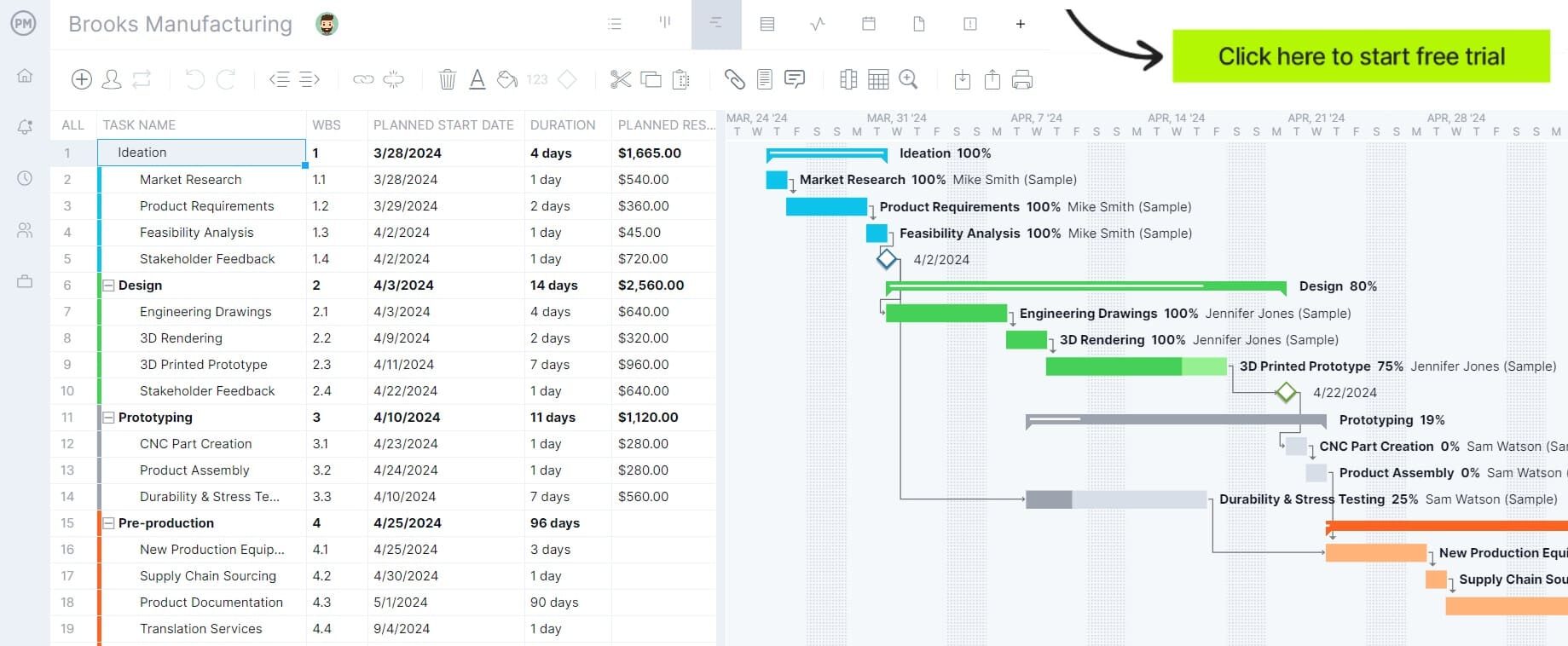
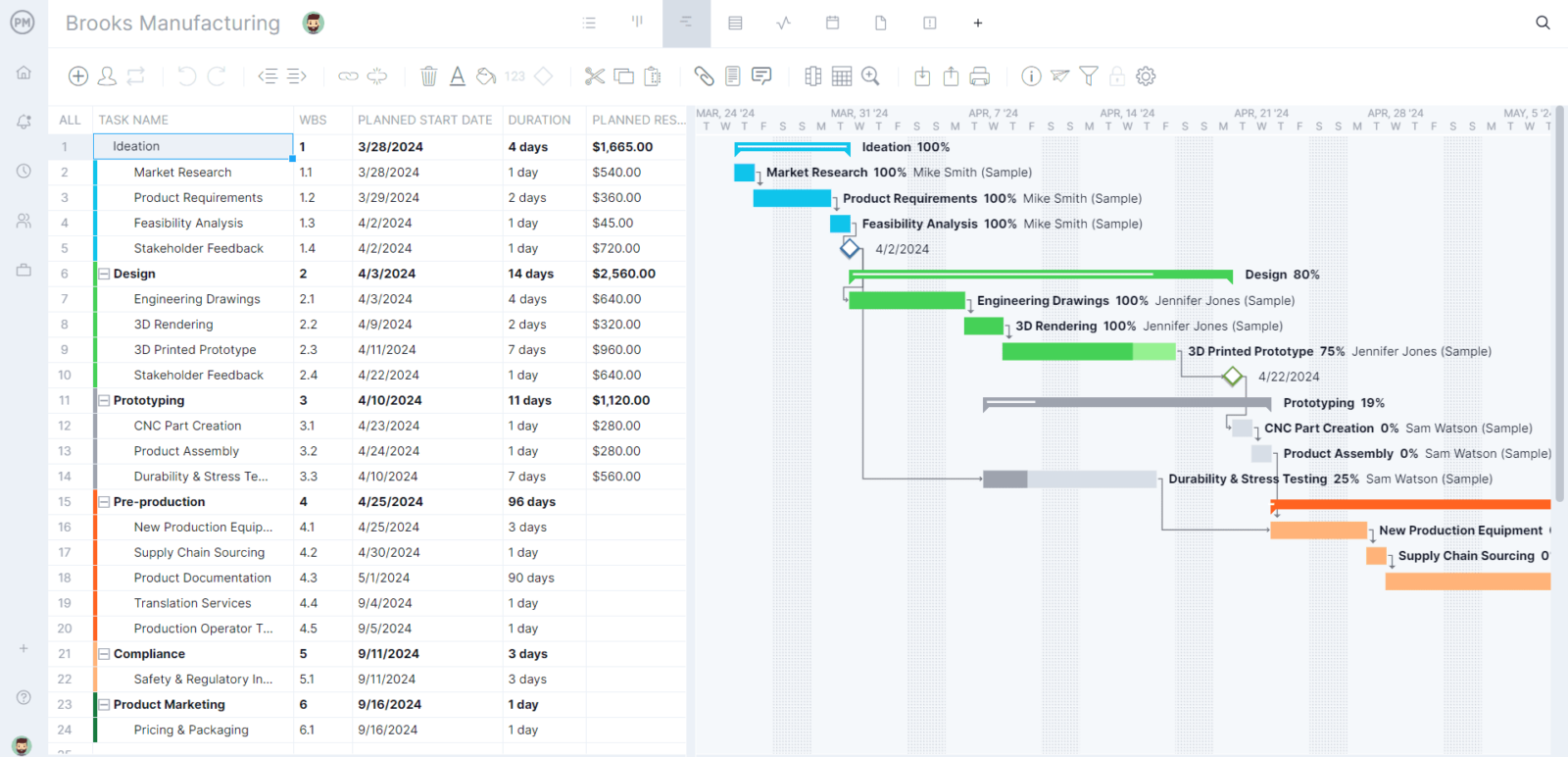
In recent years, the global manufacturing sector has shifted toward specialized, agile production scheduling platforms. Driven by post-pandemic supply chain volatilities, labor shortages, and rising raw material costs, modern industrial engineering practices emphasize transparency and end-to-end visibility. Today’s production managers leverage advanced software solutions—such as Gantt charts, Kanban boards, and real-time inventory synchronization platforms like Fishbowl and ProjectManager—to maintain operational resilience. This technological shift allows businesses to transition from reactive firefighting to proactive, data-driven manufacturing execution.

The Four-Phase Production Scheduling Process
Implementing an effective production schedule requires a disciplined, multi-step workflow. Industry standards dictate a sequential progression that ensures all variables—from raw material availability to final product delivery—are accounted for prior to shop-floor execution.
Phase 1: Production Planning
The foundational bedrock of any manufacturing operation is comprehensive production planning. During this stage, executive leadership and production managers analyze historical sales data, demand forecasting reports, and budgetary constraints to determine overarching manufacturing goals. Industrial engineers generally categorize plans into static models, which assume rigid adherence to a fixed timeline, and dynamic models, which acknowledge that supply chain variables will inevitably shift. Contemporary supply chain experts strongly advocate for dynamic planning, recognizing that operational adaptability is essential for long-term viability.
Phase 2: Production Routing
Once the overarching plan is established, the routing phase determines the exact physical and operational pathway raw materials will traverse as they transform into finished goods. Production routing involves mapping out the sequence of assembly stations, machining processes, and quality control checkpoints. The primary economic objective of routing is to identify the most cost-effective, time-efficient sequence of operations, thereby minimizing material handling costs and optimizing floor-space utilization.
Phase 3: Production Scheduling
With routing established, managers assign precise start and completion dates to every production task. This phase typically bifurcates into master scheduling, which governs long-term facility output; manufacturing or operational scheduling, which dictates specific batch runs and component fabrication; and retail operation scheduling, which manages the logistics of moving finished goods from the factory floor to distribution centers and storefronts. Crucially, robust production schedules incorporate comprehensive contingency plans to absorb unexpected disruptions, such as sudden equipment failures or localized supplier delays.
Phase 4: Dispatching and Execution
The final operational phase involves dispatching the finalized schedule to shop-floor supervisors, machine operators, and logistics personnel. Dispatching issues formal job orders, routing slips, and technical instructions. During execution, multidisciplinary teams collaborate to ensure adherence to the established sequence. Continuous monitoring is vital during this stage to identify and eliminate emerging bottlenecks that threaten to derail production milestones.
Anatomy of a Production Schedule: Key Elements and Metrics
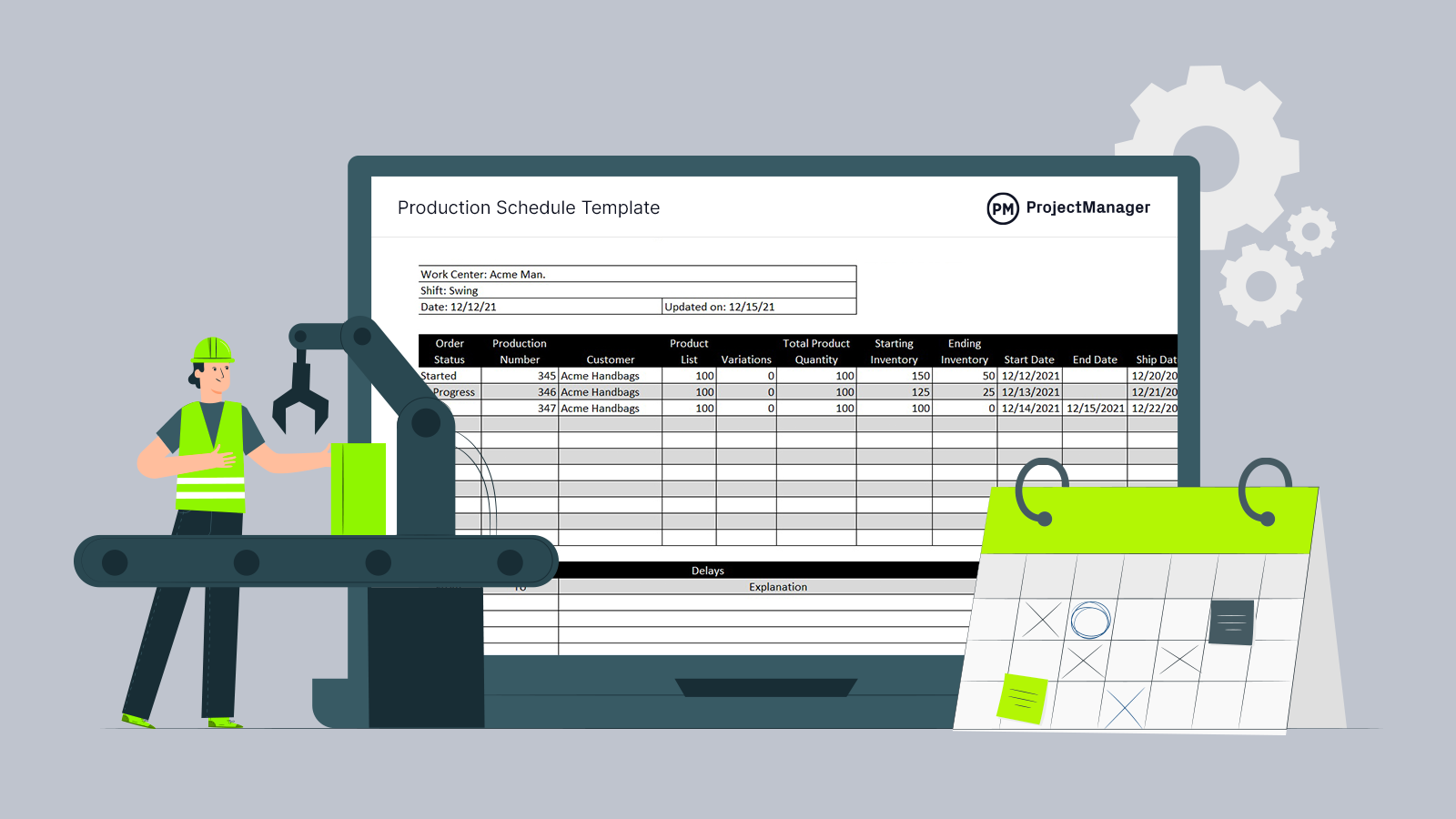
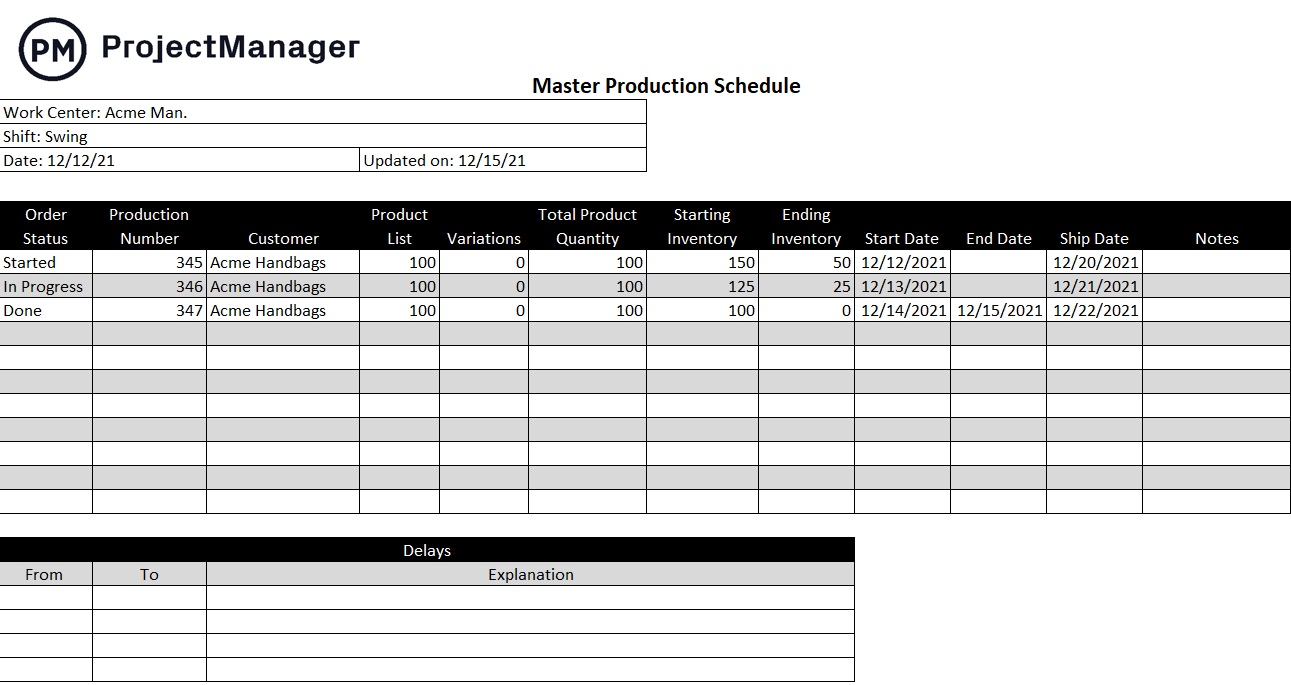
A well-structured production schedule is comprehensive, detailing every operational facet required to transform inputs into market-ready merchandise. Industry standards dictate that a master production schedule must incorporate several core components:
Forecasted Production Volume: Utilizing quantitative demand analysis and historical sales metrics, manufacturers project the precise number of units required within a given timeframe. This prevents both under-production (leading to stockouts and lost revenue) and over-production (tying up valuable working capital in excess inventory).
Detailed Production Timelines: Establishing rigid start and end dates for individual tasks, combined with critical milestones, provides manufacturing teams with a clear operational roadmap.
Lead Times: Effective scheduling accounts for three distinct categories of lead time: procurement lead time (the duration required to source raw materials from vendors), production lead time (the actual time consumed by manufacturing processes), and delivery lead time (the logistics timeline for shipping finished goods to clients).
Comprehensive Resource Requirements: A schedule is only as viable as the resources backing it. Planners must account for raw materials, specialized machinery, skilled labor, and financial capital.
Granular Cost Estimation: Financial visibility requires tracking direct material costs, direct labor wages, and manufacturing overhead expenses (such as utilities and facility maintenance), distinguishing clearly between fixed and variable costs.
Roles and Responsibilities Across the Manufacturing Ecosystem
Effective production scheduling requires synchronized cross-functional collaboration among various organizational departments.
Production Managers oversee the macro-level manufacturing environment, establishing overarching objectives, monitoring schedule adherence, and ensuring strict quality control standards are maintained.
Production Schedulers operate at the tactical level, dynamically allocating resources and balancing workloads to ensure the facility can rapidly respond to incoming customer orders. They serve as the central communication hub between planners, floor workers, and management.
Procurement Teams manage vendor relationships, material sourcing, and purchase order generation. Their accuracy in predicting procurement lead times directly impacts the feasibility of the production schedule.
Inventory Managers utilize advanced demand forecasting to track on-stock levels, work-in-progress (WIP) inventories, and finished goods, preventing costly stockouts and minimizing carrying costs.
Production Engineering Teams provide technical oversight, optimizing factory floor layouts, assessing equipment capacity, and eliminating micro-bottlenecks.
Marketing and Sales Teams act as the bridge between the external market and internal manufacturing operations, relaying customer feedback, coordinating product launches, and providing refined demand projections.
Maintenance Teams safeguard operational continuity by executing scheduled preventive maintenance and performing rapid emergency repairs, thereby safeguarding critical production windows.
Comparative Analysis: Production Schedule vs. Production Plan vs. Master Production Schedule
To maintain operational clarity, management must understand the distinct boundaries separating related manufacturing documents. A production plan provides a macro-level, strategic overview of manufacturing goals over an extended horizon, detailing general output targets without prescribing minute operational details.
A production schedule, conversely, represents a highly granular, tactical document. It focuses on individual production batches, specific machine assignments, and shop-floor execution steps on a daily or weekly basis.
The Master Production Schedule (MPS) serves as an intermediate or long-term bridge. Typically spanning weeks, months, or quarterly cycles, the MPS outlines what products, in what quantities, and by what dates the enterprise will manufacture. It links commercial sales forecasts directly with institutional production capacity, ensuring that long-range warehouse inventories remain optimal without straining factory resources.
Step-by-Step Methodology for Building a Production Schedule
Organizations aiming to construct a resilient production schedule generally follow a five-step development methodology:
- Estimate Customer Demand: Employ advanced business analytics and demand planning techniques to forecast quarterly, monthly, or yearly sales volumes, establishing a reliable baseline for required production output.
- Measure Production Capacity: Evaluate organizational resources—including labor headcount, raw material availability, and capital equipment—to determine whether existing infrastructure can meet forecasted demand. If capacity is constrained, management must invest in facility expansion or apply process optimization techniques such as assembly line balancing.
- Develop a Production Budget: Synthesize sales forecasts and capacity data into a comprehensive financial document that outlines the optimal unit production volume required to satisfy market demand while maintaining lean inventory thresholds.
- Optimize Production Routing: Map the most efficient physical and operational path for materials moving across the factory floor, minimizing transit times, handling effort, and overall manufacturing costs.
- Schedule Production Orders: Assign specific dates, durations, and resource allocations to individual manufacturing tasks, translating the production budget into an actionable, monitored shop-floor schedule.
Common Production Scheduling Techniques
Manufacturers employ various scheduling methodologies depending on their industry vertical, product type, and resource availability:
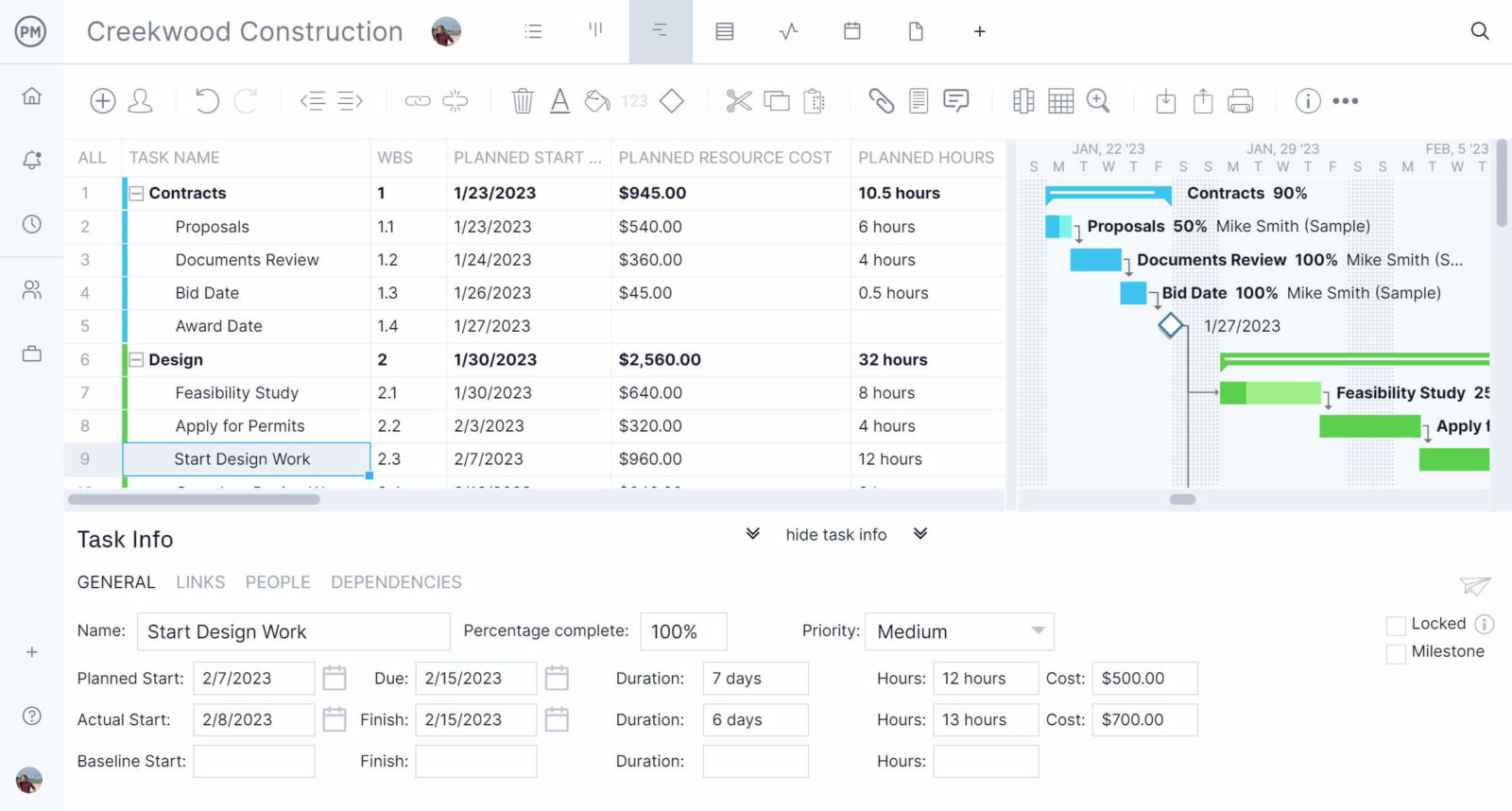
- Forward Scheduling: Initiates production immediately upon receipt of an order or when resources become available. While it maximizes resource utilization rates, it offers limited flexibility for accommodating rush orders.
- Backward Scheduling: Works backward from the customer’s required delivery deadline, initiating production only at the final possible moment to conserve holding costs and maximize capacity flexibility.
- Make-to-Order (MTO): Eliminates finished goods inventory entirely, producing items strictly to fulfill specific customer specifications and orders.
- Make-to-Stock (MTS): Utilized primarily for retail distribution, manufacturers continuously monitor stock levels and schedule production runs to replenish predetermined inventory thresholds.
- Finite Capacity Scheduling (FCS): A conservative, highly reliable method that schedules production strictly within the bounds of available resource capacity, making it ideal for small-to-midsize manufacturing enterprises.
- Infinite Capacity Planning: Schedules production orders exclusively based on lead times while ignoring immediate resource constraints, reallocating resources dynamically across tasks. This approach is typically favored by large industrial conglomerates with vast operational elasticity.
Addressing Common Challenges and Implications for Modern Enterprise
Despite deploying sophisticated methodologies, manufacturing facilities frequently encounter recurring scheduling hurdles. Unanticipated equipment breakdowns, sudden supply chain disruptions, inaccurate inventory counts, and fluctuating labor availability can rapidly invalidate even the most meticulously engineered schedules.
Industry analysts emphasize that the root cause of most scheduling failures is a lack of end-to-end visibility. When shop-floor execution is disconnected from warehouse inventory levels and corporate financial accounting, scheduling assumptions quickly collapse.
The integration of advanced production scheduling software—coupled with real-time inventory platforms like Fishbowl and robust project management suites like ProjectManager—addresses these vulnerabilities. By automating workflow triggers, providing live visual dashboards via Gantt charts and Kanban boards, and synchronizing operational data directly with financial ledgers (such as QuickBooks or Xero), modern manufacturers can achieve true operational transparency.
Ultimately, the ongoing digital transformation of production scheduling yields profound economic implications. Organizations that successfully transition from legacy, siloed scheduling practices to integrated, data-driven manufacturing environments routinely report lower cost of goods sold (COGS), accelerated monthly financial closes, reduced inventory carrying costs, and superior on-time delivery rates. As global markets continue to demand greater agility, the mastery of production scheduling remains a vital competitive differentiator for industrial enterprises worldwide.
Related posts: