KBCM Technology Group Releases Landmark COVID Edition SaaS Survey Detailing Industry Resiliency and Market Disruption


The Software-as-a-Service (SaaS) sector has long relied on comprehensive market intelligence to navigate the complexities of scaling digital enterprises. For over a decade, this benchmarking standard has been set by the annual SaaS Survey, originally launched by Pacific Crest Securities in 2010 and later stewarded by KeyBanc Capital Markets (KBCM) Technology Group. Marking the eighth consecutive year of collaboration with the entrepreneurial publication forEntrepreneurs, the release of the 2020 KBCM Technology Group SaaS Survey—specifically designated as the COVID Edition—arrives at a critical juncture in economic history.
Gathering empirical data from over 500 private SaaS companies, this specialized report offers an unprecedented look at how the global health crisis abruptly altered the trajectory of the software industry. By capturing baseline performance metrics for 2019 alongside year-to-date figures through May 31, 2020, the survey attempts to answer fundamental questions about survival, outperformance, and structural adaptation in a landscape reshaped overnight by pandemic-induced disruptions.
Background and Context: A Decade of Benchmarking Meets an Unprecedented Crisis
When KeyBanc initiated the survey in 2010, the cloud computing ecosystem was emerging from its infancy. Founders and venture capitalists needed reliable metrics on customer acquisition costs (CAC), lifetime value (LTV), annual recurring revenue (ARR) growth rates, and net retention to make informed strategic and financial decisions. Over the years, the Pacific Crest, and subsequently KBCM, SaaS Survey evolved into the definitive compass for industry executives and institutional investors alike.
The arrival of 2020, however, shattered normal operating assumptions. As governments worldwide implemented lockdowns and businesses froze capital expenditure to weather extreme uncertainty, the SaaS business model faced a severe stress test. David Spitz and the analytical team at KBCM Technology Group recognized that historical benchmarks were no longer sufficient. To capture the true magnitude of the shock, the survey structure was radically redesigned. Rather than measuring steady-state growth, the 2020 edition focused explicitly on corporate agility, operational reactions, and the diverging fortunes of market participants.
Methodology and Chronology of the 2020 Survey
Capturing an accurate snapshot of a rapidly evolving economic crisis required a nuanced methodological approach. KBCM Technology Group and the forEntrepreneurs community established a precise timeline to gather actionable intelligence while acknowledging the fluid nature of the pandemic.
Data collection for the COVID Edition took place during a compressed window from mid-June through early July 2020. Respondents were asked to provide concrete financial and operational data reflecting their baseline performance across the entirety of 2019, followed by year-to-date performance stretching through the end of May 2020.
Crucially, researchers acknowledged that the mid-year data collection represented merely the opening chapter of a much longer economic disruption. Understanding that a single point-in-time survey would fail to capture the long-term ramifications of the pandemic, the research team instituted a longitudinal framework. They assigned unique, confidential alphanumeric code names to participating private companies. This methodology ensured strict anonymity and data security while preserving the ability to conduct follow-up surveys as macroeconomic conditions evolved in the subsequent quarters and years.
Comparative Analysis: Last Year Versus This Year in SaaS
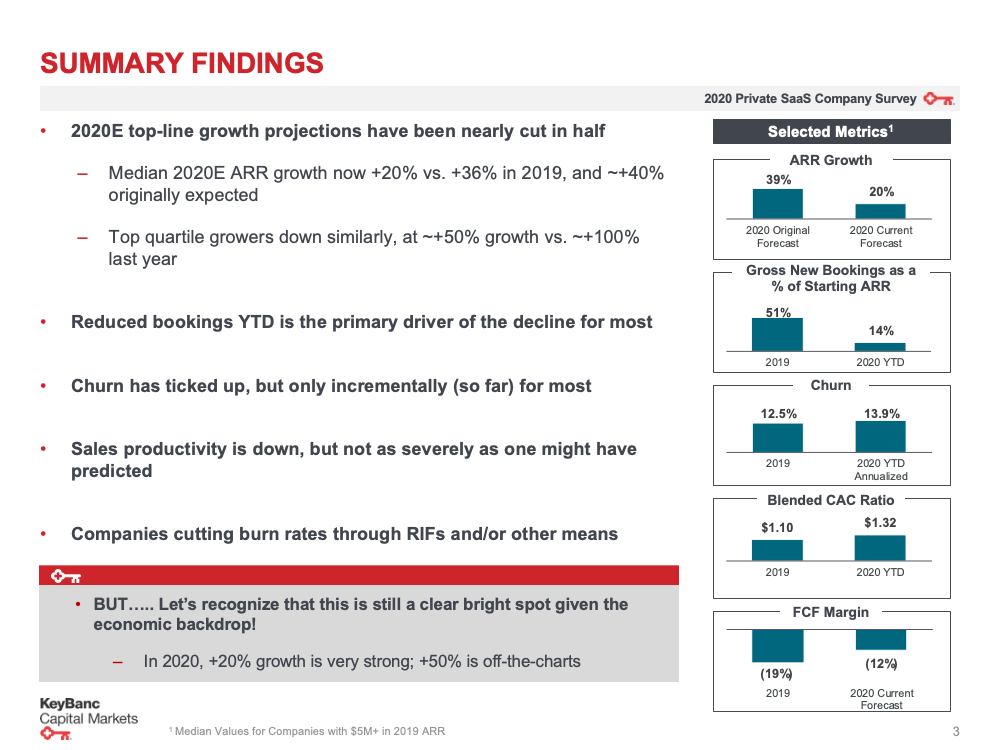
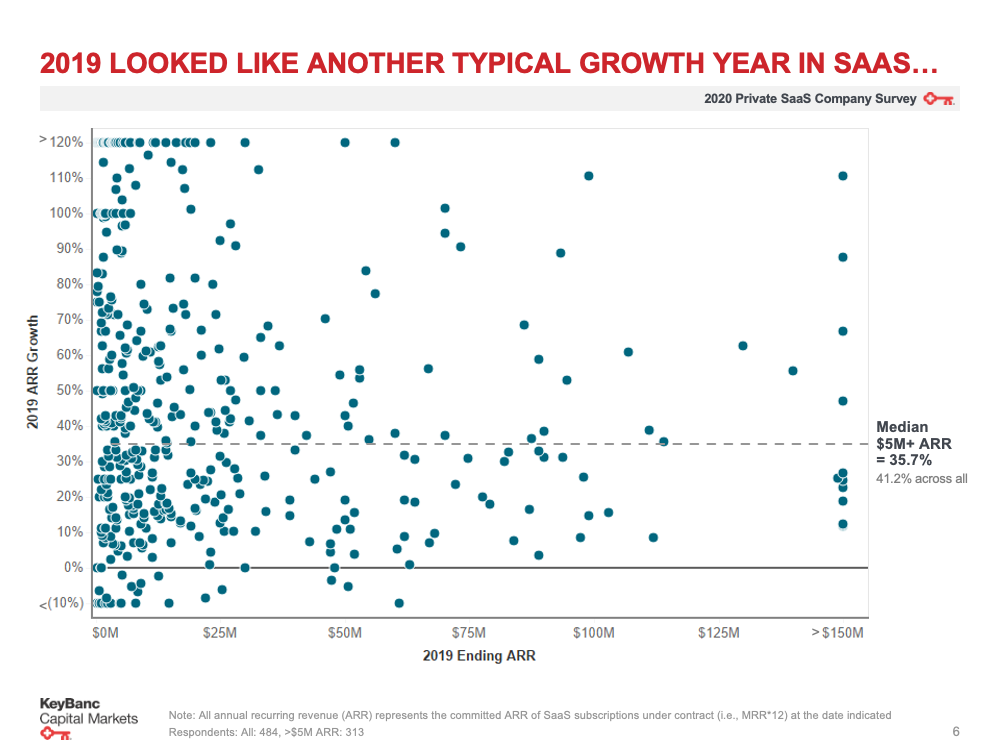
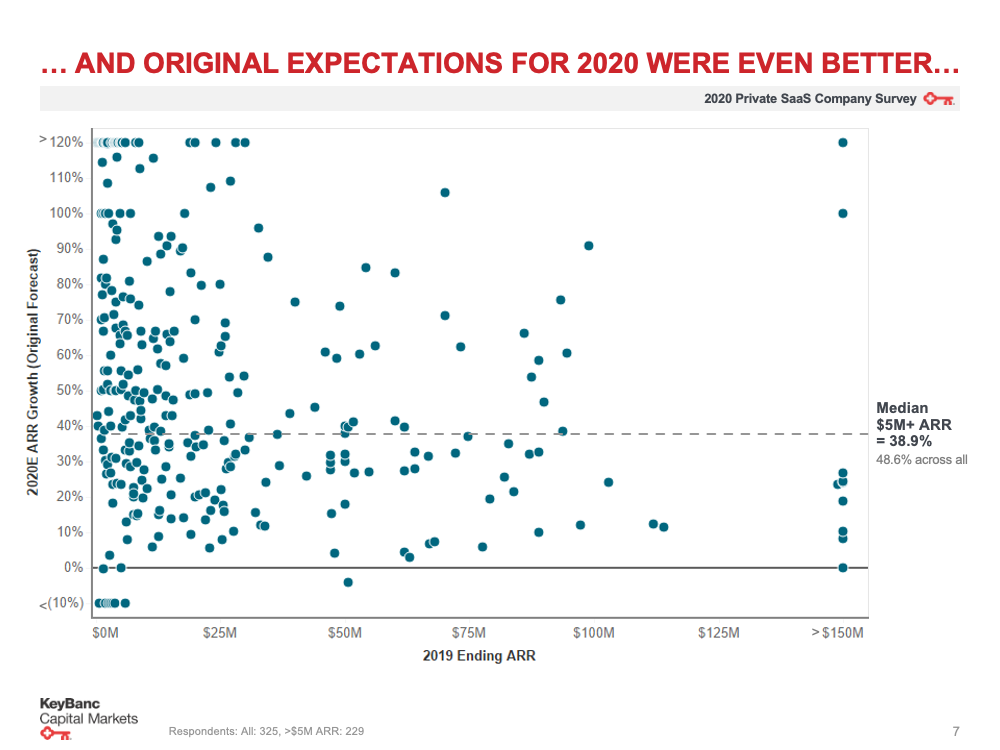
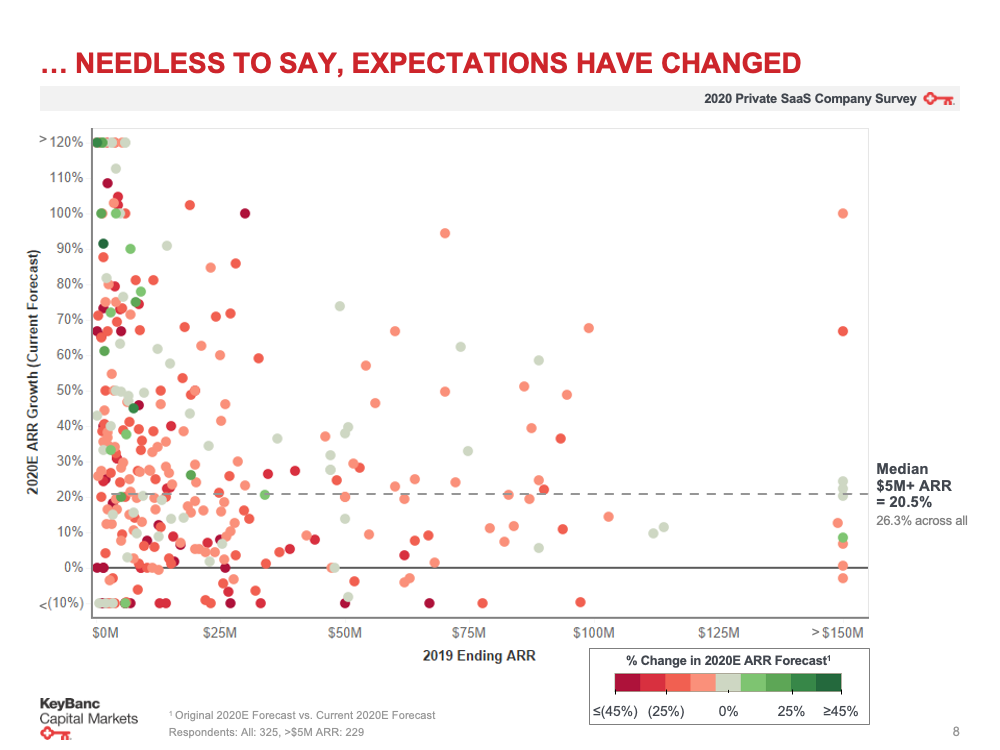
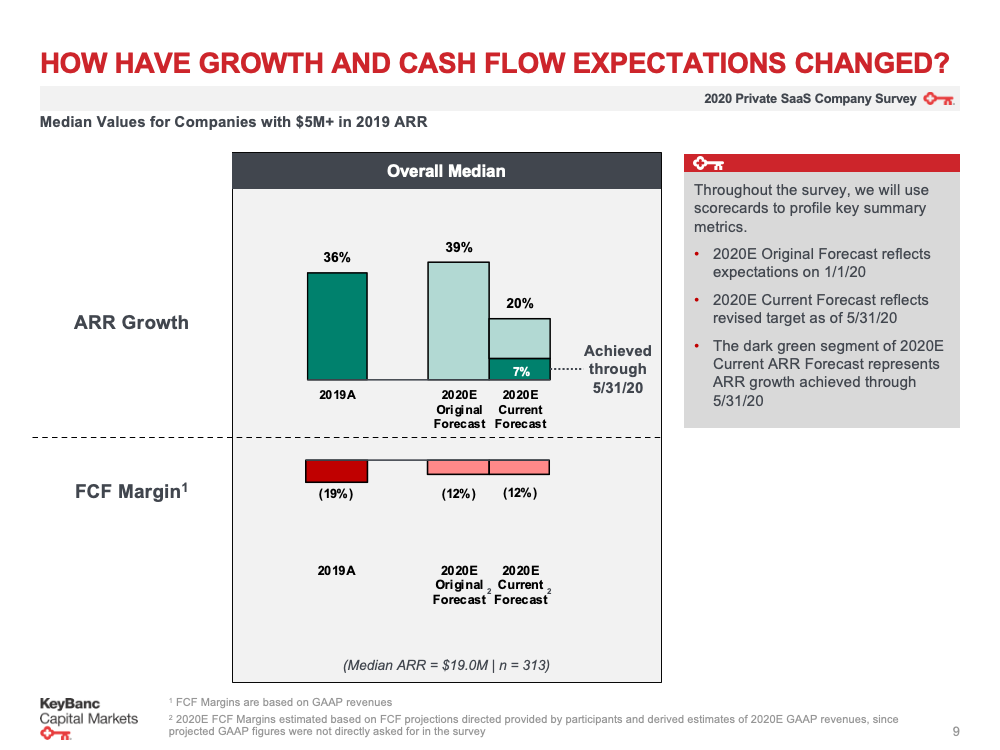
The core finding of the 2020 report centers on the stark divergence between the macroeconomic environment of 2019 and the turbulent reality of 2020. Data visualizations featured in the comprehensive report illustrate a transition from predictable, linear expansion to acute operational volatility.
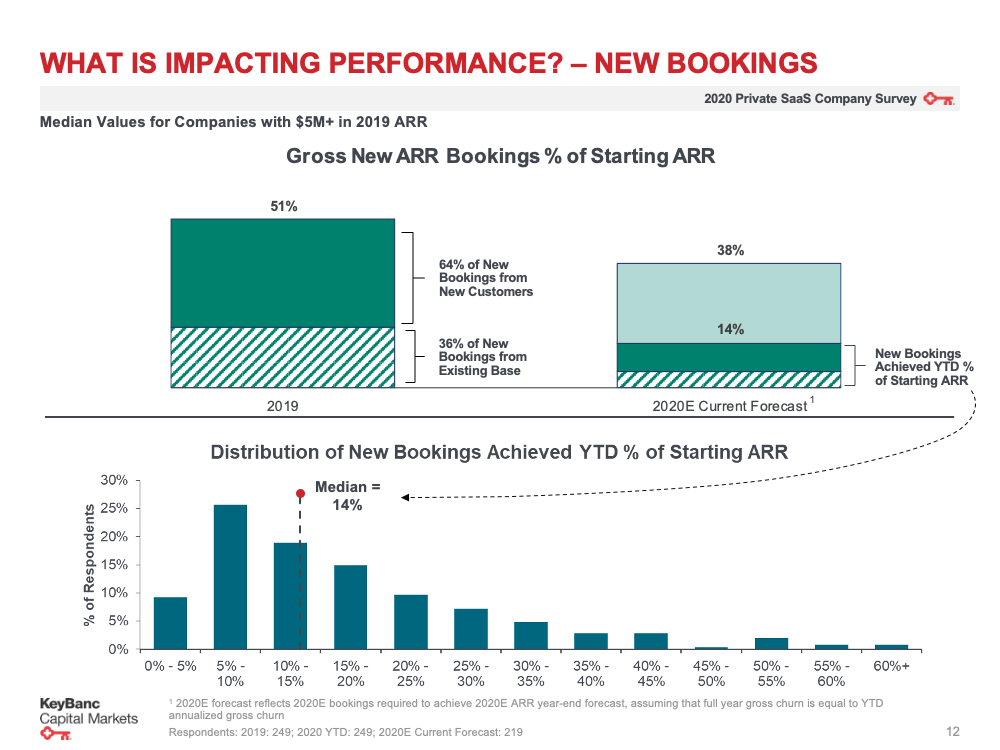
In 2019, private SaaS companies generally enjoyed robust demand, predictable sales cycles, and steady headcount expansion. Growth rates often exceeded 40% to 50% year-over-year for top-tier performers, with net revenue retention remaining comfortably above 100%. By contrast, the early months of 2020 introduced severe friction into the sales pipeline. Enterprise customers hesitated to commit to long-term software contracts, existing clients requested payment concessions or downselling, and pipeline conversion rates plummeted across multiple industry verticals.
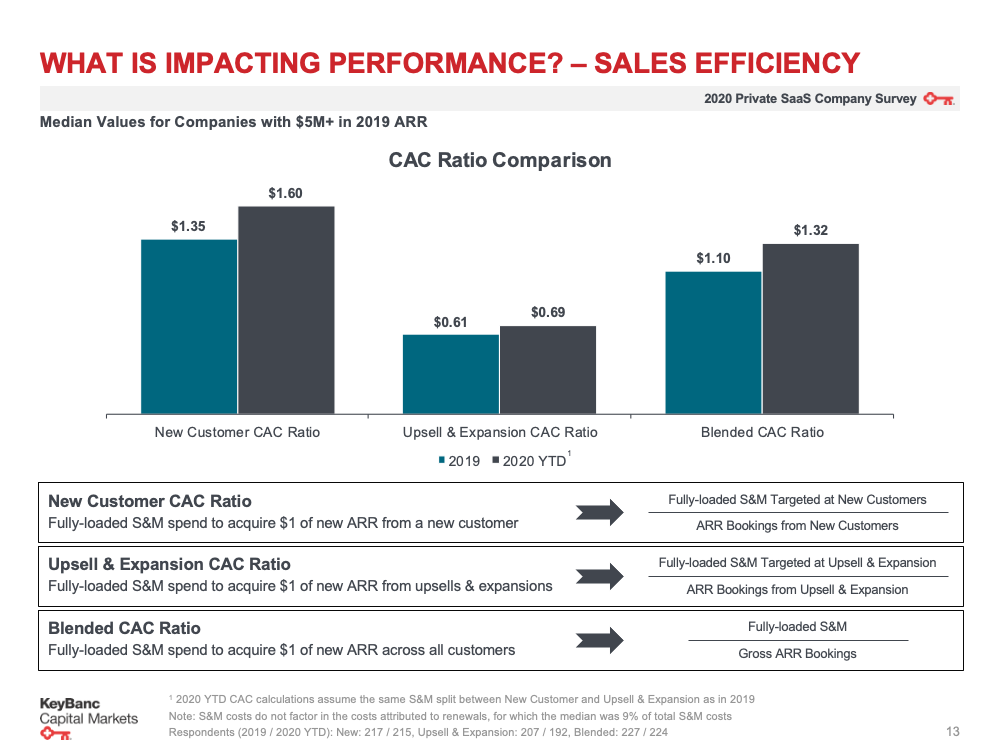
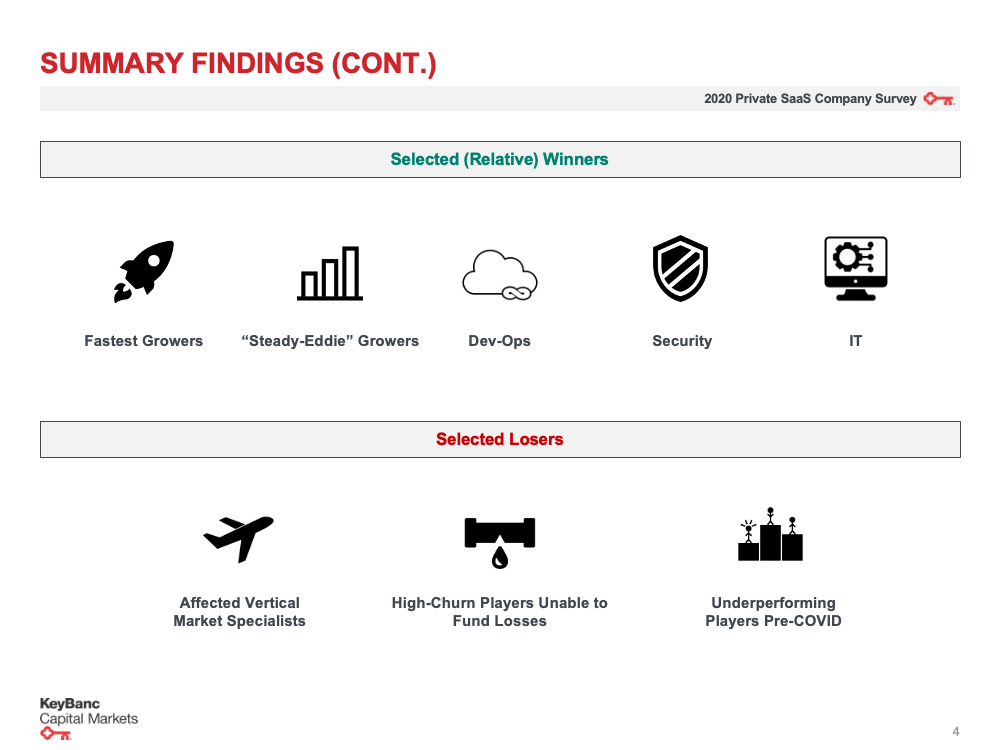
Despite these headwinds, the survey reveals that the SaaS sector did not experience a monolithic downturn. Instead, a bifurcated market emerged. Companies providing remote work enablement, cybersecurity, cloud infrastructure, and essential digital workflow automation often saw accelerated demand. Conversely, SaaS providers heavily exposed to hard-hit sectors such as hospitality, travel, traditional retail, and SMB-focused brick-and-mortar services experienced severe contractions in new bookings and elevated churn rates.
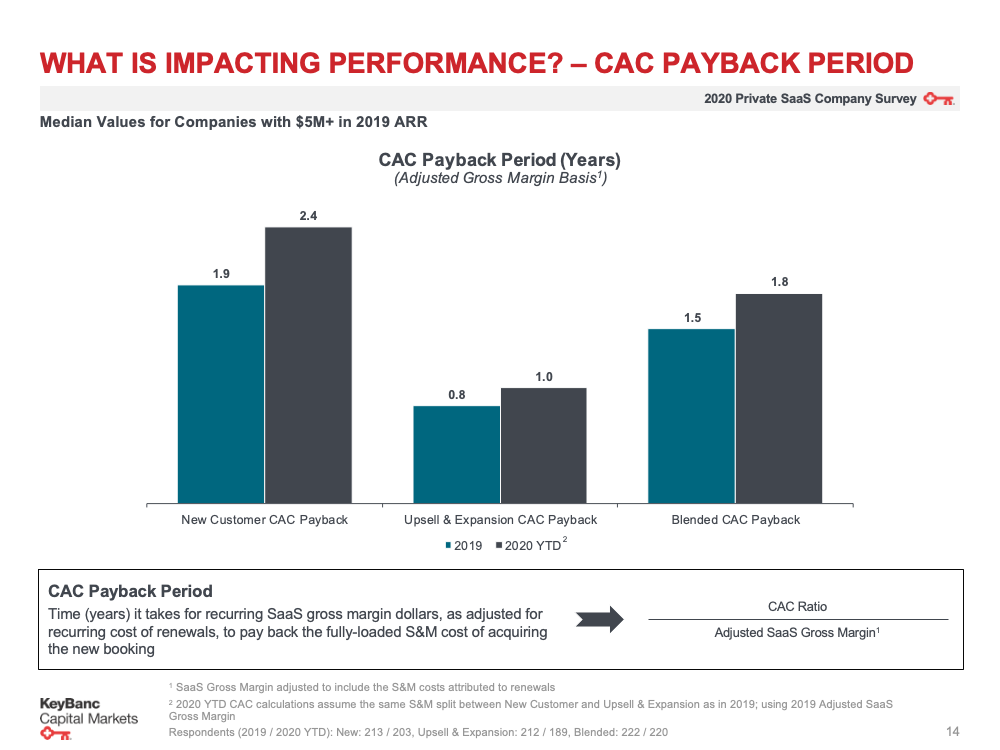
What is Impacting Performance? Key Operational Pressures
To understand the mechanics behind the shifting performance metrics, KBCM examined the specific operational friction points cited by executive leadership teams. The primary drag on performance originated from lengthening sales cycles. As corporate IT budgets underwent rigorous re-evaluation, deals that previously closed within weeks began requiring multiple layers of executive sign-off.
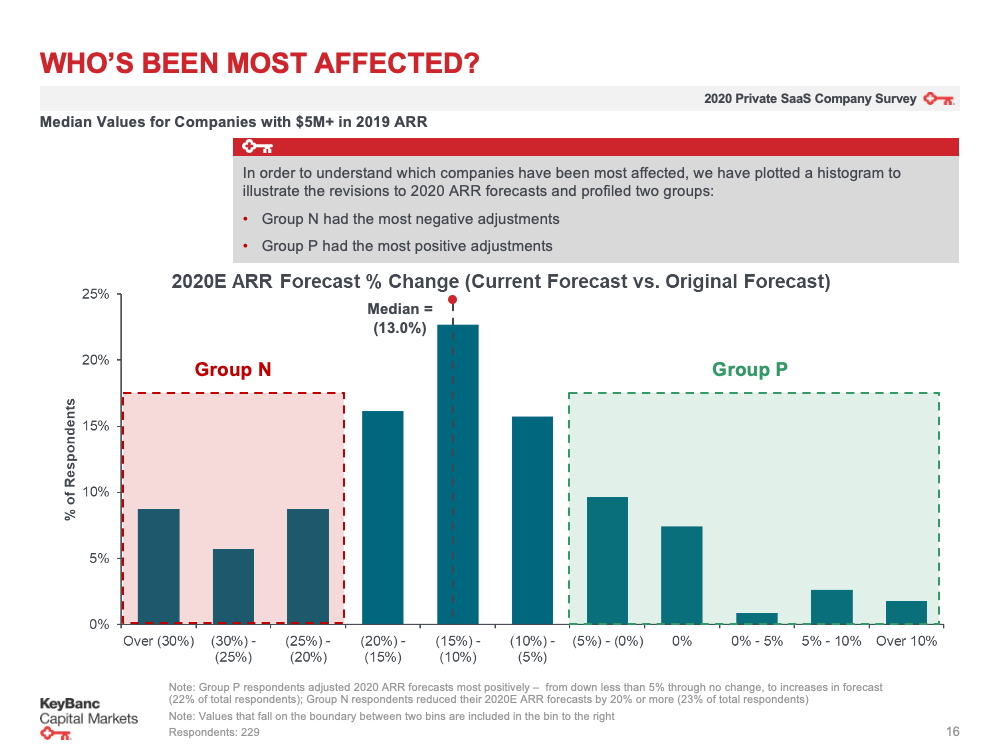
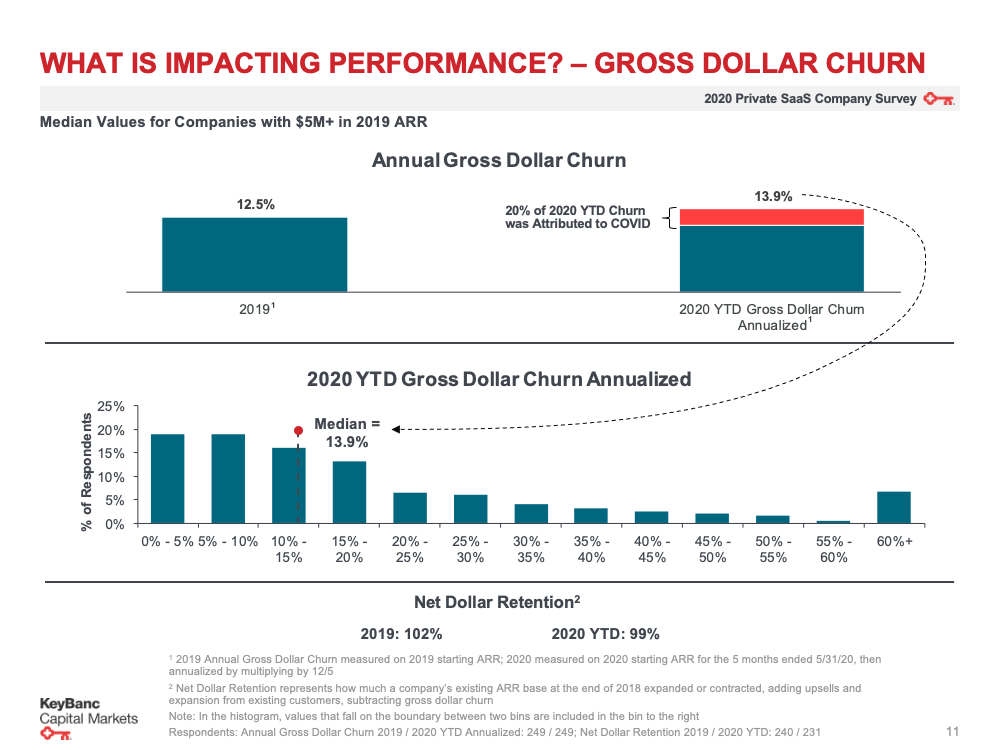
Furthermore, customer retention emerged as a frontline battleground. While software is traditionally considered "sticky," unprecedented cash-flow preservation strategies forced many organizations to scrutinize every recurring software expense. Downselling—where customers migrated to lower-tier pricing plans to reduce overhead—became a widespread defensive tactic.
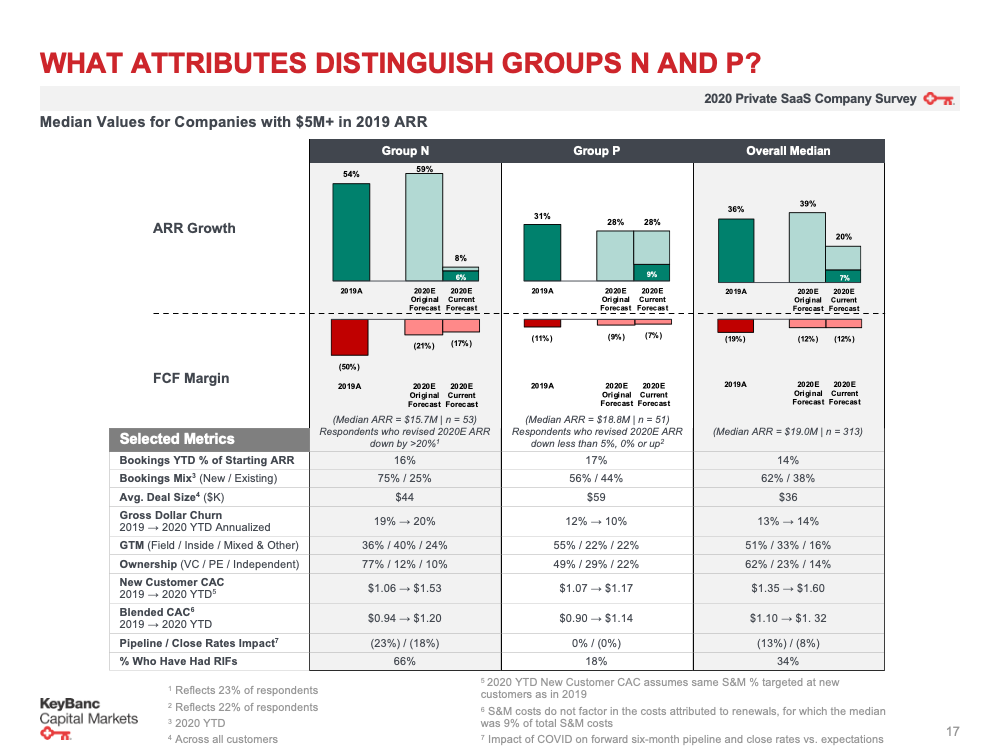
In response to these pressures, SaaS leadership teams executed rapid defensive maneuvers. The survey data highlights a dramatic pivot toward cost containment. Capital allocation shifted away from aggressive customer acquisition and experimental marketing toward core product development, customer success, and runway extension. Hiring freezes, reductions in force, discretionary travel bans, and marketing budget optimization became standard operating procedure for the median private SaaS firm striving to achieve cash-flow neutrality.
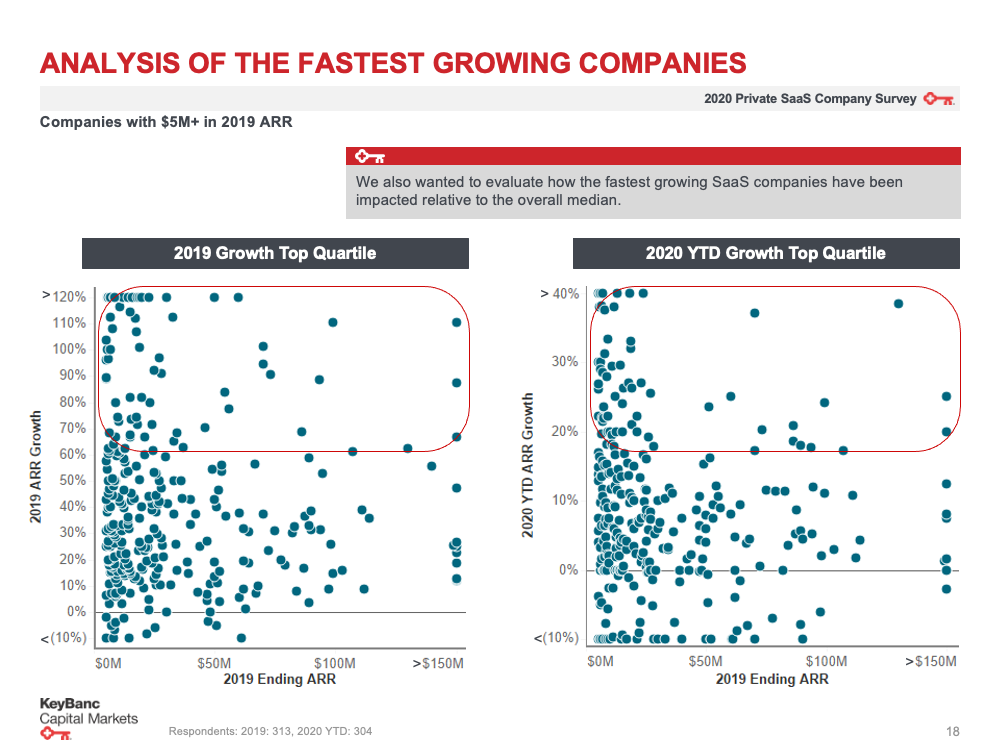
Sector Disparities: Which Companies Were Most Impacted?
The impact of the COVID-19 pandemic on SaaS performance was far from uniform, dictated largely by target market demographics and product utility. The survey data categorizes the varying degrees of vulnerability among respondents:
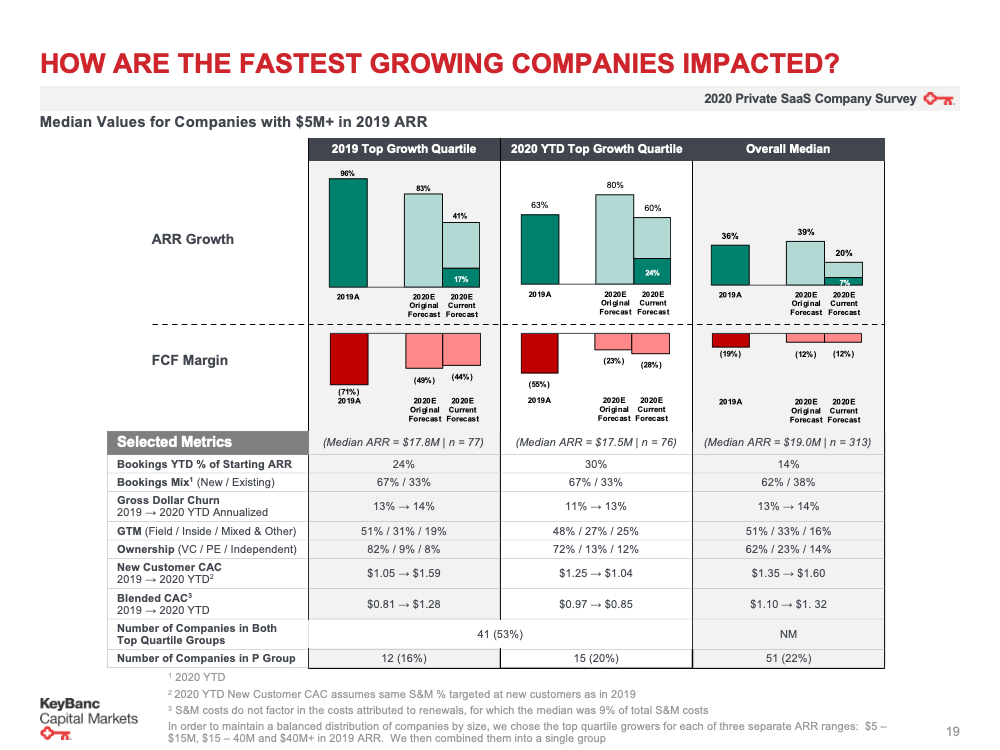
- Enterprise vs. SMB Exposure: Companies selling primarily to small and medium-sized businesses (SMBs) suffered disproportionately. SMBs faced existential cash flow crises, leading to higher default rates, elevated voluntary churn, and compressed average selling prices (ASPs). Enterprises demonstrated greater financial resilience, though their procurement processes slowed significantly.
- Vertical vs. Horizontal Solutions: Industry-specific (vertical) SaaS providers whose target customers operated in locked-down physical sectors faced severe revenue stagnation. Meanwhile, horizontal productivity and collaboration tools experienced unprecedented user acquisition spikes, though monetization of those users occasionally lagged behind pure user growth.
- Transactional vs. Subscription Resilience: Businesses reliant on usage-based or transactional pricing models experienced immediate revenue drops as client activity volumes declined, whereas pure recurring subscription models provided a stabilizing cushion.
Industry Response and Strategic Adaptation
Faced with an unpredictable horizon, software executives demonstrated remarkable tactical flexibility. The KBCM survey documented the immediate strategic responses deployed across the private SaaS ecosystem:
- Cash Preservation as a Priority: Extending cash runways became the paramount objective. Companies aggressively modeled multiple downside scenarios, frequently cutting burn rates by 20% to 40% to ensure survival through prolonged market freezes.
- Product Roadmap Pivots: Many engineering teams rapidly re-oriented their product development pipelines to address emerging remote-work requirements, security enhancements, and cost-optimization features demanded by anxious clients.
- Enhanced Customer Success Initiatives: Recognizing that acquisition was exceedingly difficult, companies shifted resources toward retention. Proactive account management, flexible payment terms, and deferred billing arrangements were deployed to protect existing recurring revenue bases.
Broader Implications and Fact-Based Market Analysis
The release of the 2020 KBCM Technology Group SaaS Survey: COVID Edition provides vital empirical grounding for an industry that had previously only experienced a prolonged, uninterrupted bull market.
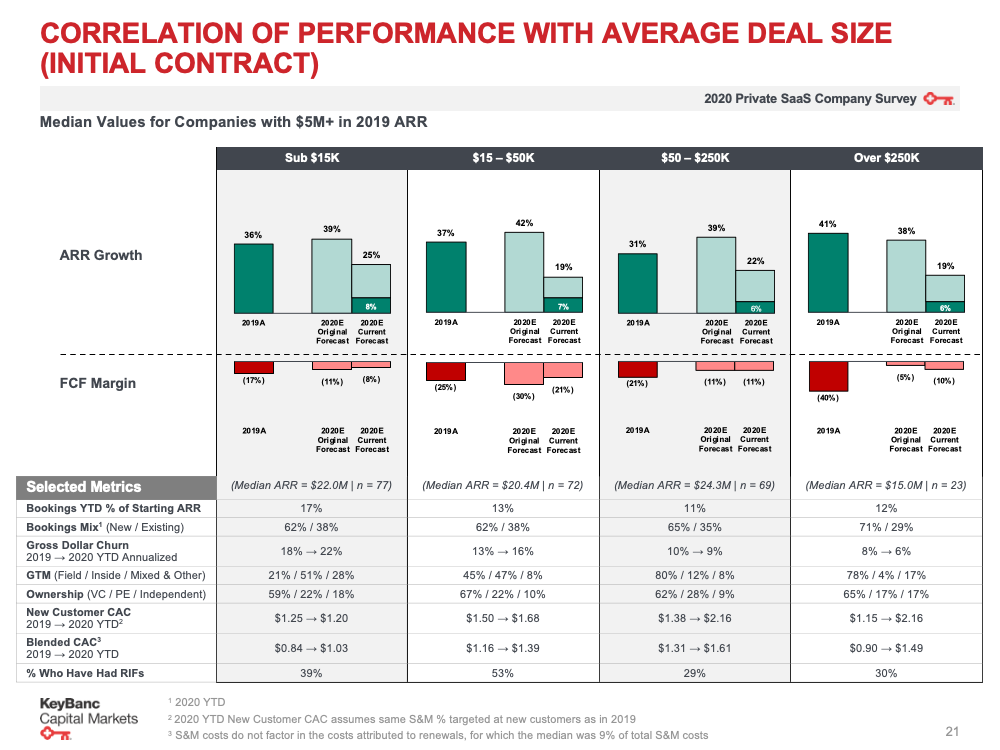
From an analytical perspective, the data underscores the structural maturation of the SaaS industry. Unlike the dot-com crash of 2000, modern B2B software companies possessed the operational visibility, high gross margins, and financial management tools necessary to adjust their cost structures swiftly. While growth rates experienced a temporary compression, the underlying unit economics of well-managed SaaS businesses proved remarkably durable.
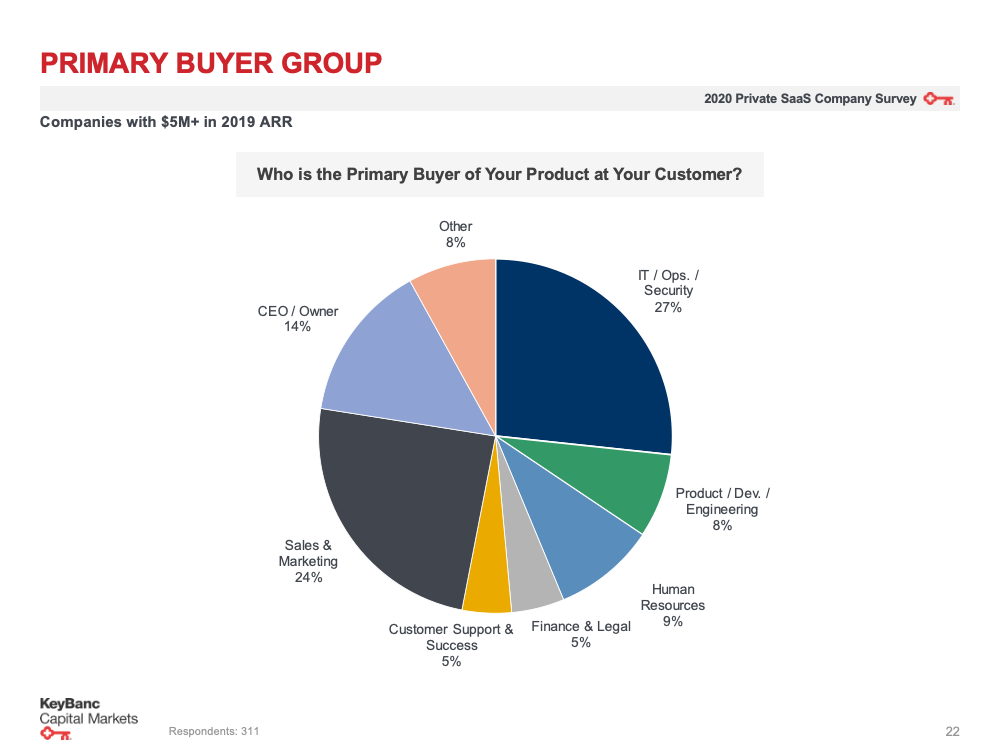
The insights captured by David Spitz and the KBCM team established a critical baseline for investors and founders. By quantifying the initial shock of the pandemic and laying the groundwork for longitudinal tracking, the 2020 survey transitioned from a traditional performance benchmark into an essential historical record of corporate adaptability during a global crisis. For stakeholders seeking a granular understanding of these findings, the complete report remains accessible for download via the forEntrepreneurs platform.