
The digital marketing landscape presents businesses with an overwhelming array of choices, often numbering in the hundreds of channels and thousands of individual tactics. For many marketers, the daily reality involves attempting to manage a dozen or more of these simultaneously, a practice that can quickly erode the clarity and conviction necessary to achieve focused, impactful results. At its core, marketing remains a fundamental endeavor: attracting potential customers to a business and then encouraging them to make a purchase. In the online realm, this translates to a simple, yet crucial, equation: New Signups = Traffic x Conversion Rate. This foundational principle highlights the two primary levers available to drive online growth, and every marketing channel, tactic, and conversion opportunity should be evaluated against these two critical metrics.
To address the complexity and empower marketers to achieve tangible outcomes, a robust framework has been developed to guide the process of improving conversion rates. This framework, often referred to as the "Conversion Map," provides a structured approach to understanding where marketing efforts are most effective and where improvements can yield the greatest returns. It encourages a return to basic marketing principles: identify what is performing well and amplify those efforts. Rather than relying on a scattergun approach of experimenting with numerous channels and tactics, the focus shifts to analyzing existing data, pinpointing areas of high traffic, high conversion, or both, and then strategically doubling down on those successes. This analytical approach, guided by the Conversion Map, helps determine the most effective next steps for driving new signups and fostering overall business growth.
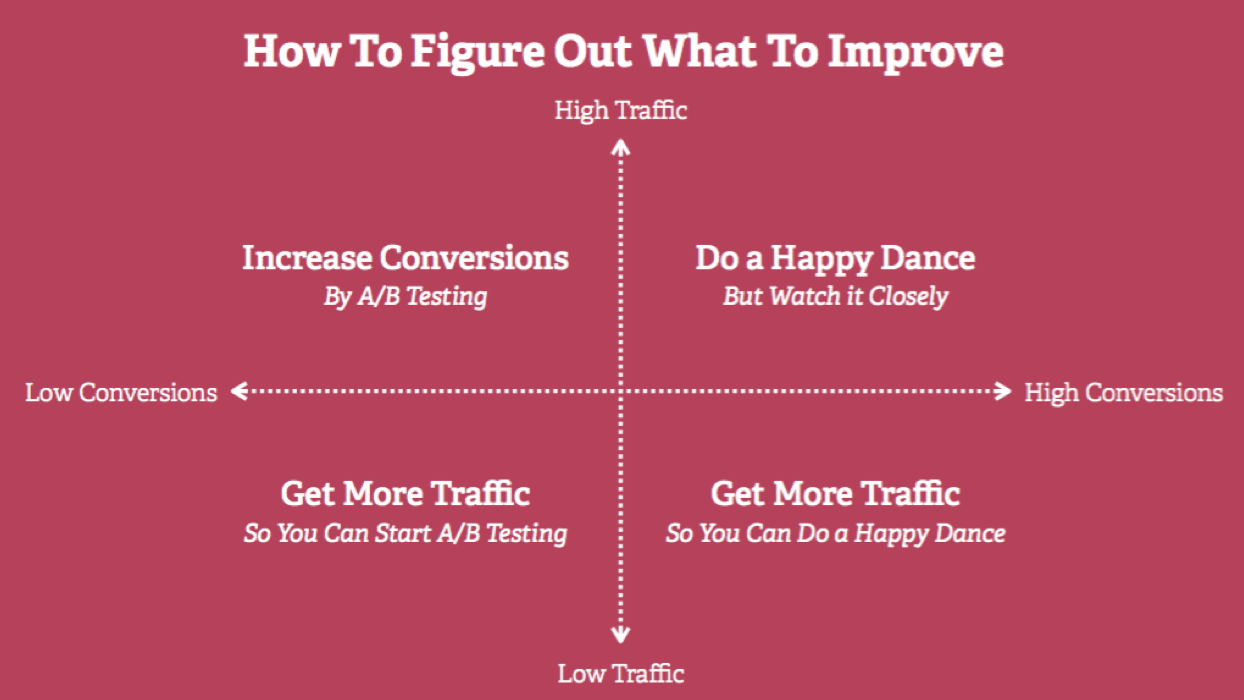
The Conversion Map: A Strategic Framework for Optimizing Marketing Performance
The Conversion Map is a conceptual tool designed to break down marketing efforts along two critical dimensions: traffic volume and conversion rate. By plotting various marketing channels, landing pages, and content pieces onto a two-by-two matrix, marketers can categorize their initiatives into one of four distinct quadrants. This visualization allows for a clear understanding of the current performance landscape and highlights the most promising areas for improvement.
The fundamental principle underpinning this framework is the classic marketing adage: "Figure out what’s working and then do more of it." Instead of constantly chasing new, unproven strategies, businesses are encouraged to delve into their existing performance data. The objective is to identify initiatives that are already driving substantial traffic, achieving high conversion rates, or excelling in both areas. By concentrating resources and efforts on these proven performers, and using the Conversion Map to guide strategic decisions, businesses can optimize their marketing spend and accelerate growth.
Transforming the Framework into an Actionable Process
The greatest opportunities for significant improvement often lie within the "high traffic, low conversion" quadrant. This is where a large volume of potential customers are already engaging with a business’s offerings, but are not yet converting at an optimal rate. By addressing these areas, businesses can achieve a substantial increase in signups with relatively efficient resource allocation.

The Conversion Map prioritizes these quadrants for execution in a specific order, ensuring that efforts are focused on the most impactful areas first:
-
High Traffic, Low Conversion: This quadrant represents a significant opportunity. The substantial influx of visitors indicates strong reach and brand awareness, but a failure to convert them effectively. This is an ideal area for rigorous A/B testing and experimentation. With a large traffic volume, the sample size for testing is considerable, enabling faster learning cycles and more reliable data. The primary goal here is to understand what types of conversion strategies resonate best with the audience for a given channel, landing page, or content piece. This involves testing different calls to action, optimizing landing page design, refining messaging, and tailoring offers to better meet visitor intent. The aim is to transform this "goldmine of opportunity" into a high-performing asset.
-
Low Traffic, High Conversion: Content or channels that attract a smaller, yet highly engaged audience, often indicate a strong connection with a specific niche or a position further down the sales funnel. This content typically provides detailed, tactical advice that is closely aligned with the product or service, but may lack broader appeal. While understanding the customer is strong in this quadrant, understanding the wider audience might be lacking. The strategic imperative here is to increase traffic to these high-converting assets. The goal is to scale the audience for this content, potentially reaching tens of thousands of visitors. As traffic increases, conversion rates may naturally decline due to a broader audience with varying levels of intent. The challenge then becomes transitioning from traffic generation to conversion optimization, potentially moving these assets into the "high traffic, low conversion" quadrant, necessitating a shift in strategy.

-
Low Traffic, Low Conversion: This quadrant represents the most challenging scenario, where neither traffic nor conversions are significant. The primary objective for initiatives in this space is to generate more traffic through any available means. This is a common starting point for many early-stage startups, particularly in the SaaS sector. For these businesses, content marketing often serves as a crucial strategy for building initial traffic and brand recognition. The focus should be on broad reach and awareness, employing tactics that can draw eyeballs and introduce the brand to a wider audience, with the ultimate goal of moving these efforts into the "high traffic, low conversion" quadrant.
-
High Traffic, High Conversion: This is the ideal scenario, representing a highly effective marketing asset or channel. When an initiative consistently attracts a large audience and converts them at a high rate, it signifies a successful strategy. These assets are the "cash cows" of a marketing operation and should be carefully maintained to ensure their continued performance. While over-optimization is generally discouraged, consistent monitoring is crucial to prevent a decline in performance. These high-performing areas provide the resources and stability to fund experimentation and growth initiatives in other quadrants.
Maximizing Opportunities: A Phased Approach to Conversion Improvement
The strategic prioritization of these quadrants is crucial for an efficient and effective marketing process. The recommended order of execution allows businesses to capitalize on their most promising opportunities first:

-
Initiate efforts in the "High Traffic, Low Conversion" quadrant. This is where the potential for immediate impact is greatest. By focusing on improving conversion rates for channels and content that already attract significant attention, businesses can quickly see an increase in signups without necessarily needing to invest heavily in new traffic generation. This quadrant offers the most efficient path to scaling acquisition.
-
Subsequently, focus on the "Low Traffic, High Conversion" quadrant. Once the high-traffic, low-conversion areas are showing improvement, attention can shift to scaling the audience for highly effective, but currently low-traffic, assets. The insights gained from optimizing high-converting content can be leveraged to attract a broader audience, carefully managing the expected decline in conversion rates and preparing for the next phase of optimization.
-
Address the "Low Traffic, Low Conversion" quadrant as a foundational step. While lower priority in terms of immediate impact, initiatives in this quadrant are essential for long-term growth. For new businesses or those entering new markets, building initial awareness and traffic is paramount. Content marketing, SEO, and broader promotional efforts are key to moving these assets out of obscurity and into more productive quadrants.

-
Maintain the "High Traffic, High Conversion" quadrant. These are the established successes that fuel the entire marketing engine. While they require ongoing attention to ensure stability, they should not be the primary focus for new growth initiatives. Their role is to provide a reliable stream of customers and revenue, supporting the exploration and optimization of other areas.
The Long Game: Building Sustainable Growth Through Content and Conversion
The principle of "playing the long game" is particularly relevant in the context of content marketing and conversion optimization. Companies that invest in creating high-quality, valuable content that resonates with their target audience often achieve remarkable cost efficiencies in customer acquisition. For instance, some studies have indicated that content marketing can lead to customer acquisition costs significantly lower than those associated with paid advertising channels like Google AdWords. Even when overall traffic might fluctuate, a sustained focus on conversion optimization can ensure continued business growth.
Content marketing, in particular, is a long-term investment. In the initial stages, businesses focus on establishing a presence and building an audience by creating "islands" of valuable content. Over time, as the volume and quality of this content increase, these individual pieces begin to connect and form "continents" – authoritative online destinations that attract and engage a broad audience. This kind of sustainable growth is not achieved through sporadic, isolated tactics or a single "Hail Mary" play. Instead, it is the result of a deliberate, step-by-step process, consistently applied over time. By understanding the interplay between traffic and conversion, and by strategically applying frameworks like the Conversion Map, businesses can navigate the complexities of online marketing and build a robust, scalable engine for growth. The data supports this approach: as of recent industry reports, companies that prioritize content marketing and conversion rate optimization (CRO) consistently outperform their peers in terms of lead generation, customer loyalty, and overall revenue growth. This strategic discipline, grounded in data analysis and a clear understanding of fundamental marketing principles, is the key to thriving in the dynamic digital marketplace.