Smashing the Operational Bottleneck: A Strategic Blueprint for Scaling Business Systems Through Documentation and Delegation

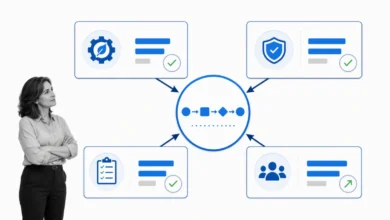
The defining characteristic of a maturing enterprise is its ability to transition from founder-led operations to system-driven execution. In the current economic landscape, where operational agility determines market survival, the most common threat to scaling is the internal bottleneck. A business bottleneck is defined as a critical juncture where operational flow halts, awaiting the memory, review, or manual approval of a single individual—usually the business owner or a senior executive. Research indicates that organizations suffering from "founder dependency" experience a 30% reduction in scalability, as the decision-making capacity of the leader becomes the ceiling for the entire organization’s output.
When every strategic decision or routine process must pass through a single point of failure, control becomes a constraint rather than an asset. While many entrepreneurs fear that relinquishing control equates to a loss of quality, industry experts argue that the inverse is true: controlled autonomy, facilitated by robust documentation, creates a higher standard of performance. To move beyond this plateau, companies must institutionalize three core habits: systematic documentation, strategic delegation, and the implementation of verified trust frameworks.
The Anatomy of an Operational Bottleneck
The phenomenon of the bottleneck is not merely a logistical annoyance; it is a structural defect in business architecture. Historically, the "owner-dependency" trap occurs during the transition from a startup to a growth-phase company. In the early stages, informal communication is a competitive advantage. However, as headcount increases, the "knowledge silos" created by founder-centric decision-making begin to manifest as delays.
Data from the Small Business Administration (SBA) and various operational efficiency studies suggest that 45% of small-to-midsize business owners spend more than 20 hours per week on repetitive administrative tasks that could be automated or delegated. This time drain represents an opportunity cost, preventing leadership from engaging in long-term strategic planning, market expansion, or product innovation. The cycle of bottlenecking is characterized by a chronological progression: first, a task is performed; second, it becomes a routine; third, it becomes a dependency; and finally, it becomes a constraint that prevents the business from scaling beyond the owner’s 24-hour daily limit.
Phase 1: Identifying the Constraint
The systematic elimination of bottlenecks begins with a rigorous diagnostic phase. Leaders must categorize tasks based on frequency, complexity, and the degree of risk associated with error. According to the Theory of Constraints, popularized by Eliyahu M. Goldratt, an organization must identify its "drum-buffer-rope"—the point at which the entire system’s throughput is determined by a single, limited resource.
Business leaders should initiate this process by documenting tasks that repeatedly cause "operational friction." This includes recurring approvals, data entry processes, or specialized client interactions that current employees cannot complete without supervisor intervention. It is a common strategic error to attempt an enterprise-wide overhaul simultaneously. Instead, the most effective approach is the "single-win" methodology: selecting one high-impact, repeatable process and optimizing it from start to finish. This provides the team with a psychological victory and creates a reusable template for subsequent systems.
Phase 2: The Architecture of Documentation
A process document is not merely a static manual; it is a dynamic operational asset. In modern, high-growth companies, the transition from "tribal knowledge" to "explicit documentation" is the most significant hurdle. A high-quality process document must capture five critical data points: the trigger (what initiates the work), the owner (who is responsible), the expected outcome (the definition of success), the procedural steps, and the decision thresholds (when to escalate).
The evolution of documentation tools has changed the landscape for mid-market firms. Platforms such as Process Street have moved beyond simple text-based manuals, integrating Compliance Operations Platforms that combine documentation with active workflow management. By using AI-enabled systems, companies can now track compliance in real-time, ensuring that as a process is executed, the evidence of that execution is automatically captured. This replaces the need for the owner to manually review every item, as the system itself acts as a gatekeeper for quality control.
Phase 3: Delegating for Results
Delegation is frequently misunderstood as the act of offloading labor. In reality, effective delegation is the act of transferring authority. A study by the Harvard Business Review on leadership effectiveness found that managers who master "high-impact delegation" increase their team’s productivity by up to 25% within six months.
The handoff process requires three distinct elements:
- Defined Outcomes: Clearly articulating what "done" looks like.
- Resource Provisioning: Ensuring the owner has the access, budget, and authority to complete the task without needing to check back in.
- Escalation Protocols: Explicitly defining the "red lines"—financial, safety, or legal thresholds—where the owner must halt work and consult leadership.
When these boundaries are set, the owner can operate with full agency. This phase also serves as a diagnostic tool. If the new owner struggles, the gaps in the documentation become immediately apparent. These "knowledge gaps" represent the final traces of the original bottleneck and should be refined until the process is entirely self-sufficient.
Phase 4: Cultivating Controlled Autonomy
The transition from "managing" to "leading" requires a psychological shift for the business owner. Once a process is documented and delegated, the temptation to hover is the primary cause of system collapse. This is often termed "micromanagement-induced atrophy," where the team loses the ability to think independently because they have learned that their work will be checked and altered regardless of its quality.
To avoid this, leaders must implement "checkpoint intervals." Rather than reviewing every task, leaders should review the results of the process at set intervals—weekly or monthly. By focusing on KPIs (Key Performance Indicators) and performance data, the leader can maintain visibility without interfering in the day-to-day workflow. This environment of "controlled autonomy" fosters a culture of accountability. When employees know they are trusted to make decisions within a defined framework, engagement levels typically rise, further increasing the efficiency of the system.
The Broader Impact: Scaling for the Future
The implications of removing bottlenecks extend far beyond the immediate increase in operational speed. When a business moves away from founder dependency, it increases its valuation. Investors and potential acquirers consistently assign higher multiples to companies that demonstrate "transferable value"—the ability for the business to function, grow, and thrive independently of its original owner.
Furthermore, the process of documentation creates a culture of continuous improvement. Once a task is documented, it becomes an object that can be studied, optimized, and upgraded. As the team gains experience with these systems, they often identify efficiencies that the owner—distracted by the broader scope of the business—would have overlooked.
Conclusion: The Cycle of Improvement
The path to a bottleneck-free organization is not a one-time project but an ongoing commitment to organizational maturity. As the business evolves, processes that were once efficient will eventually become outdated. The final step in this methodology is the rigorous audit: after a process has been in use for a set duration, the leadership team must review cycle times, error rates, and team feedback.
By systematically applying these principles—finding the constraint, documenting the process, delegating with authority, maintaining controlled trust, and iterating—business owners can effectively move from the center of their company to its periphery. This transition allows them to focus on the high-level strategic decisions that drive long-term growth, leaving the routine operations to a high-functioning, self-correcting system. In the final analysis, the goal is not for the owner to disappear, but to ensure that their presence is a choice, not a necessity.
Related posts: