Beyond the Commercials: Inside Progressive Insurance’s Expanding Remote Workforce and Work-From-Home Opportunities

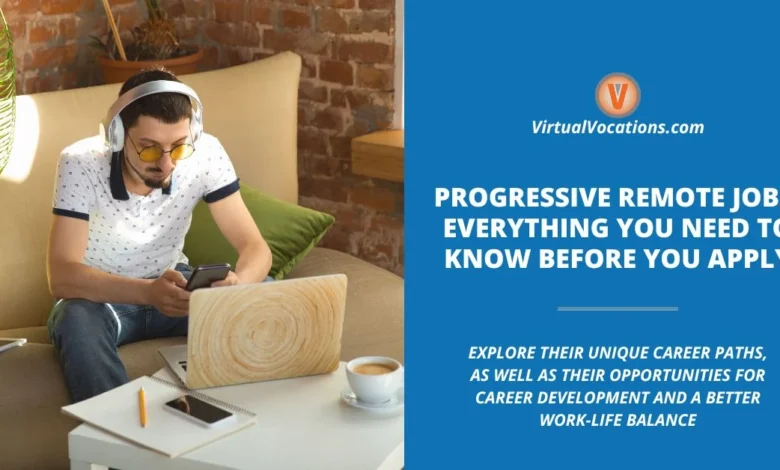
When consumers think of Progressive Insurance, iconic marketing campaigns featuring characters like Flo or Dr. Rick typically come to mind. These memorable advertisements have cemented the company’s presence in American pop culture, portraying a brand with a distinct sense of humor and high visibility. However, beyond its advertising footprint, Progressive operates as a massive corporate enterprise and a major U.S. employer. In recent years, the auto insurance giant has significantly expanded its remote employment footprint, offering a surprising variety of virtual career paths that extend well beyond traditional insurance roles.
As corporate America continues to navigate the post-pandemic shifts in workplace dynamics, Progressive has positioned itself as a notable destination for remote jobseekers. The company’s work-from-home (WFH) ecosystem spans multiple departments, encompassing customer support, advanced technology, data science, marketing, finance, and corporate operations. For professionals seeking stability, comprehensive benefits, and geographic flexibility, understanding the true scope of Progressive’s remote hiring practices reveals opportunities that challenge conventional industry stereotypes.
The Evolution of Remote Work in the Insurance Sector
The modern insurance industry bears little resemblance to the paper-heavy, office-bound operations of decades past. Driven by digital transformation, the need for real-time customer data analysis, and the imperative to scale operations efficiently, major insurers have undergone a quiet technological revolution. This shift has fundamentally altered their talent acquisition strategies, moving away from localized hiring models toward distributed, national workforces.
Historically, insurance companies relied heavily on regional brick-and-mortar offices to manage underwriting, claims processing, and customer service. However, advancements in cloud computing, secure virtual private networks (VPNs), and customer relationship management (CRM) software have dismantled these physical barriers. Progressive, as one of the largest auto insurers in the United States, capitalized on this technological evolution to build a resilient, decentralized corporate infrastructure.
Today, the company’s hiring framework routinely incorporates remote positions designed to attract talent regardless of geographic proximity to corporate headquarters in Mayfield Village, Ohio. This operational pivot not only broadens the talent pool for the employer but also democratizes access to stable corporate careers for professionals residing outside major metropolitan tech and financial hubs.
Diversity of Remote Career Paths: Beyond Claims and Underwriting
A common misconception among jobseekers is that securing employment at an insurance company requires a specialized background in actuarial science, underwriting, or risk assessment. While those technical disciplines remain foundational to Progressive’s core business, they represent only a fraction of the available virtual positions.
Recent labor market data and listings aggregated by virtual employment platforms indicate that Progressive actively recruits remote professionals across a wide spectrum of functional areas. These roles can be categorized into several distinct pillars:
Technology and Data Engineering
To maintain its competitive edge in policy pricing, risk assessment, and fraud detection, Progressive relies heavily on sophisticated IT infrastructure. Recent virtual job openings in this sector have included machine learning engineers, data engineers, software developers, DevOps professionals, information security analysts, and data architects. Furthermore, the company has increasingly invested in emerging technologies, recruiting specialists focused on generative AI, large language models (LLMs), and Responsible AI infrastructure.
Customer-Facing and Call Center Operations
Customer service remains a high-volume entry point for remote workers at Progressive. These positions involve assisting policyholders with complex billing inquiries, policy modifications, and claims navigation. Because insurance is a non-discretionary necessity for drivers, call center operations must remain robust, structured, and highly responsive. Consequently, Progressive frequently recruits remote customer service representatives, offering structured onboarding programs, paid training, and ongoing performance coaching.
Corporate Functions and Creative Services
Beyond tech and customer service, the company’s internal operations require a diverse suite of professional competencies. Recent remote listings have included roles in marketing communications, corporate finance, project management, accounting, and legal compliance. Creative professionals, such as junior copywriters and marketing process analysts, also find viable career paths within an organization that invests heavily in nationwide advertising and brand management.
Navigating Progressive’s Remote Work Requirements and Policies
For prospective applicants, distinguishing between "remote" and "work-from-anywhere" is a critical step in the application process. While Progressive embraces distributed teams, remote employment within the company often comes with specific operational and geographic parameters.
Geographic Restrictions and State Compliance
Due to varying state-level employment laws, tax regulations, and licensing requirements, certain remote positions are restricted to residents of specific states. Candidates must carefully review location disclaimers within individual job postings to ensure their home state aligns with the company’s compliance footprint.
Schedule Structures and Flexibility
The degree of schedule flexibility varies significantly depending on the department. Corporate roles, such as software development or marketing management, typically offer standard administrative schedules with a high degree of autonomy. Conversely, customer-facing and call center positions often require structured shifts, adherence to specific peak-volume hours, and occasional weekend availability.

Technical Infrastructure and Home Office Standards
Working remotely for a major financial services provider necessitates strict adherence to data privacy and security protocols. Applicants must typically verify that they possess a dedicated, quiet workspace, high-speed broadband internet connectivity that meets minimum bandwidth thresholds, and a hardware setup compliant with corporate security guidelines. Progressive frequently provides necessary hardware, such as encrypted laptops and peripherals, but the onus remains on the employee to maintain a professional, distraction-free home office environment.
Compensation, Benefits, and Employee Development
Total compensation packages remain a decisive factor for jobseekers evaluating remote opportunities. Progressive provides eligible remote employees with a robust compensation framework designed to rival traditional on-site corporate packages.
While exact offerings vary based on job level, department, and geographic locality pay adjustments, standard benefits typically include comprehensive medical, dental, and vision insurance coverage, 401(k) retirement plans with company matching, paid time off (PTO), and wellness stipends.
In addition to direct financial compensation, Progressive has placed a strategic emphasis on internal mobility and professional development. For remote workers, combating professional isolation and stagnation is a known challenge. To counteract this, the company utilizes virtual training modules, leadership development tracks, and cross-functional project assignments designed to foster long-term career progression without requiring physical office presence.
Strategic Approach to Crafting a Competitive Application
Securing a remote position at a Fortune 500 company requires a targeted, evidence-based application strategy. Because automated applicant tracking systems (ATS) screen incoming resumes for specific keywords, generic applications rarely succeed in highly competitive talent pools.
Tailoring Credentials to Job Descriptions
Applicants should meticulously analyze job postings to identify required technical proficiencies, soft skills, and credential benchmarks. Tailoring a resume involves weaving these exact terminology markers naturally into professional summaries and experience sections, ensuring the document reflects the specific language of the role.
Quantifying Professional Impact
Successful candidates move beyond listing past job duties by quantifying their professional achievements. Rather than stating generalized competencies—such as possessing strong problem-solving or communication skills—applicants should present measurable metrics. Examples include reducing average customer handling times, successfully deploying software patches within strict deadlines, or managing marketing campaign budgets with proven return on investment (ROI).
Demonstrating Remote Work Competency
Given the unsupervised nature of remote work, demonstrating autonomy, digital literacy, and self-motivation is vital. Candidates should highlight their proficiency with collaborative workplace technologies (such as Microsoft Teams, Slack, Jira, or cloud-based documentation platforms) and provide concrete examples of successful independent project management during interviews.
Preparing for the Progressive Interview Process
Progressive utilizes a rigorous, multi-stage hiring process tailored to the specific demands of the open role. Depending on the department, candidates may undergo automated video screenings, technical skills assessments, structured panel interviews, and behavioral evaluations.
For behavioral interviews, experts recommend utilizing the STAR method (Situation, Task, Action, Result) to structure responses. Candidates should prepare specific anecdotes demonstrating adaptability, conflict resolution, analytical problem-solving, and resilience under pressure. Furthermore, interviewees should be prepared to articulate a well-rounded rationale for wanting to join Progressive specifically, moving beyond the baseline desire for remote work flexibility to discuss alignment with the company’s corporate culture, technological trajectory, and industry standing.
Broader Industry Implications and Future Outlook
Progressive’s sustained commitment to remote hiring reflects a broader structural realignment within the financial services and insurance sectors. As labor markets remain competitive, companies that offer genuine workplace flexibility retain a distinct advantage in recruiting specialized talent across demographics.
By decoupling high-level engineering, data analytics, and corporate communications roles from geographic epicenters, traditional corporations are effectively competing with Silicon Valley technology firms for top-tier talent. For jobseekers, this evolution translates into expanded career optionality, enabling professionals to secure enterprise-level stability and benefits from home offices anywhere in the country.
Ultimately, while consumer-facing marketing campaigns like those featuring Flo will continue to define Progressive’s public persona, the company’s internal operations tell a different story—one of a forward-looking digital enterprise driven by a distributed, highly skilled national workforce.