The modern newsletter economy has increasingly evolved into a micro-blogging ecosystem, and Substack Notes has established itself as a primary battleground for reader acquisition. For publishers, consistency is paramount when attempting to capture attention across saturated digital feeds. Recognizing this operational necessity, content platforms and third-party management tools have rolled out automated scheduling capabilities designed to streamline publishing workflows. Creators now possess multiple pathways to plan their promotional cycles ahead of time, balancing native simplicity against cross-platform interoperability and advanced analytics.

The Evolution of Content Scheduling on Substack
For years, maintaining a daily or even weekly cadence on Substack Notes required manual intervention in real time. Publishers had to interrupt their deep-work cycles, open the mobile or web application, and manually dispatch their short-form updates. That operational bottleneck shifted significantly when Substack introduced native scheduling functionality across web, iOS, and Android platforms. This implementation allowed creators to queue up content directly within the native environment, removing the absolute necessity for third-party browser extensions or manual alarm reminders.
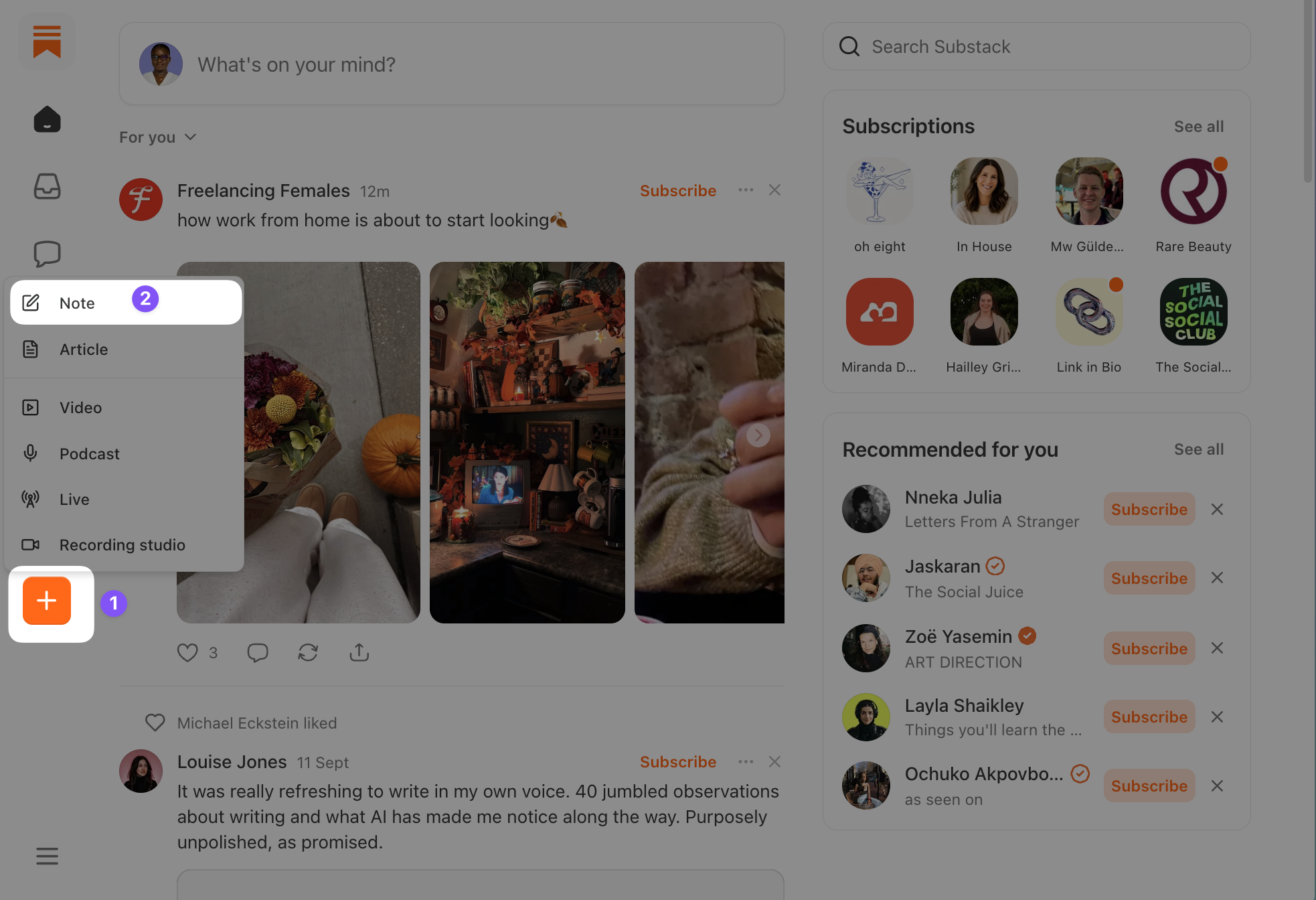
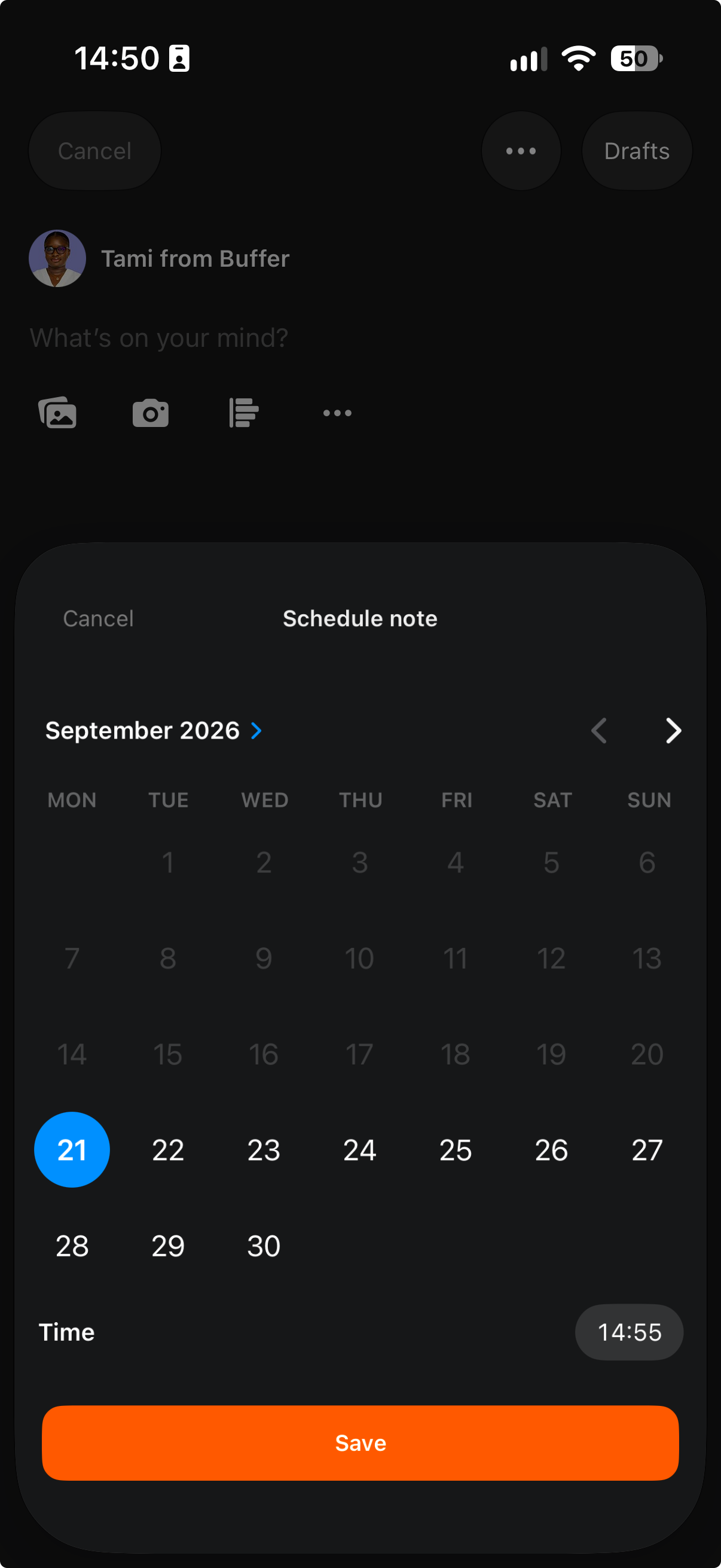
Despite this native integration, the built-in toolset remains tailored to light users. When creators schedule a Note inside Substack, the posts are stored chronologically within a draft repository, indicating the intended publication timestamp. Authors can modify or push back these publication times up to approximately three months in advance. However, the native architecture lacks a visual multi-day calendar interface, limits scheduling to a singular post sequence without batch-planning overviews, and omits native cross-posting features to external social networks like LinkedIn, X, Bluesky, or Threads. Furthermore, native performance tracking is largely confined to basic engagement metrics such as likes, direct replies, and restacks, leaving deeper attribution analytics opaque.
Integrating Third-Party Infrastructure for Advanced Workflows
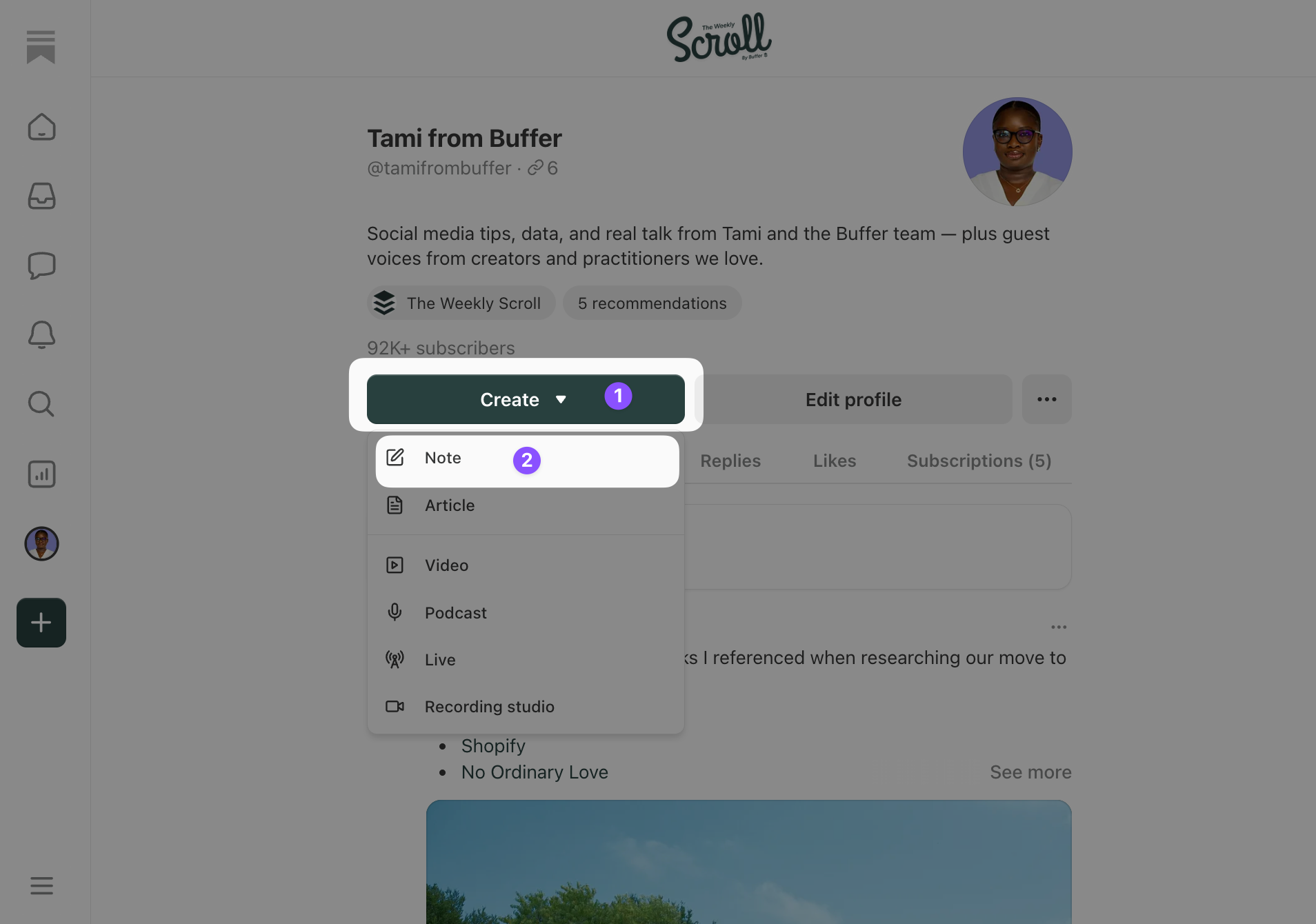
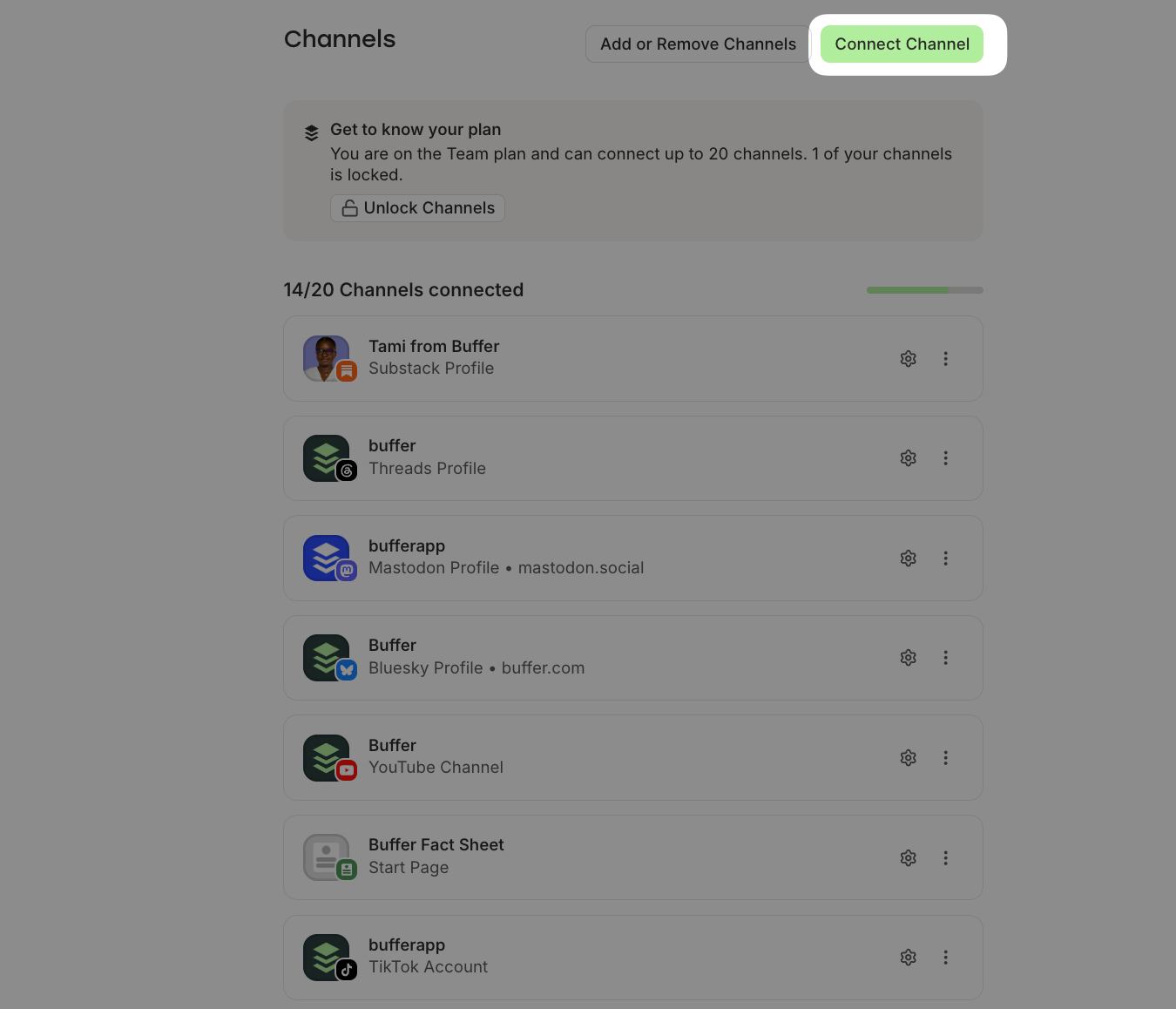
To bridge the gap between niche newsletter publishing and holistic social media management, third-party platforms have integrated official API capabilities to support Substack infrastructure. A prominent example is Buffer, which incorporates Substack accounts alongside traditional social channels within a unified dashboard. By leveraging official API integrations, platforms like Buffer enable creators to treat a Substack Note similarly to a LinkedIn update or an X post.
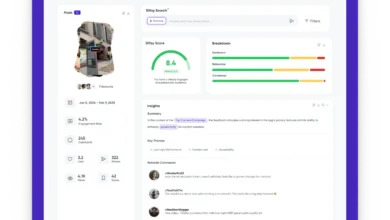
Utilizing these external integrations alters the publishing workflow by introducing centralized editorial calendars. Creators can draft, arrange, and visualize an entire week or month of short-form content across multiple channels simultaneously. More importantly, professional-grade integrations provide attribution modeling, tracking metrics beyond basic impressions and follower growth. Advanced analytics dashboards can trace user acquisition directly down to the specific Note, revealing precisely how many free and paid newsletter subscribers a particular post generated. This data-driven visibility helps publishers allocate their creative energy toward topics that yield measurable business results.
Comparative Analysis: Native Functionality vs. Third-Party Dashboards
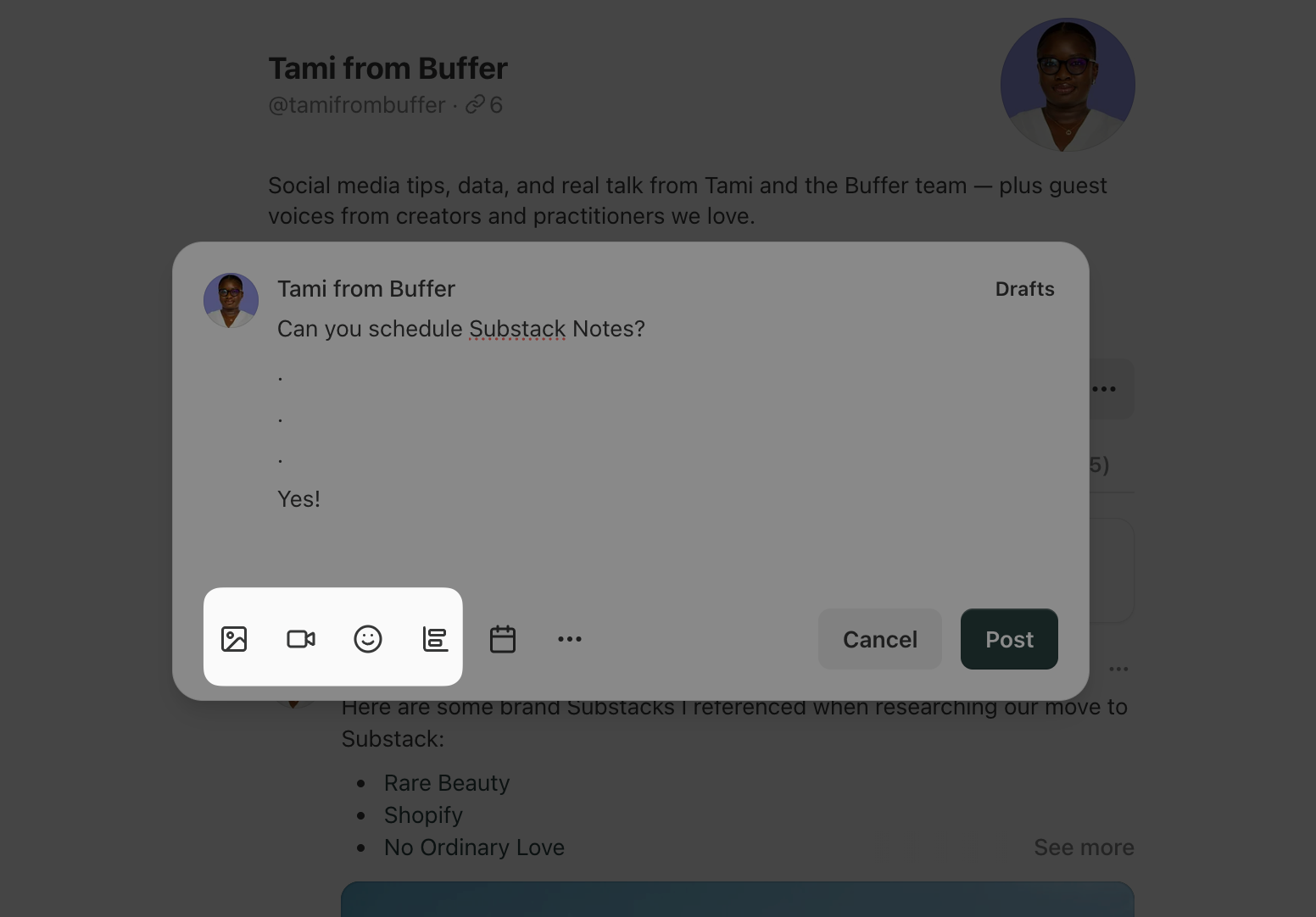
When evaluating whether to use native scheduling or a third-party application, publishers must weigh operational scale against data needs. The native Substack scheduler is entirely free, deeply integrated into the native reading and writing environment, and sufficient for authors who publish short updates a couple of times per week. It requires no external accounts, software configurations, or API permissions, making it an accessible entry point for independent writers.
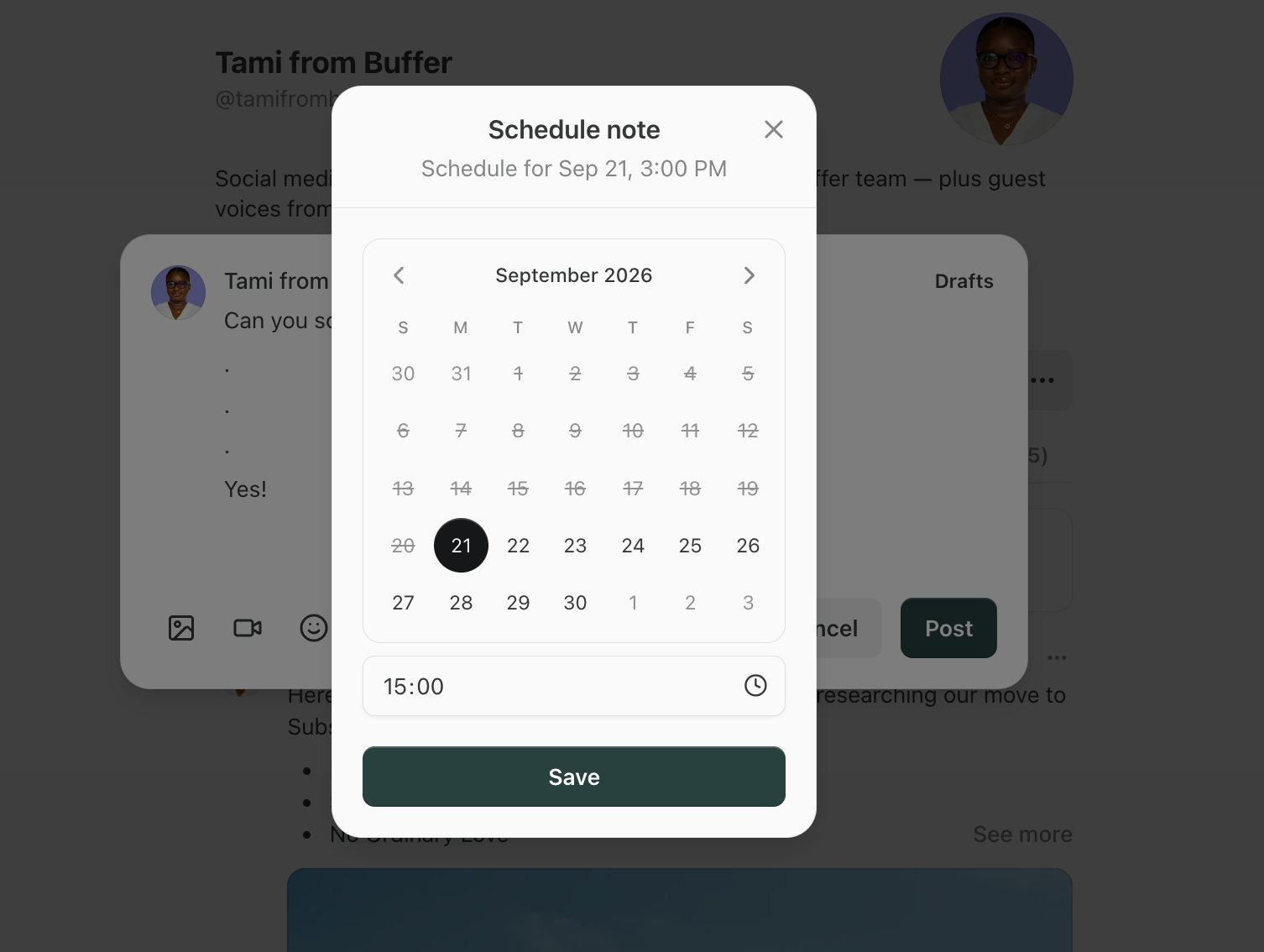
Conversely, third-party tools target high-volume publishers, media brands, and multi-channel creators who treat Substack as part of a broader digital funnel. While free tiers of external schedulers typically restrict the number of active channels and scheduled queues, their paid tiers unlock unlimited scheduling, comprehensive historical analytics, and multi-platform distribution. For organizations running daily publication schedules—such as Buffer’s own editorial arm, which utilizes structured daily Notes—the ability to cross-publish identical copy to Bluesky or LinkedIn while monitoring granular subscription conversions provides a distinct operational advantage.
Industry Implications and Best Practices for Creators
The maturation of scheduling infrastructure for short-form publishing reflects the professionalization of independent journalism. As newsletter platforms compete directly with legacy social media giants for reader mindshare, the technical friction of publishing must approach zero. Automated scheduling allows creators to batch-produce content during peak creative windows, maintaining a steady, reliable presence in subscriber feeds without demanding constant online availability.
Industry analysts note that while automated scheduling solves the logistical hurdle of consistency, it introduces new strategic considerations. Algorithms across modern social and publishing graphs often reward immediate creator interaction. Consequently, successful publishers emphasize that scheduling should be paired with proactive engagement strategies. Reviewing analytics to identify peak audience activity, and dedicating time to respond to reader comments within the first hour of a Note’s automated release, remains vital for maximizing algorithmic reach and community building.
Frequently Asked Questions
Is there a financial cost associated with scheduling Substack Notes?
No. Substack’s native scheduler is entirely free to use across the web and mobile applications. Additionally, external platforms offer free service tiers that permit basic scheduling and limited analytics without requiring upfront payment information.
Can creators schedule interactive features like restacks and direct replies?
Currently, neither native Substack tools nor external API integrations support the automated scheduling of restacks, quote-restacks, or replies to other users’ Notes. These actions require manual engagement.
Does automated scheduling negatively impact content performance?
Empirical observations across major publishing accounts indicate no algorithmic penalty for scheduled content. A Note published automatically via an API or native queue performs identically to one posted manually, provided the timing aligns with peak audience readership patterns.
How far in advance can content be planned?
Substack’s native interface generally restricts advance scheduling to roughly a three-month window. In contrast, specialized social management platforms typically impose no strict upper limit on how far ahead a post can be queued.
Does third-party scheduling violate platform terms of service?
No. Authorized tools that integrate via official APIs operate entirely within platform guidelines, ensuring that automated publishing functions smoothly and securely without triggering security flags.
Related posts: