The Rise of Permissionless Pilots: How Modern B2B Startups Are Inverting the Enterprise Sales Cycle

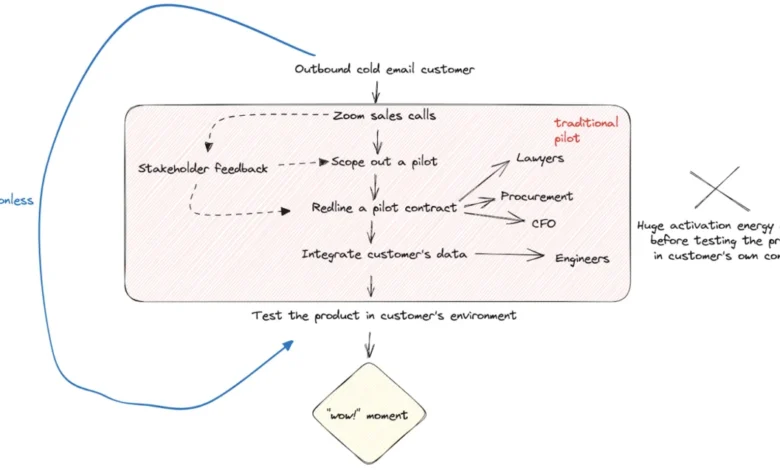
The traditional enterprise software sales cycle has long been characterized by a grueling, bureaucratic marathon. For decades, selling technology to Fortune 500 companies meant navigating months of preliminary discovery calls, navigating complex multi-departmental procurement processes, drafting exhaustive legal contracts, and executing intricate technical integrations. Only after traversing this arduous gauntlet could a prospective buyer finally test the software using their own proprietary data to experience what industry veterans call the "Time to Wow!" moment—the exact point at which the true value of a product becomes unmistakably clear.
However, a transformative shift is currently underway across the business-to-business (B2B) software-as-a-service (SaaS) landscape. Innovative startups are successfully upending this legacy model by introducing what industry observers term "permissionless pilots." By leveraging publicly available data to deliver a customized, context-aware product demonstration instantly, these nimble companies are shifting the buyer’s crucial "wow" moment from the conclusion of the sales cycle to the very beginning—often before a salesperson ever places a cold call.

The Persistent Catch-22 of Enterprise Sales
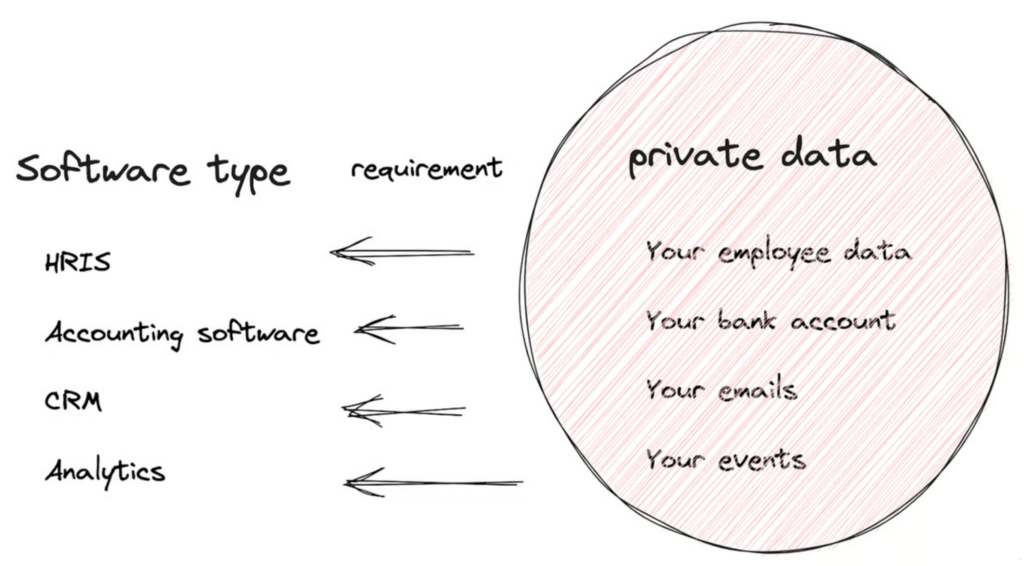
To understand the profound impact of permissionless pilots, one must examine the fundamental architectural challenge of enterprise software. Modern software solutions—particularly those driven by advanced data analytics, artificial intelligence, and machine learning—require real-world customer data to function properly.
Historically, software vendors attempted to circumvent this requirement during sales demonstrations by utilizing synthetic or "dummy" data. While this approach simulates functionality, it ultimately provides little more than a theoretical user experience. For enterprise buyers, watching a vendor operate a demo with generic data is akin to watching a car dealership salesperson drive a vehicle on a closed track; it fails to demonstrate how the product will perform under the specific, messy, and complex conditions of the buyer’s actual operational environment.
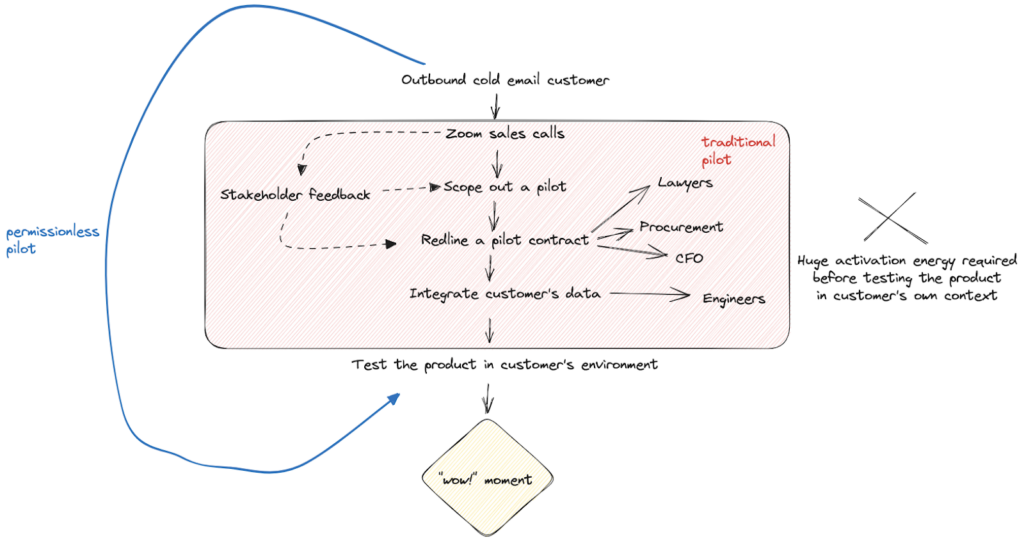
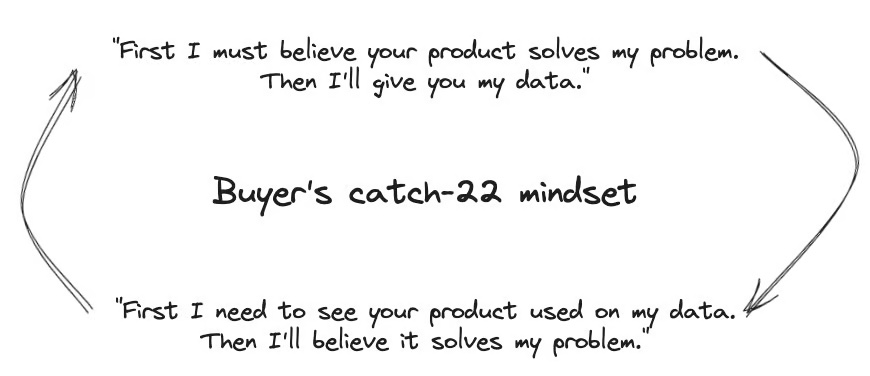
Yet, obtaining permission to use real company data for a trial has traditionally required clearing significant organizational hurdles. Prospective buyers must expend valuable internal social capital to secure political buy-in from reluctant stakeholders, convince security and compliance teams to vet a third-party vendor, and negotiate temporary data-sharing agreements. Consequently, enterprise software sales have long been trapped in a classic catch-22: customers refuse to invest the necessary political and administrative capital to test a product until they are certain it works on their data, but they cannot see how it works on their data until they invest that capital.
Redefining the Customer Journey: The Mechanics of Permissionless Pilots
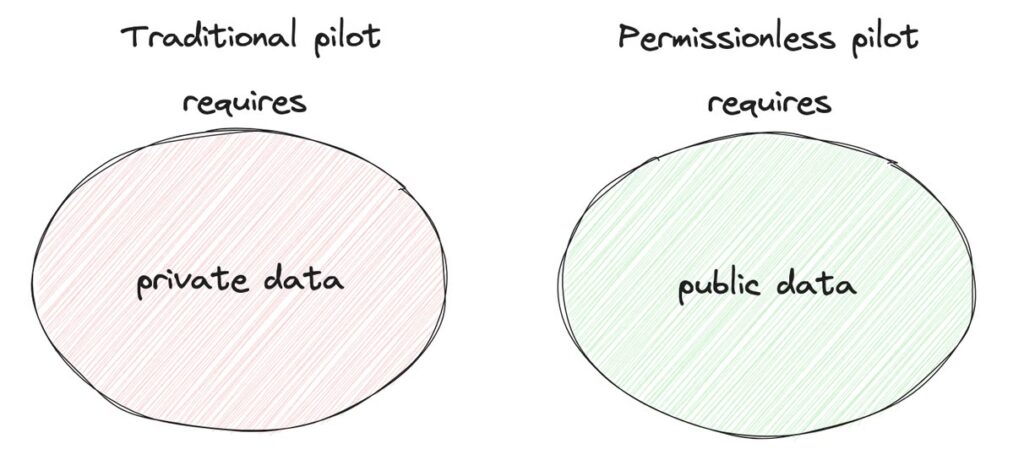
A permissionless pilot effectively shatters this vicious cycle by reducing the customer’s time-to-value metric to zero. Rather than demanding that a prospect sign non-disclosure agreements, grant API access, or configure internal databases, a permissionless pilot utilizes publicly accessible, customer-specific data to generate an immediate, tailored product demonstration.
The term "permissionless" highlights the core innovation: the software works autonomously out of the box, requiring zero pre-configuration, setup meetings, or formal authorization from the target company. By automating the ingestion and analysis of public data sources, software startups can present a prospective client with actionable, highly relevant insights regarding their own business operations on first contact.
This methodology has been catalyzed by exponential growth in global data creation, alongside significant technological advancements in artificial intelligence. Modern machine learning techniques—such as advanced computer vision and large language models (LLMs)—enable systems to ingest, structure, and analyze vast quantities of unstructured public data at unprecedented speeds. According to industry data aggregators, the global volume of data created, captured, copied, and consumed globally has scaled exponentially over the past decade, creating a vast reservoir of public intelligence that agile software companies can harness for automated demonstrations.
Real-World Implementation: The Success Story of Emerge Tools
The viability of permissionless pilots is no longer merely a theoretical concept debated by venture capitalists; it is a proven go-to-market strategy actively driving rapid growth and massive customer acquisition for early-stage companies.
A prominent case study within the venture capital ecosystem is Emerge Tools, a specialized mobile application performance management (APM) and optimization suite designed to help developers reduce mobile application file sizes, improve download speeds, and optimize startup performance. Despite selling to monolithic enterprise organizations—including household names such as DoorDash, Square, Airbnb, Duolingo, Dropbox, and Bumble—Emerge scaled rapidly without maintaining a traditional outbound sales force.
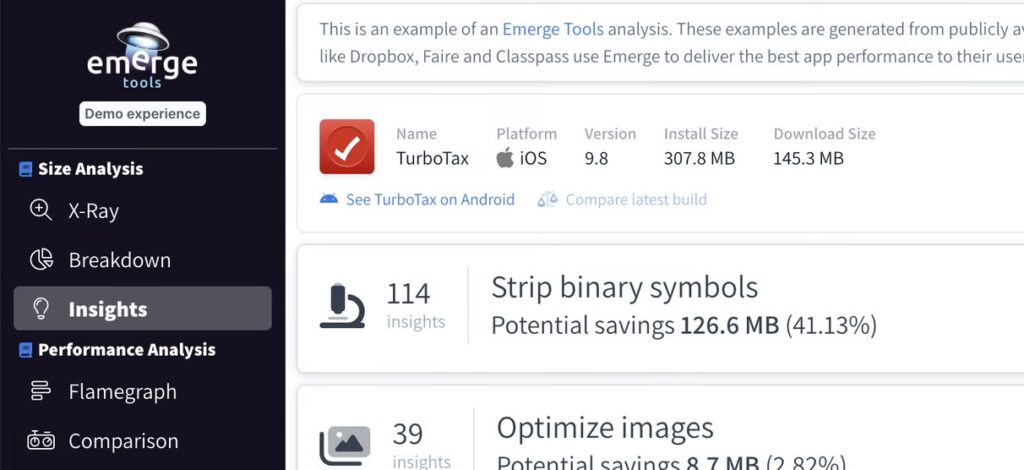
The core challenge for Emerge involved navigating the complex stakeholder ecosystem within large mobile engineering departments. Securing formal adoption of an internal performance optimization tool typically requires navigating lengthy procurement and technical review cycles. To circumvent this friction, the Emerge engineering team developed an automated system capable of reverse-engineering the publicly available binary code of any native mobile application found within the iOS App Store and the Google Play Store.
By performing automated analyses on public application files, Emerge could instantly demonstrate concrete performance optimizations and file-size reductions for prospective enterprise clients without requiring any internal data sharing or technical integration. For example, the platform could generate a comprehensive optimization report for major enterprise applications—such as the TurboTax iOS application owned by financial technology giant Intuit—identifying precise code inefficiencies capable of reducing total app size by over 40 percent.
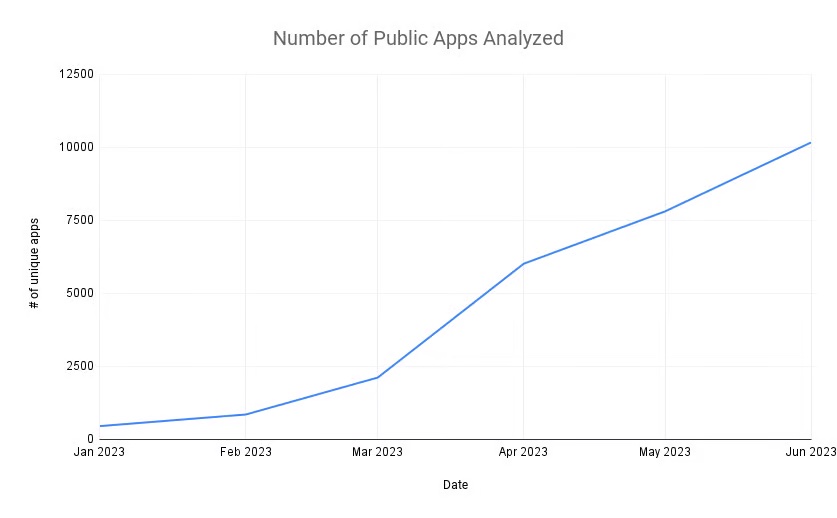
This capability transformed the nature of customer acquisition. Beginning in early 2023, Emerge systematically scaled its automated analysis pipeline, expanding its library from approximately 500 analyzed applications to over 10,000 public apps maintained on a regular scanning cadence.
The Strategic Implications of Public Artifacts in B2B Marketing

Beyond serving as an instantaneous sales demonstration, permissionless pilots function as powerful organic marketing and distribution artifacts. Because each automated app analysis resides on a unique, publicly accessible URL, these reports naturally circulate within corporate networks.
Software developers and engineering managers frequently encounter these analyses through organic search results, technical blogs, or social media deep-dives, subsequently sharing the links internally via corporate communication channels like Slack. This bottom-up adoption model triggers immediate internal demand. Rather than a vendor trying to convince a C-suite executive to purchase software, internal engineers discover pre-validated optimization reports for their own products, generating immediate internal advocacy.
Industry metrics from companies deploying similar strategies indicate substantial corresponding growth in organic search visibility, developer community engagement, and inbound enterprise pipeline velocity. When prospective buyers can independently examine verifiable, context-specific insights regarding their own technological infrastructure, the traditional sales pitch becomes obsolete.
Broad Applications Across the Enterprise Software Ecosystem
While automated analysis of mobile binaries is highly effective for application performance tools, the underlying framework of the permissionless pilot can be adapted across a diverse array of B2B verticals. Startups across various industries are discovering untapped opportunities by aligning their core product capabilities with relevant public data repositories:
- Search Engine Optimization (SEO): Platforms such as Conductor analyze public Google search results to provide immediate, actionable optimization recommendations for corporate web properties before formal contract discussions begin.
- E-commerce Optimization: Enterprise tools leverage millions of public marketplace listings to generate automated conversion-rate optimization strategies, highlighting pricing discrepancies, visual asset improvements, and copywriting adjustments for major retail brands.
- Cybersecurity and Vulnerability Scanning: Threat intelligence and bug bounty platforms utilize automated external reconnaissance to scan web applications for visible security vulnerabilities, presenting prospective clients with verified threat assessments.
- Financial Intelligence and Forensic Accounting: Fintech startups like Bedrock AI ingest public regulatory filings, such as Securities and Exchange Commission (SEC) disclosures, to automatically detect hidden accounting discrepancies, earnings quality failures, and potential fraud risks for institutional investors and hedge funds.
- Web-Based Personalization: Marketing technology platforms like Mutiny allow prospective enterprise buyers to visualize how landing page content can be dynamically personalized for distinct visitor segments without requiring prior account creation or code integration.
Strategic Considerations and Future Outlook
As the software industry continues to evolve, the traditional boundaries separating marketing, product demonstrations, and sales engineering are rapidly dissolving. Permissionless pilots represent a fundamental evolution in how enterprise software companies build trust, overcome institutional skepticism, and accelerate market penetration.
However, business strategists emphasize that the deployment of permissionless pilots requires careful execution. Because these demonstrations involve analyzing public-facing assets belonging to prospective clients, companies must strike a delicate balance between demonstrating technical competence and maintaining professional decorum. The primary objective is to build brand equity and demonstrate undeniable value rather than alienate prospects through overly aggressive or critical assessments.
Ultimately, as public data availability expands and artificial intelligence capabilities mature, the expectation for frictionless, value-first software evaluations will only increase. Startups that successfully design and deploy permissionless pilots are positioned to bypass the traditional enterprise sales bottleneck, delivering immediate clarity to buyers and establishing a sustainable competitive advantage in an increasingly crowded market.