The Product-Led Growth Lab Series: ChartMogul Deep Dives into the Evolving Complexities of SaaS Growth

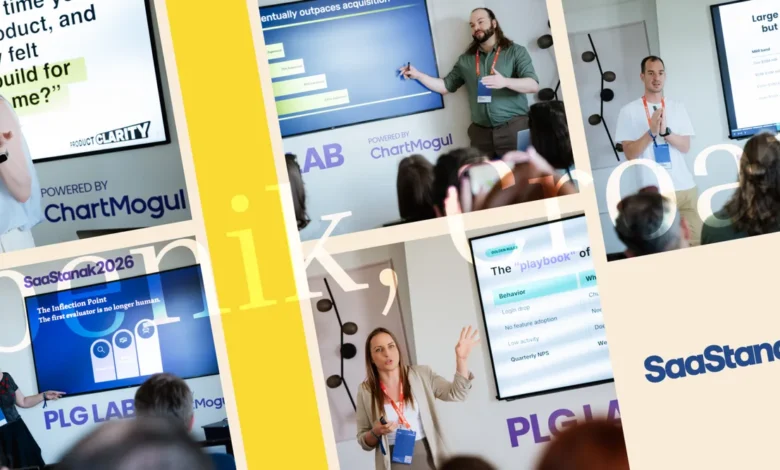
ChartMogul, a leading platform for subscription revenue analytics, has concluded its inaugural Product-Led Growth (PLG) Lab series, a collection of intimate, city-based meetups designed to address the intricate challenges faced by SaaS founders and operators. The series, spearheaded by Sara Archer, Chief Revenue Officer at ChartMogul, aimed to provide a candid forum for discussing the often-overlooked operational and technical hurdles inherent in the PLG model. The sessions, held in San Francisco and on the Croatian coast, featured expert speakers who shared actionable insights and data-driven strategies, with presentations and key takeaways now made publicly available by ChartMogul for wider dissemination.
The genesis of the PLG Lab series stems from Archer’s observations of the prevalent struggles within the SaaS community. "The vast majority of our customers are building ambitious SaaS businesses by way of smart, opinionated products. They don’t have massive amounts of capital, rooms full of Enterprise AEs, or six-figure contracts," Archer stated in her introductory remarks. "In the many years I’ve been at ChartMogul, my conversations with founders and operators often revolve around the same thing: the weeds of PLG complexity." This sentiment underscores the need for practical, operator-level guidance that goes beyond theoretical discussions, delving into the tangible issues like optimizing n8n workflows, refining activation paths, and structuring compensation for hybrid go-to-market (GTM) strategies.
The series kicked off in San Francisco during the week of Stripe Sessions, a significant event in the payments and financial infrastructure landscape. The San Francisco meetup featured Brenna Loury, CRO of Doist, who candidly discussed the challenges associated with moving upmarket within a PLG business model. The engagement level was so high that discussions continued even after the formal session concluded, spilling over to a rooftop reception where attendees could continue networking and debating over refreshments. This organic continuation of conversations highlighted the perceived value and urgency of the topics addressed.
Following the San Francisco event, the PLG Lab series transitioned to the scenic Croatian coast, in partnership with SaaStanak, a renowned SaaS conference. Two full afternoons were dedicated to PLG content, drawing standing-room-only crowds despite a significant heatwave. The intense engagement from attendees, characterized by sharp questions, shared experiences, and the forging of new connections, underscored the critical need for such specialized forums. ChartMogul expressed particular pride in the success and impact of these sessions.
Recognizing that many within the global SaaS community could not attend in person, ChartMogul has committed to making the wealth of operator-level knowledge shared accessible to a broader audience. True to its data-centric ethos, the company is systematically recapping each session, extracting practical takeaways, and providing access to the presentation slides. This initiative ensures that valuable insights on scaling PLG businesses remain a readily available resource.
Architecting Scalable PLG: The Expansion Engine and Automated Upsells
One of the pivotal sessions, "The Expansion Engine: Architecting a Scalable PLG Stack for Automated Upsells," presented by an unnamed speaker, tackled a core tenet of SaaS growth: expansion revenue. The presentation, available for review, argues that while expansion is often viewed as a sales execution challenge—identifying the right moment, crafting the right offer—it is fundamentally an infrastructure problem for many SaaS businesses. The key takeaway emphasizes that when the correct data flows seamlessly into well-designed workflows, expansion opportunities become more timely, relevant, and significantly easier to scale. This architectural approach to expansion is crucial for sustainable growth, moving beyond ad-hoc sales tactics to a systemic, automated process.
Navigating Automation’s Pitfalls: Behavior vs. User Feedback
Another critical topic addressed was "When Automations Guess Wrong: Behavior Shows What Happened. Users Tell You Why." This session, led by Aleksandra, focused on the often-unseen disconnect between automated workflows and actual user understanding. The core message, reinforced by the presentation, suggests that while lifecycle automations may be technically functional, they can often feel generic. The session serves as a vital reminder that user behavior analytics reveal what happened, but qualitative user feedback is indispensable for understanding why it happened. This distinction is crucial for refining automations and ensuring they resonate with user needs and motivations, thereby enhancing the overall product experience and driving deeper engagement.
The AI Imperative: From Traditional SaaS to AI-Native in 5 Days
The rapid evolution of artificial intelligence within the software landscape was a central theme in the session, "From Traditional SaaS to AI-Native in 5 Days: 3 Companies That Did It." This presentation reframed the concept of being "AI-native" from a broad strategic goal into a concrete product exercise. The framework presented advocates for identifying the initial valuable outcome an AI can deliver, eliminating surrounding manual work, preserving the trust-building moments within the user journey, and then architecting the user experience backward from that point. The session’s practical prompts and frameworks are designed to guide teams in answering critical questions, such as what a product can achieve before a user needs extensive training, which decisions AI should make by default, and what small user actions are still necessary to maintain a sense of ownership over the outcome. This approach offers a tangible path for established SaaS companies to integrate AI effectively and swiftly.
Unpacking the LTV Blind Spot: Insights from 3,700 SaaS Businesses
A groundbreaking presentation, "LTV Has a Blind Spot: Findings from 3,700 SaaS Businesses Over 6 Years," offered novel data insights from ChartMogul’s own research team. While Lifetime Value (LTV) remains a critical metric for guiding decisions related to Customer Acquisition Cost (CAC), payback periods, and segment investments, this session highlighted the inherent limitations of the formula. The key takeaway is that LTV calculations can be misleading if not cross-referenced with actual customer behavior. The presentation aims to equip businesses with a more nuanced understanding of LTV, enabling them to make more informed strategic decisions by acknowledging and addressing the "blind spots" within traditional LTV modeling.
The Human Element in PLG: Fixing Product First Impressions and Activation
"People-Led Growth: Fixing Your Product’s First Impression and Path to Activation" offered a crucial perspective on the human-centric aspects of PLG. The content serves as a necessary reset for teams that treat onboarding as a "set and forget" process. Paulina’s framework, detailed in the presentation, provides a simple, yet effective, monthly review process for onboarding. It encourages teams to adopt a user’s perspective, identify points where trust erodes or momentum falters, and then focus on fixing single moments that guide users towards their first significant win. This iterative approach emphasizes that a successful onboarding experience is a continuous effort, critical for long-term user retention and product adoption.
The Rise of Invisible PLG: Adapting to AI-Driven Discovery
The session "Invisible PLG" delved into the emerging landscape where AI agents are increasingly capable of discovering, evaluating, and integrating with software products. The core diagnostic presented is whether an AI agent could autonomously navigate and utilize a given product. If the answer is no, the implication is that the product, while potentially visible to human users, is becoming increasingly invisible to the automated systems that are shaping software evaluation in the current era. This session highlights the need for products to be not only user-friendly but also system-readable and integrable to remain competitive in an AI-driven future.
Scaling from $1M to $20M ARR: Growth Levers and New Success Signals
A practical workshop, "[Workshop] From $1M–$20M ARR: Growth Levers and New Signals for Success," transformed the ambitious question of reaching $20 million in Annual Recurring Revenue (ARR) into a more actionable operational inquiry: "What has to get better as we scale?" The workshop emphasized that achieving this growth milestone is rarely the result of a single solution but rather a combination of compounding improvements across Average Revenue Per Account (ARPA), retention, expansion, strategic focus, and execution. Crucially, it also highlighted the importance of leadership standards that ensure these improvements are sustainable and integrated into the company culture.
Bridging the Gap: Where PLG Meets Sales in a Hybrid Growth Engine
The complexities of integrating PLG with traditional sales methodologies were explored in "Where PLG Meets Sales: Building a Hybrid Growth Engine in Practice." This session debunked the notion that hybrid GTM is simply a self-serve funnel appended to a sales team. Instead, it presents hybrid GTM as a strategic approach to solving systemic and process-related challenges that arise when different buyer personas require distinct pathways. The presentation covered critical aspects such as account routing, defining ownership, designing effective incentive structures, establishing clear product boundaries, and ultimately, meeting customers precisely where they are in their buying journey.
Addressing the Launch to Adoption Gap in SaaS Product Marketing
"The Launch to Adoption Gap: Why Fast Shipping Doesn’t Equal Product Growth" offered a fresh perspective on SaaS product marketing. The session identified a common challenge faced by many teams: product development is accelerating faster than users can effectively absorb new features. Natalija’s framework reframes product marketing from merely announcing what has been shipped to actively "designing for adoption." In an environment characterized by constant product releases, the competitive advantage lies with companies that can strategically prioritize what deserves attention, target the right users at the opportune moment, and translate product releases into tangible, sustained behavior change.
ChartMogul’s Vision: PLG’s Evolving Landscape
In her closing thoughts, Sara Archer synthesized the overarching themes of the PLG Lab series. "Taken together, the sessions made one thing pretty clear: PLG is no longer just about removing sales from the buying journey," she remarked. The discussions underscored that modern PLG encompasses a sophisticated interplay of data architecture, robust feedback loops, insightful onboarding psychology, agile hybrid GTM design, streamlined launch systems, agent-readable infrastructure, and, fundamentally, the human element of articulating a product’s value proposition. Archer concluded that PLG is simultaneously becoming more technical, more operational, and more human, reflecting its maturation as a core growth strategy for ambitious SaaS businesses. The availability of these sessions’ insights promises to equip a wider array of SaaS professionals with the knowledge needed to navigate this increasingly complex and dynamic landscape.