The Rise of Permissionless Pilots: How Modern SaaS Startups Are Inverting the Enterprise Sales Cycle

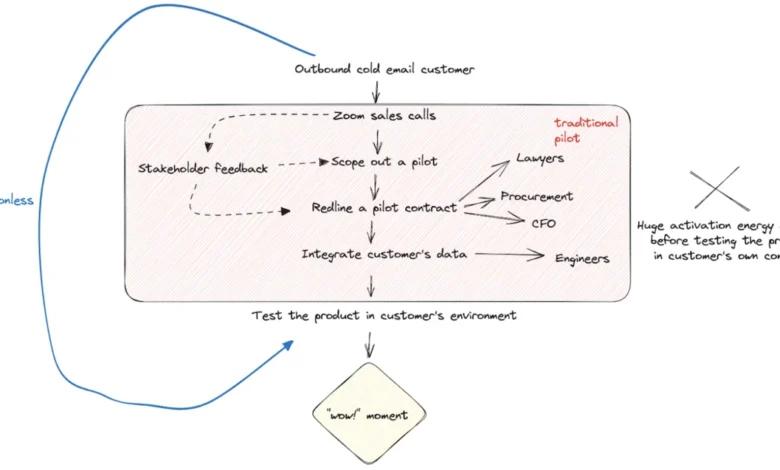
The modern enterprise software-as-a-service (SaaS) sales cycle has long been characterized by a protracted, friction-heavy gauntlet. For decades, startups and legacy tech vendors alike have relied on a predictable sequence of events: initial cold outreach, discovery calls, lengthy security reviews, legal negotiations, and complex data integrations. Only after traversing this administrative labyrinth could a prospective buyer experience a product’s value proposition firsthand. However, a growing cohort of venture-backed startups is rewriting this playbook by introducing a mechanism known as the "permissionless pilot"—a strategic shift that inverts the traditional sales timeline by delivering immediate, data-driven proof of value before a single contract is signed or permission is granted.
The Traditional Sales Slog and the Customer Data Catch-22
To understand the disruption caused by permissionless pilots, one must examine the fundamental structural flaw of traditional enterprise sales. Industry best practices have long emphasized the concept of "Time to Wow!"—a term coined a decade ago by SaaS veteran David Skok to describe the critical juncture where a buyer fully realizes a product’s utility.

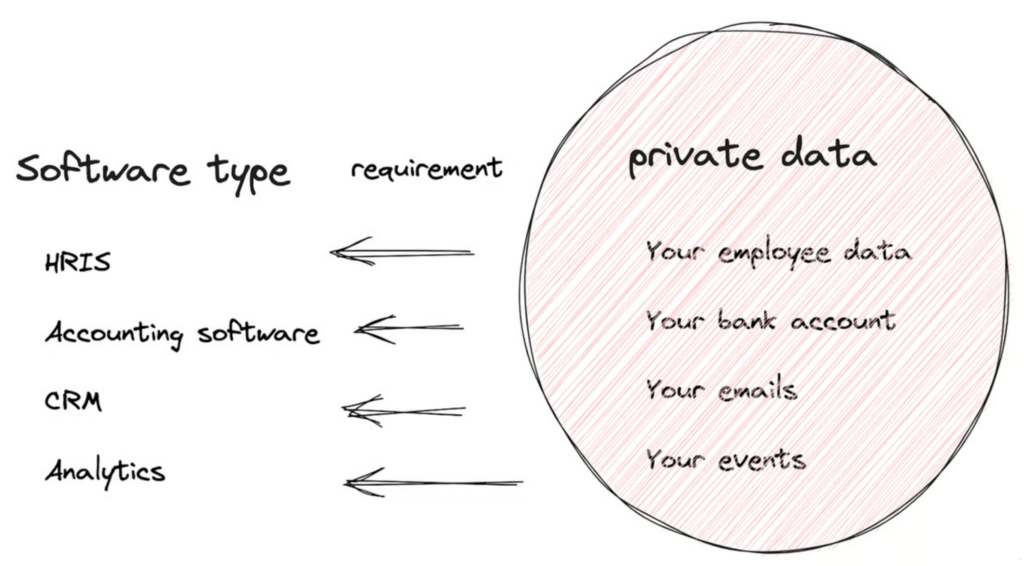
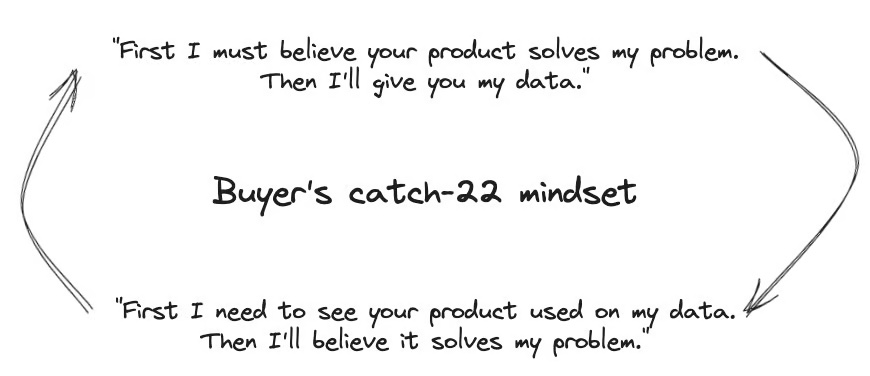
Yet, enterprise software presents a persistent catch-22: most sophisticated B2B applications require proprietary customer data to function properly. During early-stage evaluations, vendors frequently attempt to bypass this hurdle by utilizing simulated dummy data. Industry analysts often compare this practice to watching a commercial or listening to a salesperson describe a vehicle rather than taking a test drive yourself.
Enterprise buyers are notoriously reluctant to share internal corporate data with an unproven third party. Doing so requires navigating internal compliance frameworks, satisfying rigorous security questionnaires, and expending significant political capital within their own organizations. Consequently, buyers are asked to commit time, resources, and trust to a vendor before they have ever witnessed the software operating within their unique context. This friction has historically resulted in elongated sales cycles, low conversion rates, and immense expenditure on enterprise sales development representatives (SDRs) and account executives (AEs).
Defining the Permissionless Pilot: Shifting the Value Proposition
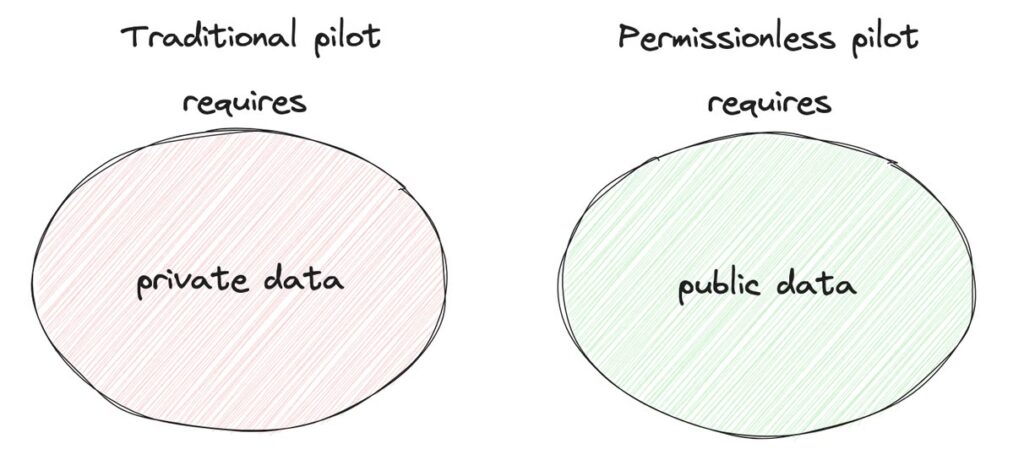
The permissionless pilot completely dismantles this paradigm. Instead of demanding that a prospective client provide data, sign non-disclosure agreements, or undergo technical onboarding, a permissionless pilot leverages publicly available, customer-specific data to generate an instant, customized demonstration.
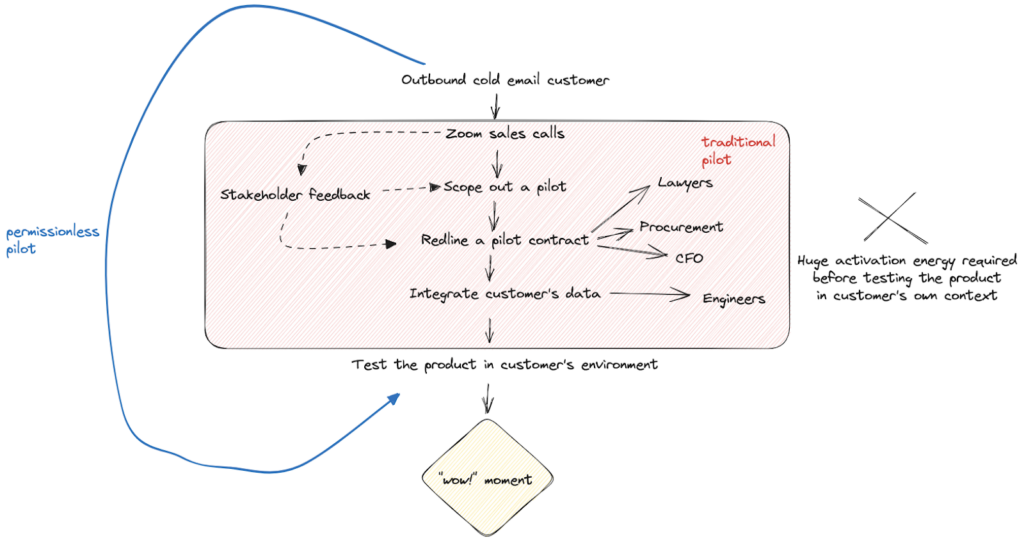
By utilizing public data sources—ranging from open-source code repositories and app store binaries to SEC filings and public web pages—startups can construct a fully functional proof-of-concept tailored precisely to the target company before any formal commercial relationship exists. The term "permissionless" signifies that the vendor does not require authorization, administrative credentials, or proprietary data access to deliver an immediate, context-specific demonstration of product value.
This approach effectively reduces the buyer’s "Time to Value" to absolute zero. Instead of scheduling a multi-week evaluation period, the vendor delivers the "Wow!" moment at the very top of the funnel, often publishing the customized results openly or delivering them directly to key decision-makers as an unsolicited, highly relevant audit or analysis.
Real-World Implementation: The Emerge Tools Case Study
While the concept may initially sound theoretical, several high-growth technology companies have successfully weaponized permissionless pilots to secure enterprise contracts with minimal traditional outbound sales overhead. A prime example within the venture capital ecosystem is Emerge Tools, a mobile application performance management (APM) and optimization suite designed to help engineering teams reduce binary sizes, accelerate load times, and optimize memory usage.
Building a mobile optimization tool typically requires deep integration into a company’s internal continuous integration and continuous deployment (CI/CD) pipelines. Securing buy-in from a mobile engineering director at a Fortune 500 company traditionally demands months of relationship-building, security clearances, and technical alignment.
To circumvent this bottleneck, Emerge engineered an automated system capable of reverse-engineering the publicly available binary files for every native mobile application hosted in the Apple iOS App Store and Google Play Store. By running these public binaries through their proprietary analytical engine, Emerge could instantly generate comprehensive optimization reports for any mobile application on the market—completely without the target company’s prior knowledge or consent.
For instance, the platform developed automated public analysis pages for prominent enterprise applications, such as the TurboTax iOS application owned by Intuit. Without Intuit having to provision data or redline vendor contracts, Emerge’s software automatically identified codebase inefficiencies capable of reducing the application’s size by over 40 percent.
Scaling Content and Organic Growth Through Automation
The strategic deployment of permissionless pilots has yielded profound commercial and marketing implications for early-stage companies adopting the model. By the beginning of 2023, Emerge had scaled its automated analysis framework from approximately 500 applications to tracking and analyzing over 10,000 public mobile apps on a regular cadence.
Each automated analysis generated a unique, public URL containing actionable, highly technical insights. These URLs served multiple strategic functions:
- Organic Content Generation: The findings were repurposed into deep-dive blog posts, engineering case studies, and social media threads that resonated deeply with the developer community.
- Internal Viral Distribution: Because the analysis pages were hosted on public URLs, prospective buyers routinely shared the reports internally via communication channels like Slack, generating organic word-of-mouth momentum within targeted accounts.
- SEO Expansion: The continuous publication of specific, high-intent technical keywords fueled substantial organic search traffic growth, driving a 400% increase in inbound search clicks and social media followers over the course of a year.
As a result of this methodology, Emerge successfully onboarded industry-leading enterprise clients—including DoorDash, Square, Airbnb, Duolingo, and Dropbox—significantly scaling its annual recurring revenue while operating with a lean go-to-market structure and bypassing traditional enterprise sales forces.
Cross-Industry Applications and Broader Market Implications
The proliferation of permissionless pilots is not isolated to mobile application development. Rapid advancements over the past decade in artificial intelligence, machine learning, computer vision, and natural language processing (NLP) have dramatically expanded the availability and structural tractability of public data. Startups across numerous sectors are discovering viable pathways to implement permissionless value-delivery mechanisms:
- Search Engine Optimization (SEO): Companies like Conductor analyze public Google search results to provide unsolicited, actionable site architecture improvements directly to prospective enterprise clients.
- E-commerce Optimization: Drawing parallels to platforms like Salsify, B2B software providers cross-reference millions of public e-commerce catalog listings to suggest conversion-driving adjustments to copywriting, pricing strategies, and rich media assets.
- Cybersecurity and Threat Intelligence: Bug bounty and vulnerability management platforms, such as HackerOne, frequently utilize automated external scanning of web applications to demonstrate immediate risk visibility to prospective security leadership.
- Financial Technology and Hedge Funds: Specialized artificial intelligence platforms, including Bedrock AI, ingest public regulatory disclosures such as SEC filings to perform forensic data analyses, instantly surfacing hidden earnings quality flags and accounting anomalies for institutional investors.
- Web-Based Marketing Personalization: Conversion platforms like Mutiny allow marketing leaders to preview dynamic, personalized landing page adaptations based on audience attributes prior to requiring account creation or software installation.
Analytical Implications and Strategic Considerations
From a macroeconomic and venture capital perspective, the rise of permissionless pilots reflects a fundamental maturation in enterprise go-to-market strategies. As customer acquisition costs (CAC) continue to rise across traditional digital advertising channels and outbound sales teams face diminishing response rates from saturated enterprise buyers, product-led growth (PLG) strategies are evolving.
Market analysts note that permissionless pilots effectively bridge the gap between pure product-led growth and enterprise sales motions. By front-loading the value proposition using public data, startups reduce buyer skepticism and minimize the administrative friction that traditionally stalls B2B procurement processes.

However, market observers and founders issue a crucial caveat regarding the execution of permissionless pilots. Because these strategies involve interacting with public data or analyzing third-party digital footprints without prior consent, companies must navigate them with careful consideration for brand reputation, data privacy, and professional tone. When executed correctly, a permissionless pilot transforms a software vendor from an intrusive sales organization into an immediate, trusted technical advisor—fundamentally altering how enterprise software is evaluated, marketed, and sold in the modern digital economy.