The landscape of business-to-business (B2B) software evaluation is undergoing a seismic shift, driven almost entirely by the proliferation of artificial intelligence. For decades, software procurement relied on static feature checklists, self-reported vendor slide decks, analyst quadrants, and curated customer testimonials. However, the rise of autonomous AI agents—systems capable of performing complex, multi-step workflows with varying degrees of accuracy—has rendered traditional marketing materials obsolete. Buyers no longer care merely about what a vendor promises their product can do; they demand transparent, verifiable proof of how algorithms perform under live operating conditions.
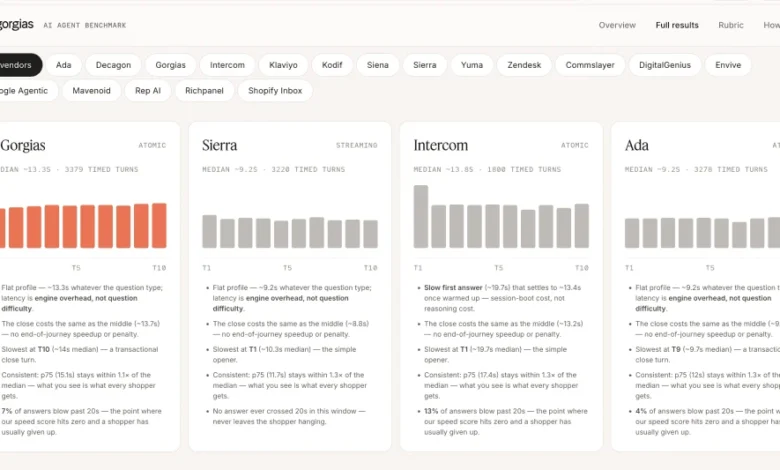
This fundamental transformation in buyer behavior was recently brought into sharp focus by Gorgias, a $100M Annual Recurring Revenue (ARR) leader in ecommerce customer experience (CX) software. Backed by the SaaStrFund during its seed round, Gorgias took a bold and unprecedented step for a mainstream SaaS provider: it open-sourced its entire testing harness and published a massive, highly detailed competitive evaluation pitting its own proprietary AI agent against 17 rival vendors across 8,356 live customer support conversations.
The report, which highlights competitor strengths and even showcases rival Yuma leading in specific automation categories, marks a radical departure from the guarded secrecy that has historically defined enterprise software marketing. As artificial intelligence reshapes how software is discovered, evaluated, and purchased, the Gorgias release offers a compelling blueprint for how B2B companies must adapt to survive in an era of radical transparency.
The Anatomy of an AI Evaluation: Moving Beyond Traditional Benchmarking
To understand the significance of the Gorgias report, one must first distinguish between traditional software benchmarking and modern AI agent evaluations. In the conventional SaaS era, benchmarking typically meant comparing static databases or user interfaces. A CRM system, for instance, executes deterministic functions; clicking a button yields the exact same programmatic result every time.
Artificial intelligence, by contrast, is probabilistic. An AI agent might deliver an exceptional, highly accurate customer support resolution on Monday, yet hallucinate or fail to understand context on Thursday. Furthermore, because underlying foundation models are constantly updated by third-party providers, an AI agent’s performance can degrade or improve overnight without any direct intervention from the software vendor.
Consequently, traditional marketing tools—such as annual analyst reports or static feature grids—are utterly incapable of capturing this dynamic reality. An AI evaluation, or "eval," subjects the software to continuous, rigorous testing by feeding real-world queries into the system, capturing every output, and grading the results against a strict, version-controlled rubric.
By executing this process across thousands of live interactions involving multiple competing products, companies can establish a quantitative baseline of performance. Gorgias’s methodology moves far beyond a simple comparison of user interfaces, evaluating latency, resolution rates, tone compliance, and tool-use accuracy across a diverse ecosystem of competing CX solutions.
The Strategic Imperative of Radical Honesty
One of the most striking aspects of the Gorgias benchmark is that the company did not rig the results to position itself as the undisputed winner in every category. While Gorgias secured the top overall spot in comprehensive customer support capabilities, the public report explicitly demonstrates that rival solutions outperformed Gorgias in specific niches—notably highlighting Yuma’s superior performance in pure automation metrics.
Historically, enterprise software executives would vehemently object to publishing any document that highlights a competitor’s victory. However, industry veterans and investors argue that this transparent approach is precisely why the report succeeds.
Modern B2B buyers are intensely cynical regarding vendor-supplied marketing materials. Procurement leaders have grown accustomed to filtering out hyperbolic claims and self-serving comparative charts. When a software provider willingly publishes data showing its competitors winning in designated areas, it fundamentally alters the psychological dynamic of the sales cycle. By acknowledging shortcomings and exposing the raw data, the vendor establishes immediate credibility, causing buyers to place far greater trust in the metrics where the company genuinely excels.
Furthermore, this strategy dramatically streamlines the evaluation process for prospective clients. Conducting a comprehensive audit of 13 to 18 competing AI vendors requires immense organizational resources. Most ecommerce brands lack the engineering bandwidth to run thousands of test conversations across multiple platforms, typically limiting their diligence to a handful of vendor demonstrations and a brief pilot program. By open-sourcing the entire testing harness—complete with code repositories and scoring rubrics—Gorgias effectively performs the market’s due diligence for them, positioning its report as the definitive industry standard.
The Rise of Autonomous AI Agents in Software Discovery
Perhaps the most profound implication of public AI evals involves the changing nature of software discovery itself. Increasingly, enterprise procurement processes no longer begin with human researchers browsing software review sites or attending trade shows. Instead, technology buyers are turning to advanced conversational agents, such as custom GPTs or enterprise research assistants, to build initial software shortlists.
These autonomous agents are engineered to ingest, verify, and cross-reference structured data. They can effortlessly parse open-source code repositories, read version-controlled rubrics, and analyze public scoring weights. Conversely, they are entirely blind to gated PDF whitepapers, password-protected case studies, and vague marketing copy.
Vendors that fail to publish structured, verifiable, and checkable evaluations risk being entirely invisible to the AI agents conducting the initial phases of enterprise vendor selection. Interestingly, while Gorgias open-sourced its benchmarking code on GitHub, early observers noted that its live reporting website initially blocked automated web crawlers via its robots.txt file—a minor friction point that highlights how rapidly technical infrastructure must adapt to an AI-first procurement world.
Internal Cultural and Product Implications
Beyond external marketing and sales enablement, publishing raw, unvarnished competitive evaluations exerts a powerful internal influence on product and engineering teams. For years, competitive intelligence within software companies remained safely sequestered inside internal Slack channels, executive slide decks, or quarterly review meetings.
When metrics such as competitor latency (such as Envive’s clocking in at 7.9 seconds) or rival resolution rates are published publicly alongside internal figures, complacency becomes impossible. Engineering teams are forced to confront performance gaps in real-time, with public accountability replacing internal speculation. Because the evaluation rubrics and test harnesses are version-controlled in public repositories, internal teams cannot quietly manipulate scoring criteria to mask product deficiencies or inflate success metrics. This relentless public exposure creates a hyper-focused feedback loop that accelerates product iteration and drives engineering excellence.
A New Blueprint for Enterprise Software Marketing
The decision by Gorgias to open-source its AI evaluation framework signals a broader maturation of the enterprise software market. As artificial intelligence becomes the core operational engine of modern business applications, the era of smoke-and-mirrors marketing is rapidly drawing to a close.
For B2B vendors navigating this new paradigm, the path forward requires a complete inversion of traditional go-to-market strategies. Rather than hiding behind proprietary claims and defensive marketing walls, successful companies must embrace radical transparency. By open-sourcing testing harnesses, publishing live performance data against named competitors, and openly acknowledging areas where rivals excel, forward-thinking organizations can build unprecedented levels of trust with both human buyers and the autonomous AI agents destined to guide future enterprise software procurement.
Related posts: