For more than a decade, marketing attribution in the software-as-a-service (SaaS) industry has been plagued by a reputation for being excessively complex, unreliable, and cost-prohibitive. Traditional marketing teams have historically over-indexed on pipeline performance metrics, constructing elaborate dashboards and reporting infrastructure primarily designed to justify quarterly budgets to executive boards. This backward-looking approach has routinely resulted in countless wasted hours spent debating the merits of first-touch versus last-touch attribution models, diverting vital human capital away from creative, top-of-funnel demand generation initiatives.
Founders and revenue leaders find themselves caught in a perpetual paradox: while they allocate substantial capital toward customer acquisition, proving which specific channels genuinely generate recurring revenue remains one of the most elusive metrics to calculate accurately. However, a recent collaborative workshop hosted by subscription analytics firm ChartMogul and data consultancy InnerTrends suggests a paradigm shift. According to insights shared by ChartMogul Chief Revenue Officer Sara Archer and InnerTrends founder Claudiu Murariu, building a high-accuracy attribution model for a modern SaaS business has never been more achievable or economically feasible.

The Structural Mismatch of Legacy Attribution
To understand why attribution has historically failed SaaS organizations, industry analysts point to its origins. Early digital attribution models were engineered explicitly for the e-commerce sector rather than subscription-based business models. E-commerce frameworks relied on a linear, highly compressed consumer journey: a user clicked an advertisement, browsed a catalog, and executed a purchase within a single browsing session. In that foundational era, tracking mechanisms were straightforward, relying heavily on third-party cookies, universal URL parameters (UTMs), and open scripts that allowed ad platforms to effortlessly bridge the gap between ad spend and conversion.
The contemporary SaaS ecosystem bears little resemblance to this legacy environment. Modern buyer journeys frequently span several weeks, months, or even quarters. Enterprise and mid-market deals are rarely influenced by a single decision-maker; instead, multiple internal stakeholders interact with content, documentation, and product trials before a contract is signed. Furthermore, product-led growth (PLG) strategies and artificial intelligence-driven product exploration often shape long-term revenue potential long before a prospective buyer ever interacts with a human sales representative.
Compounding this complexity is a rapidly tightening privacy landscape. Browsers increasingly block third-party tracking cookies by default, aggressive consent management platforms suppress analytics scripts, and privacy-conscious users routinely deploy ad blockers and virtual private networks (VPNs). Beyond strictly digital interactions, SaaS discovery occurs organically across decentralized channels—such as peer-to-peer Slack communities, encrypted messaging applications, industry podcasts, and word-of-mouth recommendations—that traditional tracking scripts cannot capture. Consequently, an escalating share of inbound traffic defaults to "Direct" or "Unknown" designations in standard web analytics dashboards.

Embracing Consistency Over Impossible Precision
A critical psychological breakthrough for modern revenue leaders is the realization that absolute data precision is not only unattainable, but ultimately unnecessary for effective decision-making. Founders frequently experience intense internal pressure to produce exact, penny-accurate attribution numbers for every dollar spent on marketing. Yet, when a prospect discovers a software solution via a casual mention in a private WhatsApp group and subsequently converts weeks later from a mobile device, no existing analytics architecture can fully map that disparate journey.
Instead of chasing an elusive 100 percent visibility rate, data analysts advocate for structural consistency. Industry benchmarks indicate that if a revenue organization can reliably capture and interpret 60 to 75 percent of user journeys using robust, first-party data, recognizable patterns emerge that enable highly confident strategic choices.
Thomas Anastaselos, Director of Revenue Operations and Data Analytics at ChartMogul, emphasizes this operational philosophy. "People block tracking, scripts won’t load, random errors happen. Guess what? It doesn’t matter," Anastaselos notes. Once an organization verifies its tracking approach against foundational metrics like server logs, and acknowledges that its models capture a reliable 70 percent of leads, the methodology becomes internally consistent. "You now know that you are missing 30 percent. But you also know that you are comparing two campaigns on the same basis. So, your decision-making is practically unaffected."
Structural Shifts Democratizing SaaS Attribution
Despite increasing regulatory headwinds surrounding user privacy, effective attribution is paradoxically becoming more accessible to SaaS enterprises. This accessibility stems from a fundamental transfer of control back to internal engineering and data teams.
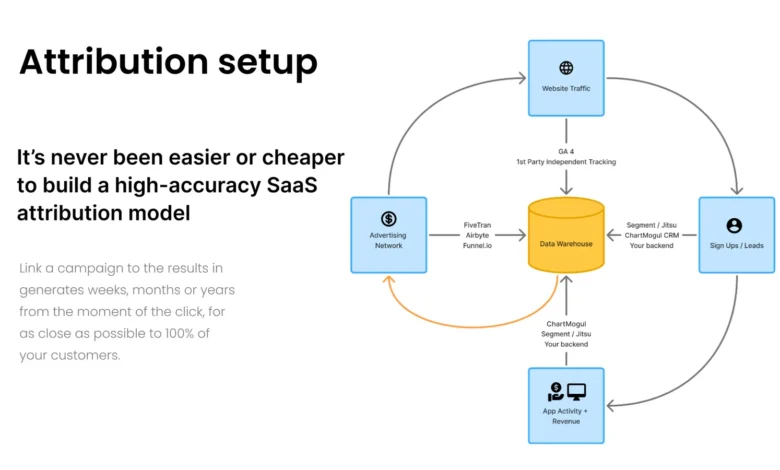
First-party data has effectively replaced volatile third-party tracking. The most reliable data points in the SaaS lifecycle—such as user signups, application logins, and in-product activation milestones—occur within the boundaries of the company’s own application. By storing these verified interactions securely, organizations build a durable backbone for their attribution models that remains immune to browser-level cookie deprecation.
Concurrently, the steep democratization of cloud-based data warehouses has lowered the barrier to entry. Platforms such as Snowflake, Google BigQuery, and managed PostgreSQL databases allow businesses to centralize and query massive datasets rapidly and affordably. Tasks that required dedicated data engineering teams and enterprise budgets a decade ago can now be executed by lean, mid-market SaaS operations with minimal technical overhead.
Identity stitching has similarly evolved. Rather than relying on transient browser cookies to track a prospect across multiple touchpoints, modern architectures utilize internal user identifiers once a visitor authenticates or registers an account. This allows analytics pipelines to retroactively stitch together a user’s pre-login marketing touchpoints with their post-login product behavior, regardless of whether the initial discovery occurred in a cookie-restricted environment. When rich product usage data from a PLG motion is injected into this warehouse-centric model, leadership gains a holistic narrative connecting top-of-funnel marketing investments directly to long-term customer lifetime value (LTV).
The Financial Imperative: Revenue Quality Over Vanity Metrics
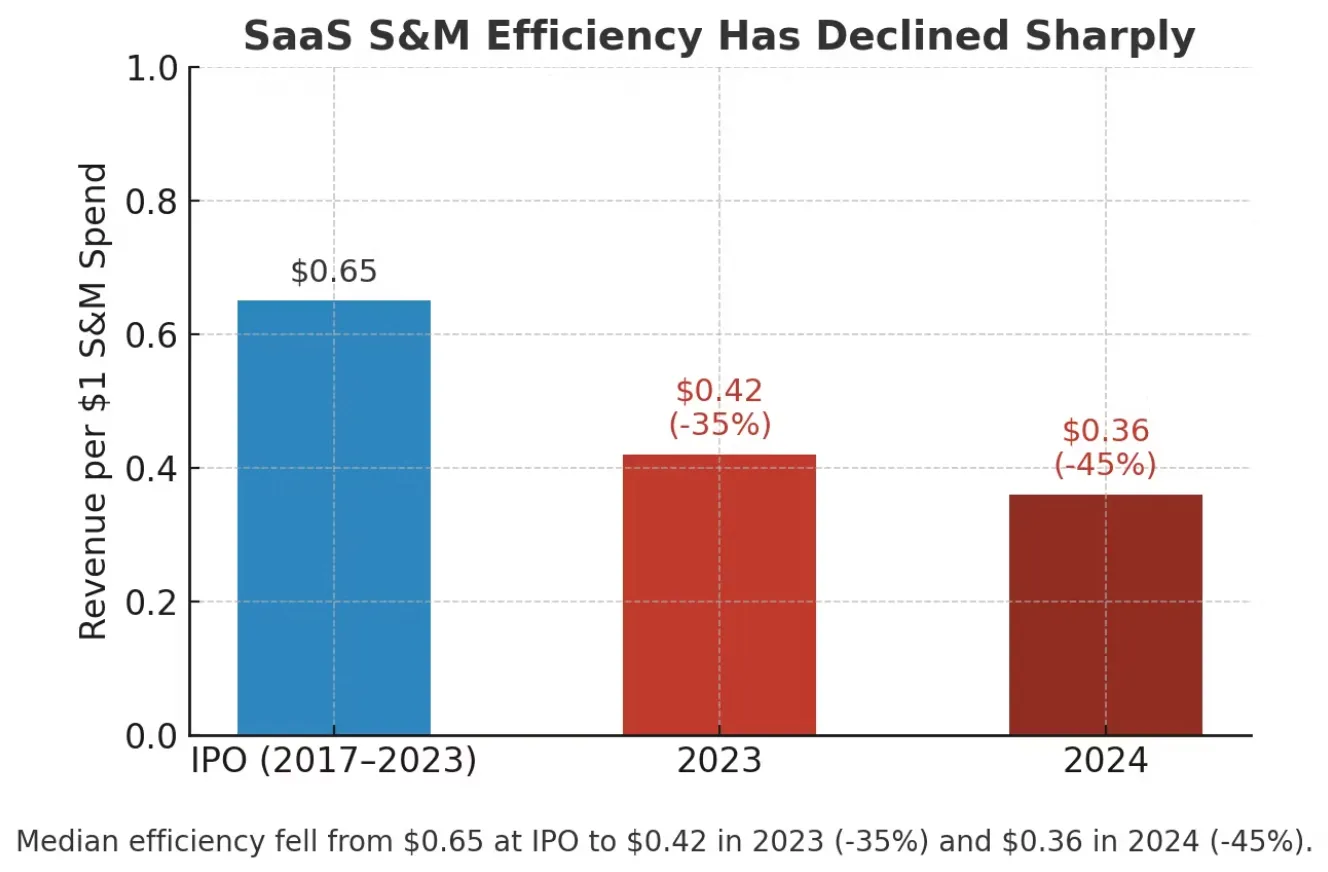
The urgency to modernize attribution models is heavily underscored by macroeconomic realities. Customer acquisition costs (CAC) across the global SaaS sector have climbed steadily over the past several years, while overall sales and marketing efficiency ratios have contracted. In this climate, treating all inbound leads as equal assets is a strategic liability.
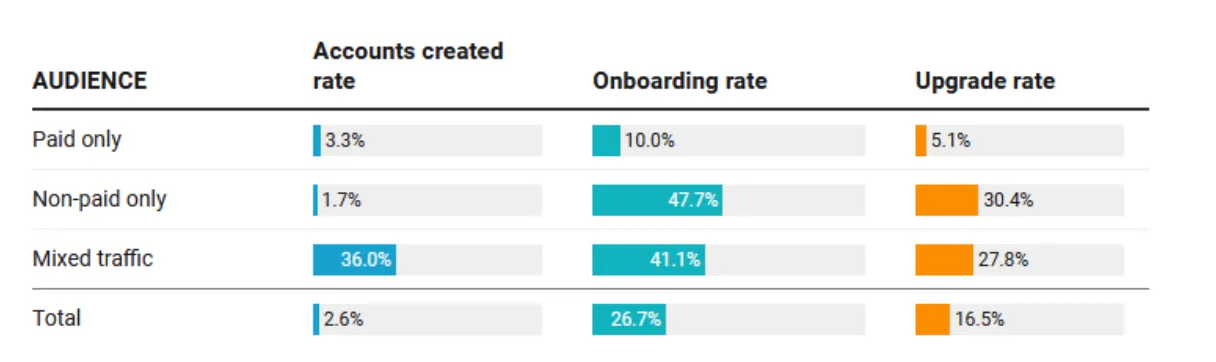
Historical data frequently illustrates a stark divergence between lead volume and revenue generation. A classic cautionary tale involves organizations that heavily subsidize gated content strategies. From a surface-level marketing perspective, such initiatives often appear wildly successful, doubling raw lead volume and populating executive dashboards with impressive metrics. However, bottom-line financial analysis frequently reveals that leads generated via friction-heavy gated assets yield substantially lower monthly recurring revenue (MRR) and inferior retention rates compared to users who enter through organic product-led trials or direct searches.
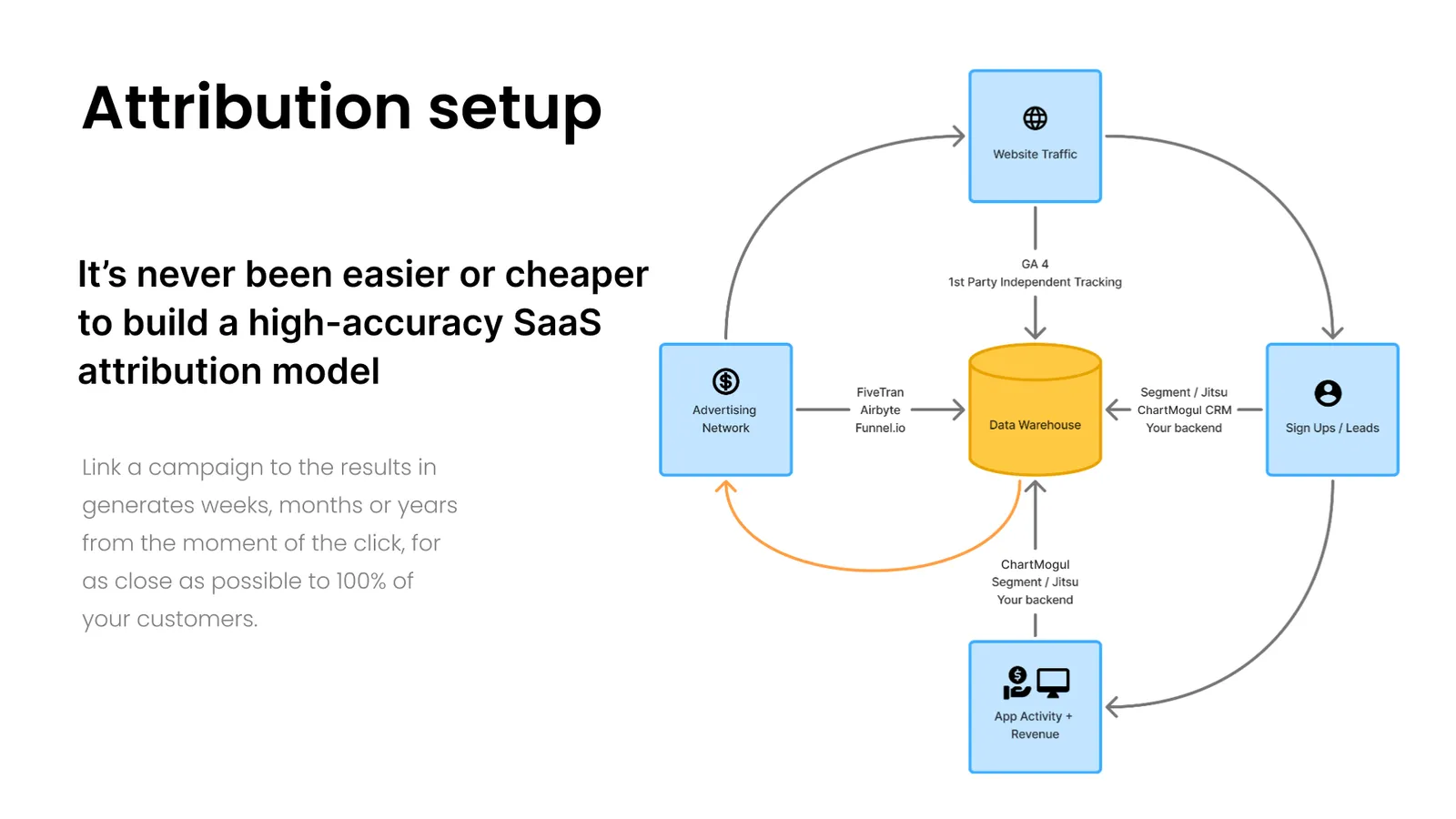
Optimizing for top-of-funnel vanity metrics without full-funnel attribution routinely misleads executive teams into scaling unprofitable acquisition channels. Modern attribution bridges the gap between channel-level expenditures and customer-level financial outcomes, transforming analytics from an isolated reporting exercise into a core driver of sustainable corporate growth.
A Five-Step Framework for Modern SaaS Attribution
To operationalize this modernized approach without requiring bloated analytics infrastructure, data experts recommend a warehouse-first framework centered on five foundational steps:
-
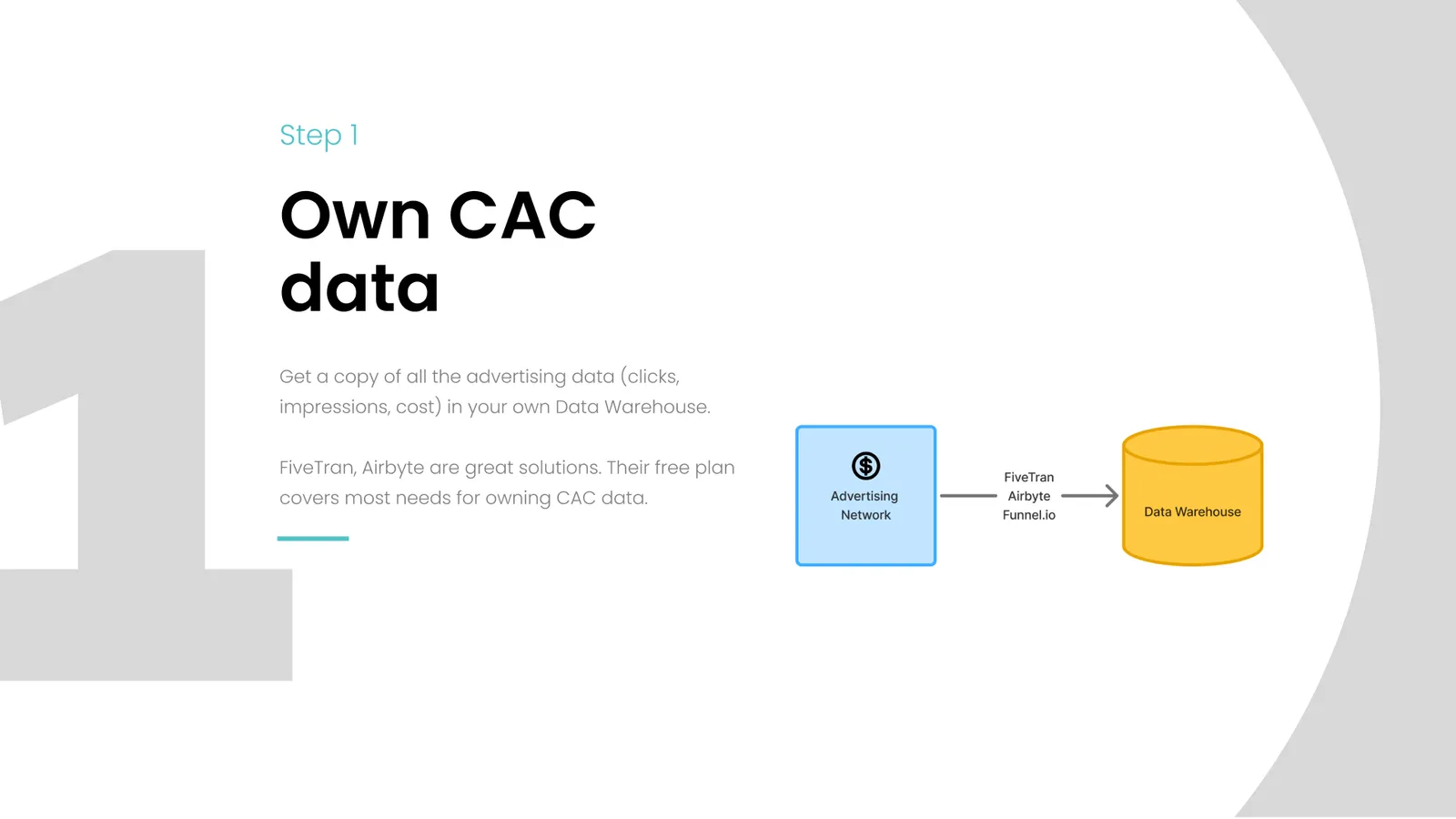
Own Your CAC Data: Centralize core advertising expenditure data directly within your internal data warehouse. By aggregating spend metrics independently from ad platform dashboards, organizations liberate themselves from vendor-locked reporting discrepancies.
-
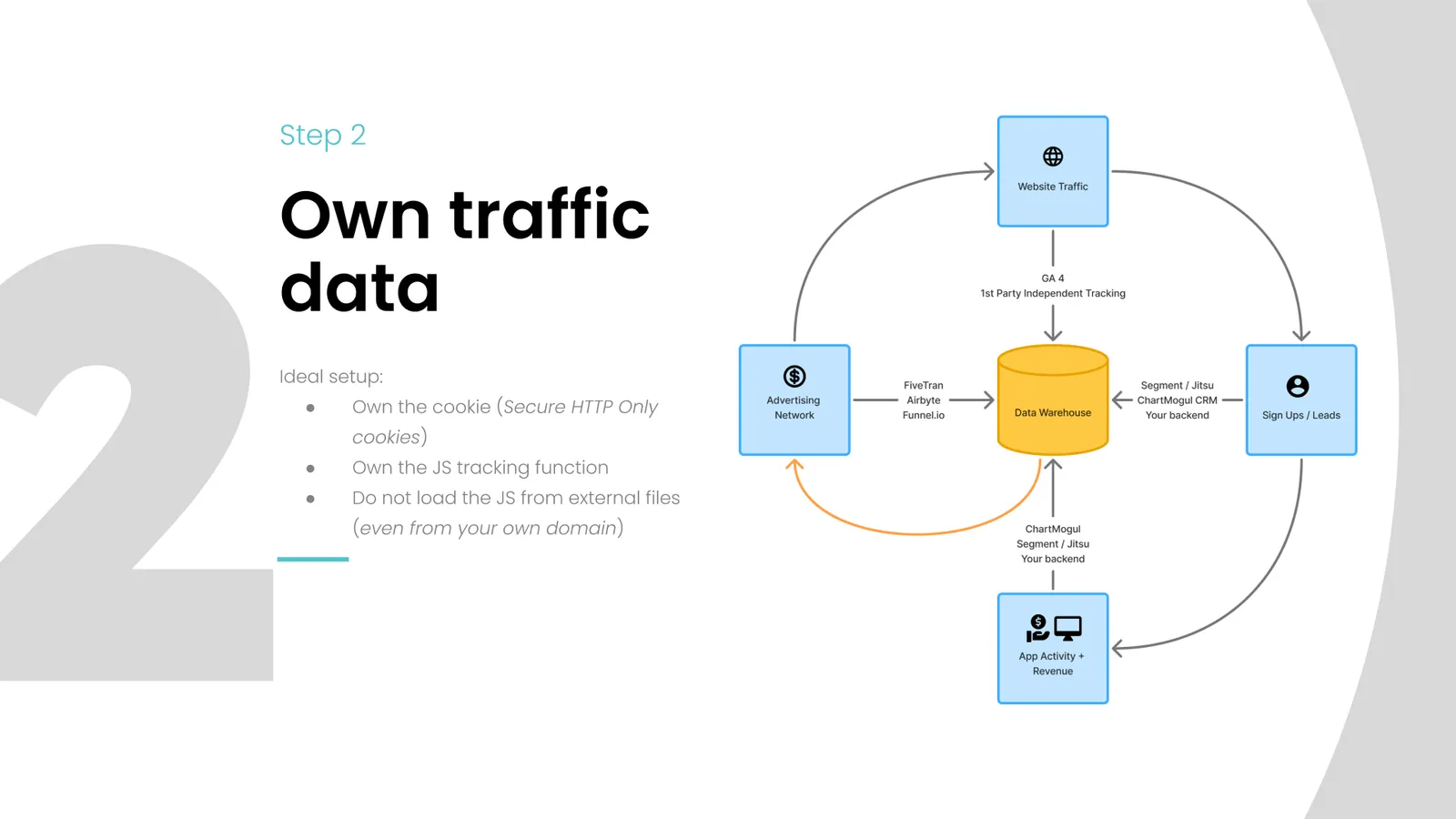
Take Control of Traffic and Cookie Tracking: Move beyond standard out-of-the-box tracking scripts. Implement server-side tracking and Conversions APIs to bypass aggressive browser-level ad blockers and script suppression tools. Hosting tracking logic internally breaks predictable URL patterns and script signatures that trigger consumer-side blocks.
-
Anchor Journeys to Customer Events: Utilize browser cookies only during the anonymous phase of the user journey. Once a visitor registers or logs in, transition the attribution key to a permanent, logged-in user ID, binding all subsequent engagement to an authenticated profile.
-
Integrate Subscription and LTV Data: Connect subscription analytics and recurring billing platforms directly to the data warehouse. Merging financial metrics with marketing touchpoints completes the quantitative loop required to evaluate true customer profitability.
-
Compute and Activate the Model: With unified data consolidated in the warehouse, revenue teams can run multi-touch attribution models that map actual channel spend against realized MRR and LTV, empowering executive leadership to reallocate capital with absolute clarity.
Broader Implications for the SaaS Industry
The transition toward warehouse-first, first-party attribution marks a mature turning point for the software industry. As venture capital funding environments demand rigorous capital efficiency and sustainable growth over growth-at-all-costs mentalities, the tolerance for speculative marketing budgets has evaporated.
By relinquishing the pursuit of impossible data perfection and embracing consistent, internally verifiable measurement frameworks, SaaS companies are reclaiming strategic control over their financial destinies. Ultimately, modern attribution is no longer about defending past expenditures to a board of directors; it is about establishing a reliable compass to navigate an increasingly complex digital landscape.
Related posts: