How Amazon Developed the Working Backwards Methodology to Revolutionize Global Infrastructure

In the annals of modern corporate history, few frameworks have proven as influential to the trajectory of the technology sector as Amazon’s "working backwards" methodology. Originating in the early 2000s, this approach—which mandates that product development begins with a mock press release detailing the finished customer experience—has transformed the company from a retail bookstore into the dominant force in cloud computing. Today, Amazon Web Services (AWS) stands as an $11.5 billion run-rate powerhouse, accounting for a significant majority of Amazon’s operating income and underpinning the digital operations of major global enterprises, including Netflix, Airbnb, and Slack.
The Genesis of Cloud Infrastructure
The story of AWS began in the mid-2000s, a period when the barriers to entry for software development were prohibitively high. Creating a scalable web service typically required millions of dollars in capital expenditure, the acquisition of physical server hardware, and a massive team of systems engineers. In 2006, AWS disrupted this model by offering infrastructure as a service. This shift effectively democratized computing power; where it once took months of planning and significant investment to deploy an application, a solitary developer could now provision the necessary resources in less than an hour.
The impact of this shift cannot be overstated. Recent data indicates that approximately one-third of daily internet users interact with websites and applications hosted entirely on the AWS ecosystem. This saturation has yielded unprecedented financial results for Amazon. In recent fiscal reporting, the cloud division has been the primary driver of record-breaking profits, often offsetting thinner margins in the company’s retail operations.
Chronology: From Concept to Global Dominance
The success of AWS was not an accidental byproduct of rapid growth, but the result of a deliberate, iterative development process. The timeline of this transformation is marked by rigorous internal discipline:
- 2003–2005: Amazon leadership identifies a massive inefficiency in its internal infrastructure. Teams were spending excessive time reinventing basic storage and computing components. Jeff Bezos and his executive team began conceptualizing a platform that could standardize these processes.
- 2006: The launch of Simple Storage Service (S3). This was the inaugural major product for AWS, marking the transition from a proprietary internal tool to a public-facing utility.
- 2006–2010: AWS expands its catalog to include Elastic Compute Cloud (EC2) and Relational Database Service (RDS), rapidly moving from a storage provider to a comprehensive computational engine.
- 2015: AWS reaches a $7 billion run rate, signaling that cloud computing is no longer a niche service for startups but the backbone of the enterprise IT sector.
- 2020–Present: With the global shift toward remote work and digital-first operations, AWS sustains its position as the market leader, facing competition from Microsoft Azure and Google Cloud, yet maintaining its "first-mover" advantage through its unique development culture.
The Working Backwards Philosophy
At the heart of this growth is the "Working Backwards" protocol. As described by industry leaders like Ian McAllister, a former General Manager at Amazon and current executive at Airbnb, the process requires product managers to draft a mock press release before a single line of code is written.
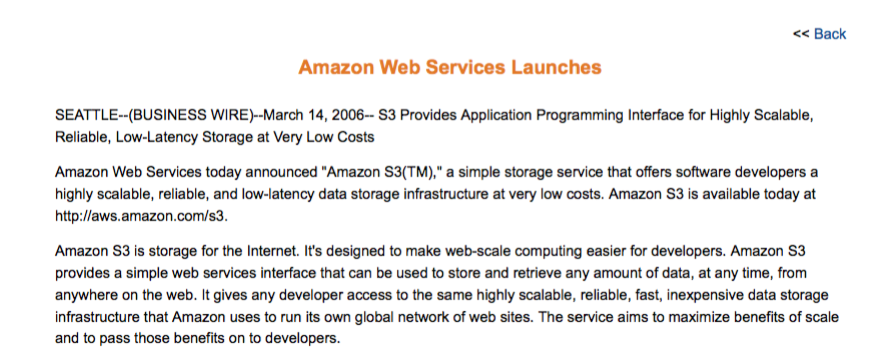
The document must articulate the customer problem, demonstrate why current market solutions are insufficient, and outline how the proposed product will provide a superior user experience. This serves as a "guiding light" throughout the development cycle. If the product cannot be described in a compelling way that justifies its existence, the project is abandoned.
This process is famously rigorous. For example, Andy Jassy, the current CEO of Amazon and former head of AWS, reportedly went through 31 distinct drafts of the original S3 press release before finalizing the vision. This commitment to iterative writing over iterative coding saved the company millions in development costs by forcing clarity of thought at the inception phase rather than mid-deployment.
Economic and Strategic Implications
The financial implications of this strategy are profound. By aligning development with clear customer-centric goals, Amazon minimizes "feature creep"—the tendency for products to become bloated with unnecessary, expensive, and underutilized functions.
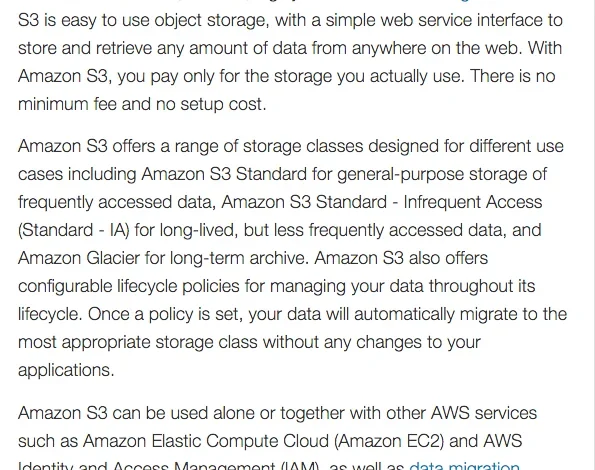
When comparing the original 2006 S3 press release to the product’s current landing page, the stability of the vision is striking. Only two minor paragraphs have been appended to the original description over the course of nearly two decades. This indicates that the core value proposition—the ability for a college student or a multinational corporation to access the same scalable infrastructure at a cost-effective price—remained constant while the underlying technology evolved to support billions of requests.
Industry Reactions and Competitive Landscape
Market analysts have noted that while many firms attempt to emulate the "working backwards" model, few succeed in replicating the organizational discipline required. The approach requires a company-wide culture of customer-centricity, where even minor product initiatives are held to the same standard of scrutiny as flagship launches.
Competitors have historically struggled to match the speed and precision of Amazon’s deployments. By the time a competitor identifies a gap in the market, Amazon’s teams have often already drafted, vetted, and begun executing a solution that addresses the user’s pain point directly. This has led to a market environment where Amazon’s cloud unit is consistently viewed as the "gold standard" for developer experience and infrastructure reliability.

Institutionalizing Customer-Centricity
To maintain this trajectory, Amazon has institutionalized these habits through internal triggers. Teams are encouraged to utilize "pr/faq" documents (Press Release and Frequently Asked Questions) as a standard requirement for project proposals. These documents are shared across departments, allowing for peer review and ensuring that the project remains focused on the user’s needs rather than internal technical preferences.
The broader impact on the tech industry is that "working backwards" has become a foundational best practice for product managers globally. Startups and legacy corporations alike have adopted elements of this framework to improve their innovation cycles. However, the true lesson of the AWS story is that methodology alone is insufficient; it must be coupled with an unwavering focus on the "things that don’t change"—specifically, the customer’s desire for lower costs, higher reliability, and ease of access.
Conclusion: The Sustainability of the Model
As Amazon continues to scale, the "working backwards" framework remains its primary defense against the stagnation that often plagues large, complex organizations. By ensuring that every initiative is rooted in a tangible customer benefit, Amazon has created a self-reinforcing cycle of innovation.
The shift from the early days of S3 to the current era of artificial intelligence and machine learning services on AWS demonstrates that the methodology is platform-agnostic. Whether building storage, compute, or AI models, the fundamental process—writing the press release, refining the message, and building the solution to match—remains the most effective tool for ensuring that technological advancement actually translates into commercial and user success. In an industry defined by rapid turnover, this emphasis on long-term, customer-focused vision has proven to be the most durable competitive advantage.