How ChartMogul Overcame Architectural Debt to Reignite Its Decade-Long Innovation Engine

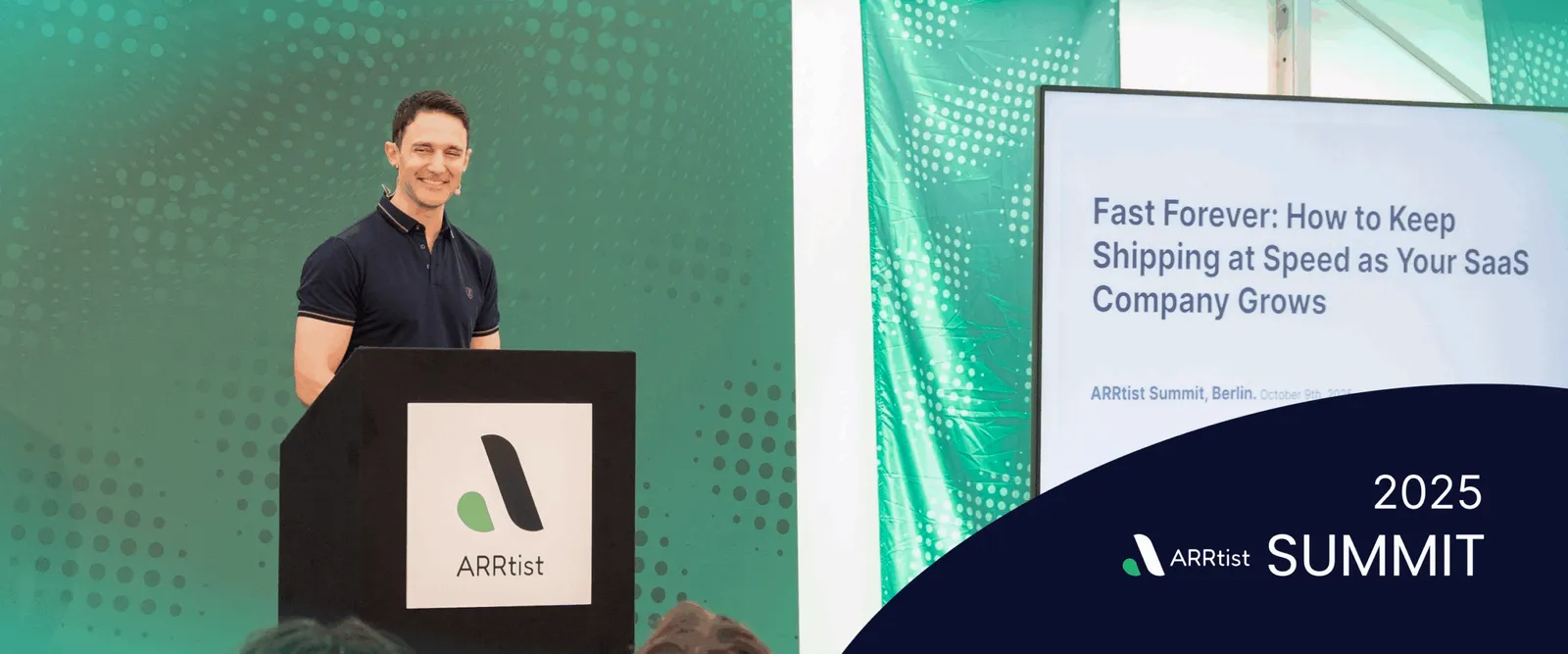
For over ten years, the software-as-a-service (SaaS) industry has watched ChartMogul evolve from an emerging startup into a cornerstone subscription analytics platform. Founded by Nick Franklin as a product-focused generalist and solo operator, the company has long championed the philosophy that a firm’s rate of innovation serves as both a primary driver of internal team morale and a formidable, lasting competitive moat. Yet, sustaining high-velocity development without succumbing to the burn-and-churn financing culture often associated with Silicon Valley hypergrowth remains a distinct operational challenge. Recently, speaking at the ARRtist Summit in Berlin, Franklin detailed the trajectory of ChartMogul’s engineering evolution: a decade-long narrative of rapid early momentum, a subsequent and severe deceleration caused by architectural complexity, and a deliberate, painstaking structural overhaul that ultimately restored the company’s development rhythm.
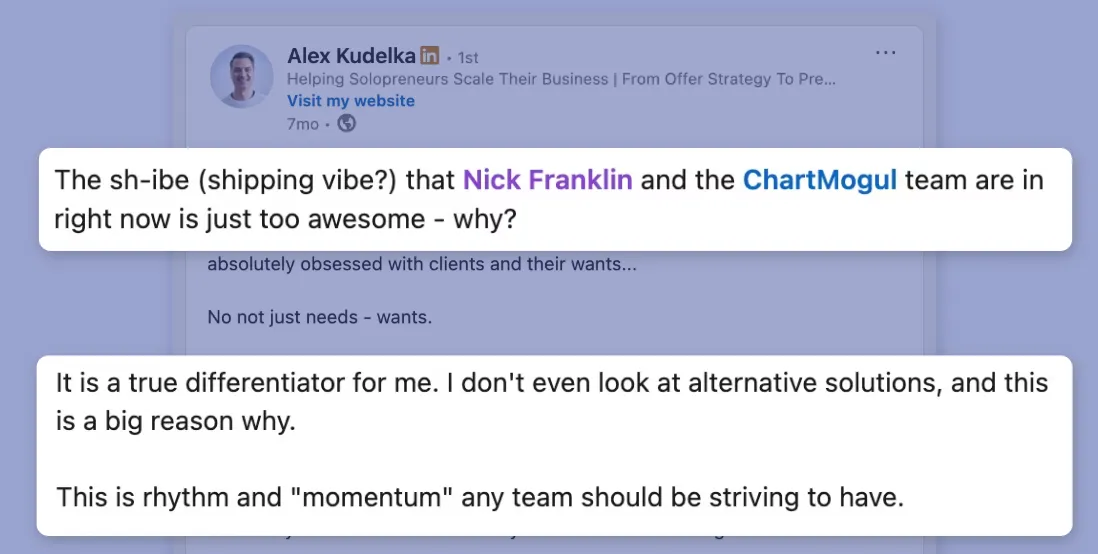
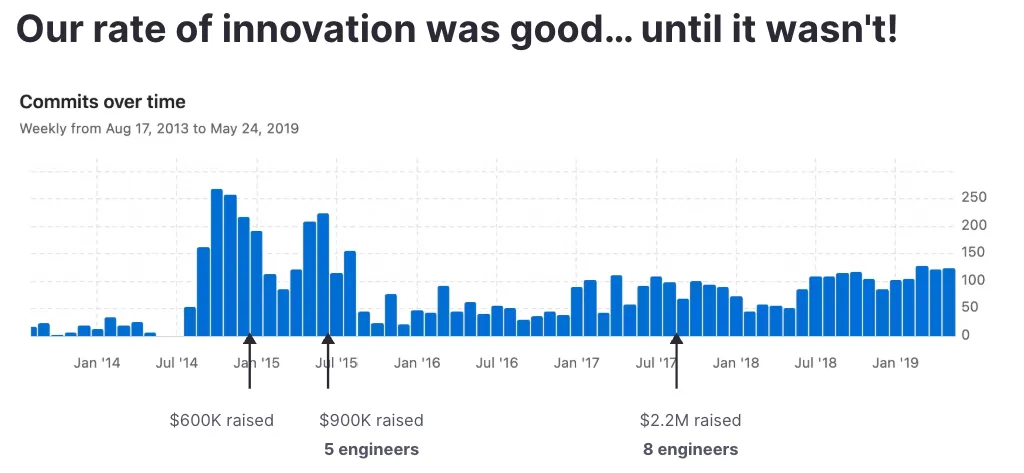
The genesis of ChartMogul in 2014 and 2015 mirrored the classic lean-startup playbook. Operating with a minimal capital injection and a lean engineering corps, the company achieved immediate product-market fit. Code commits occurred at a rapid pace, deployments were constant, and tangible product improvements materialized week after week. For customers, the value proposition was clear; for the engineering team, the feedback loop was immediate and intensely motivating. However, as customer acquisition scaled, the software codebase expanded exponentially, setting the stage for deep-seated systemic friction.
By 2016, the initial simplicity of the platform gave way to infrastructural debt. In an effort to modernize scalability, the engineering team adopted a microservices architecture—a decision that, in hindsight, exacerbated underlying architectural bottlenecks rather than resolving them. The backend infrastructure quickly devolved into a tangled web of interdependent services. While the frontend development team maintained a steady output, backend operations bogged down significantly. Cross-team dependencies meant that fixing a bug in one module inadvertently broke functionality elsewhere.
This technical friction took a heavy toll on human capital. Productivity stalled, frustration mounted across departments, and the engineering department experienced notable turnover. In an environment where visible progress ground to a halt, determining individual productivity and maintaining team morale became nearly impossible. Recognizing these warning signs, Franklin consulted with industry peers, eventually encountering the concept of "swimlanes"—an organizational framework where distinct engineering teams own specific operational domains end-to-end, enabling them to ship updates independently without creating systemic bottlenecks.
For ChartMogul leadership, this realization was sobering. Implementing a swimlane architecture meant dismantling and rewriting substantial portions of the software foundation that the company had spent years constructing. Fortunately, strong underlying customer retention and steady, organic revenue growth provided the company with the necessary financial runway to address these foundational flaws before catastrophic failure occurred.
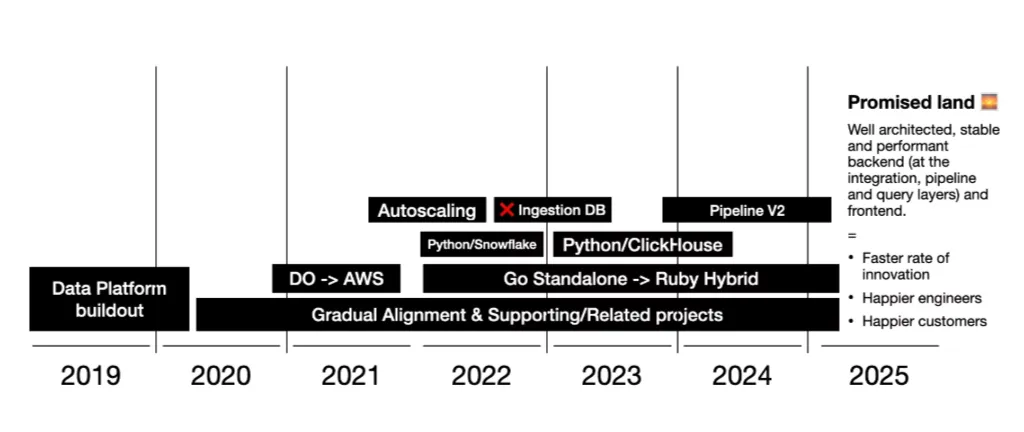
The structural remediation began in earnest following a strategic blueprint sketched by Franklin during a long-haul flight to Seoul in 2018. The plan called for establishing clear, uncompromising boundaries between data integrations, pipelines, analytics layers, and the user interface—effectively establishing ChartMogul’s proprietary version of swimlane architecture.
Beginning in 2019, the engineering organization embarked on a comprehensive, multi-year codebase rewrite. The process was neither quick nor painless, requiring years of disciplined resource allocation. Yet, the long-term payoff fundamentally transformed the company’s technical health. Today, ChartMogul operates with a modularized codebase, significantly higher employee satisfaction metrics, and an accelerated deployment frequency that eclipses its early-stage output.
Reflecting on the decade-long journey, leadership has codified several core operational takeaways designed to prevent structural stagnation. First, architectural integrity supersedes raw team size. Industry data consistently demonstrates that simply hiring more engineers fails to resolve structural debt originating from a disorganized codebase. A clean, modular foundation naturally amplifies developer productivity, proving that in software architecture, less complexity yields greater output.
Second, management must treat engineering organizations more like elite sports teams than traditional corporate hierarchies. Industry analysts frequently note that developer burnout rarely stems from working long hours on challenging problems; rather, it is generated by sustained periods of friction where effort fails to yield tangible, shipped progress. Engineers are intrinsically motivated by creation and deployment. To sustain this momentum, leadership structures must foster environment transparency, echoing Steve Jobs’ famous maxim that the most effective managers are experts leading experts. At ChartMogul, this philosophy translates into a technical culture where leadership—ranging from the VP of Engineering downward—remains hands-on with the codebase.
Third, founders and executives must maintain proximity to the technical core of the business. Early-stage directives advising founders to completely step out of technical operations often backfire. In a software enterprise, executive leadership must retain a functional understanding of how the core product operates. While personnel rotate in and out of an organization over a ten-year span, the founder remains a permanent fixture, ensuring that historical context and product vision continue to inform technical decision-making.
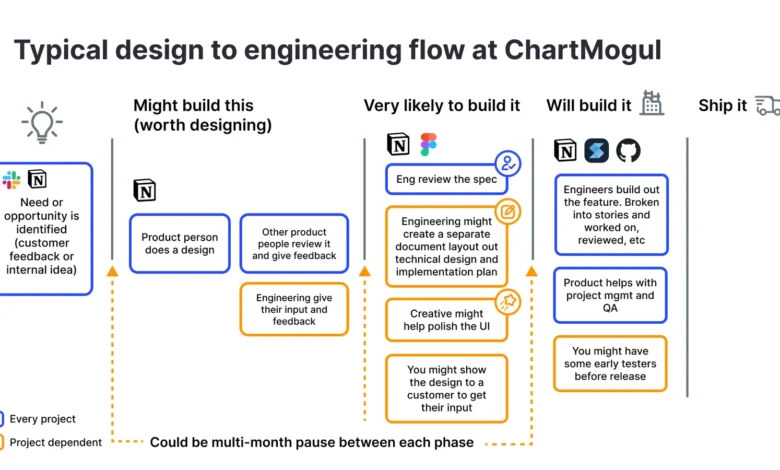
Finally, internal process must remain lightweight. While organizational frameworks are necessary for scaling, hyper-optimization and bureaucratic overhead can actively paralyze product velocity. ChartMogul mitigates this risk by decoupling the design phase from immediate execution—routinely designing product features months prior to actual implementation. This buffer provides adequate space for stakeholder feedback, iterative refinement, and more deliberate architectural decisions, ensuring a steady, sustainable workflow rather than a frenetic, chaotic rush.
The broader implications of ChartMogul’s structural transformation offer a blueprint for European B2B SaaS companies navigating growth without the artificial pressures of hyper-funded venture capital models. By prioritizing architectural health, maintaining lightweight operational processes, and keeping technical leadership closely aligned with daily engineering realities, companies can build resilient innovation engines capable of sustaining high performance across decades. Ten years after its founding, ChartMogul’s experience demonstrates that while technical debt is an inevitable byproduct of scaling, proactive structural renewal remains the ultimate safeguard for long-term competitiveness.