Apple Unveils Audio Intelligence for Series 12 and Ultra 4, Sparking Intense Privacy Debates

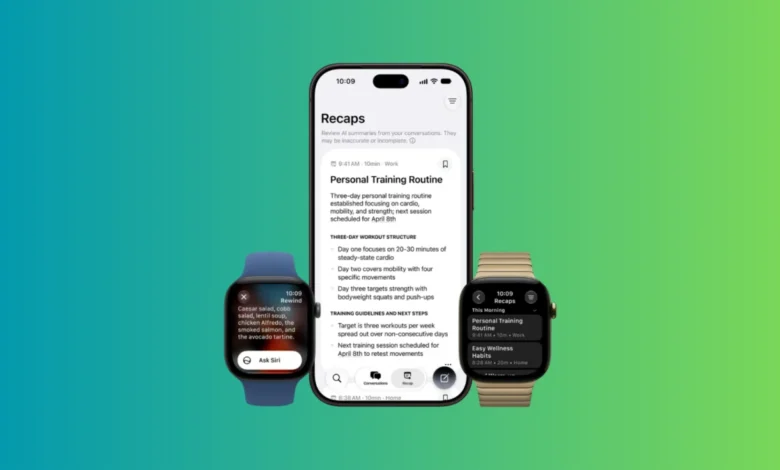
Apple Inc.’s annual autumn keynote address on September 9 introduced the tech giant’s latest hardware lineup, highlighted by the flagship Apple Watch Series 12 and the rugged Apple Watch Ultra 4. While hardware refinements, enhanced battery capacities, and sleeker form factors routinely capture consumer attention, this year’s release was dominated by a sweeping software suite dubbed "Audio Intelligence." Designed to passively capture, process, and summarize ambient conversations in real time, the feature represents a significant leap forward in wearable artificial intelligence. However, it has simultaneously ignited a fierce global debate regarding personal privacy, corporate data governance, and the legal implications of continuous acoustic surveillance in public spaces.
The core of Audio Intelligence is split into two primary mechanisms: Live Rewind and Siri Recap. Together, these tools are engineered to function as an ambient memory bank for the user, capable of parsing hours of spoken dialogue and condensing it into digestible, searchable text summaries on demand. While Apple has implemented rigorous on-device security protocols—including hardware-level encryption and decentralized cloud processing—the passive nature of the technology has left privacy advocates, legal experts, and consumers questioning where the boundaries of personal space begin and end in an increasingly automated world.
The Architecture of Ambient AI: How Audio Intelligence Operates
To understand the scope of Apple’s new offering, one must examine the complex hardware and software pipeline that powers it. The Apple Watch Series 12 and Ultra 4 are driven by the newly minted S11 system-in-package, which features an upgraded Secure Exclave. This partitioned, hardware-isolated compartment operates independently of the watch’s main operating system, rendering it inaccessible even to system-level software or external applications.
When the device’s microphones capture ambient audio, the raw stream is routed directly into this protected buffer. Within the Secure Exclave, the audio is immediately encrypted and securely transmitted to a matching Secure Enclave housed within the user’s paired iPhone. Once on the iPhone, an advanced on-device artificial intelligence model processes the audio locally. The model transcribes the dialogue, distills it to roughly half its original length by stripping away extraneous conversational filler, and neutralizes identifiable vocal characteristics.
Following this local reduction phase, the raw audio data is permanently overwritten and destroyed. Only the truncated transcript, accompanied by coarse metadata such as a generalized location stamp and time markers, is forwarded to Apple’s Private Cloud Compute infrastructure. To ensure anonymity, Apple employs a third-party network relay designed to mask the user’s IP address, preventing corporate employees or external observers from linking the incoming data packet to a specific Apple ID.
Within the Private Cloud Compute environment, Siri AI synthesizes the text into daily summaries if the user has opted into the Siri Recap feature. By default, these summaries are automatically purged from the cloud servers every seven days unless the user manually elects to archive them. If archived, the data transitions to the user’s personal iCloud storage, where it can be synchronized across native applications like Apple Notes or Apple Journal.
A Double-Edged Sword: Security Versus Account Vulnerability
Apple has positioned its security infrastructure as an industry gold standard, emphasizing that raw audio is never permanently recorded, stored, or transmitted off the local device. Nevertheless, cybersecurity analysts have pointed out a critical vulnerability that exists beyond the server level: the security of the user’s personal account.
While Apple’s server-level architecture relies on end-to-end encryption and zero-knowledge proofs to prevent mass data breaches, account-level compromises remain a persistent threat across the consumer technology landscape. Security reports underscore the frequency of credential-stuffing attacks and infostealer malware campaigns, which routinely expose millions of user login credentials. For instance, recent industry analyses highlighted hundreds of thousands of compromised iCloud credentials circulating on public forums following isolated credential leaks.

If an unauthorized actor successfully breaches a user’s iCloud account or gains physical access to an unlocked iPhone, all archived conversation summaries stored within notes or journals become instantly accessible from a centralized location. This creates a high-stakes repository of intimate personal data, business discussions, and private interactions, all compiled without the continuous oversight of the device owner.
The Legal and Ethical Quagmire of Unconsented Recording
Perhaps the most contentious aspect of the Apple Watch Series 12 and Ultra 4 launch is the absence of explicit consent mechanisms for individuals who interact with or stand in proximity to a device owner. While Apple’s privacy documentation addresses the safeguarding of the wearer’s data, it offers little protection or recourse for bystanders subjected to passive acoustic monitoring.
To mitigate criticism, Apple incorporated modest operational cues for the Live Rewind feature, including a subtle audio chime and a visual indicator on the watch display when active. Furthermore, the transcription algorithms do not explicitly name or attribute voices to specific individuals. However, critics argue that these safeguards are wholly inadequate. They fail to secure the explicit, informed consent of third parties who may be recorded during business meetings, private social gatherings, or sensitive medical and legal consultations.
The implementation of Siri Recap is viewed by legal scholars as even more problematic. Operating entirely without visual or auditory cues, Siri Recap gathers and summarizes conversations surreptitiously, leaving unsuspecting participants entirely unaware that their dialogue is being parsed by machine learning algorithms. While Apple includes a brief, generalized disclaimer in its product literature advising users to "be mindful of those around you," this advisory carries no legal weight and offers no technical restriction against unconsented recording.
This design introduces profound regulatory friction, particularly regarding global wiretapping and privacy statutes. In the United States, approximately twelve states enforce strict "all-party consent" or "two-party consent" laws, which render the recording of confidential communications illegal without the explicit permission of all participants. Internationally, jurisdictions governed by the European Union’s General Data Protection Regulation (GDPR) impose stringent restrictions on the collection and processing of personally identifiable information, explicitly prohibiting undisclosed surveillance and profiling.
Apple has preemptively defended its architecture against potential legal challenges by emphasizing a technical distinction: because the audio stream is continuously overwritten within a volatile hardware buffer and never forms a persistent audio file, no actual "recording" is ever created. In its official privacy whitepaper, the company notes that Audio Intelligence features do not generate accessible audio files, meaning there is no media to share, subpoena, or produce upon legal request.
Whether this technical nuance will satisfy regulatory bodies or withstand judicial scrutiny remains to be seen. Consumer advocacy groups argue that the semantic distinction between a persistent audio file and a real-time, AI-generated transcript is negligible to an individual whose private statements have been processed and summarized without their knowledge.
Opt-In Controls and Market Implications
Recognizing the polarizing nature of continuous ambient listening, Apple has designed the Audio Intelligence suite as strictly opt-in. The features are deactivated by default upon initial device setup, requiring users to consciously navigate their settings menus to enable Live Rewind, Siri Recap, or related sub-functions independently. This modular approach allows privacy-conscious consumers to utilize the Series 12 and Ultra 4 hardware without engaging the controversial software capabilities.
As shipments of the Apple Watch Series 12 and Ultra 4 reach global markets, the technology will face its true test in the court of public opinion and regulatory enforcement. The rollout marks a critical milestone in the mainstream normalization of ambient artificial intelligence, forcing a broader societal reckoning over the balance between personal convenience and communal privacy. For now, consumers are left to weigh the utility of an automated digital memory against the complex ethical and legal responsibilities of carrying a passive listening device into the public square.