The Small Circle: Why True Leadership Is Measured by Depth Rather Than Reach


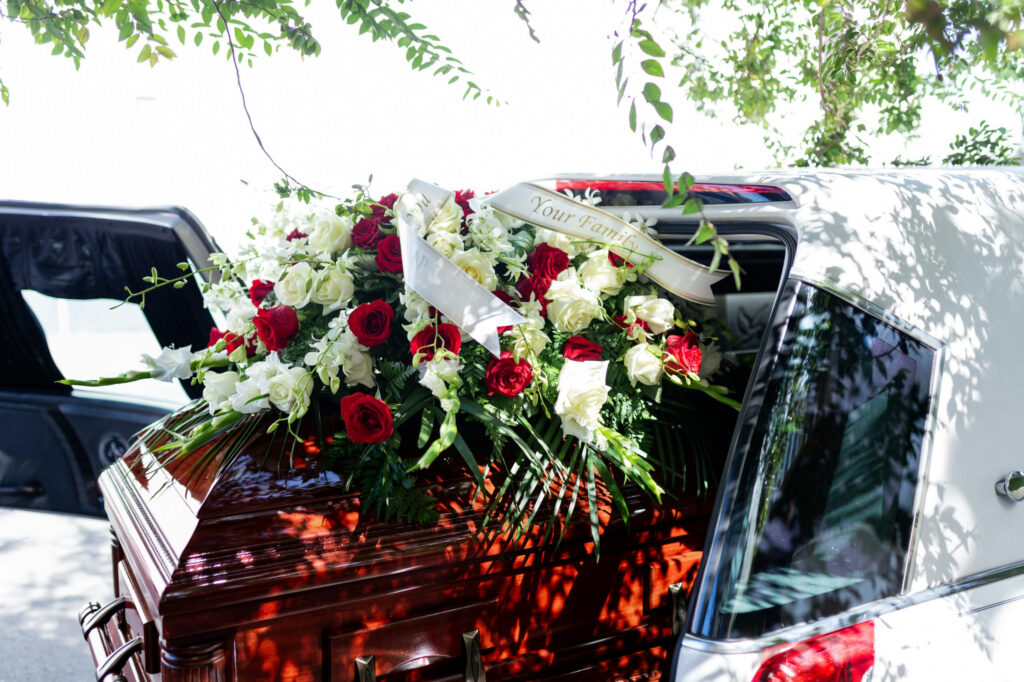
The recent funeral of a prominent corporate executive, held on a somber, overcast afternoon, served as an unlikely forum for a broader discussion on the nature of professional legacy. While the deceased was known for high-level industry contributions and a career marked by extensive public visibility, the memorial service revealed a striking departure from the metrics of modern corporate culture. Attendees, including senior industry peers and long-term direct reports, eschewed discussions of quarterly earnings, stock performance, or LinkedIn-verified milestones. Instead, the proceedings centered on the interpersonal impact of a leader whose influence was defined not by his reach, but by the depth of his commitment to his immediate circle.
The Contrast Between Public Visibility and Private Impact
In an era defined by the "attention economy," modern leadership is frequently conflated with digital presence and social influence. According to recent data from the Edelman Trust Barometer, the perception of leadership has shifted heavily toward public visibility, with 72% of consumers and employees noting that they track a leader’s public platform to assess their credibility. However, this funeral provided a case study in the dissonance between public branding and private efficacy.
The service highlighted a reality often overlooked by performance-based metrics: the most enduring leadership contributions occur in the "small circle"—the immediate colleagues, mentees, and subordinates who witness a leader’s behavior during periods of high stress, ethical ambiguity, and personal struggle. While social media algorithms prioritize volume, frequency, and engagement—metrics often used as proxies for professional success—the tributes delivered at the service focused exclusively on moments of individual mentorship, silent advocacy, and the reinforcement of personal agency in others.
Chronology of a Leadership Legacy
To understand the trajectory of this particular leader, one must look beyond the curated professional biography.
- The Early Phase: The deceased began his career in mid-market operations, where internal reports from that era suggest he spent a disproportionate amount of time on cross-departmental training—work that offered little in the way of immediate corporate prestige but built a foundational layer of loyalty among his early teams.
- The Growth Phase: During his tenure as a senior executive, he oversaw three major corporate restructurings. While public records focus on the efficiency gains and headcount adjustments, interviews with staff members reveal that his focus remained on the transition support provided to departing employees, a factor that rarely appeared in the official investor relations briefings.
- The Final Decade: In his later years, he transitioned into an advisory role. It was during this period that the disparity between his public reputation and his private influence became most pronounced. While he stopped seeking speaking engagements or industry awards, his calendar remained full of one-on-one sessions with emerging talent, demonstrating a shift from personal ambition to legacy cultivation.
The Data on Leadership Retention and Trust
Psychological research from the Harvard Business Review on team dynamics suggests that employees are 40% more likely to remain with an organization when they feel their direct supervisor is personally invested in their growth, regardless of the company’s broader external brand. This "depth-first" approach acts as an insulator against turnover, yet it remains difficult to quantify on a balance sheet.
In contrast, organizations that focus primarily on the external persona of their leadership often face higher volatility. Industry analysts have noted that when a company’s culture is tied exclusively to the public "star power" of its executives, the organizational structure becomes fragile. When the executive departs or the brand hits a downturn, the lack of a deep, decentralized trust network—the "small circle"—often leads to a rapid erosion of institutional knowledge and employee morale.
Professional Reflections on the Changing Landscape
"We are currently witnessing a cycle where the metrics of success are being confused with the substance of leadership," says Dr. Aris Thorne, a senior fellow at the Institute for Organizational Development. "When a leader spends their career curating a digital persona, they are investing in a depreciating asset. The truly transformative leaders are those who recognize that their primary duty is to build capacity in others, not to build visibility for themselves. This is the difference between being a public figure and a mentor."
The anecdotal evidence presented at the funeral mirrors this sentiment. One attendee, a senior manager who worked under the deceased for over a decade, noted that the executive’s most impactful decisions were never recorded in meeting minutes. "He was the person who stayed late to explain a complex strategy to a junior analyst, not because it helped his quarterly targets, but because he believed that analyst had the potential to lead eventually. That is the work that lasts."
The Implications for Future Leadership Models
The shift toward quantifying leadership through digital reach presents a significant risk to organizational stability. As companies increasingly demand that their leaders act as "thought leaders" and public influencers, the time allocated for the quiet, labor-intensive work of building a team is being cannibalized.
Fact-based analysis suggests that this trend toward visibility over substance has three primary consequences:
- Erosion of Ethical Courage: When a leader is hyper-focused on public image, the pressure to "spin" narratives becomes a barrier to radical transparency. This often results in a culture where difficult truths are obscured to maintain a favorable public narrative.
- Diminished Mentorship Capacity: The time required to curate a brand is substantial. Data indicates that for every hour spent on high-visibility external communications, there is a commensurate decrease in time spent on one-on-one professional development for direct reports.
- Fragile Succession Planning: Organizations that rely on a single, high-profile leader often struggle to transition when that individual exits. By failing to invest in the "small circle," the leader creates a dependency that effectively hollows out the next layer of management.
Moving Toward a Model of Substantive Influence
The legacy left by the executive in question serves as a benchmark for what modern leadership could look like if it were recalibrated toward depth. It requires a fundamental pivot in how success is measured. Instead of focusing on external validation, leadership development programs may need to incorporate metrics that measure the success of subordinates, the retention of top talent, and the quality of internal mentorship.
This does not imply that results and performance are irrelevant. To the contrary, results are the objective standard by which the effectiveness of a mission is judged. However, the distinction lies in whether results are treated as the ultimate goal or as a byproduct of a well-developed, highly empowered team.
As the attendees left the memorial, the overcast sky began to clear. The contrast between the cold, gray morning and the warmth of the stories shared provided a poignant metaphor for the shift from superficial perception to genuine, human-centric leadership. The "small circle"—the group of people whose lives were tangibly altered by one individual’s presence—remains the only metric that survives long after the quarterly reports have been archived.
Ultimately, the lesson of the service was clear: the public highlight reel is for the spectators, but the small, often invisible work of investing in human potential is for the history books. Leadership is not about how many people know your name; it is about how many people are better off because they knew you. In an age of infinite reach, the most radical and effective act of leadership remains the quiet, deep investment in the person sitting directly across from you.