Beyond Personality Labels: Navigating Behavioral Styles for Organizational Efficiency


The modern workplace is increasingly defined by the collision of disparate communication styles. What one employee perceives as "directness," another may interpret as hostility, and what one leader views as "social cohesion," another sees as a tactical inefficiency. As organizational psychology becomes a staple of corporate strategy, companies are moving beyond simple personality tests to implement structured behavioral frameworks, such as DISC (Dominance, Influence, Steadiness, Conscientiousness) and the Kolbe Index, to optimize team performance and reduce operational friction.
Historical context suggests that these assessments, which gained significant traction in the mid-20th century, were initially designed to streamline recruitment and conflict resolution. Today, however, they serve a more granular purpose: aligning individual cognitive preferences with organizational workflows. By understanding the "entry point" of different behavioral profiles, managers are finding that they can reduce meeting times, increase output, and improve the overall quality of collaborative efforts.
The Anatomy of Behavioral Friction
In professional environments, friction often arises not from a lack of competence, but from a mismatch in behavioral expectations. Data from organizational management studies indicate that a significant percentage of workplace conflicts are rooted in how individuals prefer to process information.
For those who score as "High C" (Conscientious) on the DISC scale, the primary value is accuracy and logic. These individuals typically prioritize the objective over the social. For a High C, a meeting that begins with extensive "chit-chat" is perceived as a barrier to productivity rather than a team-building exercise. Conversely, those with a "High S" (Steadiness) profile often require a relational buffer—a brief period of social acknowledgment—before they feel comfortable transitioning into high-pressure tasks or providing reports.
The implication for leadership is clear: the "one-size-fits-all" approach to communication is obsolete. Effective managers are now adapting their communication style to the recipient. When a manager approaches a "High D" (Dominant) individual, brevity and a focus on the "big picture" are essential. When interacting with a "High C," providing the request with a clear deadline and then granting the autonomy to complete the task without interference is the standard for success.
Dispelling the Myth of the "Natural" Role
A persistent issue in modern human resources is the tendency to "pigeonhole" candidates based on their behavioral assessments. There is a common misconception that certain behavioral profiles are inherently better suited for specific roles—for example, that a Dominant type is the only viable candidate for a sales leadership position, or that an Influencer is the only person capable of managing client relations.
Industry experts caution against this deterministic view. Research into cognitive flexibility shows that while a specific profile may possess a natural inclination toward certain tasks, these traits are not prescriptive of professional capability. A Conscientious individual can be an exceptionally effective salesperson, provided they are coached on how to bridge the gap toward the spontaneity required for relationship-based selling.
The consensus among industrial-organizational psychologists is that organizations should hire based on core skill sets and genuine interest in the role, utilizing behavioral assessments only as a diagnostic tool for coaching and integration. By shifting the focus from "hiring to type" to "coaching to gap," firms can unlock a broader talent pool and build more resilient, cross-functional teams.
Implementing a Shared Organizational Vocabulary
The true utility of behavioral assessments lies in the creation of a shared language. When a team adopts a framework like DISC or Kolbe, the nature of workplace dialogue shifts. Vague complaints—such as "this person is too slow" or "this person is too aggressive"—are replaced by objective observations: "This individual requires more context to reach the execution phase" or "This teammate needs directness to maintain momentum."
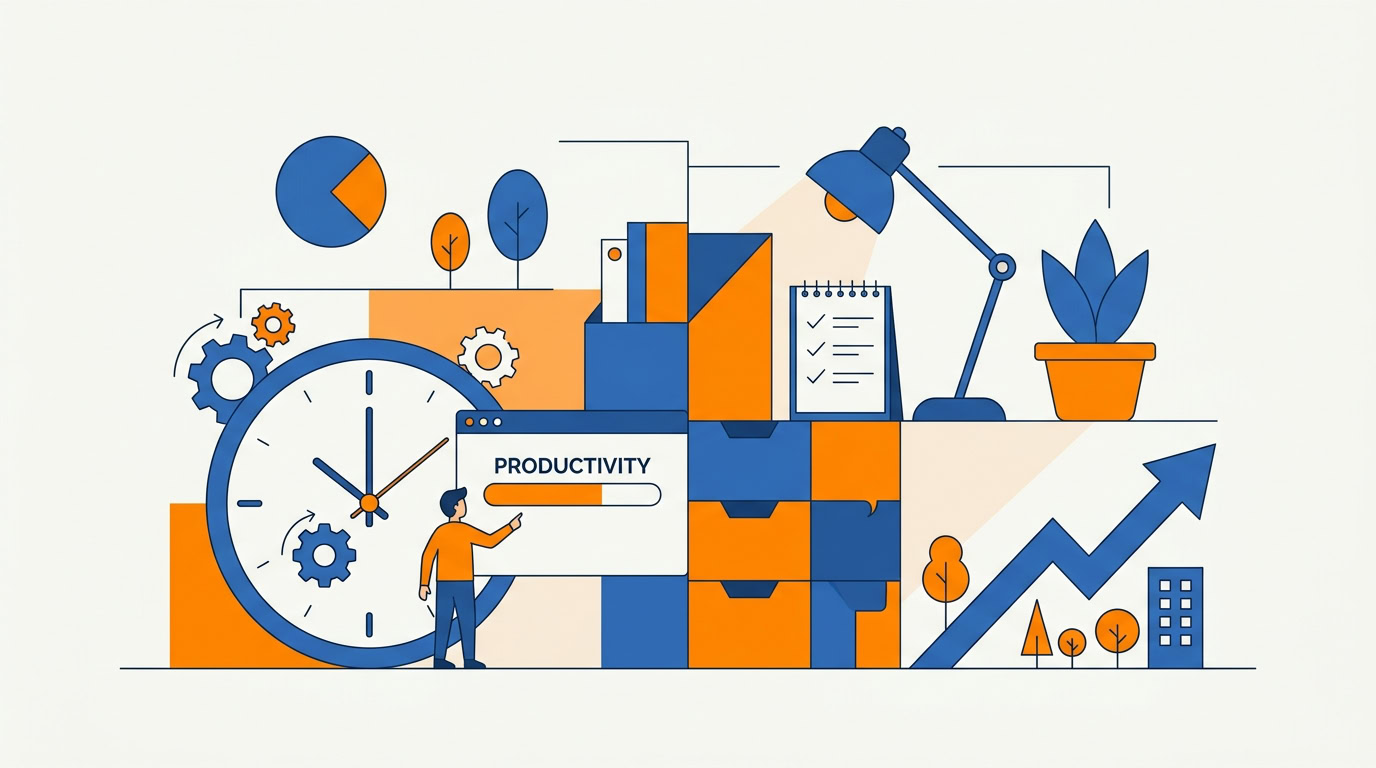
This transition from subjective judgment to objective analysis is critical for project management. By assigning tasks based on cognitive preference, companies can minimize the energy lost to organizational friction. For instance, a project that requires intense, focused analysis is better suited for a team member with a high Conscientious profile, whereas a project requiring rapid pivots and high-level vision is better served by someone who scores high on the "Quick Start" scale of the Kolbe index.
The Evolution of Time Management in the Digital Age
The challenge of time management has undergone a fundamental transformation over the last thirty years. In the 1990s, the primary obstacle to productivity was the physical tracking of appointments and tasks. In the current environment, the challenge is the sheer volume of external inputs—constant notifications, emails, and the demand for instantaneous responses.
This environment has forced a pivot from traditional time management to "speed correction" and signal filtering. The modern professional must navigate a landscape of constant micro-decisions. To combat this, many high-performing teams are adopting the "Rule of Three." By setting exactly three primary goals for a given workday, professionals can establish a clear "finish line." This strategy, which is effective across all behavioral styles, serves as a psychological anchor, helping to alleviate the "always-on" anxiety that plagues the contemporary workforce.
Structuring the Meeting of the Future
One of the most effective ways to test the integration of these principles is through meeting reform. The prevalence of unnecessary meetings is cited by the Bureau of Labor Statistics and various productivity studies as a primary contributor to "hidden" operational costs.
To implement a more efficient meeting culture, organizations are being encouraged to:
- Mandate an Agenda: Every meeting must have a clear objective and a defined set of deliverables.
- Remove Social Barriers: While team building is valuable, it should be siloed away from functional, decision-making meetings.
- Audit Interruption Patterns: Leaders are encouraged to conduct a weekly audit of the interruptions that prevent deep work, adjusting communication channels to protect the focus of the team.
Implications for Long-Term Organizational Health
The integration of behavioral science into daily workflows is not merely a "productivity hack"; it is a systemic shift in how organizations conceptualize human capital. By recognizing that self-awareness is a fundamental professional skill, companies can better match individuals to the tools and environments where they thrive.
A Conscientious worker who relies on rigorous list-based applications like OmniFocus may struggle in a team that mandates a purely visual project management system like Trello. By acknowledging these differences, organizations can customize their digital ecosystems to support, rather than hinder, the employee’s cognitive process.
As we move further into an era of remote and hybrid work, the ability to decode these behavioral styles will become increasingly vital. The lack of physical presence in the office means that non-verbal cues are often lost, making the explicit understanding of communication preferences the only remaining bridge between distributed team members.
In conclusion, the goal of utilizing behavioral assessments is to foster a work environment that is both efficient and psychologically sustainable. Whether through the implementation of a 3-goal daily reset, the standardization of agendas, or the strategic delegation of tasks based on cognitive expertise, the objective remains the same: to reduce the noise of the modern workplace and allow individual talent to manifest with the least possible resistance. The organizations that succeed in the coming decade will be those that view behavioral style not as a set of static traits, but as a dynamic map for optimizing human output.