The Evolution of ChatGPT and the Transformative Impact of Artificial Intelligence on Global Industry

The emergence of ChatGPT as a cornerstone of modern technological infrastructure represents a definitive shift in the digital landscape. Since its widespread adoption, the platform has evolved from a novel conversational interface into a sophisticated engine for automation, data synthesis, and creative production. Developed by OpenAI, this large language model (LLM) utilizes advanced neural network architectures to process vast repositories of human-generated information, enabling it to perform tasks ranging from complex code generation and mathematical analysis to creative writing and market strategy formulation.

The genesis of this technology can be traced back to early research in natural language processing (NLP). While AI-driven chatbots have existed for decades—dating back to Joseph Weizenbaum’s ELIZA in the 1960s—modern LLMs represent a quantum leap in capability. The transition from rule-based systems to probabilistic, transformer-based models allowed machines to understand context, nuance, and syntax with unprecedented accuracy. By the time of its public release in late 2022, the model had been trained on a massive corpus of data, including books, academic journals, and internet archives, setting the stage for a global technological pivot.
Technological Infrastructure and the Mechanics of Intelligence
At the core of the system lies a transformer-based architecture that processes data by assigning "attention" weights to different tokens in a sequence. This allows the model to maintain long-range dependencies within a conversation, effectively remembering the context of a discussion over hundreds of lines of text. The training process, known as Reinforcement Learning from Human Feedback (RLHF), is critical to its performance. During this phase, human trainers rank the model’s responses to specific prompts. This iterative process acts as a corrective mechanism, refining the AI’s output to be more aligned with human expectations, helpfulness, and safety guidelines.
However, this reliance on static training data creates inherent limitations. Because the model is trained on information up to a specific cutoff point, it can struggle with real-time accuracy. Furthermore, because it predicts the next most likely word in a sequence based on statistical probability, it can occasionally produce "hallucinations"—confidently stated but factually incorrect information. Recognizing these risks, industry leaders have emphasized that the technology is designed to assist rather than replace human judgment.
Strategic Integration in the Global Business Sector
The adoption of generative AI within the corporate sphere has been nothing short of transformative. According to recent industry reports, organizations are increasingly leveraging these tools to drive operational efficiency. In customer service, AI-driven agents now manage high-volume inquiries with human-like empathy and precision, reducing response times and operational costs.
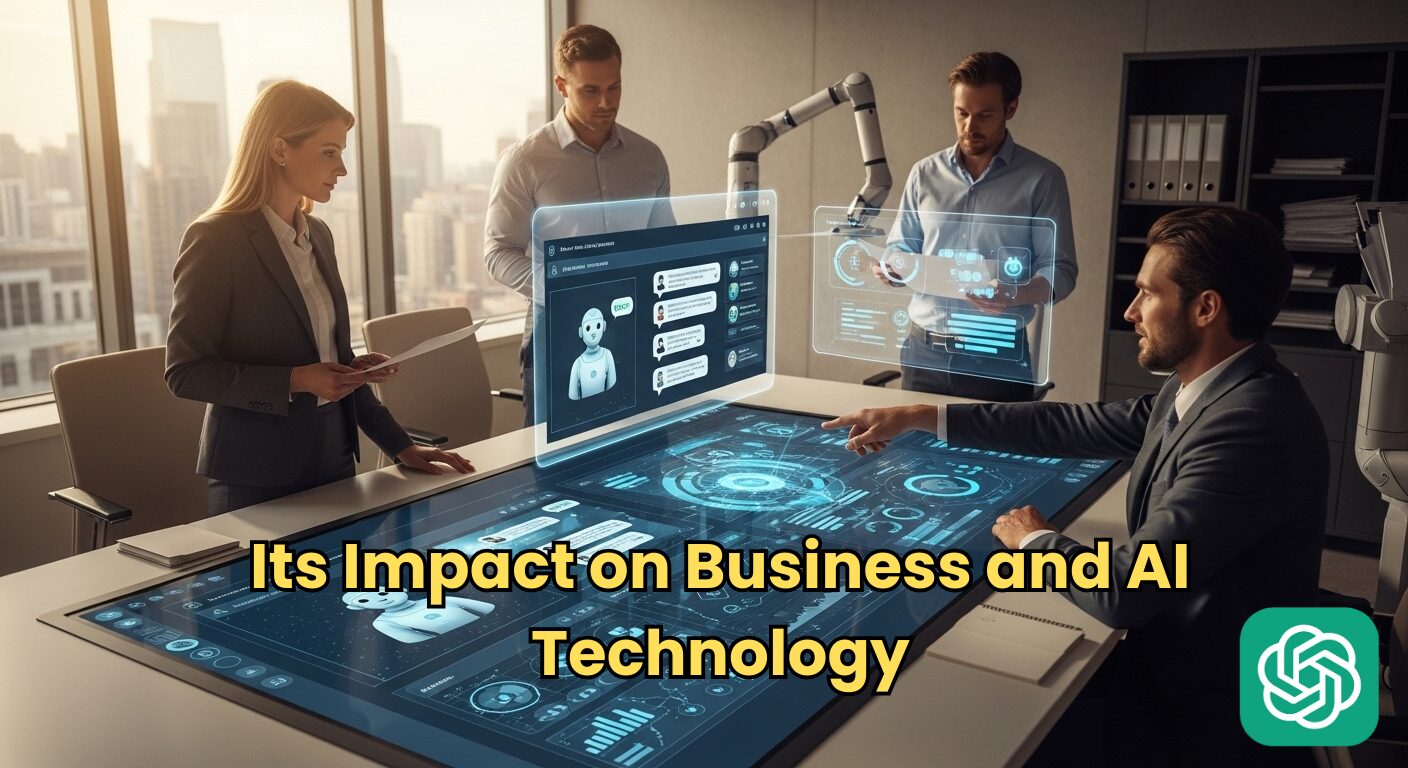
In the realm of marketing and content creation, the technology has redefined the production lifecycle. By automating the generation of initial drafts, social media copy, and SEO-optimized articles, businesses have significantly accelerated their time-to-market. Market research firms have also observed that AI can synthesize vast amounts of consumer sentiment data in minutes, a task that previously required weeks of manual analysis. Despite these benefits, the rapid integration has raised concerns regarding intellectual property, data privacy, and the potential for job displacement in creative sectors. Analysts suggest that the future of business strategy will rely on a "human-in-the-loop" model, where AI handles data-heavy lifting while humans maintain oversight on strategy, ethics, and final decision-making.
The Expansion into Multimodal Capabilities

The progression of AI has moved beyond mere text. The introduction of integrated image generation modules has expanded the scope of creative work. By translating natural language descriptions into high-fidelity visual media, these models allow designers to rapidly prototype concepts. This functionality is part of a broader trend toward "multimodal" AI, where a single model can interpret and generate text, audio, image, and code simultaneously.
This expansion has profound implications for industries like architecture, fashion, and film production. Yet, it also necessitates a new regulatory framework. The ability to generate realistic imagery has sparked intense debate over the authenticity of digital content, prompting tech companies to implement watermarking technologies and metadata tagging to distinguish AI-generated assets from reality.
Challenges and the Future of AI Ethics
As the influence of AI grows, so does the scrutiny regarding its ethical footprint. Bias remains a primary concern; since the model learns from historical data, it may inadvertently perpetuate societal prejudices present in its training sets. OpenAI and other developers are currently engaged in a multi-year effort to mitigate these biases through more diverse training data and stricter filtering mechanisms.
Furthermore, the environmental cost of maintaining these massive data centers is coming under fire. The compute power required to train and run large-scale models consumes significant electricity, prompting a debate about the sustainability of the AI boom. Experts are calling for more efficient, energy-conscious algorithms, often referred to as "green AI," to balance technological progress with environmental responsibility.
Economic and Social Implications of Widespread Adoption

The economic impact of this AI cycle is comparable to the introduction of the internet. A study by global management consulting firms indicates that generative AI could contribute trillions of dollars to the global economy over the next decade by boosting productivity. However, this growth comes with a structural shift in the labor market. While some roles may become obsolete, the demand for "AI literacy"—the ability to effectively communicate with and manage AI tools—is skyrocketing.
Educational institutions are currently navigating this shift, attempting to integrate AI into curricula while maintaining academic integrity. The consensus among policymakers and educators is that AI should be treated as a new form of digital literacy, essential for the future workforce.
The Road Ahead: Continuous Improvement
Looking toward the remainder of the decade, the trajectory of AI development appears focused on three core areas: accuracy, reliability, and reasoning. The current generation of models is moving toward "agentic" workflows—systems that do not just provide answers but can take independent actions, such as booking travel, managing supply chains, or executing software updates.

The shift toward these autonomous agents represents the next frontier. As developers refine the ability of these systems to reason through multi-step problems, the margin for error is expected to shrink. However, this progress also demands a more robust global dialogue on safety and regulation. International governing bodies are currently drafting standards for AI safety, aiming to foster innovation while preventing the misuse of high-powered, general-purpose AI.
In summary, the rise of AI as an everyday tool is not merely a passing trend but a fundamental change in the human-machine relationship. From solving complex mathematical problems to helping businesses scale with unprecedented speed, the technology offers a vision of a more efficient future. Yet, as the industry matures, the focus must remain on the responsible development of these systems. The ongoing challenge for developers, businesses, and society at large is to harness the immense potential of AI while building in the safeguards necessary to ensure that it remains a tool for human empowerment rather than a source of systemic risk. The coming years will be defined by how effectively we navigate this balance, ensuring that the promise of artificial intelligence is realized in a way that is equitable, secure, and beneficial to the global population. As we stand on the precipice of this new era, one thing remains certain: the integration of AI into the fabric of daily life is accelerating, and the landscape of work, creativity, and communication will be permanently altered by its influence.