Amazon Kindle Click Review: The E-Reader Giant Finally Embraces Bluetooth Page Turners

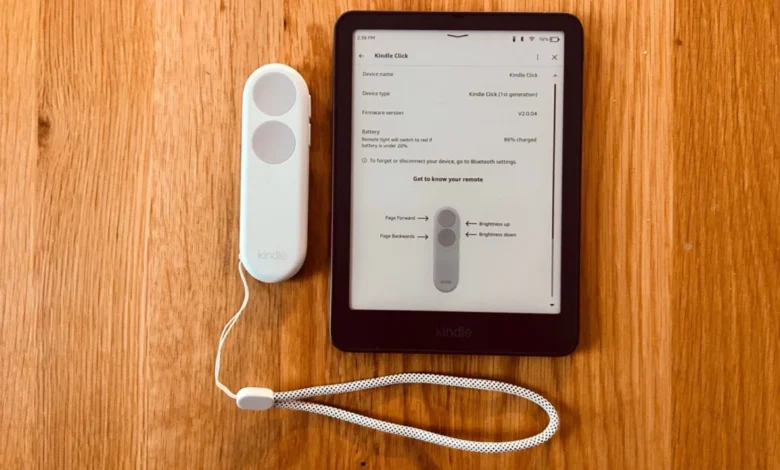
Amazon has long maintained a dominant market share in the global e-reader industry, positioning the Kindle as the ubiquitous standard for digital reading. However, market dominance has historically not translated into rapid technological innovation or openness for the platform. While competitors such as Kobo, Onyx Boox, and Barnes & Noble have routinely pioneered hardware adjustments—such as adjustable color temperature front lights and native color electronic paper displays—Amazon has traditionally taken a cautious, reactive approach. Furthermore, the company has heavily restricted its operating system, preventing users from leveraging third-party hardware accessories or downloading uncurated e-book file directories natively on the device interface.
Among these hardware omissions, the lack of native Bluetooth remote support remained one of the most persistent consumer complaints. Although every Kindle model released since 2018 features integrated Bluetooth hardware modules designed to route audio to wireless headphones, Amazon locked the firmware protocol exclusively to audio output profiles. Consequently, Kindle owners were left entirely unable to pair external input devices, frustrating a massive segment of consumers who sought hands-free reading options.
The Demand for Hands-Free E-Reading and the Rise of BookTok Culture
The modern appetite for e-reader remote controls accelerated significantly with the rise of literary communities on social media platforms like TikTok, commonly referred to as BookTok. Readers began sharing videos showcasing alternative setups that allowed them to turn pages from a distance. Competitors quickly capitalized on the trend, developing proprietary Bluetooth peripherals or compatible clickers.
For Kindle users, bypassing the software lock required awkward, manual workarounds. The most prominent solution involved third-party clip-on mechanical accessories. These devices physically attach to the bezel of the e-reader and feature a conductive pad that mimics a human finger tap when triggered by a wireless remote signal. While functional, these physical clickers present severe limitations: they can only advance pages in a single direction, obscure a portion of the electronic paper display, require frequent recharging, and risk damaging delicate e-ink screens over extended periods of use.
Recognizing the pent-up market demand, Amazon has finally shifted its firmware policy. The tech giant has released its own proprietary Bluetooth remote, the Kindle Click, alongside a vital software update that unlocks the Kindle’s Bluetooth protocol to accept external input peripherals.

Technical Specifications and Compatibility Constraints
Priced at approximately $35 before local taxes, the Kindle Click is a compact, dedicated peripheral designed specifically for seamless integration with Amazon’s latest hardware ecosystem. However, a major point of friction for existing consumers is hardware eligibility: the Kindle Click and the newly opened Bluetooth input firmware are strictly restricted to Kindle devices manufactured in 2024 or later. Owners of older legacy hardware, even models well within active use cycles, are locked out of the update, requiring an explicit hardware upgrade to utilize native remote page-turning.
The peripheral pairs efficiently with current flagship iterations, such as the recently updated Kindle Paperwhite Signature Edition. Setup requires a straightforward process: users enter the device’s updated Settings menu, navigate to a newly introduced Accessories tab, and select the Kindle Click from the available hardware list. Once initially paired, the remote establishes an automatic connection whenever both devices are powered on and within proximity, provided the Kindle’s Bluetooth radio remains active.
Functional Evaluation of the Kindle Click
Measuring the utility of an e-reader remote requires examining specific use cases where traditional device handling becomes impractical. The primary advantages center around physical comfort and ergonomics.
In active environments—such as using stationary exercise equipment like an elliptical machine or a spin bike—holding an e-reader steady can be challenging due to motion and vibration. Propounding the Kindle on a secure surface or equipment console allows users to read comfortably while advancing text via the lightweight remote.
Similarly, the peripheral addresses the perennial winter reading dilemma: maintaining warmth under heavy blankets. Standard reading habits require keeping at least one arm exposed to manually swipe or tap the screen. By utilizing a remote control, readers can position the e-reader at a comfortable eye-level distance while keeping their hands entirely enclosed within blankets or throws.

Functionally, the Kindle Click performs its core tasks reliably. The device features a streamlined layout consisting of large, tactile forward and reverse buttons, alongside smaller side buttons that adjust screen front-light brightness levels. Once a book is launched, button presses register instantly with minimal latency.
Analysis of Functional Limitations and Missed Opportunities
Despite fulfilling its primary design brief, industry analysts and early reviewers note that the Kindle Click lacks the advanced versatility found in competing third-party alternatives. For instance, the Boox Tappy features multi-functional operating modes that allow users to toggle between turning pages, scrolling through web browsers, or navigating multimedia tracks.
The Kindle platform natively supports audiobook playback via Audible integration, yet the Kindle Click cannot be utilized to control audio functions. Users are unable to use the remote to adjust volume levels or skip between chapters within an audiobook file, a functional omission that industry observers consider a significant oversight. Furthermore, while the remote successfully controls display brightness, it fails to offer direct manipulation of the screen’s color warmth settings—a feature heavily utilized by readers during evening sessions.
Broader Market Implications and Industry Response
The introduction of the Kindle Click signifies a notable shift in Amazon’s product strategy, reflecting a willingness to respond directly to consumer trends popularized by competing ecosystems. By modernizing its firmware architecture to support Bluetooth input devices—even with strict hardware limitations—Amazon has acknowledged the evolving expectations of the modern digital consumer.
Industry analysts suggest that while the $35 price point places the Kindle Click at a slight premium compared to generic third-party clickers, the official integration guarantees system stability and eliminates the risk of screen damage associated with mechanical clip-on actuators. Whether Amazon will expand firmware compatibility to older Kindle generations or enhance the remote’s functionality through subsequent software patches remains to be seen. For now, the Kindle Click establishes a new baseline official accessory tier for Amazon’s hardware lineup, permanently altering the hands-free reading landscape for modern digital bibliophiles.