The persistent issue of workplace inefficiency is often misdiagnosed as a failure of individual willpower or discipline. Much like a refrigerator door that repeatedly drifts open because of a degraded rubber seal, chronic productivity leaks in professional and personal environments are rarely solved by increased exertion. Instead, they require the identification and replacement of systemic "seals"—the underlying operational flaws that allow time, energy, and resources to escape. As of September 15, 2026, industry experts are increasingly pivoting toward a structural approach to productivity, moving away from behavioral patches and toward refined, repeatable systems.
The Anatomy of Systemic Inefficiency
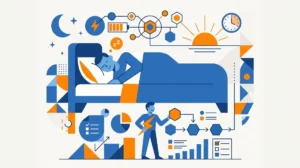
Productivity frameworks are increasingly categorized into three distinct layers: personal systems, work systems, and strategic systems. When any one of these layers malfunctions, the impact is felt across the entire organization. Personal systems involve the foundational elements of an individual’s daily operating procedure—sleep, nutrition, physical health, and the management of morning energy. Work systems focus on the tactical execution of tasks, while strategic systems serve as the long-term navigational tools that ensure alignment with core organizational objectives.
The failure to maintain these systems often leads to the "paddling trap," a phenomenon where professionals expend significant energy to maintain high activity levels without achieving meaningful forward momentum. Data suggests that without a structured review process, such as a weekly audit of goals, professionals can spend upwards of 12 months in a state of high-intensity, low-impact output.
Chronology of the Modern Workflow Evolution
The transition toward automated and systemic productivity began in earnest during the early 2020s, driven by the rapid integration of Large Language Models (LLMs) into daily business workflows.
- 2023–2024: The "discovery phase," where individuals began using AI for basic text generation and summarization.
- 2025: The "integration phase," characterized by the shift toward AI-native workflows, such as automated meeting transcription and autonomous email triage.
- 2026: The current "optimization phase," where the focus has moved from merely using AI to designing systems that specifically identify and automate rule-based human tasks.
This timeline reflects a broader shift in corporate culture. Initially, AI was viewed as a novelty; today, it is viewed as an essential component of the "input-process-output" model of productivity. By analyzing what enters a system, how it is processed, and what the final output is, organizations are better positioned to catch inefficiencies before they escalate into bottlenecks.
Empirical Analysis of Work Systems
A critical component of modern systems thinking is the reduction of decision fatigue. Research in organizational psychology indicates that the average professional faces hundreds of minor decisions daily, which deplete cognitive resources. By pre-determining the "trigger" and the "action"—such as establishing a strict, non-negotiable morning routine or a rigid three-item daily to-do list—individuals can preserve their executive function for complex problem-solving.
Regarding work systems, the question, "How can I AI this?" has become a standard diagnostic tool for operational audits. Email management, for example, is inherently rule-based. By implementing workflows that classify messages, draft responses, or archive non-essential communications, professionals have successfully offloaded up to 30% of their daily administrative burden.
However, the introduction of AI into meeting environments has created a new set of workplace etiquette challenges. While AI-driven notetakers—such as tools that provide sentiment analysis, decision tracking, and follow-up email drafts—drastically increase efficiency, they also raise concerns regarding privacy and meeting culture. The industry is currently divided between using "joiner" bots, which are visible participants, and "local" notetakers that record audio via the user’s computer, mitigating the intrusion while posing minor risks to transcription accuracy.

Strategic Systems and Long-Term Alignment
While tactical systems are often the most visible, strategic systems—such as weekly, monthly, and quarterly planning—are the most vital for long-term health. These systems are inherently less urgent than email or task management, leading many to neglect them until a crisis occurs.
Analysis of high-performing teams reveals that a 90-day goal-setting cadence is the "sweet spot" for maintaining both urgency and reality-based planning. This timeframe is long enough to permit substantive progress on complex projects but short enough to prevent the "drift" that occurs in multi-year planning cycles. The most effective professionals use these periods to conduct a retrospective analysis, treating their work as a data set to be optimized rather than a burden to be endured.
The Role of Custom GPTs and Quality Control
Beyond individual tasks, the institutionalization of quality control through custom AI models is becoming a standard practice. In product management and software development, teams are increasingly deploying AI "checkers" that review project specifications against pre-established criteria before they are handed off to developers.
This model effectively shifts the burden of quality control upstream. By ensuring that the inputs to a process meet specific standards, organizations significantly reduce the need for repetitive coaching and late-stage rework. This is a classic application of systems thinking: by improving the quality of the raw material entering the process, the output is inherently more reliable, reducing the need for costly manual interventions.
Implications for the Future of Work
The broader implication of this shift is a move toward "lean" productivity. The objective is no longer to do more work in the same amount of time, but to design systems that require less maintenance over time. The "fridge door" analogy—where a broken seal causes constant, recurring, and unnecessary effort—is a metaphor for the state of many modern professional environments.
Industry analysts suggest that the next frontier will not be the acquisition of more tools, but the refinement of existing ones. The most successful professionals are those who are willing to "fix the seal"—that is, to identify the one broken component in their workflow, whether it is an ineffective morning routine, a lack of prioritization in task lists, or the absence of a recurring strategic review.
Recommendations for Implementation
For organizations and individuals looking to improve their efficiency, the consensus is to avoid a wholesale overhaul of all systems simultaneously. Instead, a modular approach is recommended:
- Select one system to audit: Whether it is a personal, work, or strategic system, choose one that consistently produces friction.
- Identify the "broken seal": Ask whether the problem is the input, the process, or the output.
- Apply a single tweak: Whether it is adopting a three-priority daily limit, automating a specific inbox rule, or scheduling a weekly review, implement a single, repeatable change.
- Monitor and Iterate: Use the feedback from that single change to adjust the system, rather than adding layers of complexity.
As the professional landscape continues to integrate sophisticated AI tools, the competitive advantage will lie not with those who possess the most advanced technology, but with those who possess the most robust systems for applying it. By focusing on repeatability, clarity, and strategic alignment, individuals can transition from a state of reactive "paddling" to a state of deliberate, systemic progress. The goal remains simple: replace the worn-out seal, stop pushing the door, and allow the system to function as intended.