The modern workplace is increasingly defined by a culture of collaboration, yet a growing body of management research suggests that the impulse to assist others—often perceived as a hallmark of empathetic leadership—can inadvertently stifle organizational growth. When leaders intervene too quickly or too comprehensively, they move beyond the realm of mentorship and into a cycle of "bad help," an phenomenon that fosters dependency rather than development. This systemic issue shifts the burden of responsibility from the individual to the supervisor, creating a bottleneck that hinders performance and erodes the self-efficacy of employees.
Defining the Mechanics of Bad Help
At its core, "bad help" is defined by actions that prioritize the immediate resolution of a problem over the long-term professional development of the person being assisted. While often rooted in a sincere desire to support team members, this behavior frequently stems from a leader’s internal psychological needs. Management psychologists have observed that the act of providing assistance can trigger a release of neurochemicals associated with reward, effectively "puffing up" the ego of the benefactor. In this context, the helper feels a sense of utility and moral superiority, even when the intervention actively undermines the recipient’s ability to learn.
When a leader assumes the duties of a subordinate under the guise of support, they inadvertently send a signal that the subordinate is incapable of handling the task independently. Over time, this leads to a phenomenon known as "learned helplessness." Employees who are consistently rescued from difficult tasks stop attempting to solve them, waiting instead for the leader to intervene. This dynamic creates a "tender-hearted" trap: the leader perceives themselves as a nurturing figure, while the organizational reality is one of reduced capacity and diminished individual accountability.
The Chronology of Dependency: How Over-Helping Evolves
The progression toward an enabling culture typically follows a predictable timeline. It often begins during a period of high pressure or transition, such as the onboarding of a new team or the launch of a critical project.

- The Crisis Phase: A team member encounters a significant obstacle. In an effort to meet tight deadlines, the leader steps in to "fix" the problem, rationalizing that it is more efficient to do the work themselves than to coach the employee through it.
- The Reinforcement Phase: The task is completed successfully, and the leader is praised for their hands-on approach. The employee learns that if they struggle, the leader will eventually take over.
- The Normalization Phase: The leader begins to view this intervention as a standard part of their management style. They start to feel that they are the only ones capable of ensuring quality, leading to increased workload for the leader and decreased confidence for the team.
- The Stagnation Phase: The organization realizes that despite having a "helpful" leader, the team’s collective skill set has remained static or declined. Innovation stalls because the team has lost the autonomy required to experiment and fail.
Supporting Data and Behavioral Economics
Recent workplace behavioral studies indicate that leaders who exhibit high levels of "co-dependent management" spend approximately 30% to 40% of their week performing tasks that fall within the scope of their direct reports. A 2023 analysis by the Organizational Performance Institute found that teams with high levels of autonomous problem-solving consistently outperform those where leaders act as primary troubleshooters by a margin of 22% in long-term key performance indicators.
The paradox of the "tender-hearted leader" is further evidenced by data on employee retention. While managers often believe that being "too helpful" increases employee loyalty, data suggests the opposite. High-performing individuals—those with a high need for achievement—frequently report dissatisfaction and burnout in environments where they are not permitted to own their tasks. They view constant, unsolicited intervention as a lack of trust, which is a primary driver for voluntary turnover in competitive sectors.
The Shift Toward Enabling as a Strategic Goal
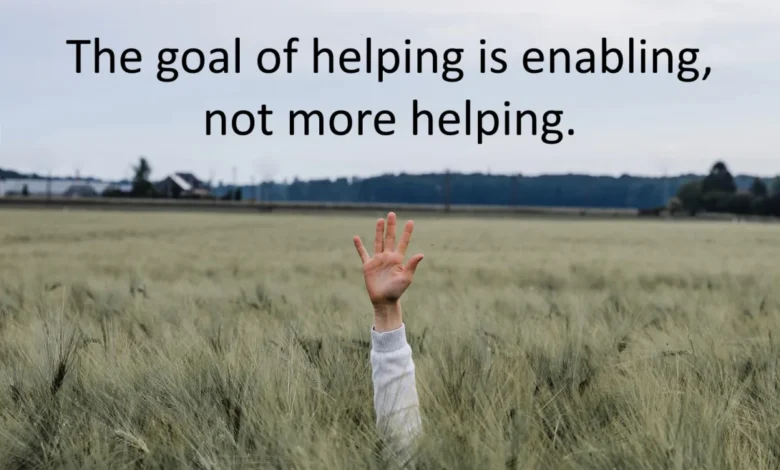
The goal of professional helping, according to organizational experts, must be shifted from "helping" to "enabling." Enabling is defined as the process of providing the resources, clarity, and psychological safety necessary for an individual to overcome obstacles themselves. It is the distinction between giving a person a completed report and providing them with the analytical framework to produce that report on their own.
Effective leaders now utilize a "pre-help" checklist to determine if their intervention is warranted. Before stepping in, leaders are encouraged to ask the following questions:
- Does this task fall within the employee’s current job description and capabilities?
- Am I intervening to solve the problem, or am I intervening to soothe my own anxiety about the outcome?
- If I provide this help, does it create a pathway for the employee to learn, or does it merely remove the obstacle for the day?
- Have I clearly communicated the expectations for self-reliance in this specific area?
- What is the risk of the employee failing, and is that failure a necessary component of their development?
The Philosophy of Edgar Schein and Modern Mentorship
The discourse surrounding this issue has been greatly influenced by the work of Edgar Schein, particularly in his seminal texts on the nature of "Humble Inquiry" and the dynamics of helping. Schein argues that the act of helping is an inherently complex social interaction that alters the power dynamic between two people. If the helper does not remain conscious of this power shift, the relationship can easily become one of donor and dependent.

Schein suggests that true help is an act of co-creation. It requires the leader to remain in a state of curiosity, asking questions that guide the employee toward their own discovery. By choosing inquiry over instruction, the leader effectively signals that they believe in the employee’s potential to arrive at the correct solution. This approach is not about withholding support, but about curating the type of support that builds capacity rather than eroding it.
Broader Implications for Organizational Culture
The organizational implications of transitioning away from "bad help" are significant. Companies that cultivate a culture of autonomy report higher levels of engagement, as employees feel a greater sense of ownership over their successes and failures. Furthermore, this shift is essential for leadership succession planning. If a manager is constantly doing the work of their subordinates, they are failing to identify which team members are ready for promotion. They are also, by extension, failing to prepare themselves for higher-level strategic work because they remain mired in the tactical weeds of their team’s daily operations.
From a macroeconomic perspective, the capacity for individual problem-solving is a critical asset. In an era characterized by rapid technological change and market volatility, organizations cannot afford to have a bottleneck at the top. The "hero leader"—the one who saves the day and fixes everything—is increasingly being viewed as a liability rather than an asset. The new standard for leadership excellence is the "architect leader," who builds the systems and fosters the culture that allows others to thrive without constant supervision.
Conclusion: A Call for Self-Reflection
To break the cycle of bad help, leaders must engage in consistent self-reflection. This involves analyzing one’s own motivations for helping and being honest about whether one is enabling growth or enabling dependency. It requires the courage to sit in the discomfort of seeing a team member struggle, while providing only the minimal amount of support required to keep them on the path to success.
Ultimately, the most effective form of support is the one that eventually renders itself unnecessary. As the adage suggests, the best teacher is one who makes themselves progressively less needed. By focusing on enabling rather than helping, leaders can transform their organizations from hubs of dependency into engines of self-sustaining high performance. The transition is not easy, as it requires a fundamental shift in the ego-gratification that many leaders derive from their roles, but it is a necessary evolution for any organization aiming for long-term, sustainable success in a modern, complex economy. Through the disciplined application of inquiry, trust, and clear expectations, leaders can ensure that their team members are not just supported, but truly capable.