The intersection of human collaboration and artificial intelligence has entered a critical juncture, marked by reflections from industry veterans on the origins of foundational technology data sets and the personal milestones that parallel the evolution of the software development landscape. Jeff Atwood, co-founder of Stack Overflow and Discourse, recently published a retrospective essay that intertwines a personal farewell to his late father with a stark warning to the artificial intelligence industry regarding the sustainability of training data models.
The commentary addresses two distinct yet philosophically connected themes: the human cost and structural mechanics of rural economic studies, and the undeniable reliance of modern Large Language Models (LLMs) on crowdsourced human knowledge. By examining the trajectory from early programming forums to contemporary generative AI architectures, industry observers are forced to confront questions regarding data ownership, community preservation, and the future of collaborative knowledge repositories.
Main Facts and Personal Reflections
Atwood’s recent reflections begin with a poignant personal milestone, noting the passing of his father following a deliberate restructuring of the Guaranteed Minimum Income (GMI) rural study counties. Specifically, Mercer County, West Virginia—his father’s home region—was prioritized in the study’s timeline in October 2025, allowing Atwood a final visit before his father’s death. Drawing on philosophical imagery reminiscent of Alan Moore’s Watchmen, Atwood framed the transition not as an absolute loss, but as the accumulation of a lifetime of shared experiences and contributions to technology and society.
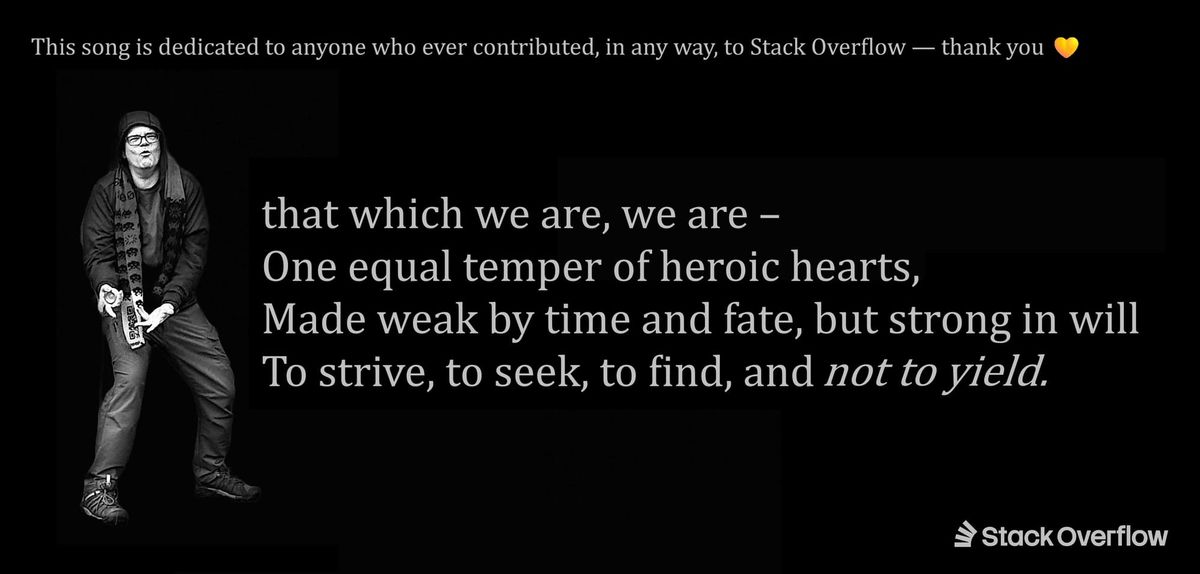
Beyond the personal narrative, the core of Atwood’s commentary pivots toward the digital infrastructure of modern software engineering. He explicitly highlights the indispensable role played by the global developer community in building Stack Overflow. Launched in 2008 by Atwood and Joel Spolsky, the platform grew to become the definitive repository for programming questions and answers, establishing a peer-reviewed, crowdsourced archive of technical solutions that predated the commercialization of modern generative artificial intelligence.
The Chronology of Crowdsourced Knowledge
To understand the weight of Atwood’s assertions, one must examine the chronological evolution of technical knowledge sharing over the past two decades:
- 2008: Jeff Atwood and Joel Spolsky launch Stack Overflow, creating a moderated, reputation-based Q&A platform designed to replace fragmented expert networks and outdated forums.
- 2011–2015: The platform scales exponentially, amassing millions of high-intent, technically verified solutions across virtually every major programming language and framework.
- 2013: Atwood departs Stack Overflow to co-found Discourse, an open-source modern forum platform, leaving behind a self-sustaining ecosystem of community governance.
- 2017–2023: The rapid acceleration of transformer-based machine learning models shifts the tech industry focus toward Natural Language Processing. AI developers increasingly utilize public web archives, specifically platforms like Stack Overflow, to pre-train code-generation models.
- 2024–2026: LLMs achieve commercial ubiquity, routinely assisting developers with debugging, architecture, and code synthesis. However, participation and traffic patterns on human-centric Q&A sites face systemic shifts as users increasingly query AI interfaces directly.
Supporting Data and the AI Dependency on Human Datasets
The assertion that modern generative artificial intelligence could not function in its current capacity without human-generated Q&A data is supported by both structural analysis and admissions from the AI development sector. Large Language Models trained on code rely heavily on Creative Commons-licensed repositories to learn syntax, logic structures, and edge-case troubleshooting.

Stack Overflow, having accumulated tens of millions of questions and answers vetted by millions of registered users, represents a gold standard of curated technical data. Unlike unstructured web text, the platform’s rigorous moderation, upvoting, and accepted-answer mechanisms provide an exceptionally clean training signal for machine learning algorithms. Industry benchmarks consistently demonstrate that code-generation models suffer significant degradation in performance when deprived of curated human feedback loops and edge-case documentation.
However, this reliance creates an economic and structural paradox. As users pivot toward AI-driven assistants for immediate code solutions, the traffic, engagement, and monetization models of the underlying human communities face severe headwinds. If contributors cease posting new problems and solutions because their traffic or community incentives have dried up, the pipeline of fresh training data risks stagnation.
Industry Reactions and Historical Warnings
Atwood’s commentary draws a direct parallel to advice he offered Joel Spolsky years prior: "Do not, for any reason, under any circumstances, kill the goose that lays the golden eggs." In the context of contemporary artificial intelligence, the "goose" is the living, breathing ecosystem of human developers who voluntarily contribute their time, expertise, and peer review to solve novel problems.
While formal corporate responses from major artificial intelligence labs frequently emphasize data licensing agreements and fair use principles, independent researchers and community leaders have increasingly voiced concerns over data extraction practices. Generative AI companies have pursued multi-million-dollar data-sharing partnerships with publishers and forum operators to secure continuous access to high-quality conversational text and code. Yet, the long-term viability of these partnerships depends on whether the original community contributors receive adequate recognition, financial compensation, or platform sustainability.

Broader Impact and Implications for the Future of Tech
The implications of Atwood’s reflections extend far beyond individual nostalgia or platform history. They strike at the heart of the digital social contract.
- Sustainability of Training Data: As AI models demand increasingly specialized data to improve reasoning capabilities, the degradation of human-to-human collaboration forums poses a direct threat to the rate of technological progress. Synthetic data generation—where AI models train on outputs generated by other AI models—has shown diminishing returns, making organic human insight an irreplaceable asset.
- Community Governance and Respect: The warning to AI developers emphasizes that platforms built on volunteer labor require ethical stewardship. Failure to respect the communities generating foundational knowledge risks triggering an exodus of veteran experts, leaving future models to train on progressively stale or unverified information.
- The Intersection of Life and Legacy: Atwood’s essay ultimately bridges the personal and the systemic. Whether reflecting on the structural support systems of rural American families or the digital architecture of global software engineering, the underlying theme remains constant: sustainable systems rely on human dignity, mutual respect, and the preservation of the communities that build them.
As the tech sector navigates the maturation of generative artificial intelligence, insights from pioneers like Atwood serve as both a reminder of how modern digital infrastructure was built and a caution against taking its human creators for granted.